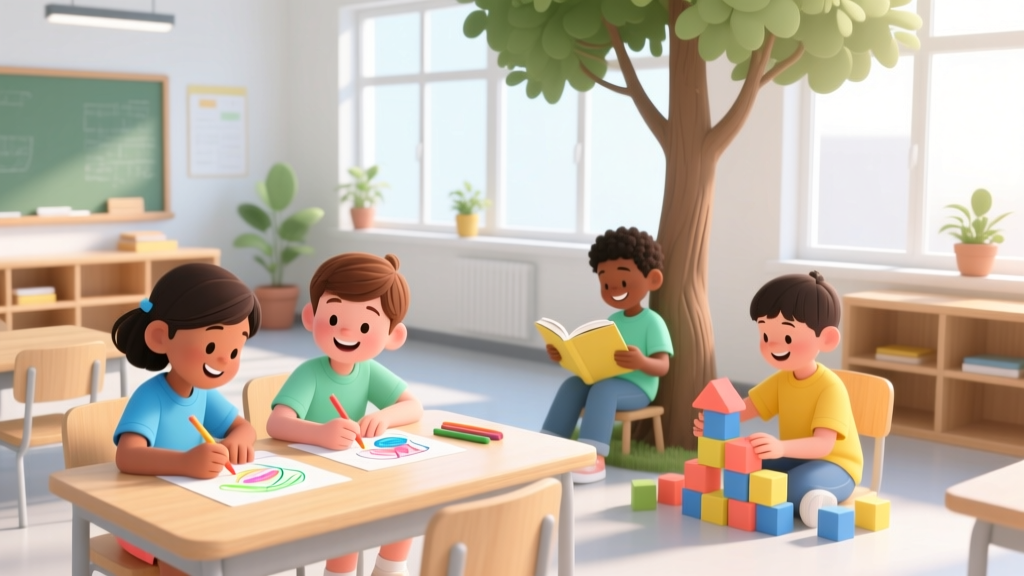
What Is Easter About for Kids? (2026)
Why 'What Is Easter About for Kids?' Matters More Than Ever Right Now
If you've ever paused mid-Easter egg hunt—basket in hand, plastic grass rustling—and wondered, What is Easter about for kids?—you're not alone. In an era where religious literacy is declining among young families (Pew Research Center, 2023), and secular celebrations often overshadow deeper meaning, parents face a quiet but urgent challenge: how to share Easter’s core message of hope, renewal, and love in ways that land with warmth—not confusion, fear, or disengagement. Children aren’t miniature adults; they process symbolism, narrative, and emotion differently at each stage. A 4-year-old doesn’t need theological nuance—but they do need honesty wrapped in safety. A 9-year-old may ask, 'Did it really happen?' and deserve space for doubt alongside reverence. This isn’t about indoctrination—it’s about offering meaning that grows with them.
What Easter Really Means—And Why Age-Appropriate Language Changes Everything
Easter is, at its heart, a story of transformation: death giving way to life, grief making space for joy, brokenness becoming whole again. But telling that story to a child requires translation—not simplification. According to Dr. Elena Martinez, a developmental psychologist and co-author of Childhood Faith in Practice (APA Press, 2022), 'Children under age 7 grasp concrete actions and sensory experiences far more readily than abstract concepts like resurrection or atonement. What they remember isn’t doctrine—they remember how they felt: safe, included, curious, comforted.' That means swapping phrases like 'Jesus rose from the dead' with 'Jesus’ love was so strong, it couldn’t be stopped—not even by sadness or endings. And that same love is still here, with us, today.'
Here’s what research shows works best across age bands:
- Ages 3–5: Focus on themes of new beginnings, light after darkness, and love that lasts. Use tactile metaphors: seeds sprouting, caterpillars becoming butterflies, winter turning to spring.
- Ages 6–8: Introduce gentle narrative—'Jesus cared deeply for people who were hurting or left out. He taught kindness, forgiveness, and courage—even when it was hard. His friends thought everything was over… until something amazing happened.'
- Ages 9–12: Welcome questions. Offer historical context ('This story has been shared for over 2,000 years'), acknowledge different beliefs ('Some families focus on bunnies and eggs; others on church and prayer; many do both—and that’s okay'), and affirm moral continuity ('What stays true across all versions is caring for others, standing up for what’s right, and believing in second chances.')
Crucially, avoid language that unintentionally links Easter to fear or punishment—phrases like 'Jesus died for your sins' can trigger shame or anxiety in young children unfamiliar with moral abstraction. The American Academy of Pediatrics (AAP) advises reframing around relational safety: 'God loves you no matter what—and wants you to know you’re always held, always welcome.'
How to Bridge the Symbol Gap: Eggs, Bunnies, Lilies—and What They *Really* Represent
Most kids encounter Easter through symbols long before scripture. And that’s not a problem—it’s an opportunity. Symbols are the original language of childhood cognition. The key is intentional connection: helping children see how fun traditions point toward deeper truths. Here’s how to make those bridges tangible:
- Eggs: Not just candy containers—but ancient symbols of new life. Try a simple activity: boil an egg, dye it blue, then crack it open together. Say: 'Just like this shell hides something new inside, Easter reminds us that even when things look closed or finished, something beautiful can begin.'
- Rabbits: Fertility icons in pre-Christian spring festivals—now reimagined as joyful messengers of abundance and playfulness. Emphasize their gentleness and nurturing nature: 'Rabbits care for their babies with such tenderness—that’s one way we learn about loving care.'
- Lilies: Pure white flowers often seen in churches. Show a real lily or photo. Explain: 'They grow from bulbs buried underground—dark and hidden—then burst into light and beauty. Like hope does.'
- Hot Cross Buns: The cross on top isn’t decoration—it’s a reminder of love’s shape. Bake together, mark the cross with dough, and talk about how love connects us: 'Top to bottom = God reaching down. Side to side = us reaching out to each other.'
This approach honors tradition while grounding it in sensory experience—a strategy endorsed by early childhood educators at the National Association for the Education of Young Children (NAEYC), who note that 'symbolic understanding develops through repeated, meaningful interaction—not passive explanation.'
The Inclusive Easter Toolkit: Supporting Diverse Families & Belief Systems
Over 40% of U.S. households raising children include interfaith, secular, or spiritually fluid parents (PRRI, 2024). A 'one-size-fits-all' Easter explanation risks alienating or confusing kids whose families observe differently—or not at all. The goal isn’t uniformity; it’s coherence, respect, and emotional safety.
Start by asking yourself two questions:
- What values do I most want my child to associate with Easter? (e.g., compassion, resilience, gratitude, community)
- What practices already feel authentic to our family? (e.g., volunteering, nature walks, baking together, attending services—or choosing not to)
Then, build outward. For example:
- Secular-leaning families might frame Easter as 'Spring Celebration Week': planting seeds, reading stories about renewal (like The Tiny Seed by Eric Carle), and donating toys to shelters—tying generosity to seasonal rebirth.
- Interfaith families could create a 'Story Circle Night', where each adult shares one meaningful spring tradition from their background—Jewish Passover’s liberation theme, Persian Nowruz’s renewal rituals, or Christian Easter—and highlight shared threads: freedom, fresh starts, family.
- Families navigating grief or loss might adapt the 'empty tomb' symbol into a 'hope jar': decorate a clear container, fill it with notes of small joys ('sunshine on my face', 'my friend shared her snack'), and open it on Easter morning as a tangible reminder that light persists.
This flexibility isn’t dilution—it’s developmental fidelity. As Dr. Amara Chen, a pediatric chaplain and author of Sacred Questions: Talking Faith with Children, affirms: 'When we honor a child’s questions—and our own uncertainties—we model spiritual integrity far more powerfully than any perfect answer.'
Developmental Pitfalls to Avoid—and What to Do Instead
Even well-intentioned explanations can backfire if misaligned with cognitive or emotional readiness. Below are four common missteps—and research-backed alternatives:
| Misstep | Why It Backfires | Better Approach |
|---|---|---|
| Telling graphic details about crucifixion | Triggers anxiety, nightmares, or fixation on violence (per AAP clinical guidelines on trauma-informed communication) | Focus on Jesus’ compassion: 'He stood with people who were scared, tired, or treated unfairly—and showed them they mattered.' |
| Saying 'It’s just a story' | Undermines spiritual significance for believing families; confuses children who hear 'story' as 'not real' versus 'true in meaning' | Distinguish types of truth: 'This is a sacred story—like the stories we tell about our grandparents’ courage or our family’s traditions. It’s true in how it shapes our hearts.' |
| Forcing participation in rituals | Creates resistance, shame, or disconnection—especially for neurodivergent or anxious children | Offer choice: 'Would you like to light a candle, hold the basket, or help set the table? You decide what feels right for you.' |
| Using guilt-based language ('Jesus did this for YOU') | Can foster performance anxiety or conditional self-worth in young children | Emphasize unconditional love: 'Jesus’ love isn’t something you earn—it’s like sunshine. It’s just there, warming everyone.' |
Frequently Asked Questions
How do I explain Easter to a child who’s never been to church?
You don’t need church experience to share Easter’s heart. Start with universal human experiences: 'Have you ever felt really sad—and then something good surprised you? That’s part of Easter. It’s about love being stronger than sadness. Some families go to church to celebrate that; others bake bread, plant flowers, or write thank-you notes. What matters is the feeling—not the building.'
My child asked, 'Did Jesus really come back to life?' What do I say?
Honor the question as sacred curiosity—not a test. Try: 'That’s one of the biggest, most beautiful questions people have asked for centuries. Some believe it happened exactly as written. Others believe it’s about the power of love to change us, even when someone we love is gone. What do you think love can do? Let’s talk about that.'
Is it okay to focus only on the Easter Bunny and eggs?
Absolutely—if that aligns with your family’s values. Play and joy are vital spiritual practices for children. The key is intentionality: 'We love the bunny because he brings fun and surprises—just like how kindness can surprise someone and make their day brighter.' Keep the door open: 'If you ever wonder about other parts of Easter, I’m here to listen and explore with you.'
How do I talk about Easter with a child who has experienced loss?
Connect Easter’s themes of hope and continuity to their lived experience: 'Remember how Grandma loved daffodils? Every spring, they come back—just like the love she gave us never goes away. Easter reminds us that love keeps growing, even when people aren’t here in person.' Consider creating a 'memory egg' decorated with photos or drawings of loved ones.
What if my child says, 'I don’t believe in Easter'?
Respond with warmth and openness: 'Thank you for telling me that. Believing is something we all get to figure out in our own time—and it’s okay to have questions, doubts, or different ideas. What part of Easter feels most interesting—or confusing—to you right now?'
Common Myths About Explaining Easter to Kids
- Myth #1: 'Young children can’t understand deep spiritual ideas.' — Actually, they grasp relational concepts (love, safety, fairness) earlier and more deeply than doctrinal abstractions. Their spirituality is embodied and experiential—not intellectual.
- Myth #2: 'You have to choose between fun traditions and faith formation.' — Research from the Lilly Endowment’s Children’s Spirituality Project shows the richest learning happens when joy and meaning are woven together: baking bread while talking about sharing, coloring eggs while discussing new beginnings.
Related Topics (Internal Link Suggestions)
- Age-Appropriate Bible Stories for Preschoolers — suggested anchor text: "simple Bible stories for toddlers"
- How to Talk to Kids About Death and Grief — suggested anchor text: "explaining loss to young children"
- Non-Religious Spring Activities for Families — suggested anchor text: "secular Easter ideas for kids"
- Montessori-Inspired Easter Learning Activities — suggested anchor text: "hands-on Easter lessons for preschool"
- Books That Explain Easter Gently for Children — suggested anchor text: "best Easter picture books for kids"
Wrap-Up: Your Next Step Starts With One Honest Conversation
'What is Easter about for kids?' isn’t a question with a single answer—it’s an invitation to presence. It asks us to slow down, listen closely, and meet our children where they are—not where we think they should be. You don’t need perfect theology or flawless delivery. You need curiosity, courage, and the willingness to say, 'I don’t know—let’s find out together.' So this week, try one small thing: pause during your Easter prep and ask your child, 'What’s something that makes you feel hopeful right now?' Then listen—without fixing, correcting, or redirecting. That moment of attuned attention? That’s where meaning begins. And it’s the most Easter-like thing you’ll do all season.
More Articles
 Are Kids Free at Great Wolf Lodge? (2026)
 What Is a Latchkey Kid? (2026)
 Kids Feel Like Strangers: 7 Evidence-Based Reconnection Tips
 What Is Size 8 Womens in Kids? (2026)
 Kids in Jail for Driving Without License? (2026)
 Does Charlize Theron Have Kids? Her Adoption Journey
 Can Kids Go in Total Wine? Rules, Risks & Alternatives
 Autistic Meltdowns: Neurological Truth & Calming Strategies
 How Many Kids Are Bullied (2026)
 Child Abduction Statistics: What Parents Need to Know