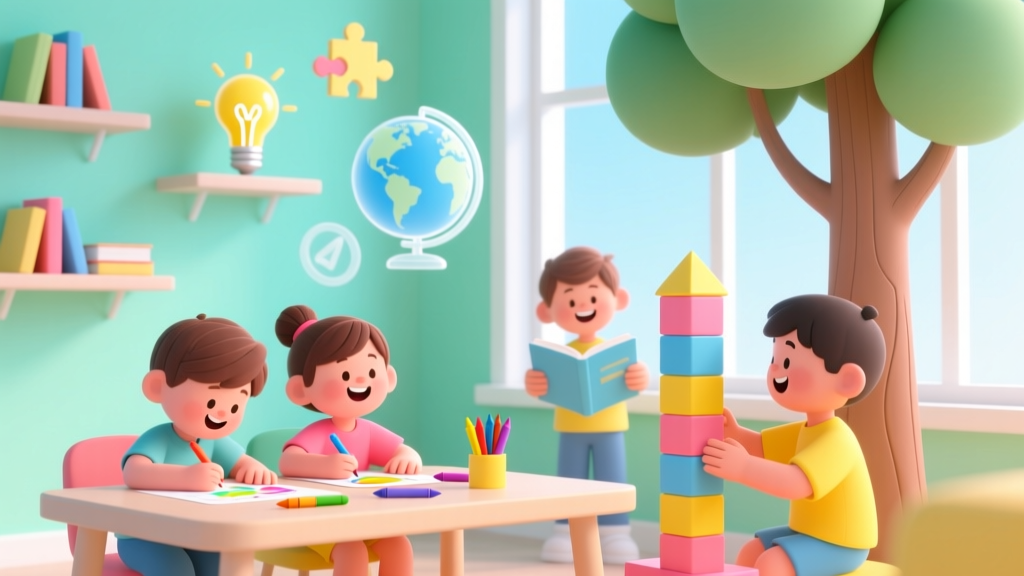
ABA Therapy for Kids: What It Really Is (2026)
Why Understanding What ABA Therapy for Kids Really Means Changes Everything
If you’ve just heard the phrase what is ABA therapy for kids — perhaps after a developmental screening, an autism diagnosis, or a teacher’s recommendation — you’re likely feeling equal parts hopeful and overwhelmed. You want answers, not jargon. You want clarity, not confusion. And most of all, you want to know: Will this help my child connect, communicate, and thrive — not just comply? The truth is, Applied Behavior Analysis (ABA) is one of the most rigorously studied interventions for children with autism spectrum disorder (ASD) and other developmental challenges — yet it’s also one of the most misunderstood. Far from being robotic drills or 'punishment-based' tactics (a myth we’ll debunk shortly), modern, ethical ABA is relationship-first, child-led, and deeply rooted in neuroscience and developmental psychology. In fact, according to the American Academy of Pediatrics (AAP), early, intensive ABA delivered by qualified professionals can lead to meaningful gains in language, social interaction, adaptive skills, and academic readiness — especially when started before age 5.
What ABA Therapy for Kids Actually Is (and What It Isn’t)
At its core, ABA is the scientific application of learning principles to bring about socially significant behavior change. Think of it less as ‘therapy’ in the traditional talk-based sense, and more as a personalized, data-driven teaching system. It breaks down complex skills — like making eye contact, asking for help, waiting patiently, or tying shoes — into small, achievable steps. Then, using positive reinforcement (praise, access to preferred activities, tokens), therapists help children learn those skills in natural settings — at home, school, or the playground.
Crucially, today’s gold-standard ABA is guided by the Behavior Analyst Certification Board (BACB) Ethics Code and emphasizes assent, dignity, and neurodiversity-affirming practices. That means your child’s preferences, sensory needs, communication style, and emotional well-being aren’t secondary — they’re central to every session. As Dr. Bridget Taylor, co-founder of Alpine Learning Group and a leading BCBA-D, explains: “Effective ABA doesn’t ask a child to mask their neurology; it helps them build tools to navigate a world not built for them — while honoring who they already are.”
Here’s what sets ethical, contemporary ABA apart:
- Assent-based practice: Children are invited to participate — and can pause or opt out without penalty.
- Naturalistic teaching: Skills are embedded in play, routines, and daily life — not isolated at a table for hours.
- Family collaboration: Parents and caregivers receive coaching, not just reports — because consistency across environments drives lasting progress.
- Focus on functional outcomes: Prioritizing skills that matter most to the child and family — like requesting snacks independently, joining a peer group, or managing big emotions — over arbitrary compliance metrics.
How ABA Works: From Assessment to Real-Life Progress
Before a single session begins, a Board-Certified Behavior Analyst (BCBA) conducts a comprehensive assessment — including interviews with parents, direct observation, standardized tools (like the VB-MAPP or ABLLS-R), and input from teachers or speech-language pathologists. This isn’t a one-size-fits-all process. Instead, it yields a highly individualized treatment plan focused on three pillars:
- Building strengths: Leveraging your child’s interests (e.g., trains, music, water play) as entry points for learning.
- Reducing barriers: Addressing behaviors that interfere with learning or safety — not by suppressing them, but by understanding their function (e.g., tantrums may signal frustration due to unmet communication needs).
- Teaching replacement skills: If a child hits when overwhelmed, ABA teaches them to use a visual card, sign “break,” or squeeze a stress ball — giving them effective, respectful alternatives.
A real-world example: Maya, age 4, was nonverbal and frequently engaged in self-injurious head-banging during transitions. Her BCBA discovered this occurred only when she couldn’t predict what came next. The team introduced a visual schedule with photos, paired transitions with her favorite song, and taught her to hand a ‘next’ card to request continuation. Within 6 weeks, head-banging decreased by 92%, and Maya began using two-word phrases spontaneously (“more swing,” “go park”). This wasn’t about stopping behavior — it was about giving Maya agency and voice.
Progress is tracked daily using objective data (frequency, duration, latency). Every 1–2 weeks, the BCBA reviews trends, adjusts goals, and shares visuals with families — no vague ‘he did great today’ summaries. Transparency isn’t optional; it’s required.
Finding & Evaluating a High-Quality ABA Provider
Not all ABA programs are created equal — and choosing the right one is arguably the most impactful decision you’ll make. Here’s how to separate evidence-based, compassionate care from outdated or harmful models:
- Verify credentials: Confirm the supervising clinician is a Board-Certified Behavior Analyst (BCBA) — not just ‘ABA-trained’ or ‘certified by the center.’ You can verify via the BACB registry (bacb.com).
- Observe a session: Ask to watch (with consent) — does the therapist follow the child’s lead? Are materials playful and varied? Is the child smiling, engaged, or relaxed — or withdrawn, rigid, or distressed?
- Ask about assent protocols: How do they honor a child’s ‘no’? What happens if a child refuses an activity? Ethical providers have clear, documented procedures — not pressure tactics.
- Review the parent training component: You should receive at least 1–2 hours per week of hands-on coaching — not just monthly meetings. Research shows parent-mediated ABA doubles long-term skill retention (Journal of Autism and Developmental Disorders, 2022).
Red flags include: no BCBA supervision, rigid 40-hour/week mandates regardless of child’s stamina, lack of home/school collaboration, or goals focused solely on ‘quieting’ or ‘normalizing’ behavior.
What to Expect: Timeline, Intensity, and Realistic Outcomes
There’s no universal timeline — progress depends on your child’s unique profile, starting skills, family involvement, and program quality. That said, research offers helpful benchmarks. The table below synthesizes findings from over 30 peer-reviewed studies (including meta-analyses published in Pediatrics and Autism) and clinical experience from top-tier programs like Marcus Autism Center and UCLA’s PEERS® Clinic:
| Timeframe | Typical Focus Areas | Realistic Milestones (With Consistent, High-Quality ABA) | Key Supporting Factors |
|---|---|---|---|
| Weeks 1–8 | Relationship-building, preference assessments, baseline data collection, parent coaching foundations | Child shows increased engagement with therapist; uses 1–2 new functional requests (e.g., “more,” “help”); parents confidently implement 2–3 strategies at home | Therapist rapport, family buy-in, consistent scheduling, low-stimulus environment |
| Months 3–6 | Communication expansion, joint attention, turn-taking, emotion identification, reducing high-priority interfering behaviors | 5–10+ spontaneous words/phrases; initiates interactions 2–3x/day; tolerates 10-min group activity; decreases meltdown frequency by ≥40% | Daily practice opportunities, visual supports at home/school, collaboration with SLP/OT, caregiver consistency |
| Months 7–18 | Social reciprocity, flexible thinking, academic readiness (pre-literacy/math), self-regulation, community participation | Engages in parallel or cooperative play with peers; follows 2-step directions independently; reads 20+ sight words; uses coping strategies (e.g., deep breaths, break card) during stress | Inclusion support in preschool, peer-mediated interventions, generalization across settings, ongoing BCBA oversight |
| Year 2+ | Maintenance, independence, advocacy, transition planning (e.g., kindergarten readiness) | Functions successfully in inclusive classroom with minimal support; demonstrates self-advocacy (“I need quiet time”); achieves grade-level academic benchmarks in key areas | IEP alignment, school team training, sibling/friend involvement, focus on lifelong skills over ‘cure’ narratives |
Note: Gains are rarely linear. Plateaus are normal — and often precede breakthroughs. What matters most is consistent, responsive support, not speed.
Frequently Asked Questions
Is ABA therapy only for children with autism?
No. While ABA is most widely researched and funded for autism, its principles effectively support children with ADHD, intellectual disabilities, anxiety disorders, selective mutism, and even severe feeding challenges or sleep disturbances. The key is whether the goal is behavior change tied to improved quality of life — and whether a BCBA designs the plan. For example, ABA-based sleep protocols have shown >80% success in reducing night wakings in toddlers with developmental delays (Journal of Pediatric Psychology, 2021).
How many hours of ABA does my child need?
There’s no universal prescription. Early intensive programs (20–40 hrs/week) were modeled on landmark studies from the 1980s — but modern practice prioritizes quality over quantity. Many children make robust progress with 10–25 hours/week, especially when combined with strong parent coaching and school-based support. Your BCBA will recommend intensity based on assessment data, family capacity, and child stamina — not a fixed number. As the AAP states: “Treatment plans must be individualized, family-centered, and developmentally appropriate.”
Does insurance cover ABA therapy for kids?
Yes — in all 50 U.S. states, thanks to mental health parity laws. Most private insurers, Medicaid, and TRICARE cover ABA when prescribed by a physician or psychologist for ASD. Coverage varies by state and plan (e.g., some require prior authorization, limit hours, or mandate specific provider types). Key tip: Request a ‘letter of medical necessity’ from your pediatrician detailing your child’s diagnosis and functional deficits — this significantly improves approval rates. Organizations like the Autism Insurance Resource Center (autisminsurance.org) offer free, state-specific guidance.
Can ABA be done virtually?
Absolutely — and telehealth ABA surged during the pandemic with strong outcomes. Research in Behavior Analysis in Practice (2023) found virtual parent coaching produced equivalent skill acquisition to in-person sessions for foundational communication and daily living skills. Ideal for rural families, busy schedules, or children who thrive in familiar environments. Requirements: stable internet, a quiet space, and active caregiver participation (you become the primary instructor, supported live by the BCBA).
How is ABA different from occupational or speech therapy?
They’re complementary, not competing. OT focuses on sensory processing, fine motor skills, and daily living tasks (dressing, eating). Speech therapy targets receptive/expressive language, articulation, and social communication. ABA uses behavioral science to teach *how* to learn — building the foundational skills (attention, imitation, motivation) that make OT and SLP interventions more effective. Best practice? Integrated teams — where BCBA, SLP, and OT collaborate on shared goals (e.g., using AAC devices, practicing social scripts during play).
Common Myths About ABA Therapy for Kids
Myth #1: “ABA is all about punishment and makes kids robotic.”
Outdated, aversive techniques (like electric shocks or forced eye contact) were abandoned decades ago and are now banned by the BACB. Modern ABA relies almost exclusively on positive reinforcement, environmental modifications, and skill-building. Children taught through play-based, naturalistic ABA show increased spontaneity, creativity, and joy — not rigidity.
Myth #2: “ABA tries to ‘cure’ autism or erase a child’s identity.”
Ethical ABA doesn’t aim for ‘normalization.’ Its goal is functional independence and quality of life — helping children communicate their needs, form relationships, and participate meaningfully in their communities. As autistic self-advocate and BCBA Julia Bascom writes: “Good ABA helps me be more myself — not less.” Programs that pathologize stimming, suppress special interests, or demand eye contact without regard for sensory comfort violate current ethical standards.
Related Topics (Internal Link Suggestions)
- Signs of Autism in Toddlers — suggested anchor text: "early autism signs to watch for between 12–24 months"
- How to Get an Autism Diagnosis — suggested anchor text: "step-by-step guide to developmental evaluations and insurance coverage"
- Best Visual Schedules for Kids with Autism — suggested anchor text: "free printable visual timers and routine cards for home and school"
- Speech Therapy vs. ABA: When to Choose Which — suggested anchor text: "how to coordinate SLP and ABA goals for maximum progress"
- IEP Goals for Children Receiving ABA — suggested anchor text: "SMART IEP objectives that align with ABA skill targets"
Your Next Step Starts With Clarity — Not Certainty
You don’t need to have all the answers today. What you do need is trustworthy information — and the confidence to ask the right questions. So take one small, powerful action: Download our free ABA Provider Vetting Checklist, which walks you through 12 critical questions to ask during intake calls (including scripts for discussing assent, data sharing, and crisis protocols). It’s grounded in BACB ethics, AAP recommendations, and feedback from 200+ families. Because understanding what is ABA therapy for kids isn’t just about defining a term — it’s about claiming your role as your child’s most informed, compassionate advocate. You’ve already taken the hardest step: showing up, seeking truth, and choosing hope — rooted in evidence, not hype.
More Articles
 Kids Learn to Read in Kindergarten: What Really Happens
 Is Technology Good for Kids? A Science-Backed Guide
 How Many Kids Will I Have? Evidence-Based Predictors
 Maggie Q Kids? Her Childfree Choice in 2026
 How Old Are Gloria Estefan’s Kids in 2026?
 6 7 Kid Hoax: What Parents Need to Know (2026)
 Are Joe Jonas Kids in A Very Jonas Christmas?
 How to Prevent Kids Reinstalling Apps (2026)
 Does Drew Barrymore Have Kids? Her Family Truth (2026)
 Why Kids Say “6 7” Instead of “Six Seven”