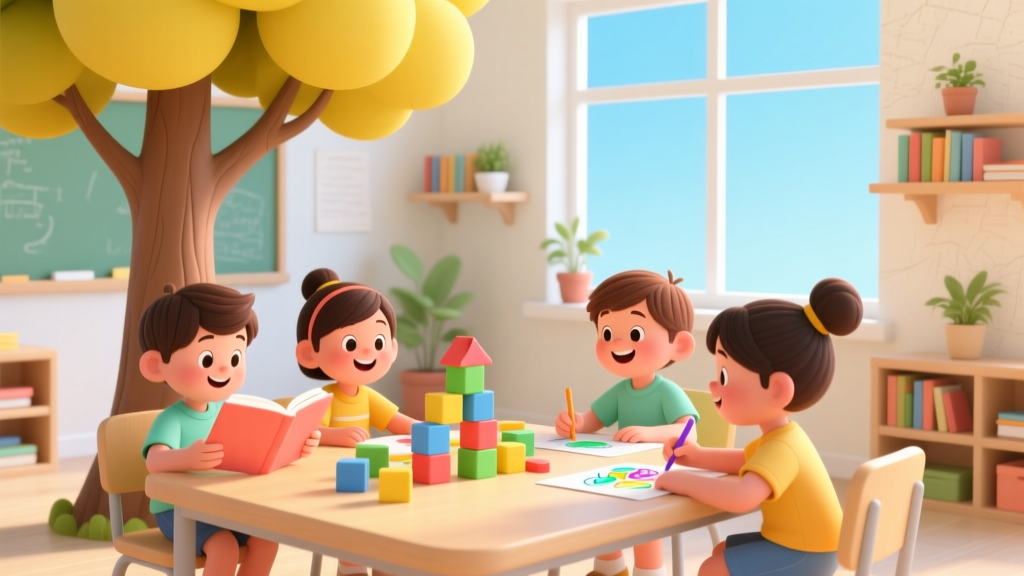
What Is a Gateway Kid? Truth, Myths & Support
Why 'What Is a Gateway Kid?' Isn’t Just a Buzzword—It’s a Mirror for Modern Parenting Anxiety
If you’ve scrolled through parenting forums, TikTok feeds, or even whispered the phrase in hushed tones at preschool pickup, you’ve likely encountered the term what is a gateway kid. It’s not in any pediatric textbook—but it’s become shorthand for a very real phenomenon: the child whose quirks, intensity, sensitivity, or unconventional interests seem to magnetically attract peers who share similar traits—or who, in turn, shape entire social ecosystems. Think of the 7-year-old who starts every lunchtime conversation about deep-sea bioluminescence and ends up leading a school-wide marine biology club; or the 10-year-old whose meticulous Minecraft redstone builds quietly draw in three classmates who later co-found a coding afterschool group. These kids don’t just participate—they catalyze. But here’s what most parents miss: labeling a child a 'gateway kid' isn’t neutral. It carries unconscious assumptions about influence, conformity, and even desirability—and when applied without nuance, it risks pathologizing authenticity.
What makes this moment urgent? Because digital visibility has amplified both celebration and scrutiny. A child’s unique spark can go viral overnight—sometimes as ‘adorable genius,’ sometimes as ‘concerning outlier.’ And while educators and therapists increasingly recognize the value of neurodiverse leadership styles, many parents still receive zero guidance on how to nurture these children without over-identifying them with labels—or worse, inadvertently pressuring them to ‘perform’ their uniqueness for approval. This article cuts through the noise. We’ll define the term with precision—not as slang, but as a cultural signal—and equip you with developmentally grounded tools, real classroom case studies, and expert insights from child psychologists and inclusion specialists.
Decoding the Term: What ‘Gateway Kid’ Really Means (and What It Doesn’t)
Let’s start with clarity: ‘Gateway kid’ is not a clinical, educational, or diagnostic term. You won’t find it in the DSM-5, AAP guidelines, or IEP frameworks. Instead, it emerged organically from parent-led online spaces—particularly Reddit’s r/Parenting, Facebook autism-support groups, and TikTok hashtags like #NeurodivergentLeadership—as a way to name a subtle but powerful social dynamic. At its best, it describes a child who, through sheer authenticity, becomes an access point for others to explore identities, interests, or ways of being they hadn’t previously felt safe expressing.
Dr. Lena Cho, a developmental psychologist and co-author of Belonging Beyond Labels, explains: “We see this most often in kids with high cognitive empathy, strong pattern recognition, and low social masking instinct—they don’t dilute themselves to fit in, so others feel permission to stop doing so too. That’s not influence; it’s resonance.”
Crucially, the ‘gateway’ isn’t about popularity or charisma in the traditional sense. It’s about relational safety. Consider Maya, a 9-year-old diagnosed with ADHD-inattentive type, who began sketching intricate fantasy maps during silent reading time. When her teacher displayed one (with permission), two classmates quietly asked if they could join her ‘Cartographer’s Guild.’ Within weeks, the group expanded to include a nonverbal autistic student who communicated via illustrated storyboards—and a shy English-language learner who found voice through co-designing map legends. No adult orchestrated it. The ‘gateway’ was Maya’s unselfconscious joy, made visible and honored.
But misuse abounds. Some parents mistakenly equate ‘gateway kid’ with ‘socially contagious’—as if neurodivergence or intense interests are diseases to be contained. Others conflate it with leadership in conventional terms (e.g., class president), overlooking how gateway dynamics often thrive outside hierarchies. And perhaps most harmfully, some schools subtly steer these children toward ‘special’ roles (e.g., ‘peer mentor for neurodivergent students’) before assessing whether that aligns with the child’s own agency or energy capacity.
Three Evidence-Based Ways to Support a Gateway Kid—Without Losing Sight of Their Individuality
Supporting a gateway kid isn’t about managing their influence—it’s about protecting their autonomy while honoring their relational impact. Here’s how to do it with intentionality:
- Practice ‘Influence Literacy’ With Your Child: Help them understand their role—not as a leader or spokesperson, but as a co-creator of community. Use age-appropriate language: “When you share your idea about building a rain garden, other kids get excited and want to help. That’s cool! But you don’t have to decide everything—or fix anyone’s feelings. What part feels fun to you? What part feels like too much?” A 2023 study in Child Development found that children aged 6–12 who received explicit coaching in boundary-setting within peer-led projects showed 42% higher sustained engagement and 31% lower emotional exhaustion than those encouraged only to ‘be helpful.’
- Create ‘Low-Stakes Launchpads’ for Their Interests: Gateway dynamics flourish when interests are shared—not showcased. Replace ‘talent show’ formats with collaborative, process-focused spaces: a ‘Curiosity Wall’ where kids post unanswered questions (not answers); a ‘Materials Lab’ with open-ended supplies (wood scraps, circuit kits, fabric swatches) labeled ‘Try anything—no instructions needed’; or a ‘Story Swap’ where each child contributes one sentence to a collective tale. These minimize performance pressure while maximizing organic connection.
- Partner With Educators Using the ‘Three-Pillar Framework’: Advocate for classroom structures that honor gateway dynamics without overburdening the child:
- Pillar 1: Choice Architecture — Offer multiple ways to contribute (e.g., ‘You can sketch the habitat, code the simulation, or interview classmates about what animals they’d protect’).
- Pillar 2: Role Rotation — Ensure no child is permanently cast as ‘the expert’ or ‘the helper.’ Rotate documentation, materials management, and facilitation duties weekly.
- Pillar 3: Exit Ramps — Build in clear, stigma-free ways to step back: a ‘Quiet Signal’ card, a designated ‘idea incubator’ corner, or pre-agreed phrases like ‘I’m brainstorming solo today.’
As Dr. Aris Thorne, an inclusive education consultant who trains over 200 schools annually, emphasizes: “The goal isn’t to amplify the gateway kid’s voice—it’s to multiply the conditions where every child’s voice can find its frequency. That’s true inclusion.”
When ‘Gateway’ Signals Something Deeper: Red Flags vs. Healthy Uniqueness
Not all standout behavior signals gateway potential—and some patterns warrant closer attention. Distinguishing between healthy divergence and emerging needs requires context, consistency, and collaboration. Below is a comparison table synthesizing guidance from the American Academy of Pediatrics (AAP), the National Institute of Mental Health (NIMH), and longitudinal data from the UCLA Center for Neurodiversity Research:
| Behavior Pattern | Healthy Gateway Indicator | Emerging Concern Requiring Support | Recommended Next Step |
|---|---|---|---|
| Intense Focus on Specific Topics | Child initiates deep dives voluntarily; shifts topics based on curiosity; shares knowledge with genuine enthusiasm (not compulsion); tolerates interruptions or redirection. | Fixation causes distress when interrupted; interferes with sleep, meals, or hygiene; replaces social interaction rather than enhancing it; accompanied by physical signs of anxiety (e.g., stimming that causes injury). | Consult pediatrician + developmental-behavioral specialist; request school-based occupational therapy screening. |
| Social ‘Pull’ Toward Peers | Child draws others in through shared interest or calm presence; relationships feel reciprocal and low-pressure; peers initiate contact across settings (recess, clubs, neighborhood). | Child appears exhausted after interactions; peers consistently mirror the child’s speech patterns/movements without independent expression; adult reports note ‘one-sided’ dynamics or lack of mutual enjoyment. | Observe interactions with trained school psychologist; explore sensory-social mismatch (e.g., child seeks deep connection but peers interpret intensity as demand). |
| Nonconformity in Expression | Child experiments with clothing, pronouns, art styles, or routines with playful confidence; adapts presentation based on context (e.g., wears glitter socks to school but plain shoes to grandma’s); expresses pride in self-defined identity. | Child expresses shame or secrecy about preferences; hides interests from trusted adults; shows marked distress around identity-related questions; avoids mirrors or photos. | Engage affirming counselor specializing in gender/identity development; connect with local PFLAG chapter or Gender Spectrum resources. |
This table underscores a critical principle: gateway behavior is defined by relational generosity—not isolation, rigidity, or distress. As licensed clinical social worker Maya Ruiz notes, “If your child’s uniqueness feels like a bridge, it’s likely healthy. If it feels like a barricade—even a beautiful one—it’s time to gently explore what’s behind it.”
Real-World Case Study: How One School Transformed ‘Gateway Energy’ Into Systemic Change
In 2022, Maplewood Elementary (a diverse K–5 public school in Portland, OR) noticed a pattern: three students—Leo (age 8, dyspraxic, obsessed with urban planning), Samira (age 9, selectively mute, created elaborate stop-motion films), and Jordan (age 10, twice-exceptional, built functional solar ovens from recycled parts)—were repeatedly named by peers as ‘the reason I joined robotics,’ ‘how I learned to tell stories,’ and ‘who taught me my first circuit.’ Staff initially worried about over-reliance. Then, principal Dr. Elena Vargas shifted focus: What if we designed the ecosystem—not the kids—to scale?
The result was the ‘Spark & Sustain’ Initiative:
- Spark Stations: Mobile carts stocked with low-barrier, high-potential materials (e.g., ‘Build-a-Bridge’ kits with flexible connectors; ‘Story Starters’ cards with image prompts; ‘Energy Explorers’ solar panels + LED arrays) placed in common areas—not classrooms—to invite organic, cross-grade engagement.
- Sustain Circles: Small, rotating peer groups (4–5 students) meeting biweekly with a trained paraprofessional to co-plan one ‘micro-project’ (e.g., redesigning the library checkout system, creating a sensory-friendly hallway map). Gateway kids participated—but never led by default.
- Adult Learning Pods: Monthly workshops for teachers and aides on ‘recognizing relational catalysts,’ featuring video clips of authentic peer interactions (with consent) and guided reflection on power dynamics in child-led learning.
Within one year, Maplewood saw a 68% increase in cross-grade collaboration, a 41% drop in unstructured recess conflicts, and—most tellingly—a 92% participation rate in student-led initiatives (up from 33%). Crucially, Leo, Samira, and Jordan all reported higher daily joy scores on school well-being surveys. As Samira shared in her end-of-year reflection (via typed message): “I don’t have to be the only one who knows how to make movies. Now everyone gets to try. And that’s better.”
Frequently Asked Questions
Is ‘gateway kid’ the same as ‘gifted’ or ‘twice-exceptional’?
No—though there’s overlap. Giftedness refers to advanced cognitive abilities measured against norms; twice-exceptionality (2e) describes individuals with both giftedness and a learning difference (e.g., dyslexia, ADHD). ‘Gateway kid’ describes a relational role—how a child’s presence and authenticity shape group dynamics. A child can be a gateway kid without being formally identified as gifted (e.g., a highly empathetic child with intellectual disability who calms peers during transitions), and vice versa. The key distinction: gateway status is contextual and observed, not assessed.
Should I encourage my child to be a ‘gateway kid’?
Encouraging a child to *be* a gateway kid misunderstands the concept entirely. It’s not a role to pursue—it’s a natural outcome of safety, authenticity, and supportive environments. Pushing a child into this space risks burnout, resentment, or loss of self-trust. Instead, ask: How can I create conditions where my child feels safe to be exactly who they are—and where others feel safe to do the same?
My child seems to attract peers who struggle socially. Am I responsible for ‘managing’ those relationships?
No—and attempting to do so often backfires. Children develop social competence through authentic, unscripted interaction—including navigating friction, misunderstanding, and repair. Your role is to provide scaffolding (e.g., ‘I notice Kai joins your Lego builds often. What do you enjoy about building with him?’), not curation. If concerns arise (e.g., imbalance, exclusion), collaborate with school counselors using observation-based language—not assumptions about intent.
Can neurotypical kids be ‘gateway kids’?
Absolutely—and this is vital to recognize. Gateway dynamics aren’t exclusive to neurodivergent children. A neurotypical child who consistently validates peers’ emotions, mediates conflicts with humor and fairness, or champions inclusive play norms can serve the same catalytic function. What matters isn’t neurological status, but relational availability: the capacity to hold space without expectation.
Common Myths
Myth 1: “Gateway kids are naturally born leaders who should be put in charge.”
Reality: Leadership implies hierarchy and decision-making authority. Gateway dynamics are horizontal and emergent—not top-down. Assigning formal leadership roles to these children often drains their energy and distorts peer relationships. True gateway impact comes from shared ownership—not delegation.
Myth 2: “If my child isn’t a gateway kid, they’re socially disconnected or lacking charisma.”
Reality: Social contribution takes infinite forms. Some children build deep 1:1 bonds, others thrive in parallel play, and many express connection through art, animals, or nature—not peer groups. Gateway status reflects one specific social pattern, not overall relational health.
Related Topics (Internal Link Suggestions)
- Supporting Intense Interests in Children — suggested anchor text: "how to nurture your child's passionate interests"
- Neurodiversity-Affirming Parenting Strategies — suggested anchor text: "neurodiversity-affirming parenting tips"
- Building Inclusive Classroom Communities — suggested anchor text: "inclusive classroom strategies for teachers"
- Understanding Twice-Exceptional (2e) Children — suggested anchor text: "what does twice-exceptional mean"
- Helping Sensitive Children Thrive — suggested anchor text: "supporting highly sensitive children"
Conclusion & CTA
So—what is a gateway kid? They’re not a category to file, a trait to optimize, or a label to claim. They’re a living reminder that human connection isn’t about fitting in—it’s about resonating deeply enough that others feel permission to show up, too. The most powerful thing you can do isn’t to identify your child as a gateway kid—but to ask yourself daily: Where did I create space today for someone else’s authenticity to land safely?
Your next step? Download our free ‘Relational Resonance Checklist’—a one-page PDF with 7 evidence-based prompts to assess and strengthen the conditions for authentic connection in your home or classroom. It includes reflection questions, observational cues, and actionable micro-strategies—all grounded in AAP and NIMH guidelines. Because supporting a gateway kid isn’t about changing them—it’s about changing the world around them.
More Articles
 Why Charlie Clark Hides Kids’ Ages (2026)
 Where Are Ruby Franke’s Youngest Kids Now? (2026)
 Is Millie Bobby Brown a Nepo Kid? (2026)
 Why Kids Resemble Parents: Science Behind Facial Similarity
 Booster Seat Age Guidelines: When to Start & Stop
 How Many Kids Does Puff Have? (2026)
 Where to Watch Kids Safely in 2026
 Does Nicole Kidman Have Kids? Her Family Journey Explained
 Kids Eat Free Thursday Near Me (2026)
 MomTok Moms’ Kids Count: Verified Family Sizes (2026)