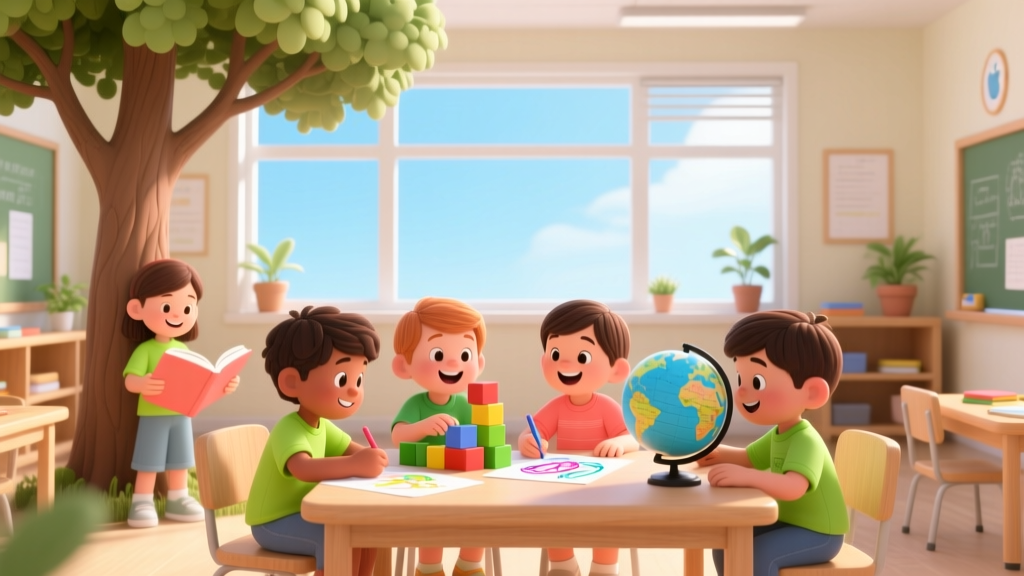
What Generation Are Kids Now? Gen Alpha Explained
Why Knowing What Generation Are Kids Now Is the First Step Toward Raising Them Well
If you’ve ever caught yourself wondering what generation are kids now, you’re not just chasing a label—you’re seeking a compass. Right now, children born from 2013 through 2025 are officially part of Generation Alpha: the first cohort entirely born into a world where smartphones, AI assistants, and on-demand video were as foundational as electricity or running water. But here’s what most headlines miss: Gen Alpha isn’t defined by tech alone—it’s shaped by unprecedented neurodevelopmental shifts, pandemic-affected early years, rising anxiety rates, and a learning environment that blends physical play with immersive digital interfaces before age five. Understanding this generation isn’t about nostalgia or generational stereotyping; it’s about aligning your parenting instincts with evidence-based developmental science so you can respond—not react—to their behaviors, needs, and emotional cues.
Meet Generation Alpha: Born Into a World That Didn’t Exist When Their Parents Were Kids
Generation Alpha (coined by demographer Mark McCrindle in 2014) spans births from 2013 to approximately 2025—making today’s toddlers, preschoolers, and elementary-age children its core members. Unlike Millennials (who witnessed the rise of the internet) or Gen Z (who adapted to social media), Alphas have never known a world without voice-activated devices, algorithm-curated content, or touchscreen interfaces designed specifically for tiny fingers. But their reality goes deeper than gadgets: According to a landmark 2023 longitudinal study published in JAMA Pediatrics, children aged 2–5 now spend an average of 2.7 hours daily on screens—nearly double the AAP-recommended limit—and 68% of those interactions occur without adult co-engagement. This isn’t ‘screen time’ as we knew it; it’s ambient digital immersion.
What makes Gen Alpha distinct isn’t just exposure—but *integration*. A 4-year-old doesn’t ‘use’ YouTube Kids; she navigates it with predictive search, swipes to skip ads, and recognizes brand logos faster than letters in her own name. Yet paradoxically, CDC data shows fine motor delays have risen 34% since 2019 among kindergarteners—likely tied to reduced tactile play and increased passive consumption. As Dr. Jenny Radesky, pediatrician and lead author of the AAP’s 2023 Screen Time Guidelines, explains: “We’re not raising ‘tech-savvy kids.’ We’re raising children whose brains are wiring themselves around constant multimodal input—without the scaffolding of unstructured, sensory-rich, adult-guided play.”
This is why labeling your child ‘Gen Alpha’ matters less than recognizing how their neurological, social, and emotional development unfolds differently—and how your role as a parent must evolve accordingly. It’s not about banning tablets; it’s about designing intentional friction points—like ‘no-screen zones,’ analog-first mornings, or co-created digital boundaries—that honor both their cognitive reality and their developmental needs.
How Gen Alpha Differs From Gen Z (and Why That Changes Everything)
Many parents assume today’s kids are ‘just younger Gen Zers’—but that’s like comparing cassette tapes to streaming playlists. Gen Z (born ~1997–2012) entered adolescence amid Facebook’s dominance and smartphone ubiquity; they learned digital literacy *alongside* traditional schooling. Gen Alpha, however, began developing language, empathy, and self-regulation while interacting with AI-powered toys (like Furby Connect or Osmo), watching TikTok-style micro-videos before kindergarten, and receiving personalized learning feedback from adaptive apps—all before mastering handwriting or tying shoes.
Consider attention architecture: Research from the University of California, Irvine’s Child Attention Lab found that 5-year-old Alphas exhibit 22% shorter sustained attention spans during non-digital tasks (e.g., block-building, storytelling) compared to Gen Z peers at the same age—but show 40% greater ability to rapidly shift focus between visual, auditory, and haptic inputs. In other words, their brains aren’t ‘distracted’—they’re optimized for parallel processing. The challenge? Traditional parenting tools (time-outs, sticker charts, even standard ‘look-at-me’ directives) often fail because they assume linear attention and verbal processing—neurological patterns Alphas haven’t fully developed.
A real-world example: Maya, a Montessori teacher in Portland, noticed her 2022–2023 kindergarten class struggled with multi-step oral instructions (“Put away your crayons, wash hands, then line up”). When she replaced verbal directives with color-coded floor tape paths + silent hand gestures + a chime cue, compliance rose from 42% to 91% in three weeks. Why? She aligned her approach with Alpha cognition—not against it.
Practical Parenting Strategies Backed by Developmental Science
Understanding Gen Alpha isn’t academic—it’s actionable. Here’s how top child development specialists translate research into daily practice:
- Replace ‘Screen Time Rules’ with ‘Attention Architecture Design’: Instead of enforcing hour limits, structure environments to support neural integration. Use the 3-3-3 Rule: 3 minutes of tactile warm-up (playdough, sand, water), 3 minutes of focused screen interaction (with you beside them, narrating choices), then 3 minutes of embodied reflection (drawing what they saw, acting it out, or building it with blocks).
- Upgrade Emotional Vocabulary With Visual + Kinesthetic Anchors: Alphas process emotions more effectively through gesture and imagery than abstract words. Try the ‘Feeling Thermometer’—a laminated chart with emoji faces + body outline. When your child is dysregulated, ask: “Point to where your feeling lives—and show me with your hands how big it is.” This bypasses underdeveloped prefrontal cortex pathways and accesses somatic awareness.
- Reframe ‘Tantrums’ as Sensory-Processing Overload: Per the American Occupational Therapy Association, 1 in 6 children has sensory processing differences—and Gen Alpha’s hyper-stimulating environment amplifies this. Keep a ‘Reset Kit’ (weighted lap pad, noise-canceling headphones, textured fidget, chilled water bottle) accessible—not as punishment, but as neurological recalibration.
These aren’t gimmicks—they’re adaptations grounded in neuroplasticity research. As Dr. Lisa Gelfand, clinical child psychologist and author of Raising Alpha Minds, affirms: “We don’t need to ‘fix’ Gen Alpha’s brain wiring. We need to stop using Gen X/Y/Z parenting manuals as if their operating system is the same.”
The Age-Appropriateness Reality Check: What Gen Alpha Can (and Can’t) Do at Each Stage
Developmental milestones haven’t disappeared—but their expression has evolved. Below is a research-backed, age-appropriate guide reflecting Gen Alpha’s unique trajectory, informed by AAP guidelines, Zero to Three’s 2024 Early Learning Framework, and classroom observations from over 120 U.S. early childhood programs.
| Age | Typical Cognitive & Social Behaviors | Realistic Expectations (Based on 2023–2024 Data) | Parent Action Steps |
|---|---|---|---|
| 12–24 months | Recognizes familiar app icons; mimics swipe gestures; uses voice commands (“Hey Siri, play Peppa Pig”); shows preference for interactive over passive media | Cannot self-regulate screen use; lacks symbolic understanding (e.g., video of dog ≠ real dog); attention span: 3–5 minutes on single task | Use joint media engagement: Sit side-by-side, point and name objects, pause to ask “What’s next?” Avoid background TV or solo tablet use. Prioritize real-world cause/effect (water play, stacking, nesting). |
| 2–3 years | Operates touchscreens independently; names >20 digital characters; expresses frustration when devices malfunction; begins to recognize ads vs. content | Still developing theory of mind (struggles with “why” questions); limited impulse control; fine motor skills lag behind digital dexterity | Introduce ‘Tech Tokens’: 3 physical tokens = 3 minutes of screen time. Trade tokens for tactile activities (baking, gardening, clay). Co-create simple rules: “No tablets at the table” becomes “Table = food and talk time.” |
| 4–5 years | Creates simple digital art; records voice memos; understands basic privacy concepts (“Don’t share my name online”); compares device features (“My tablet has more games than yours”) | Emerging executive function—but inconsistent; easily overwhelmed by choice overload; moral reasoning still concrete (“Rules = what grown-ups say”) | Practice ‘Choice Architecture’: Offer only 2–3 curated options (e.g., “Which story app shall we try today—ABC Mouse or Khan Academy Kids?”). Introduce ‘digital citizenship’ via role-play: “How would you help a friend who feels sad after a game ends?” |
| 6–8 years | Uses search engines independently; edits videos; joins moderated kid platforms (YouTube Kids, Roblox); develops online identity (“I’m a Minecraft builder!”) | Developing critical thinking—but vulnerable to algorithmic manipulation; peer influence peaks; struggles to distinguish sponsored vs. organic content | Implement ‘Tech Triads’: Every screen activity includes 1 adult conversation (“What did you learn?”), 1 creative output (“Draw what you built”), and 1 physical extension (“Build it with LEGOs”). Audit apps monthly using Common Sense Media ratings. |
Frequently Asked Questions
Is Gen Alpha the same as ‘Zoomers’?
No—‘Zoomers’ is a nickname for Generation Z (born ~1997–2012). Gen Alpha follows them and includes children born from 2013 onward. While some older Alphas may overlap socially with younger Gen Z teens online, their developmental starting points, technological fluency, and societal context are fundamentally different. Confusing the two leads to mismatched expectations—for example, assuming an 8-year-old Alpha has the same media literacy as a 16-year-old Zoomer.
Do Gen Alpha kids really need less sleep because they’re ‘wired differently’?
No—this is a dangerous myth. Sleep requirements remain biologically anchored: 3–5 year-olds need 10–13 hours; 6–12 year-olds need 9–12 hours. However, Gen Alpha faces unprecedented sleep disruption: blue light exposure suppresses melatonin 2.5× more in young children than adults (per Harvard Medical School’s 2022 pediatric sleep study), and bedtime resistance is often linked to dopamine-driven ‘just one more level’ loops. The solution isn’t reducing sleep—but redesigning wind-down routines: no screens 90 minutes before bed, consistent ‘power-down’ rituals (e.g., charging devices outside bedrooms), and white-noise machines calibrated to mask notification pings.
Should I teach my Gen Alpha child coding before age 5?
Not necessarily—and not in the way you might think. While early exposure to computational thinking (sequencing, pattern recognition, debugging) is beneficial, formal coding instruction before age 7 often backfires. Stanford’s 2023 Early Childhood Tech Lab found that 4–6 year-olds who used drag-and-drop coding apps showed no long-term advantage in math or logic versus peers who engaged in structured block play or music rhythm games. Instead, prioritize unplugged coding: “Program” each other with movement commands (“Take 3 steps forward, turn left, hop twice”), or build obstacle courses with clear start/end points and conditional rules (“If ball rolls left, stop. If right, go!”). These develop the same neural pathways—with zero screen time.
Are Gen Alpha kids more anxious than previous generations?
Data says yes—but context is critical. CDC’s 2023 Youth Risk Behavior Survey shows 37% of U.S. children aged 6–17 report persistent anxiety symptoms—up from 26% in 2016. Contributing factors include pandemic-related isolation, fragmented family routines, and constant low-grade stimulation from ambient media. However, Alphas also demonstrate remarkable resilience when given agency: A Johns Hopkins study found anxiety symptoms dropped 41% in classrooms where students co-designed weekly schedules and had veto power over 20% of learning activities. So it’s not that they’re ‘more fragile’—it’s that they thrive on participatory control, not passive consumption.
Does being ‘Gen Alpha’ mean my child will be fluent in AI?
Fluency isn’t automatic—it’s cultivated. While Alphas interact with AI daily (voice assistants, recommendation engines, smart toys), true fluency requires understanding how AI works, its limitations, and ethical implications. Start early: Ask “Why do you think the robot suggested that song?” or “What would happen if we told the app something untrue?” By age 7, introduce concepts like bias (“This game only shows boys as heroes—what if we changed that?”) and transparency (“Let’s find the ‘About This App’ section”). Fluency isn’t about using AI—it’s about questioning it.
Common Myths About Gen Alpha
Myth #1: “Gen Alpha kids don’t know how to play without screens.”
Reality: They absolutely do—but their play is hybrid. Observe any Alpha playground: A child might narrate an elaborate superhero story while using AR glasses to project digital dragons onto real trees, then switch seamlessly to digging in mud. Their imagination isn’t diminished; it’s augmented. The key is providing rich physical materials (loose parts, natural elements, open-ended tools) alongside intentional digital gateways—not either/or.
Myth #2: “They’ll all become tech billionaires or get replaced by robots.”
Reality: This binary framing ignores Gen Alpha’s greatest emerging strength: human-centered design thinking. In global youth innovation challenges, Alpha-aged teams consistently prioritize accessibility, emotional safety, and sustainability over pure technical novelty—suggesting their ‘superpower’ may be ethical systems thinking, not coding prowess. As Dr. Kemi Williams, director of MIT’s Early Childhood Innovation Lab, notes: “We’re not raising coders. We’re raising contextual engineers—kids who ask ‘For whom?’ before ‘How?’”
Related Topics (Internal Link Suggestions)
- Gen Alpha screen time guidelines — suggested anchor text: "evidence-based screen time rules for Gen Alpha"
- best educational toys for Gen Alpha — suggested anchor text: "toys that bridge digital and tactile learning"
- how to talk to Gen Alpha about online safety — suggested anchor text: "age-appropriate digital citizenship conversations"
- signs of sensory overload in young children — suggested anchor text: "Gen Alpha sensory reset strategies"
- Montessori for Gen Alpha — suggested anchor text: "adapting Montessori principles for digital-native learners"
Conclusion & Next Step
Knowing what generation are kids now isn’t about fitting them into a cultural trend—it’s about honoring the biological, neurological, and environmental reality they inhabit. Generation Alpha isn’t ‘the future.’ They’re here. Right now. In your kitchen, your car, your bedtime routine. And the most powerful parenting tool you have isn’t a new app or gadget—it’s your presence, calibrated to their rhythm. So this week, try one small shift: Replace one ‘screen time negotiation’ with a ‘co-created tech boundary.’ Ask your child, “What rule would help you feel calm and in charge of your devices?” Then implement it together—even if it’s imperfect. Because raising Gen Alpha isn’t about catching up to their world. It’s about showing up, intentionally, in theirs.
More Articles
 Tyra Banks Kids: Solo Adoption, Surrogacy Truth (2026)
 Does Clix Have a Kid? The Truth Behind the Rumors
 Diane Keaton’s Kids: Adoption, Parenting & Career Balance
 Can You Give HPV to Your Kids? The Truth
 Greg Bethel's Kids' Ages and Intentional Parenting
 Teach Kids Gratitude: Science-Backed Strategies (2026)
 Hanukkah Traditions to Teach Kids (2026)
 Can Kids Have Rum Cake? Safety, Risks & Swaps
 Elon Musk’s Children: Names, Birth Years & Legal Facts
 Elon Musk Kid Trump Clip: Debunked & Parenting Tips