
What Does OT Do for Kids? Real Answers (2026)
Why Understanding What OT Does for Kids Is One of the Most Empowering Parenting Decisions You’ll Make This Year
When parents ask what does OT do for kids, they’re often coming from a place of quiet concern—not crisis. Maybe your kindergartener avoids messy play, struggles to hold a pencil without fatigue, melts down at birthday parties, or still can’t tie shoes at age 8. You’ve heard ‘OT helps with fine motor skills,’ but that barely scratches the surface. In reality, pediatric occupational therapy is the invisible scaffolding behind foundational life skills: self-regulation, body awareness, emotional resilience, and executive function. And crucially—it’s not just for children with diagnoses. According to the American Occupational Therapy Association (AOTA), up to 1 in 6 children experience sensory or motor challenges significant enough to impact daily participation—and early, targeted OT support can prevent years of academic frustration, social withdrawal, and eroded self-esteem.
What OT Does for Kids: Beyond Handwriting and Scissors
Occupational therapy for children isn’t about ‘fixing’—it’s about unlocking potential through purposeful, playful, and deeply individualized intervention. Unlike physical therapy (which focuses on mobility and strength) or speech therapy (which targets communication), OT centers on occupation: the everyday activities that give kids meaning, connection, and competence. For a 4-year-old, occupation includes building block towers, taking turns in circle time, or tolerating the texture of glue on fingers. For a 10-year-old, it’s organizing homework folders, navigating peer conflict, or managing anxiety before a spelling test.
Dr. Elena Torres, a pediatric OT with 18 years of clinical experience and faculty at the University of Southern California’s Chan Division of Occupational Science and Therapy, puts it this way: ‘We don’t teach kids how to “do school”—we teach them how to be ready for school. That means helping their nervous system settle, their hands coordinate, their eyes track, their bodies understand personal space, and their brains plan and sequence tasks—all before they even open a textbook.’
Here’s how that translates into tangible outcomes:
- Sensory Processing Integration: OT helps kids interpret and respond appropriately to sights, sounds, touch, movement, and internal cues (like hunger or bladder pressure). A child who covers ears in the cafeteria or refuses socks may not be ‘defiant’—they may be overwhelmed by unprocessed sensory input. OT uses evidence-based frameworks like Ayres Sensory Integration® to build neurological capacity for regulation.
- Executive Function Coaching: This includes working memory, cognitive flexibility, and inhibitory control—the ‘air traffic control system’ of the brain. OTs use visual schedules, chunked task cards, and metacognitive language (e.g., ‘What’s your first step? What might go wrong? How will you check your work?’) to strengthen these skills long before middle school demands escalate.
- Self-Care Mastery: From toothbrushing routines to menstrual hygiene for tweens, OT breaks down complex, multi-step activities using backward chaining (starting with the last step and adding backward) and adaptive tools—building autonomy while reducing caregiver burden.
- Play as Assessment & Intervention: Play isn’t downtime—it’s diagnostic gold. An OT observes how a child initiates interaction, negotiates rules, handles losing, sequences pretend scenarios, and adapts when materials change. These observations directly inform goals and strategies far more authentically than standardized tests alone.
The Real-World Impact: Stories from Families Who Didn’t Wait for ‘Labels’
Consider Maya, age 6, referred for OT after her teacher noted she’d ‘shut down’ during writing tasks—even though her drawings were detailed and imaginative. Standard vision screening was normal, but an OT discovered subtle ocular motor inefficiency: her eyes struggled to track smoothly across a line, causing fatigue and avoidance. With just 12 weeks of targeted visual-motor integration games (like balloon volleyball with letter targets and ‘eye yoga’ tracking exercises), Maya went from refusing to write her name to independently drafting three-sentence stories.
Then there’s Leo, age 9, whose parents described him as ‘bright but disorganized’—constantly losing assignments, forgetting lunch, and frustrated by timed math drills. His OT didn’t focus on math facts. Instead, they co-created a personalized ‘homework launchpad’ (a laminated checklist with tactile icons), introduced a ‘brain break’ timer synced to his natural attention rhythm (25 minutes on / 5 minutes of proprioceptive input), and taught him to use color-coded folders *before* he opened his backpack. Within two months, his teacher reported a 70% reduction in missing work—and Leo proudly declared, ‘I’m not lazy. I just needed better tools.’
These aren’t outliers. A 2023 longitudinal study published in the American Journal of Occupational Therapy followed 142 children receiving school-based OT for sensory-motor challenges. At 18-month follow-up, 86% showed measurable gains in classroom participation, 79% demonstrated improved task initiation, and parents reported significantly lower stress levels—regardless of whether the child had an IEP or formal diagnosis.
When to Consider OT: The Age-Appropriate Red Flags (Not Just Milestones)
Developmental checklists are helpful—but they often miss the functional ‘why’ behind delays. Pediatric OT looks at how a skill impacts daily life, not just if it’s present. Below is an age-appropriate guide grounded in both AAP guidelines and clinical best practices—not rigid cutoffs, but patterns worth exploring with an OT if multiple items apply consistently over 2–3 months.
| Age Range | Functional Red Flags (Look for Patterns, Not Single Incidents) | Why It Matters | First Step |
|---|---|---|---|
| 3–5 years | • Avoids playground equipment (swings, slides) or seeks excessive spinning/jumping • Gags or gags at food textures beyond typical picky eating • Can’t copy a circle or cross; grip is immature (fist-like or thumb-wrapped) • Needs full hand-over-hand help for buttoning/zipping |
Sensory processing and foundational motor skills underpin later learning. Early intervention capitalizes on neuroplasticity. | Consult your pediatrician and request a referral to a pediatric OT for screening. Many clinics offer free 15-minute consults. |
| 6–8 years | • Illegible handwriting despite practice; fatigues quickly when writing • Struggles with multi-step directions (e.g., ‘Get your book, open to page 12, and underline the bold words’) • Frequently bumps into peers or misjudges personal space • Meltdowns triggered by unexpected transitions or clothing tags |
These reflect emerging executive function and self-regulation demands. Unaddressed, they correlate strongly with academic avoidance and social isolation by upper elementary. | Request an occupational therapy evaluation through your school district (free under IDEA) or pursue private evaluation. Ask specifically for assessment of sensory processing, visual-motor integration, and praxis (motor planning). |
| 9–12 years | • Cannot organize backpack, locker, or homework assignments independently • Avoids group projects or team sports due to coordination or social uncertainty • Uses only one ‘safe’ strategy for emotional regulation (e.g., shutting down or yelling) • Difficulty with time estimation (e.g., thinks 10 minutes = 30 minutes) |
Adolescence brings exponential increases in organizational and social complexity. OT builds metacognitive awareness—the ability to observe and adjust one’s own thinking and behavior. | Seek an OT experienced in adolescent development. Look for providers who integrate coaching, mindfulness-based strategies, and collaboration with school counselors. |
What to Expect in OT Sessions: Play, Purpose, and Partnership
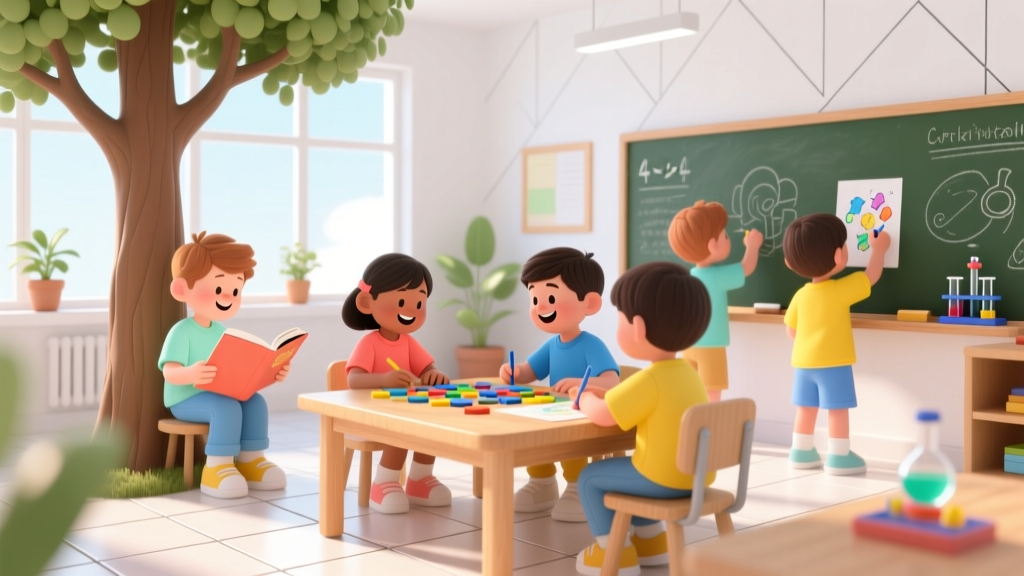
Forget sterile clinics and worksheets. Modern pediatric OT happens where kids thrive: on crash pads, in obstacle courses, at art tables, and even in grocery stores. Sessions are intentionally playful—but rigorously goal-directed. Here’s how a typical 45-minute session unfolds for a child working on self-regulation and fine motor control:
- Warm-Up (5 min): Heavy work (wall pushes, tug-of-war with resistance bands) to activate proprioception—calming the nervous system and improving body awareness.
- Core Skill Building (25 min): Activity embedded with therapeutic intent—e.g., creating a ‘pizza’ with play dough (strengthening hand muscles), placing pepperoni on a grid (visual-motor tracking and counting), then negotiating toppings with a peer (social pragmatics and turn-taking).
- Generalization Practice (10 min): Transferring the skill to a real-world context—e.g., using newly strengthened hands to open a lunchbox, or applying the ‘first-then’ visual schedule to clean up toys.
- Collaborative Wrap-Up (5 min): Child and therapist review ‘what worked,’ ‘what was tricky,’ and co-create one home strategy—empowering the child as an active agent in their growth.
Crucially, effective OT is never siloed. The best practitioners partner closely with parents, teachers, and other specialists. As Dr. Torres emphasizes: ‘My job isn’t to “fix” a child in 45 minutes. It’s to equip families and schools with strategies they use every day—so progress isn’t confined to the clinic.’ That means sharing simple, actionable tools: a weighted lap pad for circle time, a fidget tool with specific tactile feedback, or a ‘homework flowchart’ printed on the fridge.
Frequently Asked Questions
Is OT only for kids with autism or ADHD?
No—this is one of the most persistent myths. While OT is vital for many children with neurodevelopmental differences, it’s equally impactful for kids with no diagnosis who struggle with sensory sensitivities, coordination delays, anxiety-related avoidance, or executive function gaps. In fact, school-based OT services are available to any student whose challenges significantly impact their ability to access the curriculum—even without an official label.
How is OT different from tutoring or behavior therapy?
Tutoring targets academic content; behavior therapy (like ABA) focuses on modifying observable behaviors. OT addresses the underlying foundational capacities that make learning and behavior possible: sensory processing, motor planning, body awareness, emotional regulation, and environmental adaptation. You wouldn’t tutor a child struggling to hold a pencil—you’d address the hand strength, visual-motor integration, and postural control that make writing physically possible.
Can OT help with screen time or tech use?
Absolutely—and in ways most parents don’t expect. OTs help kids develop digital literacy *and* self-regulation: teaching them to recognize physical cues of screen fatigue (dry eyes, stiff neck), use timers and app blockers mindfully, distinguish between passive scrolling and creative tech use (coding, animation, music production), and build ‘tech transition rituals’ (e.g., 5-minute breathing exercise before logging off). It’s about building agency—not restriction.
What’s the difference between school-based and private OT?
School-based OT is legally mandated (under IDEA) only when a child’s needs directly impact their educational performance—and goals must align with academic access. Private OT offers broader scope: addressing home routines, community participation, social-emotional health, and family dynamics. Many families use both: school OT for handwriting and classroom accommodations, private OT for sleep hygiene, mealtime challenges, or sibling dynamics.
How many sessions does a child typically need?
There’s no universal answer—it depends entirely on goals, consistency of home practice, and the child’s neurology. Some children see marked improvement in 8–12 sessions for a targeted goal (e.g., mastering shoe laces). Others engage in ongoing, episodic support across developmental transitions (e.g., starting middle school, puberty, high school). The gold standard is ‘collaborative discharge’: when the child, family, and team identify sustainable strategies and know how to troubleshoot independently.
Common Myths About What OT Does for Kids
- Myth #1: OT is just ‘handwriting therapy.’
While handwriting is a frequent goal, it’s merely one output of underlying systems—visual perception, core strength, shoulder stability, and bilateral coordination. OT addresses those roots so handwriting (and countless other skills) emerge naturally.
- Myth #2: If my child is ‘smart,’ they don’t need OT.
Intelligence and functional skill are separate neural pathways. A child can excel at abstract reasoning yet struggle to organize their backpack or regulate emotions during group work. OT bridges that gap—ensuring cognitive strengths aren’t undermined by unmet sensory or motor needs.
Related Topics (Internal Link Suggestions)
- Signs Your Child Needs Occupational Therapy — suggested anchor text: "early signs your child might benefit from OT"
- How to Find a Qualified Pediatric Occupational Therapist — suggested anchor text: "how to choose the right pediatric OT"
- OT Activities You Can Do at Home — suggested anchor text: "simple, research-backed OT games for home"
- Sensory Processing Disorder Explained — suggested anchor text: "what is SPD and how does it affect learning?"
- IEP vs. 504 Plan: What Parents Need to Know — suggested anchor text: "OT services through your child's IEP or 504"
Your Next Step Starts With Curiosity—Not Crisis
Understanding what does OT do for kids isn’t about labeling or pathologizing—it’s about expanding your toolkit as a parent. It’s recognizing that when your child resists brushing teeth, struggles to join a game at recess, or crumples homework in frustration, there’s likely a neurologically sound reason—and a compassionate, evidence-based path forward. You don’t need permission to explore support. Start small: observe one daily routine with fresh eyes (e.g., ‘What part of getting dressed feels hardest—and what sensation or skill might be involved?’), jot down patterns for two weeks, and share them with your pediatrician or school counselor. Because the most powerful thing OT gives kids isn’t just new skills—it’s the quiet, unshakeable belief that ‘I can figure this out.’ And that belief? It starts with you asking the question.
More Articles
 How Many Kids Has Elon Musk (2026)
 Where Do Kids Eat Free Near Me? (2026)
 Disney Cruise Rail Safety: What Parents Must Know
 TikTok Kids Mode Gone in 2026 and Safer Alternatives
 Is Unspeakable Safe for Kids? (2026)
 Energy Drinks for Kids: 7 Hidden Risks (2026)
 Jeffrey Epstein Kids: What Parents Must Know (2026)
 How Kids Learn: 5 Brain-Backed Truths (2026)
 Are Shih Tzus Good With Kids? Evidence-Based Guide
 Can Kids Take Imodium AD? Pediatric Safety Facts