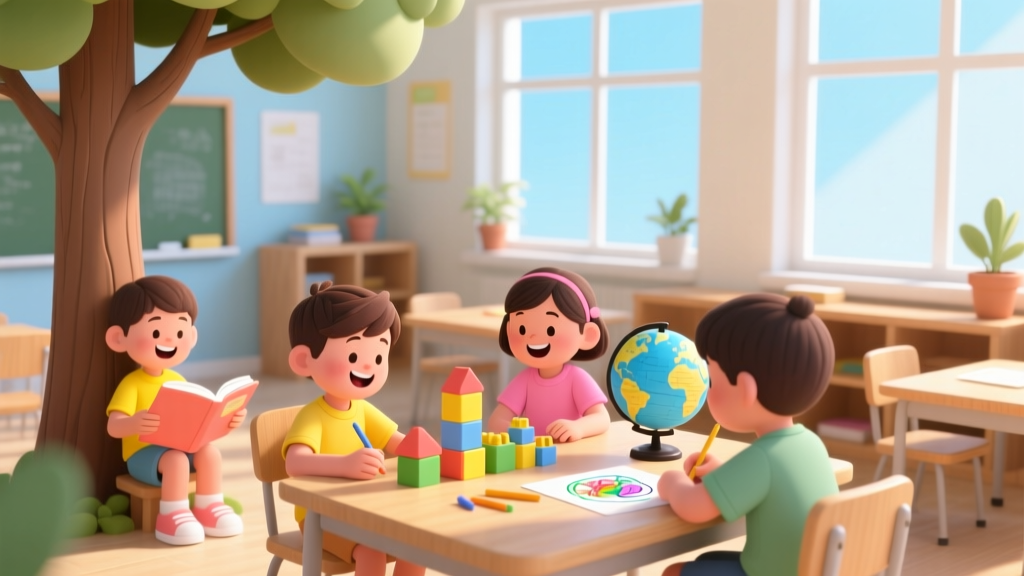
What Do Kids Learn in Preschool? (2026)
Why This Question Matters More Than Ever Right Now
If you’ve ever watched your 3-year-old stack blocks for 20 minutes, sing the same nursery rhyme off-key while dancing barefoot, or melt down over a broken crayon—and wondered, What do kids learn in preschool?—you’re not overthinking. You’re tuning into one of the most consequential developmental windows of human life. Preschool isn’t ‘baby-sitting with glitter.’ It’s where neural pathways for self-regulation, language precision, collaborative problem-solving, and even mathematical intuition are actively wired—often before formal instruction begins. And with kindergarten expectations rising (62% of U.S. districts now require letter-sound fluency and basic number sense at entry, per NIEER 2023), understanding what kids learn in preschool isn’t just curiosity—it’s strategic preparation.
The 4 Pillars of Preschool Learning (Beyond ABCs & 123s)
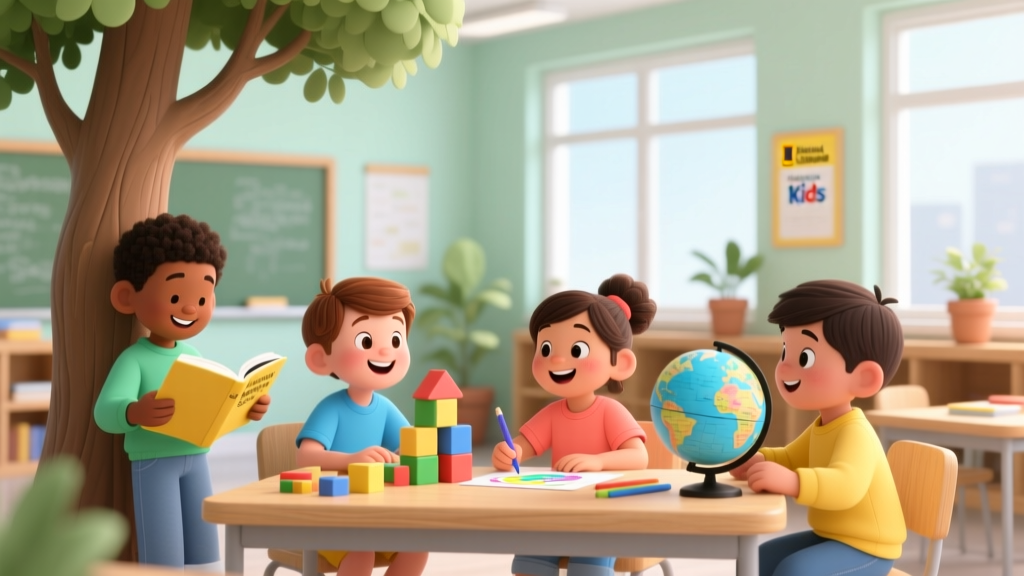
Early childhood education doesn’t follow a textbook syllabus. Instead, it’s intentionally structured around four interlocking developmental domains—each reinforced daily through play, routines, and responsive adult scaffolding. Here’s how they actually unfold:
Social-Emotional Intelligence: Where Empathy Gets Its First Practice Lab
Preschool is the first real-world classroom for emotional literacy. Children don’t just ‘learn to share’—they practice recognizing facial cues in peers, naming their own feelings (“I feel frustrated because my tower fell”), and co-regulating with adults during transitions. A landmark 2022 longitudinal study published in Child Development tracked 1,200 children from preschool through 8th grade and found that those who demonstrated strong emotion regulation skills by age 5 were 47% more likely to achieve grade-level reading by third grade—and had significantly lower rates of behavioral referrals.
How it happens: Teachers use ‘feeling charts’ with photos of diverse facial expressions; introduce ‘peace corners’ with breathing tools; and model ‘I-statements’ (“I feel worried when scissors aren’t put away—can we make a plan together?”). One teacher in Portland, OR, shared how her class created a ‘Friendship Fix-it’ routine: when conflict arises, children choose from laminated cards showing options like ‘Ask for help,’ ‘Take space,’ or ‘Use kind words.’ No lectures—just practiced, repeatable scripts.
Executive Function: The Invisible Curriculum That Powers All Learning
This is the domain most parents overlook—and the one researchers call ‘the single strongest predictor of academic and life success’ (Dr. Adele Diamond, UBC Cognitive Neuroscientist, Science, 2020). Executive function includes working memory (holding instructions in mind), cognitive flexibility (shifting between tasks or rules), and inhibitory control (resisting impulses). In preschool, this looks like: lining up without touching, remembering 3-step directions (“Put your coat in cubby, wash hands, sit at table”), or playing ‘Red Light, Green Light’—a deceptively simple game that trains brain braking.
Actionable tip: At home, replace vague requests (“Clean up!”) with executive-function-building prompts: “Can you remember the three things we do before snack? 1) Wash hands, 2) Push in your chair, 3) Sit quietly at the table.” Say it once. Wait. Let them retrieve it from memory. Research shows this builds working memory faster than repetition alone.
Foundational Literacy & Numeracy: Not Worksheets—Sensory, Story-Rich, and Movement-Based
Forget flashcards. What kids learn in preschool is language architecture and number sense—not rote memorization. They hear 30,000+ words weekly in rich, varied conversation (per Hart & Risley’s seminal research); manipulate phonemes by clapping syllables in names (“Sa-man-tha = 3 claps”); match sounds to symbols using sandpaper letters or magnetic phonemes; and explore quantity through pouring water, counting steps, or comparing groups of buttons (“Which basket has MORE?”).
Numeracy isn’t counting to 20—it’s subitizing (instantly recognizing small quantities without counting), understanding ‘more/less/same,’ and grasping one-to-one correspondence. A Montessori-inspired preschool in Austin uses ‘Number Beads’—colored wooden beads strung in groups of 1–10—to let children physically feel the difference between ‘5’ and ‘9.’ When they hold both, the weight and length difference makes abstract quantity tangible.
Physical Development: Fine & Gross Motor Skills Woven Into Every Activity
Preschool motor development is never isolated ‘exercise time.’ It’s embedded: threading beads onto yarn strengthens pincer grasp for future pencil control; climbing ladders builds core stability needed for sitting upright during lessons; scooping rice into containers develops bilateral coordination; and dancing to rhythm patterns improves timing and sequencing—foundational for reading fluency.
According to the American Academy of Pediatrics’ 2022 guidelines, 60+ minutes of active play daily—including at least 30 minutes of vigorous activity—is essential for neural pruning and proprioceptive development. Yet only 23% of preschoolers meet this benchmark (CDC, 2023). High-quality programs counter this by designing movement into transitions: ‘Hop like a frog to the carpet,’ ‘Crawl like a bear to line up,’ or ‘Balance like a flamingo while waiting for glue.’
| Preschool Activity | Primary Developmental Domain | Real-World Skill Built | Evidence-Based Impact |
|---|---|---|---|
| Building with unit blocks (wooden cubes, cylinders, arches) | Cognitive + Physical | Spatial reasoning, hand-eye coordination, early engineering concepts | Children who engage in block play 3x/week show 22% higher spatial visualization scores by age 7 (University of Delaware, 2021) |
| Shared book reading with open-ended questions (“What do you think will happen next?”) | Language + Social-Emotional | Vocabulary expansion, narrative comprehension, perspective-taking | Each additional 10 minutes/day of dialogic reading correlates with 1.8-month vocabulary gain (NIH Early Language Intervention Study) |
| Small-group cooking (measuring cups, stirring, peeling bananas) | Executive Function + Sensory Processing | Sequencing, attention to detail, tolerance for texture/mess, safety awareness | Children with regular cooking experiences demonstrate 34% stronger impulse control on delay-of-gratification tasks (Journal of Nutrition Education, 2020) |
| Outdoor nature scavenger hunt (find something smooth, something that smells, something that moves) | Sensory Integration + Language | Descriptive vocabulary, observation skills, scientific curiosity, environmental awareness | Preschoolers in nature-rich programs show 27% lower cortisol levels and 19% longer sustained attention spans (University of Illinois, 2022) |
Frequently Asked Questions
Is preschool really necessary—or is it just ‘nice to have’?
It depends on quality—but high-fidelity preschool delivers measurable returns. A 2023 meta-analysis in Review of Educational Research found that children in evidence-based, play-rich programs (not drill-and-kill academies) gained an average of 8 months of language development and 6 months of math readiness versus peers in low-quality or no preschool. Crucially, benefits were strongest for children experiencing economic hardship—closing opportunity gaps, not widening them. AAP recommends preschool for all children starting at age 3, emphasizing social-emotional scaffolding over academic acceleration.
How much academic instruction should my preschooler be getting?
Zero formal ‘instruction’—and that’s intentional. What appears as ‘no academics’ is actually deep, implicit learning. When a child sorts buttons by color and size, they’re building classification logic—the foundation for algebraic thinking. When they negotiate turn-taking on the slide, they’re practicing negotiation, fairness, and rule application—skills vital for civic participation. According to Dr. Laura Jana, pediatrician and author of The Toddler Brain, ‘Pushing worksheets before age 5 doesn’t create ‘smarter’ kids—it creates kids who associate learning with stress and compliance.’
What if my child isn’t ‘keeping up’ with peers in preschool?
Development is not linear—and preschool is designed for wide variation. A child who struggles with circle time may excel at building complex structures or telling elaborate stories. Look for growth in *their* trajectory: Does your child now wait 30 seconds before grabbing a toy instead of instantly? Can they name two emotions accurately? Do they initiate one interaction per day? These are meaningful wins. If concerns persist beyond 3–4 months, request a developmental screening through your state’s Early Intervention program (free under IDEA Part C)—not a ‘diagnosis,’ but a snapshot of strengths and support needs.
How can I reinforce preschool learning at home—without turning it into ‘homework’?
Stop trying to replicate school. Instead, amplify the work already happening: narrate your actions (“I’m pouring milk—watch how the level rises in the cup”), ask ‘how’ and ‘why’ questions during walks (“Why do you think that leaf is red?”), and protect unstructured time. A 2023 study in Pediatrics found that children with ≥1 hour of daily unstructured play showed significantly stronger creativity scores and lower anxiety biomarkers. Your role isn’t teacher—it’s co-explorer, safe witness, and vocabulary amplifier.
What certifications or credentials should I look for in a preschool program?
Prioritize programs with: (1) Lead teachers holding a BA in Early Childhood Education or Child Development, (2) Staff trained in trauma-informed practices and positive behavior support, and (3) Accreditation from NAEYC (National Association for the Education of Young Children)—the gold standard requiring evidence-based curriculum, low staff-child ratios (max 1:10 for 4-year-olds), and ongoing professional development. Avoid programs advertising ‘accelerated academics’ or using standardized testing with children under 6.
Common Myths About Preschool Learning
Myth #1: “If they’re not writing letters or doing worksheets, they’re falling behind.”
Reality: Handwriting requires fine motor maturity that most 4-year-olds haven’t fully developed. Premature pencil grip training can cause muscle fatigue and aversion. The National Association of School Psychologists states that formal handwriting instruction should begin no earlier than age 5.5—and even then, it starts with chalkboards, clay, and vertical surfaces—not lined paper.
Myth #2: “Preschool is mostly about socialization—academic learning comes later.”
Reality: Socialization is academic learning. Negotiating roles in dramatic play builds narrative structure (essential for reading comprehension). Collaborative block-building teaches geometry, physics, and engineering principles. Sharing materials requires understanding fractions (“half the playdough”). As Dr. Lilian Katz, pioneer of the Project Approach, says: ‘There is no such thing as non-academic play in early childhood. Play is the highest form of research.’
Related Topics (Internal Link Suggestions)
- Signs Your Child Is Ready for Preschool — suggested anchor text: "preschool readiness checklist"
- Montessori vs. Reggio Emilia vs. Play-Based Preschools — suggested anchor text: "best preschool philosophy for your child"
- How to Choose a Preschool: 12 Questions to Ask on Tour — suggested anchor text: "preschool tour questions"
- At-Home Preschool Activities That Actually Work — suggested anchor text: "play-based learning activities"
- When to Worry About Speech Delay in Preschoolers — suggested anchor text: "speech milestones by age 4"
Your Next Step: Observe With New Eyes
You now know what kids learn in preschool isn’t hidden in lesson plans—it’s visible in the way your child pauses before grabbing a toy, hums a new song with accurate pitch, carefully places a puzzle piece after rotating it twice, or offers a tissue to a crying friend. The next time you visit their classroom—or watch them play at home—don’t ask, ‘What did they learn today?’ Instead, ask: ‘What skill was being exercised in that moment?’ Then, name it aloud: ‘You waited so patiently—that’s your growing self-control!’ or ‘You figured out how to balance the tower—that’s your amazing problem-solving brain!’ That simple act of recognition wires neural pathways deeper than any worksheet ever could. Ready to see your child’s learning in action? Download our free Preschool Skill Spotting Guide—a printable checklist with photos, real examples, and gentle prompts to help you notice and nurture growth, every single day.
More Articles
 Melatonin for Kids: Safety, Dosing & Safer Alternatives
 Andrea Sneiderman Custody Reunification: What Parents Need
 How Many Kids Does Meredith Grey Have? (2026)
 Mitochondrial Issues in Autism: What Parents Need to Know
 How Many Kids Does Emily Belle Freeman Have?
 How Much Caffeine Can Kids Have? (2026)
 How Old Are Chip and Joanna Gaines’ Kids? (2026)
 How to Treat Pinworms in Kids: Pediatrician-Approved Guide
 How Many Kids Does Evander Holyfield Have? (2026)
 How Kids Get Cold Sores: Truth, Prevention & Care