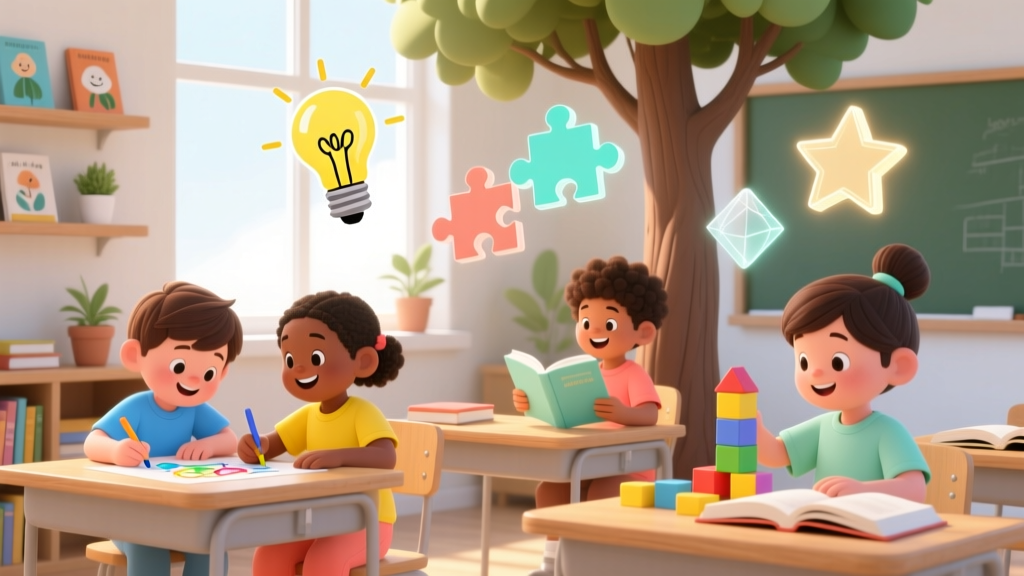
Kids' Strengths: Build Resilience & Confidence
Why "What Are Kids' Strengths?" Is the Most Underrated Question in Modern Parenting
Every day, millions of parents quietly ask themselves: What are kids strengths? Not the ones highlighted on report cards or recital programs—but the subtle, persistent patterns of joy, focus, persistence, and connection that reveal who their child truly is at their core. This isn’t about labeling or pigeonholing; it’s about seeing your child with precision and compassion. In an era where standardized testing, overscheduled routines, and social comparison dominate childhood, recognizing innate strengths has become a protective act—one that buffers against anxiety, fuels intrinsic motivation, and lays the foundation for authentic adulthood. Research from the University of Pennsylvania’s Positive Psychology Center shows children whose caregivers consistently affirm their character strengths (like curiosity, kindness, or perseverance) demonstrate 37% higher emotional regulation scores by age 10—and are twice as likely to persist through academic challenges.
Your Child’s Strengths Aren’t Just ‘Talents’—They’re Neurological Signatures
Strengths aren’t synonymous with giftedness or achievement. They’re recurring, energizing patterns—ways of thinking, feeling, and behaving that light up your child’s nervous system. When 8-year-old Maya spends 45 uninterrupted minutes arranging her stuffed animals into elaborate diplomatic negotiations, she’s not ‘just playing’—she’s exercising advanced perspective-taking, conflict resolution, and narrative reasoning. When 6-year-old Leo dismantles the toaster (again), he’s not being defiant—he’s demonstrating systems-thinking, causal curiosity, and tactile problem-solving. These aren’t ‘cute quirks.’ They’re observable, measurable expressions of neurodevelopmental wiring.
According to Dr. Lisa Damour, clinical psychologist and author of The Emotional Lives of Teenagers, “Strengths-based parenting doesn’t mean ignoring challenges—it means anchoring discipline, learning, and growth in what already works for the child. A child who feels seen for who they are—not just for what they produce—is far more receptive to feedback and coaching.”
Here’s how to spot them authentically:
- Look for ‘flow moments’: When does time disappear for your child? What activity makes them lose track of hunger, fatigue, or external distractions? Flow isn’t always loud or visible—it might be silent concentration while sketching, intense listening during storytime, or methodical sorting of LEGO pieces by color and size.
- Notice energy shifts: Does your child return from soccer practice drained—or buzzing with ideas about team strategy? Does math homework trigger resistance, but designing a fantasy map for a D&D campaign spark hours of focused drafting? Energy is data.
- Track language clues: Listen for verbs and adjectives they use spontaneously: “I figured it out,” “I helped Sam feel better,” “This fits together perfectly,” “I knew it would work because…” These reveal underlying cognitive and emotional frameworks.
From Observation to Action: Turning Strengths Into Real-World Support
Spotting a strength is step one. Leveraging it intentionally is where transformation happens. Consider this real case study from Seattle-based educator and strengths coach Anya R., who worked with 9-year-old Kai, labeled ‘disruptive’ in third grade for frequent off-topic questions and ‘excessive’ peer mediation attempts:
“Kai wasn’t ‘off-task’—he was hyper-tuning into social dynamics no adult was noticing. His ‘interruptions’ were pattern recognition: spotting when a classmate was overwhelmed before the teacher did. We reframed his role as ‘Class Empathy Ambassador,’ giving him structured ways to check in, co-create classroom norms, and lead peer listening circles. Within 8 weeks, his ‘behavior referrals’ dropped to zero—and his reading comprehension scores rose 22% because he finally felt psychologically safe enough to engage deeply.”
This isn’t anecdotal magic. It’s evidence-based practice. The VIA Youth Survey—a validated, free assessment used in over 1,200 schools—identifies 24 character strengths (e.g., fairness, gratitude, creativity, leadership) with strong predictive validity for well-being and academic engagement. But assessments alone aren’t enough. You need context.
Try this 3-step strength activation framework:
- Validate & Name: “I notice you love explaining how things work to your little brother—that shows amazing clarity and patience. That’s a real strength.” Avoid vague praise (“You’re so smart!”); name the specific behavior and its underlying quality.
- Connect to Challenge: “When your science project felt overwhelming, you used that same clear-explaining skill to break it into steps. How else could that strength help you here?” Link strengths to current struggles—this builds metacognition.
- Create Micro-Opportunities: Assign tiny, meaningful roles that activate the strength: “You’re great at noticing when people feel left out—could you help plan our picnic seating so everyone has a buddy?”
The Hidden Cost of Strength Blindness—and How to Reverse It
When caregivers overlook or misinterpret strengths, the consequences compound silently. A child whose linguistic creativity is dismissed as ‘talking too much’ may suppress verbal expression, leading to writing anxiety in middle school. A child whose meticulous attention to detail is labeled ‘perfectionism’ may internalize shame around effort, avoiding complex tasks altogether. The American Academy of Pediatrics warns that chronic misalignment between a child’s natural wiring and adult expectations is a key predictor of early-onset anxiety and academic disengagement.
Worse, many well-intentioned efforts backfire. Enrolling a kinesthetic, big-movement learner in endless piano lessons (‘to build discipline’) or pushing a deeply empathic child into competitive debate (‘to toughen them up’) doesn’t ‘fix’ weakness—it erodes self-trust. As Dr. Kenneth Ginsburg, pediatrician and resilience expert, states: “Resilience isn’t forged in adversity alone—it’s built on the bedrock of competence. And competence grows fastest when children experience mastery in domains that align with their innate design.”
So what should you do instead? Prioritize alignment over acceleration. Here’s what that looks like across common developmental domains:
| Observed Strength Pattern | What It Likely Reveals | Low-Pressure Ways to Nurture It | Risk of Ignoring It |
|---|---|---|---|
| Spends hours building intricate block structures, then narrates complex stories about them | Spatial reasoning + narrative intelligence + symbolic thinking | Provide open-ended materials (wood blocks, clay, cardboard); invite storytelling without correction; ask “What happens next?” instead of “What is it?” | May disengage from literacy activities if forced into rigid phonics drills before developing narrative confidence |
| Notices when friends seem sad and offers specific comfort (“Do you want quiet time or a hug?”) | Advanced emotional perception + response flexibility + ethical reasoning | Give age-appropriate caregiving roles (helping younger siblings with routines); discuss character dilemmas in books/movies; validate their moral observations | Risk of emotional exhaustion or resentment if constantly relied upon as ‘therapist’ without boundaries or reciprocity |
| Asks relentless “why” questions—even about mundane things like sink drains or cloud shapes | Systems-thinking + causal reasoning + intellectual courage | Use “I don’t know—let’s find out together” as a mantra; visit museums, labs, or maker spaces; model research skills (library searches, interviewing experts) | May develop distrust of authority or shut down inquiry if questions are dismissed as “annoying” or met with defensiveness |
| Draws detailed maps of imaginary worlds, complete with legends and terrain keys | Abstract representation + organizational logic + world-building imagination | Introduce cartography basics, GIS tools for kids, or collaborative world-building games; celebrate documentation over ‘artistic skill’ | Potential mismatch in art classes focused on realism or technique, leading to avoidance of creative subjects |
Frequently Asked Questions
How early can I reliably identify my child’s strengths?
Core strengths begin emerging clearly between ages 3–5, though foundational patterns (like sensory preferences or attention style) appear in infancy. Look for consistency—not isolated incidents. If your 4-year-old repeatedly organizes toys by category, negotiates fair turns, or invents rules for pretend play across multiple contexts, that’s data. Avoid labeling before age 5; instead, document patterns in a private journal: “March 12: Spent 20 mins adjusting blanket forts until ‘walls felt safe.’ Used ‘because’ 7 times explaining choices.” Patterns > labels.
What if my child’s biggest strength seems ‘impractical’—like making people laugh or noticing tiny changes in nature?
These are among the most vital strengths. Humor is a sophisticated blend of timing, empathy, perspective-shifting, and emotional regulation—skills critical for leadership and mental health. Noticing micro-changes (a bird’s feather shift, a plant’s new leaf) reflects acute observational intelligence and patience—foundational for scientists, designers, and therapists. Reframe ‘impractical’ as ‘under-recognized.’ Help your child articulate the skill behind the behavior: “You have a gift for reading rooms—and that helps people feel welcome.”
My child has learning differences (ADHD, dyslexia, autism). Do strengths work differently for them?
Absolutely—and this is where strength-spotting becomes essential. Neurodivergent children often develop profound compensatory strengths: exceptional pattern recognition, visual-spatial memory, oral storytelling, or systems navigation. Yet these are frequently overshadowed by deficit-focused evaluations. The Autism Speaks Strengths-Based Framework emphasizes documenting what a child *does* well *in their own way*—not how closely they mirror neurotypical benchmarks. Example: A nonverbal autistic child who calms peers during transitions by handing out specific fidget tools is demonstrating executive function, emotional attunement, and leadership. Document it. Celebrate it. Build from it.
Can strengths change or fade over time?
Core strengths (like curiosity or fairness) remain relatively stable, but their expression evolves with development, culture, and opportunity. A child whose strength is ‘physical courage’ at age 6 (climbing the tallest slide) may channel it into ‘moral courage’ at 12 (standing up to bullying). Strengths can also lie dormant under chronic stress or mismatched environments—then re-emerge powerfully when conditions shift. Think of strengths as muscles: they strengthen with use, atrophy without it, but never vanish entirely.
How do I talk about strengths with teachers or therapists without sounding dismissive of challenges?
Lead with collaboration: “We’ve noticed [child] lights up when [strength behavior]. How might we weave that into their learning plan? For example, could they explain math concepts to peers (leveraging communication strength) while practicing computation?” Frame strengths as tools for accessing goals—not alternatives to support. Share concrete examples, not labels. Teachers respond to actionable insights, not abstractions.
Common Myths About Kids’ Strengths
- Myth #1: “Strengths are the same as talents or achievements.”
Truth: Talents are observable skills (e.g., hitting a baseball); strengths are the underlying motivations and patterns that make skill acquisition sustainable (e.g., relentless practice fueled by competitive drive or love of strategy). A child may have zero athletic talent but immense strength in perseverance, teamwork, or strategic analysis—visible on the chess team or robotics club.
- Myth #2: “Focusing on strengths means ignoring weaknesses.”
Truth: Strengths-based development is the most effective pathway to addressing challenges. Research from the Gallup Organization shows students who receive strengths-based coaching improve in targeted ‘growth areas’ 3x faster than those receiving deficit-only feedback—because they approach difficulty with agency, not shame.
Related Topics (Internal Link Suggestions)
- How to Talk to Kids About Their Emotions — suggested anchor text: "emotion coaching for children"
- Age-Appropriate Chores That Build Responsibility — suggested anchor text: "chores by age chart"
- Signs of Anxiety in Children (and What to Do Next) — suggested anchor text: "childhood anxiety symptoms"
- Montessori Principles for Home Learning — suggested anchor text: "Montessori at home"
- Screen Time Guidelines by Age (AAP-Approved) — suggested anchor text: "healthy screen time for kids"
Conclusion & Your Next Step
Understanding what are kids strengths isn’t about compiling a resume for childhood—it’s about cultivating a lens of deep attention and respectful curiosity. Every time you name a strength accurately (“You kept trying even when it was hard—that’s grit”), you reinforce neural pathways linked to self-efficacy. Every time you design a small task that activates a strength (“You’re great at noticing details—could you help me spot typos in this email?”), you build executive function and belonging. Start today: grab a notebook and spend 3 days observing—not judging, not fixing, just witnessing. Note three moments where your child seemed fully alive, capable, or connected. Then ask yourself: What inner capacity made that possible? That’s where your most powerful parenting begins.
More Articles
 Does Pediasure Help Kids Gain Weight? (2026)
 Where Are Ruby Franke Kids Now? (2026)
 What Age for Braces for Kids? The Evidence-Based Sweet Spot
 Toe-Walking in Autistic Kids: Causes & Support (2026)
 Uvalde Shooting Kids Died: Support After Trauma
 Is Wednesday Appropriate for Kids? (2026)
 Why Doesn’t the Kid from Stranger Things Have Teeth?
 How Common Are Pinworms in Kids? (2026)
 Greenlight for Kids: What Parents Really Need to Know
 Phones Bad for Kids? What Research Reveals (2026)