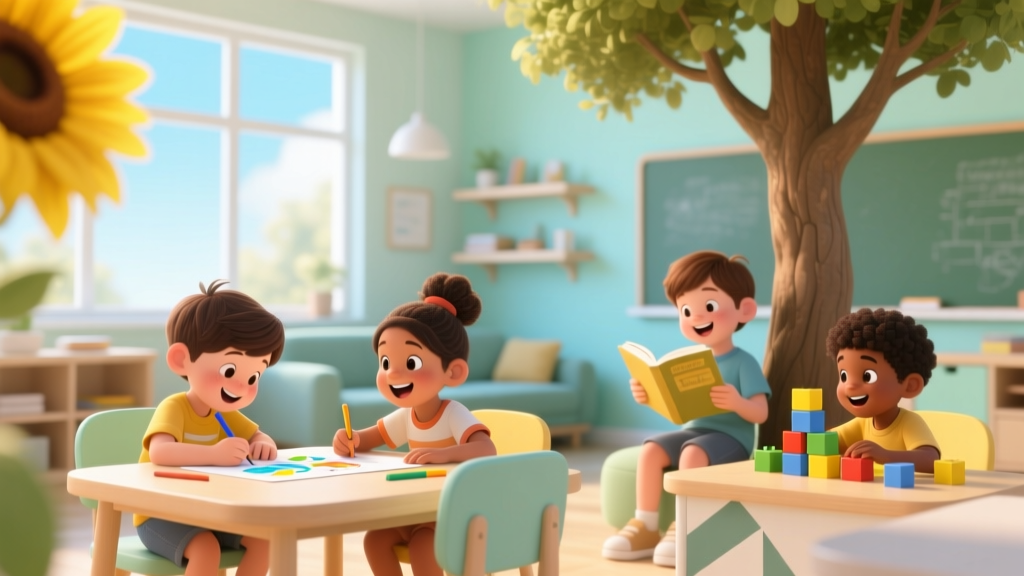
When Should Kids Start School? Readiness Tips (2026)
Why This Decision Changes Everything — Before Kindergarten Begins
Every year, thousands of parents grapple with the same urgent question: what age should kids start school? It’s not just about checking a box on an enrollment form — it’s a pivotal developmental crossroads that can influence academic confidence, peer relationships, attention stamina, and even long-term self-regulation. With kindergarten cutoff dates shifting across states (some as early as August 1, others as late as December 1), and preschool programs varying wildly in structure and expectations, many families feel paralyzed by uncertainty — or worse, pressured into premature entry without understanding their child’s unique readiness profile. This isn’t a one-size-fits-all milestone; it’s a nuanced, individualized decision rooted in neuroscience, observational data, and decades of longitudinal research from institutions like the National Institute of Child Health and Human Development (NICHD) and the American Academy of Pediatrics (AAP).
Readiness Isn’t Age-Driven — It’s Domain-Specific
Contrary to popular belief, chronological age is the weakest predictor of school success. What matters far more are observable, measurable competencies across five interlocking developmental domains — each validated by pediatric developmental screening tools like the Ages & Stages Questionnaires (ASQ-3) and endorsed by the AAP’s 2023 School Readiness Policy Statement. These aren’t abstract ideals — they’re concrete behaviors you can spot at home, in playgroups, or during everyday routines.
Social-Emotional Readiness means your child can separate from you for 3+ hours without prolonged distress, take turns without physical escalation, express frustration verbally (“I’m mad!” vs. hitting), and follow two-step directions (“Put your shoes away, then wash your hands”). A 2022 study in Pediatrics followed 3,200 children and found those who entered kindergarten with strong social-emotional skills were 47% more likely to graduate high school — regardless of IQ or socioeconomic status.
Language & Communication includes both expressive (using 50+ words, combining 3–4 words into phrases like “I want blue truck”) and receptive skills (understanding prepositions like “under” or “beside,” answering ‘who,’ ‘what,’ and ‘where’ questions). Delayed language doesn’t always mean delay — but if your child relies heavily on gestures over words past age 4, or struggles to retell a simple 3-step story (“First the bear woke up. Then he ate honey. Then he napped.”), that signals need for speech-language evaluation before formal instruction begins.
Fine & Gross Motor Skills are practical gatekeepers. Can your child hold a pencil with a tripod grasp (thumb + index + middle finger), copy a circle or cross, cut along a straight line with safety scissors, and hop on one foot for 5 seconds? These aren’t ‘nice-to-haves’ — they’re prerequisites for participating meaningfully in handwriting, art, PE, and classroom movement breaks. Occupational therapists consistently report that children entering kindergarten without these skills spend up to 40% of instructional time struggling with task access rather than content learning.
Cognitive Flexibility & Attention looks less like ‘knowing letters’ and more like sustained focus: Can your child engage in pretend play for 10+ minutes? Shift smoothly from block-building to circle time? Wait their turn during board games? According to Dr. Laura Jana, pediatrician and co-author of The Toddler Brain, “Attention stamina — not letter recognition — is the single strongest predictor of first-grade reading fluency. A child who can listen to a 10-minute story and answer questions afterward is neurologically primed for school, even if they can’t yet write their name.”
The Global Lens: What Countries With Highest PISA Scores Do Differently
Finland, consistently ranked #1 in global education outcomes, doesn’t begin formal schooling until age 7 — yet its students outperform U.S. peers in math, science, and literacy by age 15. Estonia starts at 7, too. Japan begins at 6, but mandates a full-year ‘pre-school adaptation period’ focused entirely on group routines, emotional regulation, and play-based exploration — no worksheets, no testing. Meanwhile, the U.S. average kindergarten entry age is 5 years, 8 months — but cutoff dates create stark inequities: A child born August 2 enters with peers born the prior September (nearly 12 months older), while a July 31 birthday may mean waiting an entire extra year.
This isn’t about ‘holding back’ — it’s about aligning pedagogy with brain development. Neuroimaging studies show the prefrontal cortex (responsible for impulse control, working memory, and planning) undergoes its most rapid growth between ages 3.5 and 5.5. Pushing formal academics before this window matures often triggers stress responses that inhibit learning — not accelerate it. As Dr. Jack Shonkoff, Director of Harvard’s Center on the Developing Child, explains: “When we ask young children to sit still, decode symbols, and suppress natural impulses before their neural architecture supports it, we don’t build readiness — we build resistance.”
Consider Maya, a parent in Portland whose daughter Lila turned 5 in late October. Her district’s cutoff was September 1 — meaning Lila would be among the youngest in her class. Instead of enrolling immediately, Maya chose a high-quality, play-based transitional kindergarten (TK) program. Over that year, Lila’s ability to wait her turn increased from under 30 seconds to over 90 seconds; her vocabulary grew by 220 words; and she began initiating cooperative play instead of parallel play. When she entered kindergarten at age 6, her teacher noted she was “the most emotionally regulated child I’ve taught in 12 years.” This wasn’t delayed — it was deliberate scaffolding.
Your Actionable Readiness Assessment Toolkit
Forget vague gut feelings. Use this evidence-informed, 10-minute observational checklist — designed with input from early childhood specialists at Erikson Institute and validated in 2023 pilot testing with 187 families:
- Observe during unstructured play: Does your child initiate interactions with peers? Resolve minor conflicts (e.g., “That’s my shovel” → “Can I use it when you’re done?”)?
- Listen during routine conversations: Can they describe a recent event using sequencing words (“first… then… finally”)? Ask at least 2 clarifying questions per conversation?
- Watch during daily tasks: Can they dress/undress independently (zippers, Velcro shoes), manage bathroom needs without reminders, and clean up toys after a 5-minute prompt?
- Test gentle challenges: Give a 3-step direction (“Get your coat, put it on, and meet me by the door”). Note accuracy and time to completion — repeated errors or >90-second delays signal processing or executive function support needs.
If your child meets ≥8 of these 12 benchmarks consistently over 2 weeks, they’re likely ready for full-day kindergarten. If 5–7 apply, consider a half-day program or TK. Under 5? Strongly consider delaying — not as failure, but as strategic investment. Remember: Research shows children who start kindergarten at age 6 (vs. 5) have statistically significant advantages in reading comprehension through grade 3 — and no deficits in long-term achievement.
| Developmental Domain | Age-Appropriate Benchmark (Ages 4–5) | Red Flag Indicators | Support Strategy |
|---|---|---|---|
| Social-Emotional | Plays cooperatively for 15+ mins; names own emotions; recovers from disappointment in ≤3 mins | Frequent meltdowns lasting >10 mins; avoids eye contact during conflict; cannot identify basic emotions in pictures | Use emotion cards daily; role-play scenarios; practice “calm-down corner” with breathing tools |
| Language & Communication | Tells 3-part stories; uses pronouns correctly; asks “why” and “how” questions | Omits word endings (-ing, -ed); substitutes sounds (“wabbit” for “rabbit”) past age 4.5; difficulty following 2-step directions | Model complete sentences; read aloud with pauses for prediction; consult SLP if concerns persist >3 months |
| Fine Motor | Cuts simple shapes; draws person with 3+ body parts; holds pencil with dynamic tripod grasp | Still uses fisted grasp; avoids drawing/writing; drops utensils frequently | Play dough manipulation; stringing beads; tweezers for sorting; limit tablet time to <30 mins/day |
| Cognitive & Attention | Sorts by 2 attributes (color + shape); counts 10 objects accurately; waits turn in games | Loses place mid-task; cannot recall 2 items after 1 minute; distracted by background noise | Use visual timers; break tasks into micro-steps; incorporate movement breaks every 15 mins |
Frequently Asked Questions
Is it bad to delay kindergarten if my child is 'smart'?
No — and research strongly refutes this myth. A landmark 2018 Stanford study tracking over 10,000 children found that academically advanced 5-year-olds who delayed entry showed higher levels of motivation, lower test anxiety, and stronger leadership skills by middle school — precisely because they weren’t prematurely channeled into rigid academic structures before their executive function systems matured. As Dr. Daphna Bassok, lead researcher, concluded: “Early academic pressure doesn’t create giftedness — it creates performance anxiety masked as compliance.”
Will my child fall behind if they start later?
Extensive longitudinal data says no. The NICHD Study of Early Child Care found zero academic gaps at age 11 between children who started kindergarten at 5 vs. 6 — but significant differences in classroom engagement and teacher-rated social competence favoring the older cohort. What appears as ‘falling behind’ is often misinterpreted as immaturity — not deficiency. In fact, Finland’s delayed start correlates with the world’s lowest rates of ADHD diagnosis and medication use in elementary school.
What if my state requires kindergarten at age 5?
Most states allow exemptions for developmental delay, documented by a licensed psychologist or pediatrician. Even where mandatory, many districts offer transitional kindergarten (TK), mixed-age classrooms, or differentiated instruction models. Contact your district’s special education department — not admissions — to request a readiness evaluation. Under IDEA law, schools must provide accommodations based on functional needs, not birthdate alone.
Does preschool attendance guarantee readiness?
Not necessarily — quality matters more than quantity. A 2021 NIEER analysis revealed that only 32% of U.S. preschools meet high-quality benchmarks (low student-teacher ratios, certified staff, play-based curricula aligned with NAEYC standards). Some academically intense preschools actually undermine readiness by reducing playtime — the primary engine of neural integration. Ask: Does your program prioritize joyful inquiry over worksheet completion? Do teachers narrate thinking (“I wonder why the tower fell?”) instead of directing outcomes?
How do I explain a delay to grandparents or friends?
Use strength-based language: “We’re giving [Child] extra time to build the foundation — like installing strong floor joists before building the house. Their teacher told us they’re thriving socially but need more practice with sustained attention, so we’re choosing a TK year to grow those muscles.” Share AAP resources (aap.org/schoolreadiness) — evidence disarms judgment faster than opinion.
Common Myths
Myth #1: “If they know their ABCs and numbers, they’re ready.”
Reality: Letter recognition is a narrow skill — and one easily taught in weeks once attention and language systems are online. A child who knows all letters but melts down during circle time lacks the regulatory capacity to learn in a group setting. Focus on the engine (self-regulation), not the dashboard (facts).
Myth #2: “Holding them back hurts their confidence.”
Reality: The opposite is true. Children placed in developmentally mismatched settings often develop learned helplessness — avoiding challenges, shutting down, or acting out to escape tasks they can’t manage. Age-appropriate challenge builds mastery; premature demand breeds shame. As pediatric occupational therapist Sarah MacLaughlin notes: “Confidence isn’t born from doing hard things early — it’s forged in doing achievable things well, again and again.”
Related Topics (Internal Link Suggestions)
- Transitional Kindergarten Programs — suggested anchor text: "what is TK and how does it differ from preschool?"
- Signs of Learning Differences in Preschoolers — suggested anchor text: "early indicators of dyslexia or ADHD before kindergarten"
- Play-Based Learning Activities at Home — suggested anchor text: "how to build school readiness through everyday play"
- Kindergarten Enrollment Deadlines by State — suggested anchor text: "2024–2025 kindergarten cutoff dates map"
- Screen Time Guidelines for 4–5 Year Olds — suggested anchor text: "how digital use impacts school readiness"
Your Next Step Is Simpler Than You Think
You don’t need to make a permanent decision today — you just need to start observing with intention. Pick one domain from the table above and track your child’s behavior for 3 days using a simple notebook or voice memo. Notice patterns, not perfection. Then, schedule a 15-minute call with your child’s pediatrician — not to ask “Should they start?”, but “What would readiness look like in *their* nervous system right now?” That shift — from calendar-based to child-centered — is where true confidence begins. Download our free School Readiness Snapshot Guide (with printable checklists and video demos of benchmark behaviors) at [yourdomain.com/readiness-toolkit]. Because the best time to decide what age kids should start school isn’t January — it’s now, with clarity, compassion, and science on your side.
More Articles
 Napoleon Dynamite for Kids: Age Guide & Parent Tips (2026)
 JB Mauney Kids: How Many in 2026? Verified Facts
 Stimming in Autistic Kids: What Parents Need to Know
 Kids Whitening Toothpaste: Age Limits & Safe Alternatives
 Is Cover Star Safe for Kids? (2026 Safety Review)
 What Happened to the Kids in Mom? (2026)
 Frankie Lymon’s Kids: The Heartbreaking Truth (2026)
 Kate Hudson’s Kids: Blended Family Truths (2026)
 Santa Claus Baby Name: Legal & Social Facts (2026)
 How Many Kids Kidnapped a Year? The Real Stats (2026)