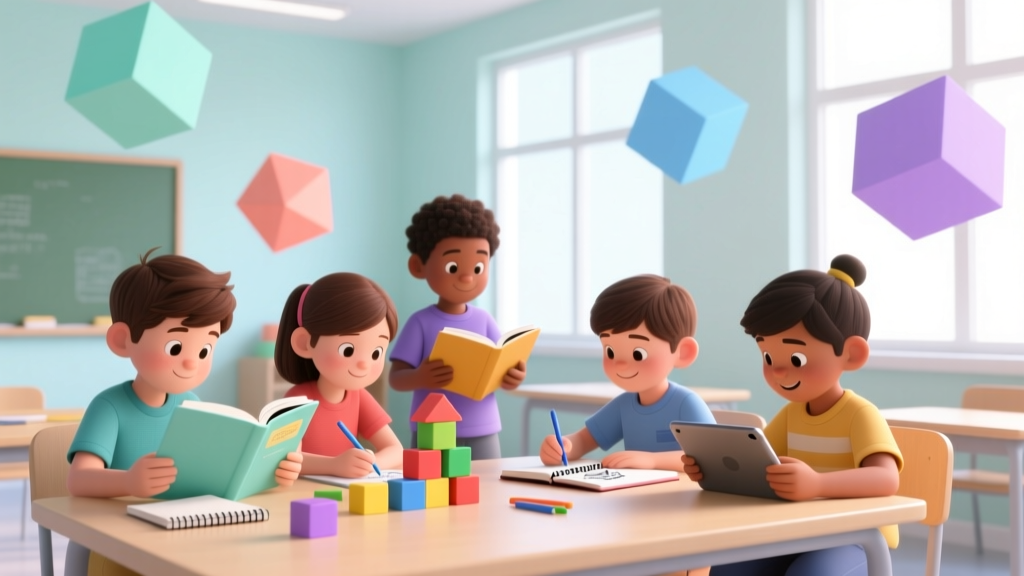
When Should Kids Start Reading? The Real Answer
Why This Question Keeps Parents Up at Night — And Why the Answer Isn’t a Number
What age should kids start reading? It’s one of the most searched, most anxious, and most misunderstood questions in modern parenting — especially amid rising academic pressure, social media comparisons, and preschools advertising 'Kindergarten-Ready Readers.' But here’s the truth no one tells you upfront: reading isn’t an on/off switch flipped at a calendar age — it’s a layered neurological, linguistic, and emotional process that unfolds uniquely for every child. According to the American Academy of Pediatrics (AAP), only about 17% of children read fluently by age 5 — yet over 68% of parents surveyed in a 2023 Zero to Three report believed their child ‘should be reading’ by then. That gap between expectation and reality fuels unnecessary stress, misdiagnosed delays, and even counterproductive teaching methods. This guide cuts through the noise with science-backed clarity — not rigid timelines, but actionable readiness signals, real-world case studies, and practical strategies grounded in decades of developmental psychology and early literacy research.
The 4 Pillars of Reading Readiness (Not Just ‘Knowing Letters’)
Decades of longitudinal research — including landmark studies from the National Institute of Child Health and Human Development (NICHD) and meta-analyses published in Reading Research Quarterly — confirm that fluent reading emerges from four interdependent foundations. If any pillar is underdeveloped, pushing formal decoding too early often leads to frustration, avoidance, or superficial ‘word calling’ without comprehension. Let’s break them down:
- Phonological Awareness: The ability to hear and manipulate sounds in spoken language — rhyming, clapping syllables, identifying beginning/middle/ending sounds (e.g., “What sound does ‘cat’ start with?”). This is the #1 predictor of later reading success, per NICHD’s 12-year Early Childhood Longitudinal Study.
- Oral Language & Vocabulary: Rich exposure to spoken language — not just quantity, but complexity (e.g., using words like “enormous,” “reluctant,” “mysterious” in context) — builds the mental lexicon needed to decode and comprehend written text. Children with 5,000+ word vocabularies by age 4 are 3x more likely to become strong readers by grade 3 (University of Kansas, Hart & Risley, 2003).
- Print Concepts: Understanding how books work — left-to-right directionality, turning pages, recognizing that print carries meaning (not just pictures), tracking text with finger. These are learned through shared reading, not worksheets.
- Letter-Sound Knowledge (NOT Just Letter Names): Knowing that “B” makes /b/ — not just singing the ABC song. A child who knows letter names but not sounds may recite ‘A-B-C’ perfectly but struggle to blend ‘b-a-t’ into ‘bat.’
Here’s what this looks like in practice: Meet Maya, a 4-year-old whose parents began formal phonics drills at 3.5 years. She could ‘read’ 20 sight words — but only by memorizing shapes, like logos. When shown ‘bat’ vs. ‘bad,’ she guessed randomly. Her teacher noted zero phonemic segmentation skills. At 4.8, after shifting to playful sound games (‘I spy something that starts with /s/… snake! What else?’), rhyming songs, and interactive storybook pointing, Maya spontaneously segmented ‘dog’ into /d/ /o/ /g/ — her first true phonemic breakthrough. Within 8 weeks, she was blending CVC words. Her ‘start age’ wasn’t 3.5 — it was 4.8, when her brain was neurologically primed.
Developmental Milestones: What to Expect — and When to Pause and Observe
Forget rigid age cutoffs. Instead, use these evidence-based behavioral markers — observed consistently over 2–3 weeks — as your readiness compass. Pediatricians and early literacy specialists (like Dr. Susan B. Neuman, former U.S. Assistant Secretary of Education) emphasize that consistency and spontaneity matter more than isolated achievements.
| Age Range | Typical Observable Behaviors | What It Signals | Supportive Next Steps (Not ‘Teaching’) |
|---|---|---|---|
| 2–3 years | Points to pictures when named; repeats rhymes/songs; scribbles with intent; recognizes own name in print; enjoys being read to daily | Emerging phonological sensitivity + print motivation | Read aloud 2x/day (point to words, pause for predictions); play sound games (“What’s the same in ‘sun’ and ‘sock’?”); label objects with rich vocabulary (“That’s a shimmering blue butterfly!”) |
| 3.5–4.5 years | Claps syllables in words (“el-e-phant” = 3 claps); generates rhymes (“cat… hat… bat…”); identifies beginning sounds (“What starts ‘ball’?”); matches upper/lowercase letters | Strong phonemic awareness foundation + growing letter-sound links | Introduce magnetic letters for sound-building (not spelling); play ‘sound scavenger hunts’; use Elkonin boxes (tapping sounds); avoid flashcards — prioritize oral manipulation |
| 4.5–5.5 years | Blends 3 sounds into words (“/c/ /a/ /t/ → cat”); segments words into 3 sounds; writes some letters correctly; attempts invented spelling (“HUP” for “hop”) | Neurological readiness for systematic phonics instruction | Explicit, multisensory phonics (e.g., Orton-Gillingham inspired); decodable books matched to taught sounds; celebrate inventive spelling as cognitive progress |
| 5.5–6.5+ years | Reads simple decodable texts independently; self-corrects errors using context/sounds; reads with expression; asks ‘why’ and ‘how’ questions about stories | Fluency and comprehension integration | Gradually introduce leveled readers with richer vocabulary; focus on inference, prediction, and connecting text to life; prioritize volume (15+ minutes/day) over speed |
Note: These ranges reflect typical development — not strict deadlines. The AAP explicitly warns against labeling children as ‘delayed’ before age 6 unless multiple red flags coexist (e.g., no rhyming by age 4, inability to follow 2-step directions, persistent letter reversals past age 7). Late bloomers are common and rarely indicate pathology — especially in boys, whose auditory processing pathways mature ~6–12 months later on average (Journal of Speech, Language, and Hearing Research, 2021).
The High Cost of ‘Early Start’ Pressure — And What Works Instead
A 2022 study in Pediatrics tracked 291 children across 12 preschools. Those in programs emphasizing structured phonics before age 4.5 showed short-term decoding gains — but by grade 2, they scored significantly lower in comprehension and reported higher anxiety around reading than peers in play-based literacy environments. Why? Because drilling isolated skills without meaningful language context creates fragile, disconnected neural pathways.
What does work? The ‘Goldilocks Zone’ approach — neither neglect nor force. Consider Liam, a bright 4-year-old who resisted flashcards but spent hours building Lego towers while narrating complex stories (“This is the dragon’s cave — he’s guarding the glittering treasure!”). His preschool teacher used his passion to embed literacy: writing ‘CAVE’ on his tower base, adding ‘DRAGON’ to a drawn flag, asking him to ‘read’ his story back. By 5.2, he was blending — not because he was drilled, but because his brain linked sounds to meaningful, self-generated language.
Three evidence-backed alternatives to premature instruction:
- Narrative Play Scaffolding: During play, narrate with rich vocabulary and embedded questions (“Oh! Your train is zooming fast — what sound does zooming make? Zzzz! What else starts with /z/?”). This builds oral language and phonemic awareness organically.
- Environmental Print Immersion: Label familiar items (‘DOOR’, ‘SINK’) with clear, consistent fonts. Point to words while reading cereal boxes, street signs, or game instructions. This teaches print concepts without pressure.
- Shared Reading Rituals: Use the ‘PEER’ model (Prompt, Evaluate, Expand, Repeat) during read-alouds: Prompt (“What do you think happens next?”), Evaluate (“Yes! The bear is curious — that’s a great idea”), Expand (“So he tiptoes quietly, like a ninja!”), Repeat (“Let’s say that together: ‘tiptoes quietly’”). This builds comprehension and vocabulary 3x more effectively than passive listening (National Center on Improving Literacy).
When to Seek Support: Red Flags vs. Normal Variation
Distinguishing typical variation from genuine concern is critical. As Dr. Sally Shaywitz, co-director of the Yale Center for Dyslexia & Creativity, emphasizes: “Dyslexia isn’t about intelligence — it’s a specific difficulty with accurate and/or fluent word recognition and poor spelling and decoding abilities. But it’s also highly treatable when identified early.” Key differentiators:
- Red Flag (Consult Pediatrician/School Psychologist): No rhyming or sound play by age 4; difficulty learning nursery rhymes; confusion of similar-sounding words (‘pen’/’pin’); avoiding books altogether; family history of dyslexia or language disorders.
- Normal Variation: Preferring pictures over text at 4; mixing up ‘b’/‘d’ until age 7; reading slowly but accurately; needing frequent rereading for comprehension — all common and resolve with exposure.
Early intervention works best when started before formal reading instruction begins. The Response to Intervention (RTI) model used in U.S. public schools identifies struggling learners in kindergarten — but proactive screening at age 4.5 (using tools like the Dynamic Indicators of Basic Early Literacy Skills, or DIBELS) can catch needs earlier. Many pediatricians now offer brief literacy screenings during well-child visits, per AAP’s 2021 policy statement.
Frequently Asked Questions
Can a child be ‘too young’ to start reading — and what damage can it cause?
Yes — chronologically, but not neurologically. Pushing formal reading before phonemic awareness is solid (typically before age 4.5) often backfires. Children may develop negative associations with books, mimic reading without understanding (‘sight-word guessing’), or experience stress-induced cortisol spikes that inhibit memory formation. A 2020 University of Cambridge study found forced early instruction correlated with 23% higher rates of reading avoidance by age 7. Focus instead on joyful, language-rich interactions — the brain will build the circuitry when ready.
My 5-year-old reads ‘The Very Hungry Caterpillar’ perfectly — does that mean they’re advanced?
Not necessarily. Memorized text recall (especially with predictable, repetitive books) is common and developmentally appropriate — but it’s not true reading. True reading requires decoding unfamiliar words. Try covering the pictures and asking them to read a new, decodable book with only sounds they’ve been taught (e.g., ‘sat’, ‘map’, ‘tin’). If they struggle, they’re likely relying on visual memory, not phonics. That’s normal — and fixable with targeted sound work.
Does screen time help or hurt early reading development?
Hurts — when passive (e.g., autoplay videos) or poorly designed. A 2023 JAMA Pediatrics study linked >1 hour/day of non-interactive screen time before age 2 with delayed language and literacy skills. However, high-quality, co-viewed apps with adult scaffolding (e.g., prompting “What sound does ‘frog’ start with?”) show modest benefits. Best practice: Prioritize human interaction. If using screens, sit beside your child, talk about what’s happening, and connect it to real-world language.
Are bilingual children ‘behind’ in reading — and should we delay English literacy?
No — and absolutely don’t delay. Bilingual children often show temporary lags in vocabulary per language, but their total conceptual vocabulary is equal to or greater than monolingual peers. Crucially, phonological awareness transfers across languages. A child strong in Spanish syllable clapping will grasp English phoneme segmentation faster. The AAP recommends maintaining home language — it strengthens cognitive flexibility and provides the rich oral foundation essential for literacy in any language.
What’s the best first book for a beginning reader?
Not ‘The Cat in the Hat’ — it’s too irregular. Start with decodable books aligned to explicit phonics instruction (e.g., Bob Books, Flyleaf Publishing’s ‘Alba’ series). These use only sounds the child has learned (e.g., ‘mat’, ‘Sam’, ‘tap’) — building confidence and reinforcing sound-symbol links. Avoid books with more than 10% ‘tricky’ words (sight words not yet taught). Success breeds motivation — and motivation is the strongest predictor of long-term reading stamina.
Common Myths
Myth 1: “If they know their ABCs by age 3, they’re ready to read.”
False. Letter naming is visual recognition — not phonemic processing. A child can sing the alphabet flawlessly but not know that ‘M’ says /m/. Phonics instruction must bridge that gap, and readiness depends on auditory processing maturity, not rote memorization.
Myth 2: “Early readers become lifelong academic stars.”
Not supported by data. Longitudinal studies (e.g., the Avon Longitudinal Study of Parents and Children) show no correlation between reading age and later academic achievement, IQ, or career success. What does predict lifelong outcomes is reading engagement — frequency, depth, and joy — cultivated through choice, relevance, and low-pressure exploration.
Related Topics (Internal Link Suggestions)
- How to choose decodable books for beginners — suggested anchor text: "best decodable books for early readers"
- Phonemic awareness activities for preschoolers — suggested anchor text: "fun phonemic awareness games"
- Signs of dyslexia in preschoolers — suggested anchor text: "early dyslexia indicators"
- Building vocabulary at home — suggested anchor text: "how to grow your child's vocabulary"
- Screen time guidelines for toddlers — suggested anchor text: "healthy screen time for preschoolers"
Conclusion & Your Next Step
So — what age should kids start reading? The answer isn’t a number on a calendar. It’s the moment your child spontaneously isolates the /s/ in ‘snake,’ blends ‘c-a-t’ without prompting, or points to ‘STOP’ on a sign and says, “That says ‘stop’ — like when we stop at the light!” That moment arrives when their brain, language, and curiosity align — typically between ages 4.5 and 6.5, but beautifully unique to each child. Your power isn’t in accelerating the clock — it’s in nurturing the soil: talking richly, reading daily with wonder, playing with sounds, and celebrating every tiny linguistic leap as the profound neurological achievement it is. Your next step? Tonight, during storytime, try one PEER prompt (“What do you think the owl feels?”), then pause and listen — not to correct, but to witness their mind making meaning. That’s where real reading begins.
More Articles
 Is Pill Mhulo Dangerous for Kids? (2026)
 How Many Kids Did Cher Have? (2026)
 How Many Kids Does Sam Elliott Have? (2026)
 Gay Parenting: Surrogacy, Adoption & Co-Parenting (2026)
 Does Kai Have a Kid? The Real Story Behind the Question
 Canelo’s Kids Family Facts and Intentional Fatherhood
 How Many Kids Does Jeffrey R. Holland Have?
 Can Kids Drink in Texas With Parents? (2026)
 Chick-fil-A Kids Meal Price & Nutrition Guide (2026)
 Jim Carrey’s Kids Family Life and Careers 2026