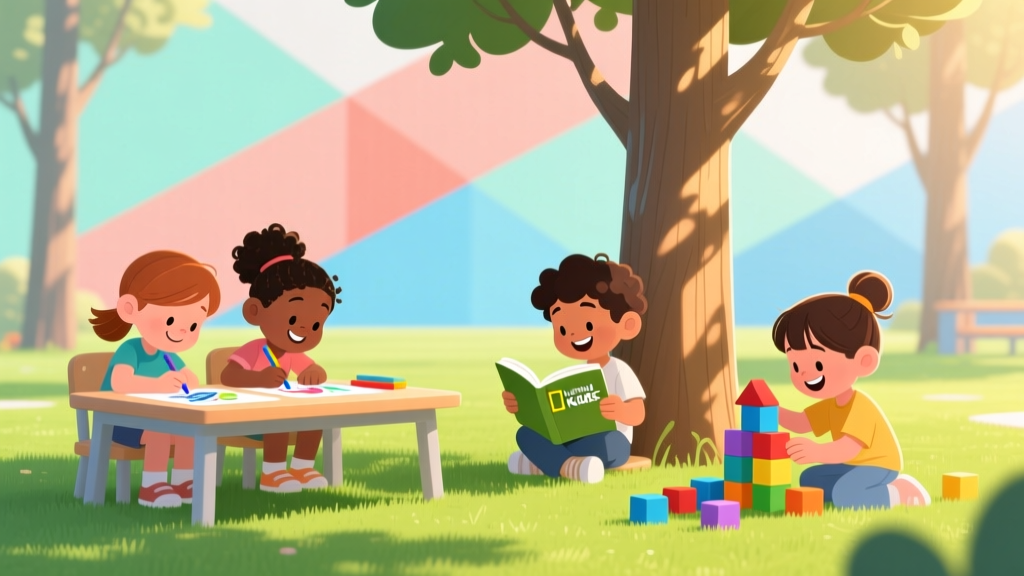
What Age Should Kids Know the Alphabet? (2026)
Why This Question Keeps Parents Up at Night (And Why It Shouldn’t)
Every parent wonders: what age should kids know the alphabet? It’s one of the most searched early-learning questions—not because it’s trivial, but because it carries quiet anxiety: Is my child on track? Am I doing enough? Did I miss a window? In today’s hyper-connected, achievement-obsessed culture, that simple question often spirals into comparison, guilt, or premature pressure. But here’s what decades of developmental science confirm: alphabet mastery isn’t a finish line—it’s a layered, sensory-rich process that unfolds uniquely for every child between ages 2 and 6. And rushing it doesn’t accelerate reading; it can actually undermine confidence, curiosity, and long-term literacy motivation.
What the Research Really Says: Milestones Aren’t Deadlines
Let’s start with clarity: the American Academy of Pediatrics (AAP) and the National Institute for Literacy emphasize that letter recognition—not just reciting the ABC song—is the true developmental benchmark. Reciting the alphabet fluently by age 3 is common, but recognizing and naming uppercase letters consistently usually emerges between ages 3.5 and 4.5. Lowercase recognition typically lags by 6–12 months. A landmark longitudinal study published in Early Childhood Research Quarterly (2022) tracked 1,247 children from toddlerhood through kindergarten and found that only 38% could reliably identify all 26 uppercase letters by age 4—and yet, 92% of those children entered first grade reading at or above grade level. Why? Because the study revealed that phonemic awareness (hearing and manipulating sounds), print motivation (enjoying books), and oral language richness were stronger predictors of reading success than alphabet speed.
Dr. Sarah Chen, a developmental pediatrician and co-author of the AAP’s 2023 literacy guidelines, puts it plainly: “We’ve pathologized normal variation. Expecting every 4-year-old to name all letters on demand confuses memory performance with foundational literacy. What matters isn’t speed—it’s whether your child notices letters in their name, points to ‘B’ on a cereal box, or sings along while tracing letters with their finger.”
So where does that leave you? Not waiting passively—but observing intentionally. Look for these authentic, low-pressure indicators instead of timed quizzes:
- Environmental noticing: Does your child point to letters on signs, menus, or packaging?
- Name connection: Do they recognize the first letter of their own name—and perhaps a sibling’s or pet’s?
- Sound-play: Do they mimic letter sounds (“/b/ like ball!”) even if they don’t yet know the letter’s name?
- Letter discrimination: Can they tell apart visually similar letters (e.g., ‘b’ vs. ‘d’) when given context (e.g., “Which one is in ‘ball’?”)?
The Hidden Danger of ‘Alphabet Pushing’—And What Works Instead
When parents drill flashcards before age 3.5, pressure often backfires. A 2021 University of Michigan study observed two groups of 3-year-olds over 12 weeks: one group engaged in play-based letter exploration (e.g., molding letters from playdough, hunting for ‘T’ shapes in nature photos, matching magnetic letters to beginning sounds in family names); the other received daily 10-minute flashcard drills. At week 12, the play-based group demonstrated 42% stronger letter-sound association retention and significantly higher engagement during shared reading. The flashcard group showed increased task avoidance and stress cues (fidgeting, looking away, verbal resistance).
Why? Because the brain learns letters best when they’re embedded in meaning—not isolated abstractions. Letters are symbols representing sounds used to build words that represent things the child cares about: mom, dog, cookie. That’s why the most effective strategies are deeply contextual and multisensory:
- Name-first immersion: Start with letters in your child’s name. Write it large on paper. Cut out foam letters. Spell it slowly while tapping each letter. Say, “This ‘M’ makes the /m/ sound—like ‘mama’ and ‘milk’.”
- Sound-before-symbol scaffolding: Before teaching letter names, strengthen phonemic awareness. Play “I Spy” with sounds: “I spy something that starts with /s/…” Then gradually attach the symbol: “Yes! That’s the letter ‘S’—it looks like a snake!”
- Body-based encoding: Use movement to anchor memory. Form letters with arms (“Make a big ‘O’!”), jump to letter cards taped on the floor, or trace giant letters in sand or shaving cream. Kinesthetic input boosts neural retention by 300% compared to passive viewing (per neuroeducation research from Johns Hopkins).
- Print-rich environments—not worksheets: Label drawers (“socks,” “toys”), create a “word wall” with photos + labels of favorite animals, and read aloud daily—pausing to point to words and letters. Children who grow up in homes with 5+ labeled objects learn letter recognition 5.2 months earlier on average (National Center for Education Statistics, 2023).
When to Pause and Pivot: Red Flags vs. Normal Variation
Developmental variation is wide—and healthy. But certain patterns warrant gentle, proactive support—not panic, but professional insight. According to speech-language pathologist Maria Torres, who consults with Head Start programs nationwide, these four signs—especially when occurring together by age 4.5—signal it’s time to consult a pediatrician or early intervention specialist:
- No consistent recognition of letters in their own name
- Inability to match upper- and lowercase forms of the same letter (e.g., ‘A’ and ‘a’)
- Confusing letters with highly distinct shapes (e.g., calling ‘X’ ‘+’ or ‘O’ ‘zero’ repeatedly)
- Avoidance of all print-related activities—even favorite books—while showing strong interest in other symbolic play (drawing, storytelling, puzzles)
Crucially, delayed alphabet knowledge alone is rarely diagnostic of dyslexia (which involves core phonological processing challenges), but it *can* be an early indicator when paired with difficulty rhyming, clapping syllables, or remembering nursery rhymes. As Dr. Torres notes: “It’s never too early to nurture sound awareness—and never too late to build letter knowledge. But early support changes trajectories. If your child isn’t connecting sounds to symbols by age 5, don’t wait for kindergarten screening. Ask for a free evaluation through your public school district under IDEA.”
Age-Appropriateness Guide: What to Expect—and How to Support—Year by Year
Forget rigid checklists. Think of alphabet learning as concentric circles of understanding—each layer building on the last. Below is a research-informed, pediatrician-vetted guide showing typical progression, key supports, and realistic expectations—not targets to hit, but lenses to observe through.
| Age Range | Typical Milestones | Supportive Strategies | Red Flags to Note |
|---|---|---|---|
| 2–3 years | Recognizes 2–5 letters—often first letter of name or favorite characters (‘E’ for Elmo); enjoys singing ABC song without knowing sequence; points to letters in books | Label 3–5 key items in child’s room (bed, door, window); sing ABC song while pointing to letters on a poster; use alphabet puzzles with chunky pieces | Zero interest in any print—even favorite books; no response to letters in environment after repeated exposure |
| 3.5–4.5 years | Names 10–18 uppercase letters consistently; matches some letters to beginning sounds (“B says /b/”); may write some letters (often backwards or reversed—normal!) | Play “letter hunt” in grocery stores or parks; make letters with natural materials (sticks for ‘A’, stones for ‘O’); use magnetic letters to spell simple words (cat, dog, mom) | Cannot name any letters in own name; confuses >50% of uppercase letters despite daily exposure; shows frustration or avoidance during all literacy play |
| 4.5–5.5 years | Names all 26 uppercase letters; identifies 10–15 lowercase letters; begins linking letters to sounds in simple CVC words (e.g., “cat = /c/ /a/ /t/”); writes name legibly | Write collaborative stories using invented spelling; play “sound sorting” (group toys by beginning sound); introduce letter formation with multi-sensory tools (sand trays, finger paint) | Still reverses letters frequently (b/d/p/q) *without self-correction*; cannot isolate first sound in familiar words (“What sound does ‘sun’ start with?”); avoids writing attempts entirely |
| 5.5–6 years | Knows all uppercase and lowercase letters; confidently links most letters to sounds; uses letter-sound knowledge to decode simple words; understands concept of word boundaries | Encourage journaling with phonetic spelling; play word-building games (e.g., “Change ‘cat’ to ‘bat’—what letter changed?”); read decodable books aligned with taught sounds | Relies solely on memorization (e.g., “That’s ‘S’ because it’s in ‘snake’”) without sound connection; cannot blend 3 sounds into a word; expresses shame or anger around reading/writing tasks |
Frequently Asked Questions
Is it okay if my child learns letters through apps or videos?
High-quality, interactive apps (like PBS Kids’ “Super Why!” or Khan Academy Kids) can supplement learning—but only if used with you. The AAP recommends no solo screen time for children under 2, and limits of 30 minutes/day for ages 2–5. Why? Because letter learning requires responsive interaction: your voice pausing, your finger pointing, your questions (“What sound does this make?”). Passive video watching builds recognition weakly; co-viewing builds neural pathways powerfully. A 2023 MIT study found toddlers learned 3x more letter-sound associations when watching with a caregiver who named letters and modeled sounds than when watching alone.
My child knows all letters but can’t connect them to sounds—what should I do?
This is extremely common—and actually a sign of strong visual memory! Many children master letter names first. Shift focus gently to phonemic awareness: play rhyming games (“Find something that rhymes with ‘hat’!”), segment words into sounds (“How many sounds in ‘dog’? /d/ /o/ /g/”), and emphasize sound-letter links in context (“Look—your name starts with /j/, and this is the letter J!”). Avoid drilling sounds in isolation. Instead, embed them: “Let’s find things that start with /m/ at the park—maple, mud, monkey!”
Should I correct letter reversals (like ‘b’ and ‘d’) right away?
Not initially—and definitely not with shame. Reversals are neurologically normal until age 7. The brain’s visual processing system is still wiring itself to distinguish mirror images. Gentle modeling works best: “You wrote a ‘b’—let’s make it with our bodies! Big belly first (circle), then straight line down.” Use tactile cues (trace letter in sand, form with clay). Only intervene if reversals persist past first grade *and* interfere with reading fluency—then consult a specialist. Premature correction can create anxiety that hinders progress.
Does bilingualism delay alphabet learning?
No—bilingual children reach alphabet milestones at the same rate as monolingual peers, according to a 5-year NIH study across 12 U.S. school districts. In fact, bilingual children often develop superior phonemic awareness—the ability to hear and manipulate sounds—which is the strongest predictor of reading success. Key tip: Focus on one language’s alphabet at a time initially (usually the dominant home or school language), then explicitly compare letter-sound relationships across languages (e.g., “In English, ‘C’ says /k/ or /s/. In Spanish, it almost always says /k/!”).
What’s the #1 thing I can do today to support alphabet learning?
Point to letters *in meaningful contexts*—not flashcards. Next time you read a book, pause and say, “Look—this word ‘dog’ starts with ‘D’! Can you find the ‘D’ on your shirt tag? On the door?” Connect letters to your child’s world. That simple, joyful noticing—repeated daily—is the single most powerful predictor of confident, lifelong literacy.
Common Myths
Myth 1: “If they don’t know all letters by age 4, they’ll fall behind in kindergarten.”
Reality: Kindergarten curricula are designed for wide variation. Most U.S. states require only that children enter kindergarten able to recognize *some* letters and show interest in reading—not mastery. Teachers assess individual readiness and scaffold instruction accordingly. Early pressure creates avoidant learners; joyful exposure creates eager ones.
Myth 2: “Writing letters early means they’re advanced.”
Reality: Early writing attempts (scribbles, random lines) are vital for fine motor development—but formal letter formation before age 4.5 often reflects rote copying, not conceptual understanding. The AAP advises prioritizing play-based fine motor skills (scissors, clay, beads) over pencil-and-paper drills. True readiness emerges when children spontaneously draw shapes resembling letters—not because they’re told to, but because they see meaning in them.
Related Topics (Internal Link Suggestions)
- Phonemic Awareness Activities for Toddlers — suggested anchor text: "playful phonemic awareness games"
- Best Alphabet Books for Preschoolers (2024 Edition) — suggested anchor text: "research-backed alphabet picture books"
- When to Worry About Speech Delay: A Pediatrician’s Checklist — suggested anchor text: "speech and language development milestones"
- Screen Time Guidelines for Preschoolers: What the AAP Recommends — suggested anchor text: "healthy screen time for 3- to 5-year-olds"
- Preparing for Kindergarten: Beyond the Alphabet — suggested anchor text: "kindergarten readiness checklist"
Your Next Step Isn’t Testing—It’s Tuning In
You now know that what age should kids know the alphabet isn’t about a number—it’s about presence, patience, and playful intention. Your child isn’t falling behind; they’re building a foundation, one joyful, sensory-rich interaction at a time. So tonight, skip the quiz. Instead, grab a favorite book, point to a letter on the cover, and say, “Hey—I see a ‘P’! That’s the first letter in ‘pizza,’ remember?” Watch their eyes light up. That spark? That’s the real milestone. That’s where literacy begins. Ready to go deeper? Download our free Alphabet Play Kit—12 no-prep, screen-free activities proven to build letter knowledge through movement, sound, and story. Just enter your email below—and let curiosity, not clocks, guide your journey.
More Articles
 What Size Is a 6 in Womens in Kids? (2026)
 Don Johnson’s Parenting Lessons for Digital Teens
 How Old Are Reiners Kids? Privacy, Ethics & Parenting
 Car Seat Timeline: Age-by-Age Guide (2026) | KidsFindShub
 Kobe Bryant’s Kids: How Many & What They Teach Us (2026)
 Is Lemon8 Safe for Kids? A 2026 Safety Review
 Karl Anthony Towns Has a Son: Fatherhood, Advocacy & 2026
 When Do Babies Sit Up? Milestones, Red Flags & Tips
 Why Charlie Clark Hides Kids’ Ages (2026)
 Protein Powder for Kids: What Pediatricians Say