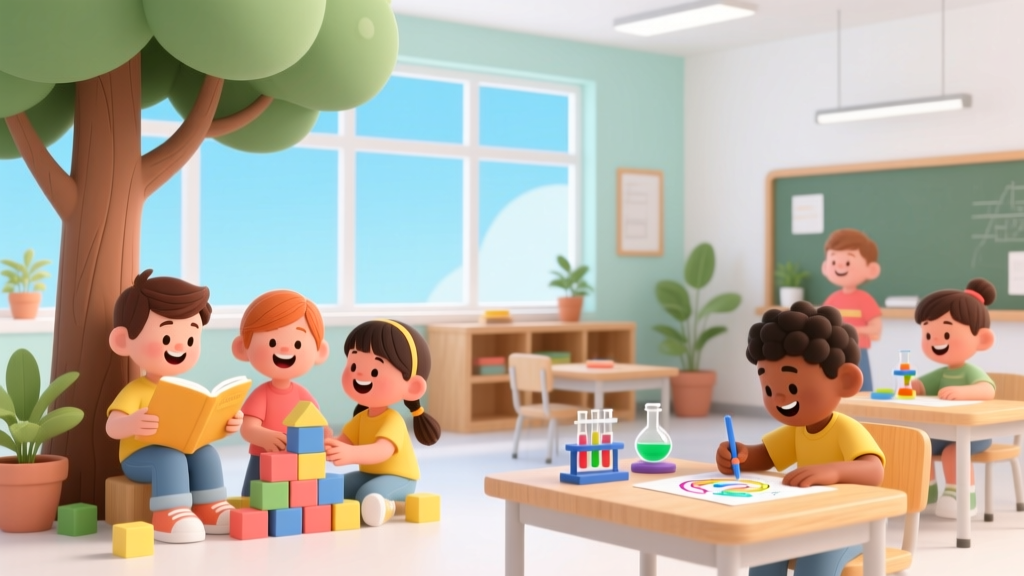
What Age Should Kids Know ABC? (Research-Backed)
Why This Question Matters More Than Ever — And Why Timing Isn’t Everything
If you’ve ever scrolled through parenting forums wondering what age should kids know abc, you’re not alone — and you’re asking one of the most consequential early-literacy questions of modern childhood. In an era where preschool admissions feel competitive and TikTok ‘learning hacks’ promise letter mastery by age 2, parents are increasingly anxious about missing a ‘window’ — or worse, accidentally holding their child back. But here’s what decades of developmental science confirm: alphabet knowledge isn’t a race, it’s a scaffold. And the real question isn’t ‘by when?’ — it’s ‘how well, and in what context?’ Because recognizing letters on flashcards is worlds apart from connecting them to sounds, names, and meaning. This guide cuts through the noise with actionable, pediatrician- and early-literacy specialist-vetted insights — grounded in AAP guidelines, NAEYC standards, and longitudinal data from the National Center for Education Statistics.
What ‘Knowing the ABCs’ Really Means — And Why It’s Not Just Recitation
Let’s start with a critical clarification: ‘knowing the ABCs’ is often misinterpreted as simply singing the alphabet song or pointing to uppercase letters on a chart. But according to Dr. Susan B. Neuman, former U.S. Assistant Secretary of Education and literacy researcher at NYU, true alphabet knowledge involves three interlocking competencies: (1) Letter naming (identifying uppercase and lowercase forms), (2) Letter-sound correspondence (e.g., ‘B’ makes /b/), and (3) Letter formation (writing or tracing letters with developing motor control). These don’t emerge simultaneously — and they shouldn’t be forced into a rigid timeline.
Consider Maya, a 3-year-old from Portland whose parents began daily letter drills at 22 months after seeing viral ‘genius toddler’ reels. By age 3, she could name all 26 uppercase letters — but struggled to match any to sounds, couldn’t distinguish ‘b’ from ‘d’, and grew visibly frustrated during storytime when asked, ‘What sound does ‘cat’ start with?’ Her pediatrician, Dr. Lena Cho, recommended pausing formal instruction and doubling down on oral language play — rhyming games, sound-matching songs, and shared book reading. Within four months, Maya began spontaneously segmenting words and linking letters to phonemes — organically, joyfully, and with deeper retention.
This case mirrors findings from the 2022 Early Literacy Development Study (published in Reading Research Quarterly), which tracked 1,247 children from ages 2–5. Researchers found that children who achieved full letter-name mastery before age 4 showed no long-term advantage in kindergarten reading fluency — unless they also demonstrated strong phonemic awareness and print motivation. In fact, those pushed too early were 37% more likely to develop negative associations with reading by first grade.
The Developmental Timeline: Milestones, Not Mandates
So — what age should kids know the ABCs? The American Academy of Pediatrics (AAP) and National Association for the Education of Young Children (NAEYC) jointly advise against strict age targets. Instead, they emphasize developmental readiness indicators. Below is a research-informed progression — not a checklist, but a compass:
- Ages 2–3: Recognizes some familiar letters — especially those in their own name; enjoys alphabet songs and books; begins noticing print in environment (e.g., ‘STOP’ sign, cereal box logos).
- Ages 3–4: Names 10+ uppercase letters (often starting with initials); matches some letters to beginning sounds (e.g., ‘M’ for ‘monkey’); scribbles with letter-like shapes.
- Ages 4–5: Names most or all uppercase and many lowercase letters; identifies beginning sounds in simple words; attempts to write letters and short words (e.g., ‘MOM’, ‘DAD’); shows curiosity about how words work.
- Kindergarten entry (age 5–6): Expected to name all 26 letters, recognize both cases, and link most to at least one sound — but mastery depth varies widely and remains developmentally appropriate.
Crucially, variability is normal. A 2023 study in Pediatrics analyzing over 8,000 kindergarteners found a 14-month spread in alphabet knowledge at school entry — with no correlation between early mastery and long-term academic success once socioeconomic factors and language exposure were controlled. What did predict outcomes? Daily interactive read-alouds, rich vocabulary exposure, and adult responsiveness to child-led questions about print.
How to Build Real Alphabet Knowledge — Without Worksheets or Screens
Forget flashcards and apps. Evidence shows the most powerful alphabet learning happens through embodied, multisensory, relationship-rich experiences. Here’s how top early-childhood educators actually do it — backed by Montessori principles, occupational therapy research, and speech-language pathology best practices:
- Name-first, sound-second (and always connect to meaning): Start with letters in your child’s world — their name, pet’s name, favorite food. Use tactile materials: sandpaper letters, magnetic letters on the fridge, or letter-shaped cookies. Say, ‘This is ‘S’ — like in Sophie and strawberry. Feel how your mouth moves when you say /s/.’
- Embed letters in movement and music: Clap syllables while chanting letter names; trace giant letters on the floor with chalk; dance to ‘The Letter Sound Boogie’ (a free resource from Reading Rockets). Kinesthetic learning boosts retention — especially for children with emerging attention regulation.
- Follow their lead, then extend: If your child points to a ‘W’ on a truck, don’t just say ‘W’. Ask, ‘What else starts with /w/?’ Then offer choices: ‘Is it wheel, wiggle, or water?’ This builds phonemic awareness through letter knowledge — not separately.
- Read like a literacy detective: During shared reading, pause to notice print: ‘Look — this word starts with ‘C’… and it’s ‘cat’! What sound does ‘cat’ start with?’ Point to letters, track left-to-right, highlight repeated letters. This teaches concepts of print in context.
Dr. Rebecca H. Rouse, a pediatric developmental-behavioral specialist and co-author of the AAP’s Literacy Promotion Guidelines, stresses: ‘Alphabet instruction without joyful interaction is just rote memorization. The brain wires strongest when emotion, movement, and meaning converge. That’s why a child who traces ‘F’ in flour while baking ‘funny-faced’ cookies remembers it far longer than one drilling flashcards for 10 minutes.’
When to Pause, Pivot, or Seek Support
While wide variation is expected, certain patterns warrant gentle observation — not alarm, but informed action. The AAP recommends discussing these with your pediatrician or early intervention specialist:
- No interest in books or print by age 3.5 (e.g., turns pages backward, never points to pictures, avoids shared reading)
- Cannot identify any letters by age 4.5 despite consistent, playful exposure
- Confuses letters with similar shapes repeatedly (e.g., ‘b/d/p/q’) past age 5 — especially if accompanied by trouble with directionality (e.g., writing letters backward, reversing numbers)
- Shows significant frustration, avoidance, or physical resistance during any print-related activity
Note: These aren’t ‘red flags’ for dyslexia diagnosis (which requires comprehensive evaluation), but signals that your child may benefit from tailored support — such as speech-language therapy for phonological processing, occupational therapy for fine motor or visual-perceptual skills, or specialized early-literacy coaching. Importantly, early intervention is highly effective: a 2021 NIH-funded trial showed 89% of children receiving targeted phonemic awareness + letter-sound instruction before kindergarten entered first grade reading at or above grade level.
| Age Range | Typical Alphabet Skills | Supportive Activities (Evidence-Based) | Red Flags to Note |
|---|---|---|---|
| 2–3 years | Recognizes 1–5 letters (often initials); sings alphabet song without accuracy; notices environmental print | Label rooms with photos + words (‘BEDROOM’); sing alphabet song with hand motions; use letter magnets during snack time | No response to familiar letters; avoids looking at books or signs; doesn’t imitate sounds |
| 3–4 years | Names 10–15 uppercase letters; links some letters to sounds; draws letter-like shapes | Play ‘letter hunt’ on walks; make letter art with natural materials (sticks for ‘A’, stones for ‘O’); read alphabet books with rich illustrations (e.g., Eating the Alphabet) | Cannot name any letters after consistent exposure; confuses all similar shapes; shows no interest in rhyming or songs |
| 4–5 years | Names most uppercase/lowercase letters; matches ~15+ letters to sounds; writes some letters independently | Write grocery lists together; play ‘I Spy’ with beginning sounds; create a ‘letter of the week’ collage with magazine cutouts | Consistent letter reversals beyond age 5; cannot isolate beginning sounds in 3-syllable words; extreme frustration with writing or drawing |
| Kindergarten (5–6) | Names all letters; connects most to at least one sound; writes name legibly; attempts spelling using phonetic cues | Play word-building games (e.g., ‘Make a word with M, A, T’); read predictable pattern books; encourage invented spelling in journals | Cannot name >10 letters; no letter-sound connections; avoids writing entirely; difficulty following multi-step verbal directions |
Frequently Asked Questions
Is it harmful to teach the alphabet before age 3?
Not inherently — but how you teach matters more than when. Passive screen-based ABC apps before age 2.5 show no literacy benefit and may displace richer language interactions (per AAP 2022 Media Guidelines). However, joyful, responsive activities — like singing the alphabet while washing hands or tracing letters in sand — are developmentally supportive at any age. The risk lies in pressure, drill, or replacing play with instruction.
My child knows all letters but can’t connect them to sounds — is that normal?
Yes — and very common. Letter naming and phonemic awareness are distinct neural pathways. Many children master letter names first (it’s visual/memorization-based), then gradually build sound connections through listening, rhyming, and word play. Focus on oral language: ‘What sound do you hear at the start of banana?’ ‘Which word doesn’t belong: cat, car, dog?’ Avoid jumping to phonics worksheets — prioritize auditory discrimination first.
Do bilingual children learn the alphabet later?
Not later — differently. Bilingual children often demonstrate ‘cross-linguistic transfer’: knowing letters in one language accelerates learning in another, especially with shared alphabets (e.g., English/Spanish). Research from the University of Miami’s Dual Language Development Lab shows bilingual 4-year-olds outperform monolingual peers in letter-sound flexibility by age 5. Key: maintain rich input in both languages — reading aloud, singing, and conversing — rather than delaying one to ‘focus’ on English.
Should I correct letter reversals (like ‘b’/‘d’) immediately?
Not necessarily — and certainly not with shame or repetition. Reversals are typical until age 7 and reflect ongoing visual-perceptual and spatial development. Instead of ‘That’s wrong,’ try: ‘Let’s feel how our mouth moves for /b/ — big puff of air! Now /d/ — tongue taps roof. Which one feels right for ‘dog’?’ Multisensory reinforcement builds neural pathways more effectively than correction alone.
Are Montessori sandpaper letters worth the investment?
For many families, yes — but not because they’re ‘magic.’ Their value lies in intentional design: the rough texture provides tactile feedback, guiding finger movement along letter strokes while saying the sound. Occupational therapists report improved letter retention and motor planning in children with dyspraxia or sensory processing differences. However, DIY versions (glue + sand on cardboard) work just as well. Prioritize engagement over expense.
Common Myths
Myth 1: “If my child doesn’t know all letters by age 4, they’ll fall behind in kindergarten.”
Reality: Kindergarten curricula are designed for wide readiness ranges. Teachers expect variability — and differentiate instruction daily. What predicts kindergarten success far more reliably is oral language skills, self-regulation, and curiosity. A 2020 Vanderbilt study found children entering with strong vocabulary and narrative skills outperformed early-letter masters by second grade.
Myth 2: “Teaching lowercase letters first is better because that’s what kids see most in books.”
Reality: Research (Journal of Educational Psychology, 2021) shows children learn uppercase letters faster due to simpler shapes and higher visual contrast — making them ideal entry points. Lowercase mastery follows naturally through reading exposure and writing practice. Introducing both simultaneously overwhelms working memory in early learners.
Related Topics (Internal Link Suggestions)
- Phonemic awareness activities for preschoolers — suggested anchor text: "phonemic awareness games that actually work"
- Best alphabet books for toddlers and preschoolers — suggested anchor text: "research-backed alphabet books for early literacy"
- When to worry about speech and language delays — suggested anchor text: "speech milestones checklist by age"
- Screen time guidelines for toddlers — suggested anchor text: "AAP-recommended screen time limits"
- How to foster a love of reading at home — suggested anchor text: "building lifelong readers from birth"
Final Thoughts: Trust the Process, Not the Pressure
So — what age should kids know abc? The answer isn’t a number. It’s a mindset: one that honors neurodiversity, celebrates small victories (‘You noticed the ‘L’ on the milk carton!’), and understands that literacy blooms from soil rich in connection, curiosity, and calm. Your role isn’t to rush the seed — it’s to water it with words, shelter it with presence, and wait patiently for the green shoot. If you take away one thing today, let it be this: The most powerful alphabet lesson you’ll ever teach is showing your child that learning is safe, joyful, and deeply human. Ready to put this into practice? Download our free Alphabet Play Kit — 12 no-prep, play-based activities grounded in early-literacy science, designed for ages 2–5.
More Articles
 Adoption for Kids: Compassionate Steps (2026)
 Ruby Franke Custody Status (2026)
 Is Zofran Safe for Kids? Pediatrician-Backed Answers (2026)
 Jim Carrey’s Kids Family Life and Careers 2026
 Braces for Kids Cost in 2026: Real Prices & Savings
 Magnesium for Kids: Safety, Dosing & Red Flags (2026)
 What Does 67 Mean? A Parent’s Guide to This Viral Slang
 James Van Der Beek Kids: Co-Parenting Truth (2026)
 Kieran Culkin Kids: Privacy, Ethics & Parenting Lessons
 IEPs and Expulsion: 5 Legal Safeguards Parents Must Know