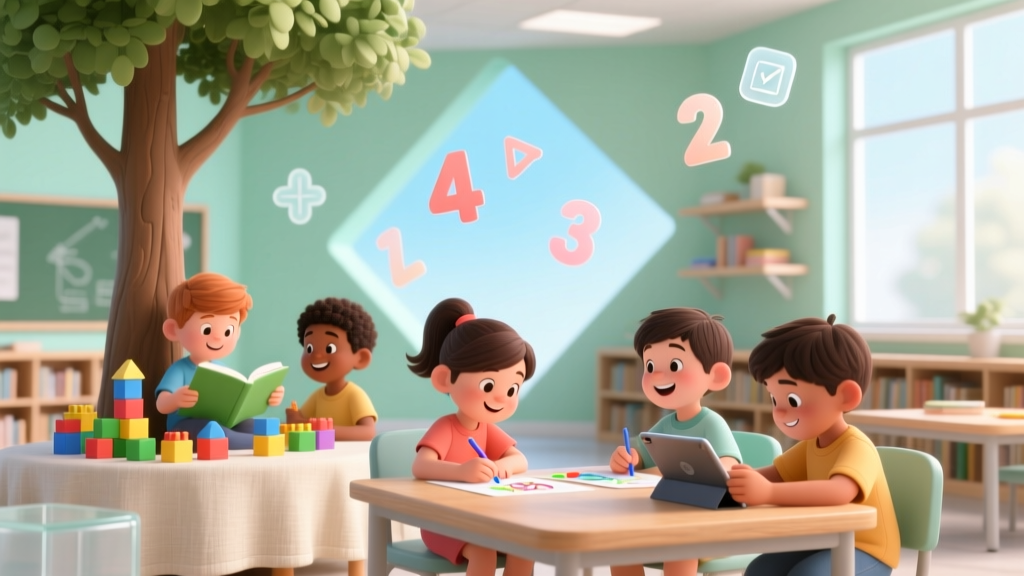
What Age Should Kids Write Their Name? (2026)
Why This Milestone Matters More Than You Think—And Less Than You Fear
What age should kids be able to write their name is one of the most frequently searched questions among parents of preschoolers—and for good reason. It’s often the first concrete ‘academic’ benchmark families use to gauge readiness for kindergarten, spark concerns about learning differences, or even question whether they’re doing enough at home. But here’s the truth no one tells you upfront: there is no universal, biologically mandated age. Instead, name-writing emerges from a complex interplay of fine motor control, visual-motor integration, letter knowledge, motivation, and environmental opportunity—and it unfolds uniquely for every child.
According to the American Academy of Pediatrics (AAP), handwriting development isn’t a race; it’s a scaffolded process built on foundational skills that begin long before pencil meets paper. Yet many parents feel pressure—from well-meaning relatives, preschool intake forms, or social media comparisons—to see neat, legible names by age 4. That pressure can unintentionally shift focus away from what truly predicts long-term literacy success: oral language, phonemic awareness, and joyful engagement with mark-making. In this guide, we’ll unpack the evidence-backed timeline, decode the subtle signals that matter more than spelling accuracy, and give you practical, low-stress strategies grounded in occupational therapy best practices—not Pinterest perfection.
What the Research Really Says: A Developmental Timeline (Not a Deadline)
Let’s start by replacing anxiety with clarity. Pediatric occupational therapists and early childhood researchers consistently emphasize that name-writing isn’t an isolated skill—it’s the visible tip of a deep developmental iceberg. Dr. Elena Martinez, a pediatric occupational therapist with 15 years of experience at Children’s Hospital Los Angeles, explains: “When I assess a 4-year-old who can’t yet write their name, my first question isn’t ‘Is something wrong?’—it’s ‘What’s supporting their hand strength? Are they holding crayons with a mature tripod grasp? Do they enjoy drawing, tracing, or building with blocks?’”
Here’s what large-scale observational studies and clinical benchmarks tell us:
- Ages 2–3: Children begin scribbling purposefully, imitating vertical and horizontal lines, and may produce random marks they proudly declare as their ‘name.’ This is not random—it’s symbolic representation emerging. They’re learning that marks carry meaning.
- Ages 3–4: Most children start approximating letters—often beginning with the first letter of their name or capital letters they see frequently (like ‘A’, ‘O’, ‘X’). Their ‘name’ may consist of 2–3 recognizable shapes or repeated letters (e.g., ‘M M M’ for Maya). This is called logographic writing—a critical cognitive leap where symbols stand for whole words.
- Ages 4–5: With growing hand strength and visual memory, many children begin sequencing 3–5 letters, often mixing uppercase and lowercase, reversing letters (‘b’/‘d’), or omitting vowels. Legibility improves—but consistency does not. According to a 2022 longitudinal study published in Early Childhood Research Quarterly, only 68% of U.S. kindergarteners could independently write their full first name legibly by October of their K year.
- Ages 5–6: By first grade, most children write their name with conventional spelling and consistent letter formation—though fine motor fatigue may still cause variability across tasks (e.g., writing on whiteboard vs. lined paper).
Crucially, the AAP explicitly warns against using name-writing as a sole indicator of school readiness. In its 2023 School Readiness Guidelines, the organization states: “Focus on the process—not the product. A child who traces their name with focused attention, adjusts grip mid-task, and verbalizes letter sounds is demonstrating far more predictive readiness than one who copies a perfectly formed name without understanding its components.”
The 4 Foundational Skills Your Child Needs (Long Before Pencil Time)
Trying to rush name-writing without these pillars is like building a house on sand. Each skill supports the next—and all are observable in daily play, not just ‘schoolwork.’ Here’s how to spot and strengthen them:
- Hand Strength & Dexterity: Can your child squeeze playdough into snakes, tear paper along a line, open twist-top containers, or string large beads? Weak intrinsic hand muscles make pencil control exhausting. Try: ‘Clothespin Color Match’ (clip clothespins onto colored cardstock) or ‘Therapy Putty Hide-and-Seek’ (hide small objects in putty and dig them out).
- Visual-Motor Integration: This is the brain-hand-eye connection. Watch how your child copies simple shapes (circle, cross, square) on paper—or stacks blocks in a pattern. Difficulty here often shows up as trouble staying inside coloring lines or matching puzzle pieces. Try: ‘Shadow Tracing’ (place clear plastic over a simple shape and trace its outline with finger or marker) or ‘Laser Maze’ (use a laser pointer to follow a taped path on the floor).
- Letter Knowledge & Phonemic Awareness: Does your child recognize the first letter of their name? Can they isolate the beginning sound in words (‘What sound does “cat” start with?’)? Research from the National Institute for Literacy confirms that letter-sound knowledge predicts handwriting fluency more strongly than motor skill alone. Try: ‘Name Sound Hunt’ (find objects around the house starting with their name’s first sound) or ‘Alphabet Photo Book’ (take pictures of family members/objects whose names start with each letter).
- Motivation & Executive Function: Writing requires sustained attention, working memory (holding the sequence of letters in mind), and self-regulation. A child who abandons tasks quickly or resists practice may need scaffolding—not more drills. Try: ‘Name-Writing Choice Board’ (offer 3 options: write with chalk on sidewalk, stamp letters with foam letters, or form letters with pipe cleaners) to build ownership and reduce power struggles.
Real-world example: When 4-year-old Leo struggled to hold a pencil, his preschool OT didn’t start with worksheets. Instead, she introduced ‘scissor cutting challenges’ (cutting zigzag lines, snipping straws into confetti) and ‘tweezer transfers’ (moving pom-poms with kitchen tongs). Within 8 weeks, Leo’s pencil grip matured—and he spontaneously wrote ‘L-E-O’ on his lunchbox. His progress wasn’t linear, but it was deeply rooted in functional, joyful skill-building.
When to Pause, Observe, and Seek Support (Without Panic)
While variation is normal, certain patterns warrant gentle, proactive observation—not alarm, but informed attention. The key is distinguishing developmental pace from potential red flags. As Dr. Sarah Chen, a developmental pediatrician at Boston Children’s Hospital, advises: “We don’t diagnose delays in isolation. We look for clusters—skills that *should* emerge together—and consider the whole child: Are they communicating clearly? Making friends? Showing curiosity? If name-writing is the *only* area of concern, it’s rarely cause for urgency.”
That said, consider consulting your pediatrician or an early intervention specialist if, by age 5, your child:
- Shows persistent avoidance of all fine motor tasks (drawing, puzzles, buttoning)
- Cannot copy a circle or cross after multiple demonstrations
- Has extreme difficulty holding utensils or tools, or tires easily during drawing
- Does not recognize any letters in their own name despite frequent exposure
- Uses only one hand for all tasks and resists switching hands during bilateral activities (like rolling playdough or tearing paper)
Importantly, early intervention services (available free in the U.S. under IDEA Part C for ages 0–3 and Part B for ages 3–5) focus on play-based, family-centered support—not ‘therapy’ as a deficit label. A 2021 study in Pediatrics found that children receiving occupational therapy before kindergarten showed significantly stronger handwriting outcomes by Grade 2—but only when interventions prioritized functional participation over rote drill.
Practical, Play-Based Strategies That Actually Work
Forget worksheets. The most effective name-writing practice happens in context, through movement, sensory input, and choice. Here’s what occupational therapists recommend—tested in homes and classrooms:
- Multi-Sensory Letter Formation: Trace letters in shaving cream on a tray, ‘write’ names in the air with giant arm movements (‘sky-writing’), or mold letters from salt dough. Tactile input strengthens neural pathways far more than static tracing.
- Name Recognition First: Before writing, ensure your child can reliably point to their name among other names (e.g., on cubbies or attendance charts). Use magnetic letters to build their name on the fridge—then scramble and rebuild. This builds visual memory and letter sequencing.
- Lower the Stakes, Raise the Joy: Introduce ‘name art’ projects: painting their name with rollers, stamping it with potato prints, or creating a ‘Name Collage’ with magazine letters. Success isn’t legibility—it’s engagement and agency.
- Model with ‘Think-Aloud’ Narration: When writing your own name, verbalize your process: “I’m starting with a tall line for ‘T’… now I’m adding the little line across the top… that’s how we make a ‘T’!” This makes the invisible cognitive steps visible.
Pro tip: Never correct letter reversals (‘b’/‘d’) before age 6. Neurologically, mirror-image processing is typical—and correcting too early can create shame. Instead, celebrate effort: “I love how carefully you made those circles!”
| Age Range | Typical Name-Writing Behavior | Key Developmental Supports Needed | Red Flag Indicators (If Persistent) |
|---|---|---|---|
| 2–3 years | Scribbles or draws marks labeled as ‘name’; may imitate 1–2 straight lines | Opportunities for gross motor play (climbing, pushing/pulling), sensory bins (rice, beans), and shared book reading | No intentional mark-making by age 3; avoids all tactile experiences (refuses playdough, paint, sand) |
| 3–4 years | Writes 1–3 letters (often first letter or repeated letters); may mix print/capitals; uses invented spelling | Strengthening hand muscles (squeezing, twisting), shape recognition games, letter sound play | Cannot copy a circle or cross by age 4; no interest in drawing or mark-making despite modeling |
| 4–5 years | Sequences 3–5 letters; attempts lowercase letters; may reverse or omit letters; writes name with some consistency | Visual-motor integration practice (mazes, dot-to-dots), fine motor tool use (scissors, tweezers), phonemic awareness games | Cannot hold pencil with thumb/index/middle fingers by age 5; extreme frustration or avoidance of all writing/drawing |
| 5–6 years | Writes full first name legibly and consistently; begins writing last name; uses mostly conventional spelling | Writing for authentic purposes (notes to family, labels for drawings), stamina-building (short, frequent writing bursts), cursive introduction (if developmentally ready) | No improvement in letter formation after 3+ months of playful practice; illegible writing across all contexts (whiteboard, paper, digital) |
Frequently Asked Questions
Can handwriting difficulties signal dyslexia?
Not necessarily—and not at this stage. Dyslexia is primarily a language-based learning difference affecting phonological processing, decoding, and spelling—not fine motor skills. While some children with dyslexia may also have handwriting challenges (called dysgraphia), many children with messy handwriting have no language-based learning differences. Conversely, early dyslexia signs include difficulty rhyming, remembering letter names/sounds, or blending sounds to read simple words—long before formal writing begins. If you notice persistent struggles with spoken language, rhyming games, or sound-letter connections, consult a speech-language pathologist or educational psychologist—not a handwriting tutor.
My child writes their name beautifully on a whiteboard but not on paper—why?
This is extremely common and usually points to sensory or motor factors—not lack of skill. Whiteboards offer visual feedback (bright contrast), less resistance (smoother surface), and often involve larger arm movements (more stable than finger control). Paper requires more precise pressure modulation, grip endurance, and visual tracking on a flat plane. Try: ‘Paper on Clipboard’ (adds stability), ‘Pencil Grips with Tactile Cues’ (rubber bumps guide finger placement), or ‘Write on Vertical Surface’ (easel or wall-mounted paper)—which naturally promotes better shoulder/elbow positioning.
Should I teach uppercase or lowercase letters first?
Uppercase letters are developmentally easier for young children to form—they have fewer curves, more straight lines, and are more visually distinct in environmental print (signs, books, labels). The AAP and National Association for the Education of Young Children (NAEYC) both recommend starting with uppercase for name-writing. Lowercase letters can be introduced gradually once uppercase mastery is solid, especially for letters with similar shapes (‘a’/‘o’, ‘c’/‘e’) to prevent confusion. Remember: Kindergarten curricula universally begin with uppercase for this reason.
Is it okay to let my child type their name instead of writing it?
Yes—as a supplement, not a replacement. Typing builds digital literacy and bypasses fine motor barriers, but it doesn’t develop the neural pathways for letter formation, spatial planning, or hand-eye coordination that handwriting does. Think of it as parallel practice: use typing for fun (‘email Grandma your name!’) but prioritize handwriting for foundational skill-building. A 2023 University of Washington study found children who combined handwriting and keyboarding showed stronger overall literacy outcomes than those using only one modality.
My 4-year-old insists on writing their name ‘perfectly’ and gets upset when it’s messy—how do I help?
This is a beautiful sign of emerging executive function and self-awareness! Reframe ‘perfection’ as ‘effort’ and ‘progress.’ Say: “I see you worked so hard on those lines—your hand is getting stronger every time you try!” Offer ‘mistake-friendly’ materials: chalkboards (easy erasing), dry-erase sleeves (slip paper inside), or sand trays. Most importantly, model imperfection yourself: “Watch me try to draw a star—it’s wobbly! That’s how we learn.” Reducing performance pressure often unlocks joyful experimentation.
Common Myths About Name-Writing
Myth #1: “If they can’t write their name by age 4, they’ll fall behind in kindergarten.”
False. Kindergarten teachers expect a wide range of name-writing abilities. What matters more is whether a child can follow multi-step directions, take turns, manage personal belongings, and show curiosity about letters. A 2022 NAEYC survey found that 73% of kindergarten teachers ranked social-emotional readiness and oral language as far more predictive of academic success than early writing skills.
Myth #2: “Tracing dotted lines is the best way to practice.”
Not for most children. Rigid tracing discourages exploration, reduces sensory feedback, and often leads to passive hand movement rather than active control. Occupational therapists prefer dynamic, open-ended activities: forming letters with yarn, drawing with chalk on pavement, or building letters with LEGO bricks. These engage proprioception (body awareness) and problem-solving—critical for true motor learning.
Related Topics (Internal Link Suggestions)
- When do kids develop a proper pencil grip? — suggested anchor text: "pencil grip development timeline"
- Best fine motor toys for preschoolers — suggested anchor text: "top occupational-therapist-approved fine motor toys"
- Signs of dysgraphia in early elementary — suggested anchor text: "dysgraphia symptoms by age"
- How to support prewriting skills at home — suggested anchor text: "play-based prewriting activities"
- Kindergarten readiness checklist (beyond academics) — suggested anchor text: "holistic kindergarten readiness guide"
Conclusion & Your Next Step
So—what age should kids be able to write their name? The answer isn’t a number. It’s a process. It’s the 3-year-old who proudly signs their artwork with a squiggle that means ‘me.’ It’s the 4-year-old who painstakingly forms ‘J-A-K-E’ with a fat marker, tongue poking out in concentration. It’s the 5-year-old who writes their name on a birthday card—and then asks, “Can I write Mommy’s name too?”
Your role isn’t to fix, rush, or compare. It’s to notice, nurture, and celebrate the small, powerful steps toward autonomy and expression. So this week, try one low-pressure, high-joy strategy: grab some sidewalk chalk and invite your child to write their name ‘as big as they can’—then take a photo and send it to a grandparent. That act of sharing, pride, and connection? That’s the real milestone.
More Articles
 How Many Teeth Fall Out for Kids? (2026)
 2025 Child Tax Credit Amounts & Hidden Credits
 Can Kids Eat Rum Cake? Safety Facts & Swaps (2026)
 What Is Size 6 in Kids to Women’s? (2026 Chart)
 How Long Do Kids Need Booster Seats? (2026)
 Pope Francis Kids? Papal Celibacy Explained
 What Is Autism for Kids? A Compassionate Guide
 Elise Stefanik Kids: How Many in 2026?
 Who Does Dominic Fike Have a Kid With? (2026)
 Are Huskies Good With Kids? A Parent’s Guide (2026)