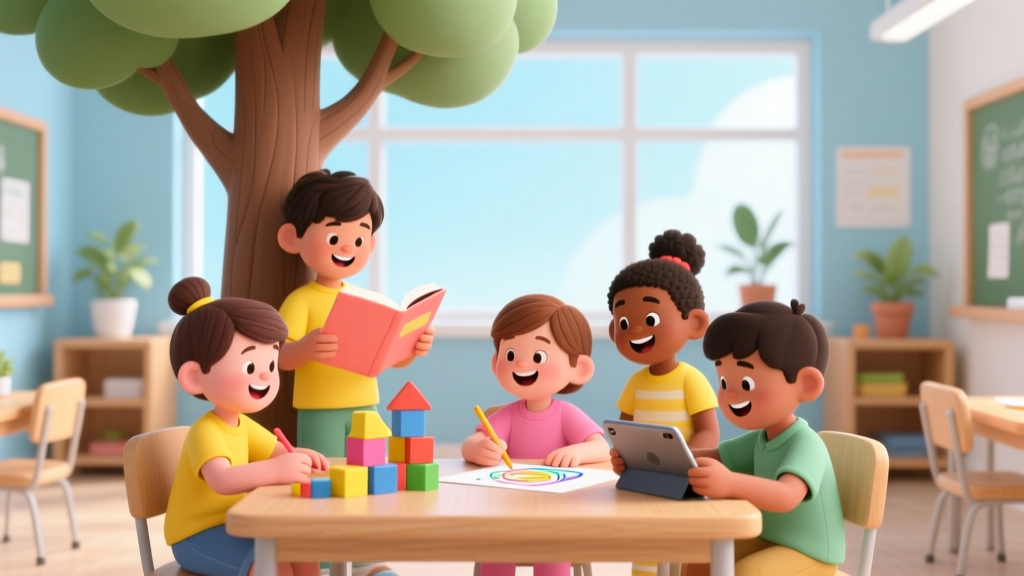
What Age Kids Learn to Read: The Real Timeline (2026)
Why 'What Age Kids Learn to Read' Is the Wrong Question — And What to Ask Instead
If you've ever scrolled through parenting forums wondering what age kids learn to read, you're not alone — but you're likely asking it backward. Most parents assume reading is a single 'light switch' moment (a birthday, a grade level, a school report card), when in reality, literacy unfolds across a dynamic, neurologically complex continuum spanning 3–8 years. According to the American Academy of Pediatrics (AAP), formal decoding skills typically emerge between ages 5 and 7, but the foundational brain wiring — sound awareness, print concepts, vocabulary depth, and narrative comprehension — begins as early as 6 months old. That means the question isn’t 'When will my child read?' but 'What are they already doing that proves their brain is building the architecture for reading?' This distinction transforms anxiety into agency. In this guide, we’ll walk you through the science-backed progression, decode what’s truly typical (and what warrants gentle support), and give you concrete, no-pressure strategies — validated by early childhood literacy specialists and classroom teachers — to nurture your child’s unique path without comparison, pressure, or commercialized 'reading programs'.
How Reading Actually Develops: A Neurodevelopmental Roadmap
Reading isn’t innate — it’s an acquired skill built on overlapping neural networks. As Dr. Maryanne Wolf, cognitive neuroscientist and author of Proust and the Squid, explains: 'The brain was never wired to read. It repurposes circuits evolved for spoken language, visual object recognition, and attention control.' That’s why reading development has distinct, observable phases — each requiring different kinds of input and support. Let’s break them down with real-world examples:
- Pre-Reading (Ages 0–4): Your baby coos in response to your voice? That’s auditory discrimination — the bedrock of phonemic awareness. Your toddler points to the dog in a book and says 'woof'? They’re connecting symbol (picture) to meaning (vocabulary). When they 'pretend read' a favorite board book from memory, turning pages left-to-right? That’s mastering print concepts — one of the strongest predictors of later fluency.
- Emergent Reading (Ages 4–6): This is where letters get names and sounds. Your child may sing the ABC song but not yet link 'B' to /b/. Or they might recognize their own name in print but not decode unfamiliar words. At this stage, success looks like pointing to words while 'reading' memorized text, noticing rhyming patterns ('cat/hat'), or segmenting syllables ('but-ter-fly').
- Early Decoding (Ages 5–7): Now comes systematic blending: sounding out C-A-T and synthesizing /k/ /a/ /t/ into 'cat'. Children begin using phonics rules (e.g., short vowel patterns) and sight-word banks (like 'the', 'and', 'was'). Progress isn’t linear — expect backsliding after vacations, 'invented spelling' (‘frend’ for ‘friend’), and heavy reliance on picture clues.
- Fluent Reading (Ages 7–9+): Fluency emerges when decoding becomes automatic, freeing up working memory for comprehension. Your child reads with expression, self-corrects errors mid-sentence, infers character motives, and connects themes across chapters. Importantly: fluency ≠ speed. A thoughtful, slower reader who pauses to visualize scenes or ask questions is often more advanced cognitively than a rapid decoder who skims without retention.
A key insight from Dr. Linnea Ehri’s decades of research on orthographic mapping is that children don’t 'learn to read' — they build mental word banks. Each time a child successfully decodes a word (e.g., 'ship'), links its spelling, sound, and meaning, and retrieves it quickly next time, that word becomes 'sight-recognized'. This process requires repeated, meaningful exposure — not isolated worksheets.
The Real Age Range: Why 'Typical' Isn't a Single Number
So — back to the original question: what age kids learn to read? Here’s the data-driven answer: Most children achieve basic decoding proficiency (reading simple sentences independently) between ages 5.5 and 7.2 years. But that statistic hides enormous nuance. A landmark longitudinal study published in Pediatrics (2022) tracked 2,143 children from birth to third grade and found:
- Only 12% were reliably decoding by age 5 — and nearly all had attended high-quality preschool with explicit phonological awareness instruction.
- 47% reached benchmark fluency by the end of first grade (age 6.5–7).
- 28% achieved it during second grade (ages 7–8), often after targeted small-group intervention.
- 13% required additional support into third grade — many of whom had undiagnosed speech sound disorders or language processing differences.
This isn’t 'delay' — it’s neurodiversity in action. As Dr. Sally Shaywitz, co-director of the Yale Center for Dyslexia & Creativity, emphasizes: 'Dyslexia isn’t about intelligence or effort. It’s a difference in how the brain processes written language — and it affects 1 in 5 children. Early identification doesn’t mean labeling; it means providing the right kind of instruction, earlier.'
What matters far more than chronological age is progress monitoring. Are they showing growth in phonemic awareness? Building vocabulary? Engaging with stories? These are stronger indicators than whether they can read 'The Cat in the Hat' by age 6.
Actionable Support Strategies — By Developmental Stage
Forget generic 'read to your child daily' advice. Here’s what works — and why — at each phase, based on National Institute for Literacy (NIFL) best practices and classroom teacher surveys:
- For Infants & Toddlers (0–3): Prioritize oral language over print. Narrate your actions ('Now I’m stirring the batter — swirl, swirl, swirl!'), use rich vocabulary ('Look at the glistening raindrops!'), and respond to babbles as conversation. Sing nursery rhymes with exaggerated rhythm — the stress patterns train syllable segmentation. Avoid screen-based 'learning apps'; human interaction builds neural pathways no tablet can replicate.
- For Preschoolers (3–5): Play with sounds, not letters. Try 'I Spy' with beginning sounds ('I spy something that starts with /m/'), blend oral syllables ('Say 'cup-cake' fast — what do you get?'), and clap out words in names ('El-i-zab-eth = 4 claps'). Introduce letters through meaningful context: 'Your name starts with E! Let’s find other E words — elephant, egg, elbow!' Skip letter-tracing until fine motor skills mature (usually age 4.5+).
- For Kindergarteners & First Graders (5–7): Use evidence-based phonics — specifically systematic synthetic phonics (teaching letter-sound correspondences explicitly, then blending). Supplement with high-frequency word practice (sight words) — but only words that don’t follow phonics rules (e.g., 'said', 'come'). Read aloud together daily, alternating pages. When they stumble, pause and ask: 'What sound does that letter make?' not 'What’s the word?'
- For Struggling Readers (Any Age): Rule out vision/hearing issues first (pediatrician referral). Then seek screening for phonological processing deficits. Effective interventions include Orton-Gillingham-based tutoring (multisensory, structured) and repeated oral reading with feedback. Crucially: never make reading a punitive task. Pair practice with joyful, low-stakes experiences — comic books, cooking recipes, game instructions.
| Developmental Stage | Typical Age Range | Key Milestones to Observe | Supportive Activities (Evidence-Based) | When to Gently Seek Input |
|---|---|---|---|---|
| Pre-Reading Foundation | 0–3 years | Responds to sounds; babbles with consonant-vowel patterns; points to pictures on request; enjoys rhyming songs; recognizes familiar logos (e.g., McDonald's arches) | Shared book reading with expressive voices; 'sound walks' (listen for birds, trucks, rain); naming objects during routines ('sock', 'spoon', 'door') | No babbling by 12 months; no first words by 16 months; doesn’t respond to own name by 12 months (consult pediatrician/speech therapist) |
| Emergent Literacy | 3–5 years | Names most letters; matches letters to sounds (e.g., 'B says /b/'); identifies rhyming words; retells simple stories with sequence words ('first', 'then'); writes some letters or scribbles purposefully | Phoneme isolation games ('What’s the first sound in 'sun'?'); magnetic letters for word-building; environmental print scavenger hunts (street signs, cereal boxes); drawing + dictating stories | Cannot identify rhyming words by age 4.5; confuses similar-sounding letters (b/d, p/q) consistently past age 5; avoids books entirely |
| Early Decoding | 5–7 years | Blends CVC words (cat, sit); reads familiar words automatically; uses picture/context clues strategically; spells phonetically (e.g., 'bak' for 'back') | Decodable texts (not leveled readers); 'sound-tapping' for tricky words; writing journals with invented spelling encouraged; rereading favorite books for fluency | Still guessing whole words from pictures after 6 months of formal instruction; cannot segment 3-sound words (e.g., 'dog' → /d/ /o/ /g/) by age 6.5; reverses letters frequently (b/d, m/w) beyond age 7 |
| Fluency & Comprehension | 7–9+ years | Reads aloud with expression and pace; self-corrects errors; answers inferential questions ('Why did she cry?'); summarizes main ideas; reads chapter books independently | Paired reading (child reads, adult follows along silently); 'think-alouds' modeling prediction/inference; genre exploration (nonfiction, poetry, graphic novels); book clubs with open-ended questions | Slow, labored reading despite good decoding; frequent miscomprehension of main ideas; avoids reading for pleasure; fatigue or frustration during reading tasks |
Frequently Asked Questions
Is it bad if my child isn’t reading by first grade?
No — it’s not 'bad,' and it’s far more common than many realize. According to the National Assessment of Educational Progress (NAEP), only 37% of U.S. fourth graders read at or above 'proficient' levels — and many of those children didn’t read fluently until second or third grade. What matters is whether your child is making steady progress in foundational skills (phonemic awareness, vocabulary, print concepts) and engaging joyfully with language. Schools should provide tiered support (Tier 1: quality classroom instruction; Tier 2: small-group intervention; Tier 3: individualized support) — not pressure or shame.
Should I teach my child to read before kindergarten?
You absolutely can — but focus on playful, relationship-based literacy, not formal instruction. Research from the University of Michigan shows children exposed to rich oral language and interactive book reading before age 4 have significantly stronger reading outcomes — regardless of whether they knew letters beforehand. Pushing flashcards or worksheets before age 5 often backfires, creating negative associations. Instead, build curiosity: 'What do you think happens next?' 'Which word rhymes with 'moon'?' 'Can you find all the red things on this page?'
My child reads well but doesn’t understand what they read — what’s going on?
This is called 'hyperlexia' or 'word calling' — and it’s more common than assumed. It signals a disconnect between decoding (the 'how') and language comprehension (the 'why'). Causes range from limited vocabulary exposure to underlying language processing differences. Solution: Shift focus from speed to meaning. After reading, ask open-ended questions ('How would you feel if that happened to you?'), have them draw a scene, or act out the story. Use audiobooks alongside text to build listening comprehension. Consult a speech-language pathologist for assessment if gaps persist.
Are reading apps and tablets helpful for learning?
Some are — but most aren’t. A 2023 meta-analysis in JAMA Pediatrics found that interactive e-books with adult co-reading improved vocabulary, but solo app use showed no significant gains in decoding or comprehension — and correlated with shorter attention spans. The gold standard remains human interaction: your voice, your questions, your shared laughter over a silly illustration. If using apps, choose ones with zero ads, no rewards for speed (which undermines comprehension), and require active participation (e.g., tapping to reveal a rhyming word) — not passive swiping.
What’s the #1 thing I can do right now to support my child’s reading journey?
Listen — deeply and without agenda. When your child talks about their day, a dream, or a video game, give full attention. Ask follow-up questions. Expand their sentences ('You built a tall tower? Was it wobbly or super strong?'). This builds the oral language foundation that reading rests upon. As literacy expert Nell K. Duke states: 'If you want your child to read well, talk with them — not at them, not over them, but with them — every single day.'
Common Myths About Learning to Read
Myth 1: 'Reading is a natural skill — like talking — that just emerges with exposure.'
False. While spoken language develops universally with human interaction, reading requires explicit instruction in our alphabetic system. Unlike language, which is biologically primed, reading is a cultural invention demanding deliberate teaching. Brain imaging confirms that fluent readers show specialized neural activation in the left occipito-temporal region — a circuit built through practice, not inherited.
Myth 2: 'If my child isn’t reading by age 6, they’ll fall behind forever.'
Also false. Longitudinal data from the Avon Longitudinal Study of Parents and Children shows that children who began reading at age 8 — with appropriate support — caught up to peers academically by age 11 and demonstrated equal or greater critical thinking skills by adolescence. Late bloomers often develop deeper comprehension because they’ve spent more time listening to complex language before decoding.
Related Topics (Internal Link Suggestions)
- Phonemic Awareness Activities for Toddlers — suggested anchor text: "fun phonemic awareness games for 2-year-olds"
- Best Decodable Books for Beginning Readers — suggested anchor text: "top evidence-based decodable readers for kindergarten"
- Signs of Dyslexia in Preschoolers — suggested anchor text: "early dyslexia indicators before kindergarten"
- How to Choose Age-Appropriate Chapter Books — suggested anchor text: "best chapter books for emerging readers ages 6–8"
- Screen Time Guidelines for Language Development — suggested anchor text: "healthy screen time limits for toddlers' speech"
Conclusion & Next Step
So — what age kids learn to read? The answer isn’t a number on a calendar. It’s a story written in your child’s curiosity, their growing vocabulary, the way they pause to study a butterfly in a picture book, or how they proudly 'read' their grocery list aloud. Literacy blooms in the fertile ground of connection, play, and patient observation — not pressure or comparison. Your next step? Pick one small, joyful action today: Tonight, read a favorite book slowly — pausing to wonder, predict, and laugh. Tomorrow, play a 2-minute rhyming game while brushing teeth. Next week, visit your library and ask the children’s librarian for 'books that make kids say “Again!”' — not 'books for Level D readers.' Trust the process. Your presence, your voice, your belief — that’s the most powerful reading instruction of all.
More Articles
 Can Boyfriend Claim My Kids on Taxes? (2026)
 What Size Is 140 cm in Kids Clothes? (2026)
 Echinacea for Kids: Pediatrician Advice on Safety & Dosing
 How Many Kids Are There In The World (2026)
 Roofman for Kids: Safety & Developmental Checks (2026)
 Johnny Depp’s Parenting Lessons for Real Families
 How Long Does Motrin Last for Kids? (2026)
 Is the F1 Movie Appropriate for Kids? (2026)
 How Many Kids Does Bad Dolly Have? (2026)
 Does Claressa Shields Have Kids? (2026)