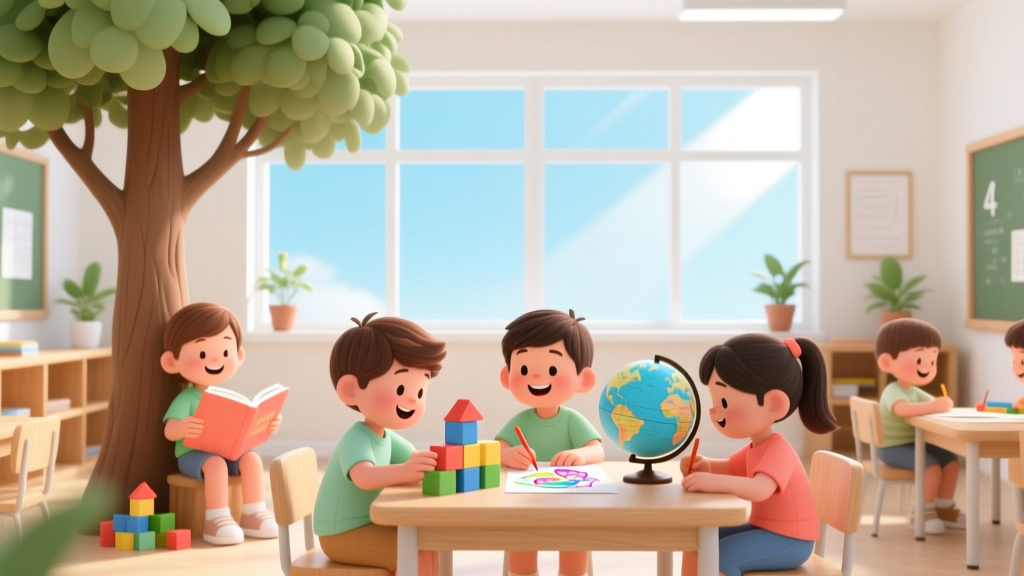
What Age Do Kids Start to Read? (2026)
Why This Question Keeps Parents Up at Night — And Why It Shouldn’t
Every parent wonders: what age do kids start to read? That question isn’t just curiosity — it’s layered with unspoken fears: "Is my child falling behind?", "Did I miss a red flag?", "Are we doing enough?" In an era of early academic pressure and viral ‘3-year-old reading Shakespeare’ reels, it’s easy to mistake outliers for benchmarks. But here’s what decades of developmental science confirm: reading is not a switch that flips on a birthday — it’s a cascade of neurocognitive, linguistic, and environmental building blocks unfolding uniquely in every child. And the most powerful predictor of lifelong literacy isn’t how early a child decodes words — it’s whether they associate reading with warmth, curiosity, and shared joy.
The Reading Continuum: From Scribbles to Sentences
Forget rigid age labels. Leading researchers like Dr. Hollis Scarborough (developer of the Reading Rope model) emphasize that reading emerges along a continuum, not a timeline. What looks like ‘reading’ at age 3 (e.g., reciting memorized text from a favorite book) is fundamentally different from the phonemic awareness and decoding skills that define true reading at age 6. Pediatricians and early literacy specialists stress that emergent literacy begins at birth — long before formal instruction — through responsive interactions like joint book-reading, sound play, and print-rich environments.
Consider Maya, a 4-year-old whose parents worried she “wasn’t reading yet.” At her pediatric well-check, her doctor observed her pointing to logos (“STOP,” “McDonald’s”), retelling stories with precise sequencing, and clapping syllables in songs — all robust indicators of pre-reading development. She wasn’t decoding words — but her brain was wiring itself for reading. Six months later, with consistent shared reading and playful letter-sound games, she began sounding out CVC words like “cat” and “sun.” Her journey wasn’t late — it was perfectly on track.
According to the American Academy of Pediatrics (AAP), 90% of children show foundational pre-reading behaviors by age 3–4, but only about 15–20% achieve independent, fluent word recognition before age 6. By age 7, over 95% of typically developing children read at or above grade level — but that doesn’t mean every child hits milestones in lockstep. Neurodiverse learners (e.g., those with dyslexia, language delays, or ADHD) often follow distinct pathways — and that’s not failure; it’s neurodevelopmental diversity requiring tailored support, not comparison.
Decoding the Milestones: What to Expect — and When to Pause and Observe
Instead of asking “When will my child read?”, ask: “What skills are they building *right now*?” Below is a research-backed, clinically validated progression — grounded in AAP, NAEYC, and National Institute of Child Health and Human Development (NICHD) frameworks — that prioritizes observable behaviors over arbitrary ages:
- Ages 0–2: Responds to rhymes and songs; points to pictures when named; babbles with varied intonation; shows interest in books (even mouthing them!); recognizes familiar signs/logos.
- Ages 2–3: Names some letters (especially those in their name); hears beginning sounds (“b” in “ball”); enjoys repetitive books; pretends to read aloud using pictures as cues.
- Ages 3–4: Matches letters to sounds (e.g., “B says /b/”); counts syllables; identifies first and last sounds in simple words; writes scribbles or approximations of letters.
- Ages 4–5: Blends 2–3 sounds into words (“c-a-t → cat”); segments words into sounds (“dog → /d/ /o/ /g/”); recognizes common sight words (e.g., “the,” “go,” “see”); attempts to write their name legibly.
- Ages 5–7: Reads simple decodable texts independently; self-corrects misread words using context or phonics; reads aloud with expression; comprehends main ideas and sequence events.
Crucially, these ranges reflect when most children demonstrate each skill — not deadlines. As Dr. Sally Shaywitz, neuroscientist and author of Overcoming Dyslexia, notes: “A child who doesn’t read fluently by age 7 isn’t ‘behind’ — they may simply need more time, different strategies, or evaluation for underlying processing differences. Early identification matters, but panic undermines progress.”
What Actually Moves the Needle: Evidence-Based Strategies That Work
Forget flashcards and pressured drills. Research consistently shows the highest-impact practices are relational, joyful, and embedded in daily life. A landmark 2022 longitudinal study published in Pediatrics followed 1,200 children from infancy to age 8 and found that shared book reading frequency (3+ times/week) predicted reading achievement more strongly than parental education level or household income. But not all reading is equal — here’s what makes it stick:
- Dialogic Reading: Instead of reading *to* your child, read *with* them. Pause to ask open-ended questions (“What do you think happens next?”), expand their utterances (“You said ‘dog’ — yes, a fluffy brown dog running!”), and label emotions and actions. This builds vocabulary, inference, and narrative skills far beyond decoding.
- Phonological Play: Sing nursery rhymes, stretch out words (“ssssuuuunnn”), play ‘I Spy’ with sounds (“I spy something that starts with /m/”), and clap syllables in names and foods. These aren’t ‘pre-reading’ — they’re neurological priming for phonemic awareness, the strongest predictor of later reading success.
- Print-Rich, Low-Pressure Environments: Label cabinets (“CUPS,” “SPOONS”), write grocery lists together, point out letters in street signs, and let kids “write” menus or cards. No corrections — just modeling and celebration of effort. As Montessori educator and literacy specialist Elena Garcia observes: “When writing feels like contribution, not performance, children internalize literacy as power — not pressure.”
- Choosing the Right Books: Prioritize high-quality picture books with rich language, predictable patterns (e.g., The Very Hungry Caterpillar), and diverse characters. Avoid early readers with forced, unnatural language (“See the cat. See the hat.”). Real language — even if complex — builds comprehension faster than simplified text.
When to Seek Support: Red Flags vs. Normal Variation
Most variation is healthy. But certain patterns warrant professional input — not because your child is “broken,” but because early, targeted support yields dramatically better outcomes. According to the International Dyslexia Association (IDA), consult a pediatrician or certified speech-language pathologist (SLP) if, by age 4, your child:
- Rarely engages with books or shows no interest in stories;
- Cannot identify rhyming words (e.g., “cat”/“hat”) or break words into syllables;
- Struggles to learn and recall letter names/sounds after consistent exposure;
- Has persistent difficulty pronouncing words (e.g., “aminal” for “animal”) or following multi-step directions;
- Shows extreme frustration, avoidance, or physical resistance during literacy activities.
Importantly, delayed speech onset alone is not a reading red flag — many late talkers catch up without literacy issues. Conversely, children with strong oral language may still struggle with phonological processing. That’s why screening — not assumptions — is key. The AAP recommends universal literacy screening starting at age 3 during well-child visits, and many school districts offer free preschool evaluations.
| Age Range | Typical Pre-Reading & Reading Behaviors | Supportive Parent Actions | When to Consider Professional Input |
|---|---|---|---|
| 0–2 years | Responds to voices/books; babbles rhythmically; tracks moving objects; shows preference for faces and high-contrast images | Read aloud daily (even 5 minutes); narrate routines (“Now we’re washing hands!”); sing songs with gestures; provide board books with textures | Consistent lack of eye contact, no babbling by 12 months, no response to name by 18 months (consult pediatrician for broader developmental assessment) |
| 2–3 years | Points to pictures on request; names some letters; enjoys rhymes; uses 2–3 word phrases; imitates drawing circles/lines | Play sound games (“What starts with /b/? Ball, baby, banana!”); trace letters in sand or shaving cream; use magnetic letters for playful naming | No recognizable words by 24 months; limited vocabulary (<50 words) or no two-word combinations by age 2; inability to follow simple instructions |
| 3–4 years | Counts to 5+; matches letters to sounds; identifies beginning sounds; tells simple stories; draws recognizable shapes/letters | Write their name together; play “letter hunt” around the house; use picture cards to build sentences; ask “why” and “how” questions about stories | Cannot rhyme by age 4; cannot identify 10+ letters; avoids books entirely; extreme frustration with drawing/writing attempts |
| 4–5 years | Blends 2–3 sounds; segments words; knows most letters and sounds; writes name legibly; recognizes some sight words; predicts story endings | Use decodable books (e.g., Bob Books Level 1); play “sound substitution” (“Change /c/ in ‘cat’ to /b/ → bat!”); write stories together (you scribe, they draw) | No blending/segmenting by age 4.5; cannot learn letter sounds after repeated practice; reverses letters frequently *and* confuses orientation (e.g., “b/d/p/q”) beyond typical development |
| 5–7 years | Reads simple sentences fluently; self-corrects errors; understands main ideas; writes short narratives with invented spelling; spells phonetically | Read chapter books aloud *to* them; discuss characters’ feelings/motivations; encourage journaling; celebrate effort over accuracy (“I love how you sounded out ‘elephant’!”) | Still guessing words from pictures/context instead of decoding by mid-1st grade; frequent letter/word reversals affecting comprehension; avoids reading aloud; significant fatigue or headaches during reading |
Frequently Asked Questions
My 5-year-old knows all his letters and sounds but won’t try to read words. Is this normal?
Yes — and very common. Knowing letter-sound correspondences is necessary but not sufficient for reading. Many children need explicit instruction in blending (combining sounds into words) and segmenting (breaking words apart). Try playful, low-stakes blending: say sounds slowly (“/c/…/a/…/t/”) and have him “push them together” like magnets. Celebrate every attempt — even if he says “cah-t” instead of “cat.” Confidence builds through safe repetition, not perfection.
My child is reading early (age 3–4). Should I push them to read harder books?
Resist the urge. Early readers often rely heavily on memory and pattern recognition, not deep decoding. Pushing advanced texts can erode comprehension and joy. Instead, deepen understanding: ask “What do you think the character is feeling?” or “How would you solve this problem?” Provide rich nonfiction (e.g., National Geographic Kids), poetry, and opportunities to write stories. As literacy researcher Dr. Nell Duke advises: “Feed the fire, don’t fan the flames.”
Does screen time help or hurt early reading development?
It depends entirely on how it’s used. Passive video watching (e.g., cartoons) provides minimal literacy benefit and displaces interactive language. But co-viewing educational apps with adult scaffolding — like pausing to predict, discussing characters, or tracing letters on-screen together — can reinforce skills. The AAP recommends no screens for children under 18 months (except video-chatting) and limits of 1 hour/day of high-quality programming for ages 2–5, always with caregiver engagement.
My child has been diagnosed with dyslexia. Does this mean they’ll never read well?
No — absolutely not. Dyslexia is a difference in how the brain processes written language, not an indicator of intelligence or potential. With evidence-based, structured literacy instruction (like Orton-Gillingham or Wilson Reading System) delivered by trained professionals, 80–90% of students with dyslexia achieve strong reading outcomes. Early intervention is critical, but progress continues throughout life. Many brilliant minds — including Richard Branson, Whoopi Goldberg, and Nobel laureate Carol Greider — are dyslexic. Focus on strengths: creativity, big-picture thinking, and verbal reasoning.
Should I teach my child to read before kindergarten?
Not formally — but immerse them in literacy-rich experiences daily. Kindergarten curricula are designed for children entering with varying readiness. Pushing formal instruction too early can backfire: a 2023 study in Early Childhood Research Quarterly found children in academically intensive pre-K programs showed higher anxiety and lower intrinsic motivation toward reading by Grade 2 compared to peers in play-based programs. Let kindergarten be the launchpad — your role is to cultivate the soil.
Common Myths
Myth 1: “If my child isn’t reading by age 5, they’re behind forever.”
Reality: Developmental timelines vary widely. The largest longitudinal study on literacy (NICHD Study of Early Child Care and Youth Development) tracked over 1,300 children and found that only 2% of children who were delayed in early reading remained significantly below grade level by age 11 — and most had co-occurring challenges (e.g., chronic ear infections affecting auditory processing, or undiagnosed language disorders). Late bloomers exist — and thrive.
Myth 2: “Learning to read is mostly about memorizing sight words.”
Reality: While high-frequency words like “the” and “of” are essential, over-reliance on rote memorization neglects the core skill: decoding. The Science of Reading consensus, endorsed by over 100 literacy organizations, confirms that systematic phonics instruction — teaching the relationship between letters and sounds — is the most effective foundation for reading success across all learner profiles.
Related Topics (Internal Link Suggestions)
- Signs of Dyslexia in Preschoolers — suggested anchor text: "early dyslexia indicators"
- Best Phonics Programs for Home Use — suggested anchor text: "evidence-based phonics resources"
- How to Choose Age-Appropriate Books — suggested anchor text: "literacy-rich book selection guide"
- Speech Delay vs. Language Delay: What’s the Difference? — suggested anchor text: "speech and language development milestones"
- Montessori-Inspired Literacy Activities — suggested anchor text: "hands-on pre-reading materials"
Your Next Step: One Small, Powerful Action Today
You don’t need to overhaul your routine — just one intentional, joyful interaction shifts the trajectory. Tonight, pick up a favorite picture book and try dialogic reading: pause on a page and ask, “What’s happening here?” Then listen — really listen — to your child’s answer. Notice how their eyes light up when you echo their words with richer language (“Yes! The dog is leaping over the fence — he’s so fast!”). That micro-moment of connection, curiosity, and co-construction is where reading truly begins. Not on a calendar — in your lap, your voice, and your unwavering belief in their unique, unfolding story.
More Articles
 Should You Give Kids Melatonin? Evidence-Based Answers
 Best Cough Medicine for Kids: What Actually Works
 Kevin Jonas Kids: Parenting Philosophy & Privacy
 When Do Kids Need to Go to the Dentist? (2026)
 How Many Kids Did Penny Marshall Have? (2026)
 Booster Seat Age Rules: When to Switch Safely
 When Do Kids Learn Addition? Evidence-Based Timeline
 Measles Deaths in Children: 2026 Facts & Protection
 El Mencho’s Kids: Verified Facts & Public Safety Risks
 Kids Bedtime Calculator: Science-Backed & Age-Based (2026)