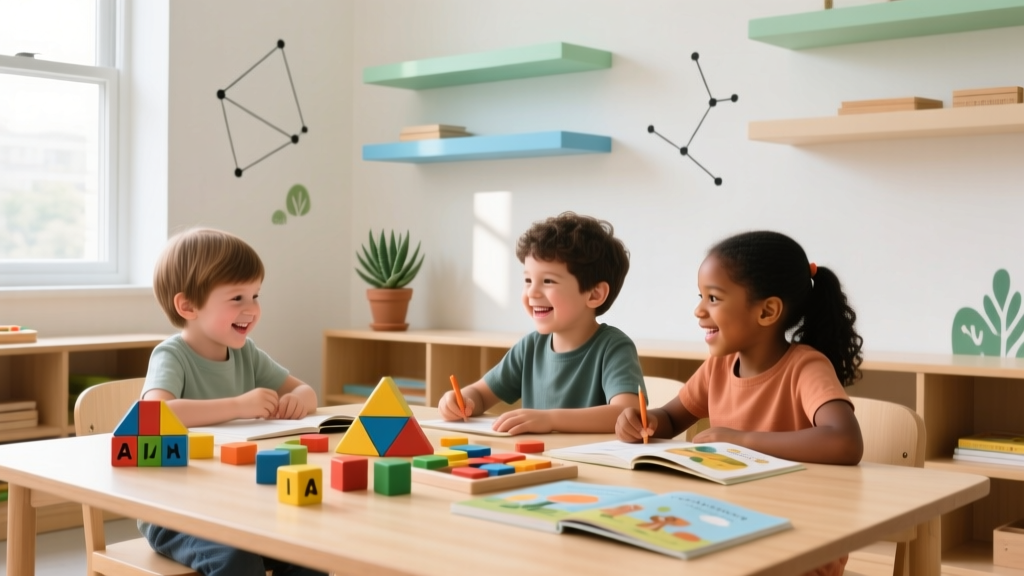
What Age Do Kids Learn to Play With Others?
Why 'What Age Do Kids Learn to Positively Play With Others' Matters More Than Ever
Parents today are asking what age do kids learn to positively play with others more urgently than ever—not because children are falling behind, but because our world is growing louder, faster, and more socially fragmented. Screen time competes with face-to-face interaction; overscheduled days leave little room for unstructured peer play; and well-meaning adults often misinterpret normal developmental variation as 'deficiency.' Yet research from the American Academy of Pediatrics (AAP) and longitudinal studies like the NICHD Study of Early Child Care confirm: positive peer play isn’t a switch that flips on at a birthday—it’s a layered, scaffolded skill built across years through safety, modeling, repetition, and gentle guidance. Getting this timeline right doesn’t just prevent power struggles at preschool drop-off—it lays neural groundwork for emotional regulation, conflict resolution, and lifelong relationship health.
The Real Timeline: From Solitary to Sympathetic Play (Birth–7 Years)
Forget rigid 'age-by-age' checklists. Social play unfolds along a neurodevelopmental arc—with overlapping phases, not clean breaks. Pediatric developmental psychologist Dr. Claire Lerner (Zero to Three) emphasizes that positive play—defined as reciprocal, empathetic, and mutually enjoyable interaction—requires three integrated foundations: self-regulation (managing big feelings), theory of mind (understanding others’ perspectives), and executive function (planning, flexibility, impulse control). These mature at different paces, which is why two 4-year-olds may look worlds apart in playground dynamics.
Here’s what decades of observational research—including the landmark Minnesota Longitudinal Study—actually shows:
- 0–12 months: Social 'pre-play': eye contact, shared smiles, vocal turn-taking with caregivers. No peer interaction yet—but this co-regulation builds the brain’s capacity for later reciprocity.
- 12–24 months: Parallel play emerges: children play side-by-side with similar toys, rarely interacting directly. This is not shyness or delay—it’s cognitive scaffolding. Their brains are learning object permanence and cause-effect before adding the complexity of another person’s intentions.
- 24–36 months: Simple associative play begins: sharing toys, brief exchanges (“My truck!” “Mine!”), and imitating peers. Conflict spikes here—not because kids are ‘mean,’ but because they’re testing boundaries while lacking vocabulary or impulse control. According to AAP guidelines, this is when adult mediation (not intervention) becomes critical: narrating feelings (“You look frustrated—he grabbed the shovel”) builds emotional literacy.
- 3–5 years: Cooperative play takes root: assigning roles (“You be the doctor, I’ll be the patient”), negotiating rules (“We take turns on the slide”), and showing concern (“Are you okay?” after a fall). But consistency is rare. A child may share beautifully at home yet hoard blocks at preschool—a sign of context-dependent regulation, not moral failure.
- 5–7 years: Sympathetic & inclusive play deepens: forming friendships based on shared interests, adapting behavior for group harmony (“Let’s make up a new rule so everyone gets a turn”), and recognizing exclusionary dynamics (“That’s not fair to Maya”). This stage correlates strongly with later academic success—not because play is ‘practice for school,’ but because sustained collaboration strengthens working memory and cognitive flexibility.
What ‘Positive Play’ Really Means (And What It Doesn’t)
Many parents equate ‘positive play’ with quiet cooperation or constant smiling. That’s a dangerous misconception. True positive play includes negotiation, disagreement, repair, and even short-term withdrawal—all handled with increasing agency and empathy. As Dr. Ross Greene (author of The Explosive Child) reminds us: “Kids do well if they can.” When a child hits, grabs, or walks away mid-game, it’s rarely willful defiance—it’s an overwhelmed nervous system signaling unmet needs (tiredness, hunger, sensory overload, or undeveloped skills).
Here’s how to reframe common behaviors:
- “He never shares” → At age 3, sharing is a cognitive leap—not a moral failing. Research in Child Development shows most children don’t reliably share until age 4.5–5, and even then, only with trusted peers.
- “She plays alone all the time” → Solitary play remains developmentally appropriate through age 6, especially for introverted or highly sensitive children. Forced group inclusion can backfire, triggering anxiety that impedes social growth.
- “They fight every time they’re together” → Sibling or peer conflict peaks between ages 3–5 because children are practicing boundary-setting and perspective-taking—the very skills needed for healthy relationships. The goal isn’t zero conflict; it’s teaching repair (“I’m sorry I broke your tower. Can I help rebuild it?”).
So what does indicate a need for extra support? Persistent patterns beyond age 5: consistent avoidance of all peer interaction, inability to read facial cues, extreme distress during routine playdates, or aggression that escalates rather than de-escalates with adult coaching. In those cases, consult a pediatrician or child psychologist—not to ‘fix’ the child, but to uncover underlying factors like language delays, sensory processing differences, or anxiety.
Practical Strategies: Building Positive Play Skills Day-by-Day
You don’t need expensive programs or play therapists to nurture positive peer interaction. What works best is embedded, low-pressure practice woven into daily life. Below are evidence-backed approaches, tested by early childhood educators and validated in randomized trials (e.g., the Chicago School Readiness Project):
- Model ‘repair language’ in your own conflicts. Children absorb social scripts from adult interactions. Narrate your own mistakes aloud: “I raised my voice when I was frustrated. I’m going to take a breath and try again.” This teaches accountability without shame.
- Create ‘play micro-opportunities’—not full playdates. Instead of 2-hour sessions that overwhelm young nervous systems, try 15-minute ‘toy swaps’: exchange one favorite item with a neighbor child, then debrief (“How did it feel to let someone hold your dinosaur?”). Short, predictable interactions build confidence.
- Use role-play with puppets or dolls to rehearse scenarios. Before a birthday party, act out: “What if someone takes your cupcake?” “What if you want to join kids building a fort?” Let your child direct the story—this builds agency and problem-solving.
- Label emotions before the meltdown. During calm moments, name feelings in real time: “Your shoulders are tight—you might be feeling worried about the new teacher.” This expands their emotional vocabulary, making it easier to communicate needs instead of acting out.
- Protect unstructured outdoor time—even 20 minutes daily. Natural environments lower cortisol and boost oxytocin, creating ideal conditions for spontaneous, imaginative peer play. A 2023 University of Illinois study found children who spent ≥45 mins/day in green spaces showed 32% higher cooperative play scores than peers with limited nature access.
When to Worry (and When to Wait): A Developmental Red Flag Guide
Developmental timelines vary widely—but certain patterns warrant professional insight. The table below synthesizes AAP recommendations, CDC milestones, and clinical consensus from pediatric behavioral specialists:
| Age Range | Typical Social Play Behaviors | Green Light (Normal Variation) | Yellow Light (Monitor Closely) | Red Flag (Consult Professional) |
|---|---|---|---|---|
| 2–3 years | Parallel play; brief toy exchanges; imitation; occasional physical contact (hugs, pushes) | Plays alongside peers for >80% of time; limited verbal negotiation | Consistently avoids eye contact during play; no response to name in social settings | No shared attention (doesn’t point to show interest); no pretend play by age 3 |
| 4–5 years | Cooperative games with simple rules; taking turns; expressing empathy (“You’re sad”); basic conflict resolution | Needs adult help to resolve >50% of conflicts; shares reluctantly | Frequent meltdowns during peer play; no attempts to initiate interaction | Aggression causing injury; destroys toys to express frustration; no understanding of ‘fairness’ |
| 6–7 years | Forming friendship groups; collaborative storytelling; adapting rules for inclusion; apologizing spontaneously | Struggles with complex group dynamics (e.g., cliques); prefers solitary hobbies | Consistently excluded by peers without clear cause; blames others for all conflicts | No friends after 6+ months of school; expresses hopelessness about relationships |
Note: Red flags require evaluation—not diagnosis. Many traits overlap with neurodiversity (e.g., autism, ADHD, anxiety), which aren’t deficits but different neurological pathways. Early support focuses on accommodation and skill-building, not normalization.
Frequently Asked Questions
Can screen time replace peer play for social development?
No—screens cannot replicate the bidirectional feedback loop of live social interaction. While video calls with grandparents offer connection, passive watching or solo gaming lacks the real-time emotional calibration, nonverbal cue reading, and adaptive response practice essential for positive peer play. A 2022 JAMA Pediatrics study linked >2 hours/day of recreational screen time before age 5 to significantly lower social competence scores at age 7. Prioritize face-to-face interaction—even brief, high-quality moments—over digital substitutes.
My child is advanced academically but struggles socially. Is this normal?
Yes—and it’s more common than many realize. Cognitive advancement (e.g., reading at age 4) doesn’t automatically accelerate social-emotional development, which relies on different neural networks. Gifted children may have intense interests that differ from peers, struggle with ‘small talk,’ or misread subtle social cues. Focus on finding ‘interest-based connection points’ (e.g., coding clubs, nature exploration groups) where social interaction feels authentic, not performative.
Should I enroll my shy child in social skills classes?
Proceed with caution. Most commercial ‘social skills’ programs use rigid, neurotypical-centric scripts that can increase anxiety and mask authentic expression. Instead, seek play-based occupational therapy or DIR/Floortime approaches that follow the child’s lead, build regulation first, and honor their communication style. As occupational therapist Maureen Dunphy notes: “The goal isn’t to make a child ‘more social’—it’s to help them feel safe enough to connect in ways that feel true to them.”
Does gender affect when kids learn to positively play with others?
Research shows minimal biological differences in social play onset—but significant environmental influences. Girls are often encouraged toward cooperative, verbal play earlier; boys toward physical, rule-based play. This shapes observed behaviors but not innate capacity. A 2021 meta-analysis in Developmental Psychology found that when given equal access to diverse play materials and adult modeling, gender gaps in empathy, sharing, and conflict resolution vanished by age 5.
How does bilingualism impact peer play development?
Bilingual children may experience a brief (6–12 month) lag in vocabulary per language—but show enhanced social cognition overall. Studies confirm they’re better at perspective-taking, ignoring distractions during conversation, and adapting communication for different listeners—key ingredients for positive play. Celebrate code-switching as social agility, not confusion.
Common Myths About Positive Peer Play
- Myth #1: “If they’re not playing together by age 3, something’s wrong.”
False. Parallel play remains normative and beneficial through age 4. Forcing interaction before neural readiness increases stress and undermines trust. Patience isn’t permissiveness—it’s neuroscience-informed support.
- Myth #2: “Playdates must be long and structured to ‘work.’”
False. Short, child-led interactions (even 10–15 minutes) with minimal adult scripting yield stronger social gains than 2-hour, adult-directed sessions. Unstructured time allows children to practice initiating, negotiating, and repairing—skills no curriculum can teach.
Related Topics (Internal Link Suggestions)
- Supporting Empathy Development in Toddlers — suggested anchor text: "how to teach empathy to toddlers"
- Managing Toddler Sharing Conflicts Without Shame — suggested anchor text: "toddler sharing strategies that work"
- When to Seek Help for Social Development Delays — suggested anchor text: "signs your child needs social skills support"
- Outdoor Play Ideas That Build Cooperation — suggested anchor text: "cooperative outdoor games for preschoolers"
- Screen Time Guidelines for Social Development — suggested anchor text: "healthy screen time for toddlers"
Your Next Step: Start Small, Stay Consistent
Understanding what age do kids learn to positively play with others isn’t about hitting a finish line—it’s about becoming a calm, curious witness to your child’s unfolding social intelligence. Today, choose one tiny action: narrate your own feelings during a minor frustration, set a timer for 12 minutes of uninterrupted backyard play with a neighbor child, or simply observe your child’s current play style without judgment. These micro-moments, repeated with warmth and consistency, build the secure base from which all positive relationships grow. You’re not raising a ‘socially perfect’ child—you’re nurturing a human who knows their worth, respects others’ boundaries, and repairs connection when it frays. That’s the foundation no milestone chart can capture—but every parent can cultivate.
More Articles
 Kids Pneumonia Signs: 7 Early Warnings (2026)
 Do Diddy’s Kids Support Him? Psychologist Insights
 Did Toby Keith Have Kids? Truth, Parenting Tips & More
 Are Elana Meyers Taylor’s Kids Adopted? (2026)
 How Many Kids Did RFK Have? Family Facts & Parenting Lessons
 Can Kids Take Emergen-C? Pediatrician Advice (2026)
 Trump & Melania Kids: Family Truths (2026)
 What Helps Kids Sleep: 7 Evidence-Backed Strategies
 How to Measure Bat Size for Kids (2026)
 Does Ryan Seacrest Have Kids? Surrogacy & Privacy Facts