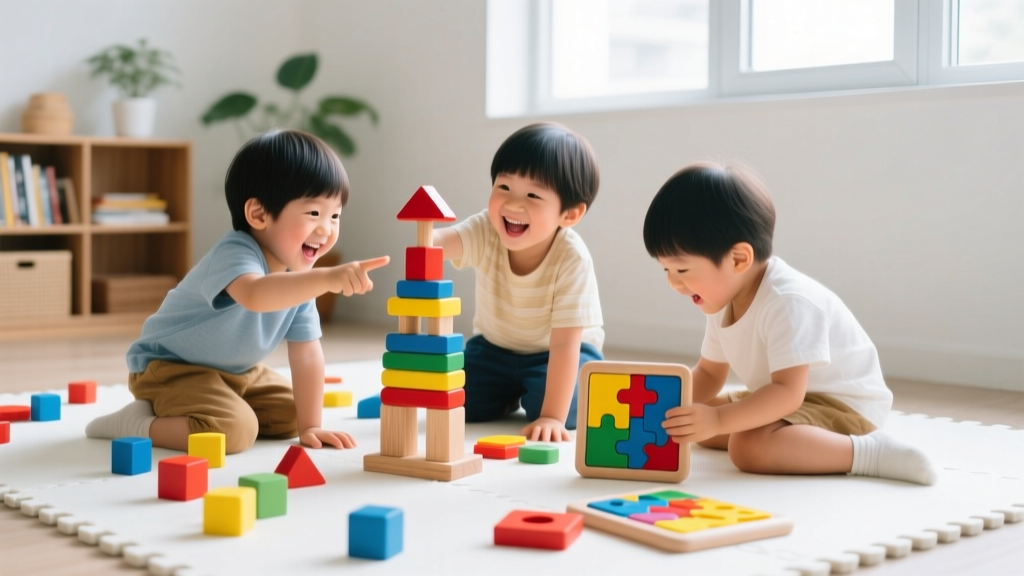
Teaching Kids About Emotions Early On
Emotional Intelligence Starts Early
Children who can name their emotions by age 4 show better self-regulation, stronger friendships, and fewer behavioral problems through adolescence. The good news: emotional vocabulary is teachable.
Building an Emotion Vocabulary
Go Beyond Happy and Sad
Most toddlers only know 2-3 emotion words. Expand gradually: frustrated, excited, nervous, proud, disappointed, curious. Use these words in your own speech: "I'm feeling frustrated because I can't find my keys."
The Emotion Thermometer
Draw a simple thermometer or traffic light. Green = calm, yellow = starting to feel big feelings, red = overwhelmed. Help your child check in: "What color are you feeling right now?"
Teaching Regulation Strategies
The Belly Breath
Place a stuffed animal on your child's belly. Breathe in slowly to make it rise, breathe out to make it fall. This visual makes deep breathing concrete for young children.
The Calm-Down Corner
Create a small space with soft pillows, a few books, and a sensory item (stress ball, glitter jar). This isn't punishment—it's a self-regulation tool. Go there together at first to model its use.
What to Do During Meltdowns
Stay calm yourself—co-regulation comes before self-regulation. Name what you see: "Your fists are tight and your face is red. You seem really angry." Don't try to teach during the meltdown. Wait until after, then discuss what happened and practice strategies for next time.
More Articles
 Why Are Kids So Annoying? It’s Their Brain Wiring
 DIRECTV Kids App for iPad (2026): Truth & 5 Alternatives
 Does Josiah Queen Have Kids? The Truth (2026)
 When to Tell Kids About Santa (Backed by Science)
 Is Life of a Showgirl Appropriate for Kids? (2026)
 Did Charlie Kirk Have Kids? Truth & Family Pressures
 Labradoodles with Kids: Truth, Temperament & Pitfalls (2026)
 2000 Tariff Check for Kids: Who Qualifies in 2026?
 Rampueng Kid: Thailand’s Viral Child Star (2026)
 Teach Kids Self Care: Science-Backed, Age-Specific Guide