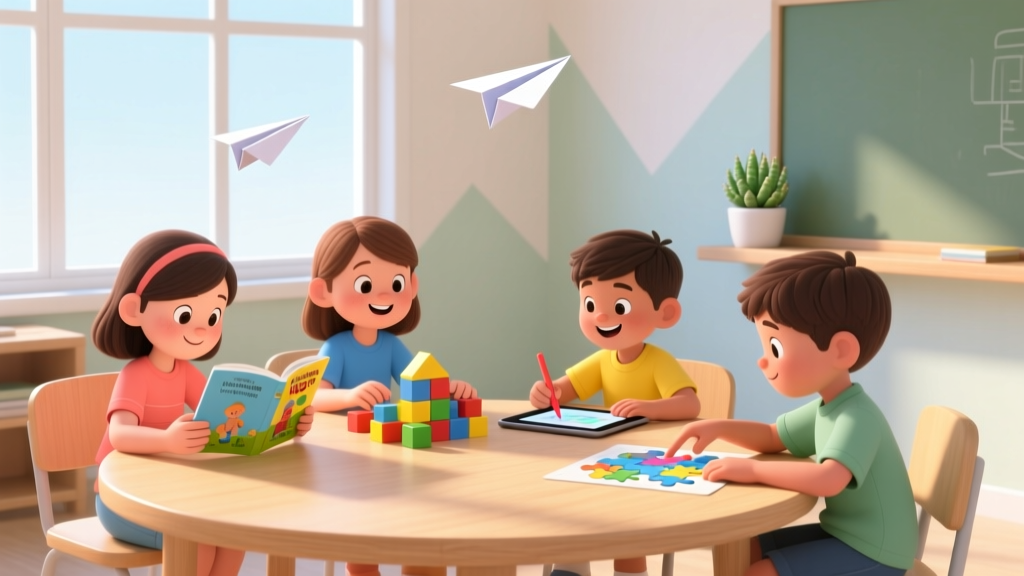
Is Technology Good for Kids? A Science-Backed Guide
Why This Question Has Never Been More Urgent — And Why the Answer Isn’t Yes or No
The question is technology good for kids isn’t rhetorical—it’s the quiet hum beneath bedtime negotiations, the pause before approving a new app request, the guilt that flickers when your 4-year-old calms instantly with a tablet while you catch your breath. In 2024, children under 8 spend an average of 2 hours 19 minutes per day on screens—up 32% since 2019 (Common Sense Media, 2024). But raw screen time stats miss the real issue: not how much tech kids use, but how, why, and with whom. As Dr. Jenny Radesky, developmental pediatrician and lead author of the American Academy of Pediatrics’ (AAP) updated screen-time guidelines, puts it: ‘Technology isn’t inherently toxic or magical—it’s a tool. Its impact depends entirely on the child’s developmental stage, the content’s quality, and whether it replaces or enriches human connection.’ This article cuts through the panic and the hype to give you what you actually need: evidence-based clarity, actionable thresholds, and a customizable framework—not dogma.
What the Science Really Says: Benefits, Risks, and Critical Age Thresholds
Let’s start with what decades of longitudinal research confirm—and what it refutes. A landmark 2023 meta-analysis in JAMA Pediatrics reviewed 67 studies involving over 112,000 children aged 0–12. It found no consistent link between moderate, high-quality screen use and cognitive delay—but did find significant risks when screens displace three irreplaceable developmental inputs: sleep, physical play, and responsive adult interaction. The critical insight? Risk isn’t linear. It spikes at specific developmental inflection points:
- Under 18 months: Passive video viewing (e.g., YouTube, background TV) correlates with language delays—even after controlling for socioeconomic factors (JAMA Pediatrics, 2022). Video chat (e.g., FaceTime with Grandma) is the sole exception—its interactive, contingent nature supports social learning.
- Ages 2–5: High-quality, co-viewed programming (like Bluey or Mister Rogers’ Neighborhood) improves vocabulary, self-regulation, and narrative comprehension—but only when adults watch *with* children and talk about what’s happening. Solo viewing shows minimal gains.
- Ages 6–12: The biggest predictor of academic impact isn’t screen time itself, but what displaces it. Children who replace homework time or family dinner conversation with gaming show lower grades and weaker family cohesion. Those who use tech for creative coding, collaborative Minecraft world-building, or digital storytelling? Their executive function scores rise 14–22% above peers (University of California, Irvine, 2023).
This isn’t about banning devices—it’s about recognizing that tech’s effect is mediated by context, content, and childhood stage. Think of it like sugar: essential in small, intentional doses (vitamin C in fruit), harmful in unregulated excess (candy binges), and dangerous when it crowds out protein and fiber (whole foods).
Your 5-Step Family Media Plan: Practical, Flexible, and Backed by Experts
Forget rigid hour limits. The AAP and Zero to Three now recommend family-centered media plans—living documents co-created with kids (age-appropriately) that prioritize intention over restriction. Here’s how to build yours:
- Map Your Tech Ecosystem First: For one week, log every device, app, and platform used by each child—including duration, purpose (learning? calming? socializing?), and whether an adult was present. You’ll likely discover patterns: e.g., “My 7-year-old uses YouTube Kids for 45 mins daily—but 32 mins are spent searching for unmoderated ‘funny fails’ videos.” Awareness precedes change.
- Define Non-Negotiable Zones & Times: Based on AAP guidelines, designate three sacred spaces/times tech-free: bedrooms (for sleep hygiene), meals (for language modeling and bonding), and the 60 minutes before bed (blue light suppresses melatonin). These aren’t punishments—they’re physiological necessities.
- Create a ‘Tech Use Charter’ With Your Child: For kids 5+, co-draft simple rules using ‘I’ statements: *‘I will ask before downloading a new game,’ ‘I will tell Mom if something online feels scary or confusing,’ ‘I will put my tablet in the kitchen charging station at 7 p.m.’* Research shows ownership increases compliance by 68% (Child Development, 2021).
- Curate, Don’t Just Restrict: Replace ‘no’ with ‘which?’ Use trusted resources like Common Sense Media (rated by child development specialists) or the Fred Rogers Center’s Media Mentor Toolkit. For example: Instead of blocking all Roblox, pre-approve 3 educational servers (like Roblox Learn to Code) and set in-app privacy controls together.
- Schedule ‘Tech-Free Reconnection Rituals’: Aim for 15 minutes daily of uninterrupted, device-free interaction: cooking together, walking without headphones, or playing Uno. This rebuilds the neural pathways for empathy and attention regulation that heavy passive consumption can weaken.
When Tech Becomes Therapy: Unexpected Benefits You Might Be Overlooking
Most conversations about kids and tech focus on risk—but emerging clinical practice reveals powerful, under-discussed benefits for neurodiverse and medically complex children. Consider these evidence-backed applications:
- Autism Support: Augmentative and alternative communication (AAC) apps like Proloquo2Go don’t replace speech—they accelerate language acquisition. A 2024 Johns Hopkins study found nonverbal autistic children using AAC for 20 mins/day showed 3x faster vocabulary growth than control groups.
- Anxiety & Social Skills: VR exposure therapy apps (e.g., Floreo) help kids with social anxiety practice greetings, eye contact, and conflict resolution in safe, repeatable simulations. Clinicians report 40% faster skill transfer to real-world settings.
- Chronic Illness Management: Gamified health apps like MySugr Junior (for diabetes) turn blood-sugar logging into a quest system. Adherence rates jump from 52% to 89% in children aged 8–12 (Pediatric Diabetes, 2023).
These aren’t ‘screen time’—they’re adaptive tools. The distinction matters. As Dr. Temple Grandin, autism researcher and advocate, notes: ‘For many kids, technology isn’t a distraction from life—it’s the bridge into it.’
Age-Appropriate Tech Use: What Developmental Science Says Works (and What Doesn’t)
One-size-fits-all rules fail because brain development isn’t uniform. The table below synthesizes AAP, Zero to Three, and the World Health Organization’s guidance on intentional tech integration by developmental stage:
| Age Range | Key Brain/Behavioral Milestones | High-Value Tech Uses | Risks to Mitigate | Parent Action Step |
|---|---|---|---|---|
| 0–18 months | Brain forms 1 million neural connections/second; learns language & emotion through live human interaction | Video calls with trusted caregivers only; audio-only stories (e.g., Libby app) played during cuddle time | Background TV reduces joint attention; passive video impairs language processing | Remove all screens from nurseries and common areas. Use white noise machines instead of ‘soothing’ YouTube videos. |
| 2–4 years | Developing theory of mind; limited impulse control; learns through imitation & play | Co-viewing high-quality shows (Daniel Tiger, Doc McStuffins) + pausing to discuss feelings; interactive drawing apps (like Draw and Tell) used with parent narration | Algorithm-driven autoplay erodes attention stamina; fast-paced edits overstimulate developing sensory systems | Enable ‘Ask to Buy’ on tablets; disable autoplay; use parental controls to limit sessions to 15-min blocks with visual timers. |
| 5–8 years | Executive function blossoms; develops moral reasoning; seeks peer connection | Creative coding (Scratch Jr.), collaborative storytelling (Book Creator), supervised Minecraft education servers; family photo-sharing via private cloud albums | Early social media exposure increases body image concerns; unmoderated chat risks grooming and cyberbullying | Install kid-safe browsers (Kiddle); co-create a ‘digital citizenship pledge’; review privacy settings on every app together. |
| 9–12 years | Abstract thinking emerges; identity formation intensifies; peer influence peaks | Podcast creation, citizen science projects (e.g., iNaturalist), ethical AI exploration (Google’s Teachable Machine), family finance simulators | Algorithmic feeds promote polarization; comparison culture harms self-worth; sleep disruption impacts memory consolidation | Use screen-time reports (iOS Screen Time, Google Digital Wellbeing) to co-analyze data monthly; negotiate 1 ‘tech detox’ weekend per month. |
Frequently Asked Questions
Can educational apps really boost my toddler’s IQ?
No—reputable studies show no evidence that apps increase IQ in children under 3. The AAP states: ‘There is no scientific evidence that digital media enhances learning or development in children younger than 2 years.’ What does boost cognitive growth? Responsive adult interaction, open-ended play, and rich language exposure. Apps marketed as ‘brain-builders’ often exploit parental anxiety. Save your money—and your toddler’s attention—for blocks, books, and back-and-forth conversation.
My child has ADHD. Is screen time especially harmful for them?
Not inherently—but the design of most entertainment platforms works against their neurology. Fast cuts, infinite scroll, and dopamine-driven notifications exacerbate impulsivity and working memory challenges. However, structured tech can be therapeutic: apps like Focus Keeper (Pomodoro timers) or Todoist for Kids (visual task managers) improve executive function when co-used with behavioral coaching. Key: Use tech as a scaffold—not a substitute—for skill-building.
How do I know if my teen is addicted to their phone?
Look beyond usage time. Clinical addiction involves loss of control, continued use despite harm, and withdrawal symptoms (irritability, anxiety when separated). If your teen misses meals, withdraws from in-person friends, or lies about usage—and this persists for >3 months—it’s time for a professional evaluation. Start with your pediatrician or a therapist specializing in adolescent digital wellness. Remember: Heavy use ≠ addiction. Context matters more than clock time.
Are VR headsets safe for kids under 13?
Major manufacturers (Meta, Sony) restrict VR use to ages 13+ due to unresolved concerns about visual development, vestibular system impact, and emotional processing of immersive content. The American Optometric Association advises against VR for children under 12. If used, limit sessions to 10–15 minutes, ensure proper fit to avoid eye strain, and always supervise—especially with social VR platforms where moderation is weak.
Do ‘blue light blocking’ glasses for kids actually work?
Evidence is weak for children. While blue light does suppress melatonin, the intensity emitted by tablets/phones is far lower than natural daylight. What truly disrupts sleep is timing (use within 1 hour of bedtime) and engagement (stressful content, social pressure). Prioritize consistent bedtime routines and device curfews over glasses. Save the budget for a good bedside lamp with warm-toned bulbs.
Debunking 2 Common Myths
- Myth #1: “Screen time causes autism.” This harmful misconception stems from correlation—not causation. Autism is a neurodevelopmental condition with strong genetic roots, typically evident before age 2. While some autistic children seek screen-based stimulation (due to predictable sensory input), screens don’t cause autism. In fact, early screen-based interventions (like AAC) support communication development.
- Myth #2: “If it’s labeled ‘educational,’ it’s automatically beneficial.” A 2023 study in Early Childhood Research Quarterly analyzed 127 apps marketed as ‘educational’ for preschoolers. 89% lacked evidence-based learning principles (e.g., active engagement, feedback, scaffolding). Many used flashy animations that distracted from core concepts. Always ask: Does this require my child to think, or just react?
Related Topics (Internal Link Suggestions)
- Screen time guidelines by age — suggested anchor text: "AAP screen time recommendations for toddlers"
- Best educational apps for elementary kids — suggested anchor text: "top-rated learning apps for 6- to 10-year-olds"
- How to talk to kids about online safety — suggested anchor text: "age-appropriate digital citizenship conversations"
- Non-screen activities for kids — suggested anchor text: "screen-free boredom busters for rainy days"
- Signs of tech overuse in children — suggested anchor text: "when screen time crosses into problematic use"
Final Thought: Technology Isn’t the Enemy—It’s a Mirror
Asking is technology good for kids is like asking ‘is fire good for humans?’ The answer depends entirely on how we tend it. When we approach tech with curiosity—not fear—and prioritize human connection over convenience, we don’t just mitigate risks—we unlock its potential as a catalyst for creativity, compassion, and connection. Your next step? Choose one action from the 5-Step Family Media Plan—even a tiny one—and implement it this week. Then observe. Listen. Adjust. Because the most powerful technology in your home isn’t the tablet or the laptop. It’s your presence, your questions, and your willingness to grow alongside your child.
More Articles
 How Many Kids Does Leonard Williams Have? (2026)
 Is Fantastic 4 OK for Kids? (2026) Pediatrician Guide
 How Many Kids Does Janelle Brown Have? (2026)
 David Gilmour’s Kids: How Many & Why They’re Private
 When Do Kids Start Listening? Neuroscience & Parent Data
 When Do Kids Get Molars? Timing, Pain & Red Flags
 Nicki Minaj on Cardi B’s Child Privacy (2026)
 Do Make-A-Wish Kids Die? The Truth (2026)
 Are Ride-On Cars for Kids a Scam? (2026)
 Is Wicked Good for Kids? Evidence-Based Guide (2026)