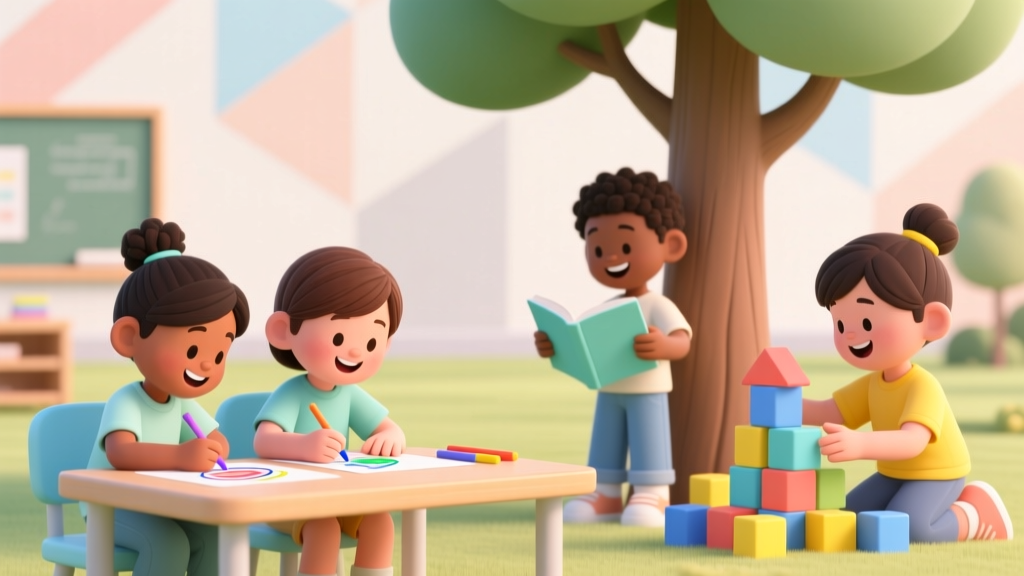
Preschool Necessary? What Research & Parents Reveal (2026)
Why This Question Matters More Than Ever — And Why There’s No One-Size-Fits-All Answer
Parents asking is preschool necessary for kids aren’t just weighing logistics—they’re making one of the earliest, most consequential decisions about their child’s lifelong learning trajectory, emotional resilience, and sense of belonging. In an era where kindergarten expectations have surged (with 78% of U.S. public schools now requiring letter recognition, counting to 20, and basic self-regulation skills before entry), and where early childhood disparities widen before age five, this isn’t theoretical—it’s urgent. Yet mounting research shows that while high-quality preschool delivers measurable benefits for many children, it’s not universally essential—and for some, poorly timed or mismatched programs can even backfire. So what actually moves the needle? Not enrollment status—but intentionality, alignment with your child’s temperament and needs, and the presence of responsive, language-rich experiences—whether in a classroom, at home, or in the community.
What the Data Really Says: Benefits, Limits, and Who Benefits Most
Let’s cut through the noise. A landmark 2023 meta-analysis published in Child Development reviewed 87 longitudinal studies tracking over 142,000 children across 19 countries. The findings were nuanced: high-quality preschool (defined by low adult-child ratios ≤ 1:8, certified early childhood educators, play-based curricula aligned with NAEYC standards, and family engagement) boosted kindergarten readiness scores by an average of 0.35 standard deviations—equivalent to ~4–6 months of academic progress. But crucially, those gains were strongest for children experiencing socioeconomic risk (e.g., household income below 150% of poverty line, parental education ≤ high school, limited access to books or rich language exposure). For children from highly resourced homes with consistent, stimulating caregiving, the academic lift was statistically insignificant after age 8—though social-emotional gains (like conflict resolution and peer collaboration) persisted.
Here’s what’s often omitted from headlines: quality matters more than attendance. A 2022 Vanderbilt study followed two cohorts—one in Tennessee’s state-funded pre-K program and a matched control group. While initial gains appeared promising, by third grade, the pre-K group showed lower achievement scores and higher disciplinary referrals—attributed to rigid, academically pressured instruction that undermined intrinsic motivation and stress regulation. As Dr. Laura Jana, pediatrician and co-author of The Toddler Brain, explains: “Preschool isn’t ‘school light.’ It’s the first formal environment where children practice executive function—the mental scaffolding for everything from homework to healthy relationships. If that environment prioritizes worksheets over wonder, compliance over curiosity, it trains the wrong muscles.”
So ask not, “Is preschool necessary for kids?” but rather, “What kind of preschool—or alternative—best serves this child, right now?”
Your Child’s Readiness Checklist: Beyond Age-Based Assumptions
Age alone tells you almost nothing about readiness. The American Academy of Pediatrics (AAP) emphasizes that developmental readiness—not calendar age—is the true benchmark. Below are six evidence-based indicators, drawn from AAP’s 2022 clinical report on school readiness and validated by the Ages & Stages Questionnaires (ASQ-3):
- Self-Regulation: Can your child wait briefly for a turn, calm themselves after minor upsets (e.g., losing a game), or follow two-step directions (“Put your shoes away, then wash your hands”)?
- Language Foundation: Do they use 3–4 word sentences consistently, ask ‘why’ and ‘how’ questions, and understand basic spatial concepts (‘under,’ ‘between,’ ‘next to’)?
- Play Complexity: Do they engage in sustained pretend play (e.g., running a ‘restaurant’ with stuffed animals), take on roles, and negotiate storylines with peers?
- Fine Motor Confidence: Can they hold a crayon with thumb-and-finger grip (not fist), copy a circle or cross, and manage zippers/buttons independently?
- Social Flexibility: Do they initiate interactions with unfamiliar children, share toys without constant adult mediation, and adapt when routines shift (e.g., transitioning from park to car)?
- Physical Stamina: Can they sustain focused activity (drawing, building, listening to stories) for 15–20 minutes without significant fatigue or dysregulation?
If your child meets 4+ of these consistently—not just occasionally—you’re likely seeing genuine readiness signals. If fewer than 3 apply, consider delaying formal preschool by 6–12 months and investing in targeted, joyful skill-building (more on that below).
High-Impact Alternatives: What to Do If Preschool Isn’t Right—Yet
“Not now” doesn’t mean “never.” It means choosing intentionality over inertia. Here’s what top early childhood specialists recommend instead of traditional preschool—for children aged 3–4 who aren’t quite ready, whose families face logistical/financial barriers, or whose learning style thrives outside structured groups:
- Parent-Child Learning Pods (3–4 children): Rotate hosting weekly with trusted families. Focus on one theme per week (e.g., ‘Water Play & Measurement,’ ‘Storytelling & Puppetry’). Use free resources from Zero to Three and PBS Kids. Outcome: Builds peer interaction + adult-guided inquiry without institutional pressure.
- Community-Based Apprenticeships: Enroll in library storytimes (not passive listening—ask librarians to coach you on questioning techniques), volunteer at animal shelters (for empathy + responsibility), or join urban gardening collectives (for science observation + fine motor work). Pediatric occupational therapist Sarah Kinsman notes: “Real-world contexts embed learning so deeply—measuring soil, negotiating tool sharing, observing plant cycles—that abstract worksheets can’t replicate.”
- Home-Based Language-Rich Routines: Replace screen time with ‘narrated living’: Describe cooking steps (“First we crack the egg, then whisk it fast!”), compare textures during laundry (“This towel is fluffy like a cloud; this shirt is smooth like glass”), and read aloud with dramatic pauses—not just nightly, but 3x daily for 5 minutes. A 2021 MIT study found this simple habit increased child vocabulary growth by 30% over 6 months.
Crucially: These alternatives only work when adults are present, engaged, and trained—not just supervising. That’s why the AAP recommends all parents complete free, evidence-based modules like Vroom (vroom.org) or the CDC’s Milestone Tracker app before committing to any formal program.
When Preschool *Is* Essential—And How to Choose Wisely
For children facing specific challenges, high-quality preschool isn’t optional—it’s therapeutic infrastructure. This includes:
- Children with speech-language delays (especially if not yet receiving services)
- Those exhibiting persistent social withdrawal, sensory sensitivities (e.g., meltdowns in noisy spaces), or difficulty with transitions
- Children in foster care, experiencing housing instability, or with documented trauma histories
In these cases, look beyond ‘accreditation’ to what’s happening in the room. Ask these non-negotiable questions during tours (and insist on observing live, unscripted time):
- “Show me how you support a child who refuses to join circle time—without removing them or using time-outs.” (Look for co-regulation strategies: offering a fidget, sitting beside them quietly, narrating feelings.)
- “How do teachers document and share observations of my child’s learning—not just behavior?” (Strong programs use digital portfolios with photos, voice notes, and developmental annotations—not just checklists.)
- “What’s your policy when a child says ‘I don’t want to’ to an activity? How do you balance choice with gentle challenge?”
Avoid programs where ‘curriculum’ means daily worksheets, ‘assessment’ means standardized tests, or ‘play’ is confined to 20-minute outdoor blocks. Prioritize those embedding literacy in baking (reading recipes), math in block-building (counting, symmetry), and science in nature walks (observing change, asking predictions).
| Experience Type | Key Developmental Domains Supported | Research-Backed Outcomes (Source) | Red Flags to Watch For |
|---|---|---|---|
| High-Quality Preschool (NAEYC-accredited, ≤1:8 ratio) | Cognitive, Social-Emotional, Language, Executive Function | +23% higher kindergarten reading scores; +18% improved peer conflict resolution (National Institute for Early Education Research, 2023) | Teachers rarely kneel to child’s eye level; curriculum changes yearly without family input; no visible documentation of individual progress |
| Consistent Parent-Child Learning Pod | Social-Emotional, Language, Cognitive Flexibility | Equivalent vocabulary growth to preschool; stronger parent-child communication patterns (Harvard Center on the Developing Child, 2022) | No shared planning among adults; activities dominated by screens or passive crafts; no reflection time built in |
| Community-Based Apprenticeship (e.g., library, garden, shelter) | Social-Emotional, Executive Function, Real-World Literacy/Math | +31% increase in sustained attention; deeper conceptual understanding of cause/effect (University of Washington Early Learning Lab, 2021) | No adult facilitation model provided; children left to ‘figure it out’ without scaffolding; safety protocols unclear |
| Intentional Home Routines (Vroom/PBS-aligned) | Language, Cognitive, Emotional Security | Closest predictor of kindergarten readiness for low-income children (Brookings Institution, 2020) | Routines feel punitive or rushed; adult focuses on ‘teaching’ not responding; child’s interests ignored |
Frequently Asked Questions
Does skipping preschool hurt my child’s chances of getting into gifted programs later?
No—gifted identification typically begins in second or third grade and relies on cognitive assessments, teacher observations, and portfolio reviews—not preschool attendance. In fact, many gifted education specialists warn that premature academic pressure can mask asynchronous development (e.g., advanced reasoning paired with immature emotional regulation). What matters far more is whether your child has had rich opportunities to explore ideas deeply, ask complex questions, and experience productive struggle—regardless of setting.
My child has ADHD. Is preschool helpful—or overwhelming?
It depends entirely on program design. Structured, worksheet-heavy preschools often exacerbate challenges. But programs using Universal Design for Learning (UDL)—with flexible seating (wobble stools, floor cushions), movement breaks woven into lessons, visual schedules, and sensory tools available on demand—can be transformative. Ask specifically about their UDL implementation and observe how they handle transitions. As Dr. Russell Barkley, ADHD researcher, states: “The best early intervention isn’t medication or labels—it’s environments engineered for neurodiverse brains.”
Are Montessori or Waldorf preschools ‘better’ than mainstream options?
Neither is inherently superior—but alignment matters. Montessori excels for children who thrive on independence, concrete materials, and self-paced mastery. Waldorf shines for imaginative, sensory-rich learners who benefit from rhythm, storytelling, and nature immersion. However, both require deep philosophical fit: Montessori demands consistency in following the method at home; Waldorf discourages media exposure and electronic devices. Mismatched enrollment leads to frustration—not growth. Visit multiple models, talk to current parents, and watch your child’s response to each environment.
What if I can’t afford preschool? Are there free or low-cost options?
Yes—many underutilized pathways exist. Public Pre-K programs (available in 44 states) often serve 4-year-olds regardless of income. Head Start serves 3–4 year olds in poverty with comprehensive health, nutrition, and family support services. Community nonprofits (like United Way chapters) offer sliding-scale tuition. Crucially: Don’t assume ‘free’ means lower quality—Head Start programs now exceed national quality benchmarks in 72% of centers (NIEER, 2023). Apply early; waitlists fill quickly.
My pediatrician says my child ‘just needs more time.’ Should I trust that?
Yes—if it’s grounded in developmental observation, not just age. Reputable pediatricians use standardized tools like the ASQ-3 and track progress over time. If your doctor recommends waiting, ask: ‘What specific skills should I watch for in the next 3 months?’ and ‘What home strategies will help bridge the gap?’ Then schedule a follow-up in 90 days. If concerns persist, request a referral to early intervention (birth–3) or preschool special education evaluation (3–5)—a federally mandated, free service.
Debunking Common Myths
Myth 1: “Preschool gives kids a ‘head start’ that lasts through college.”
Decades of longitudinal research—including the Perry Preschool Project’s 40-year follow-up—show early gains often fade by middle school unless accompanied by sustained, high-quality K–12 education and family support. Lasting impact comes from continuity, not just initial exposure.
Myth 2: “If my child isn’t in preschool by age 4, they’ll fall behind socially.”
Peer interaction happens everywhere—playgrounds, dance classes, religious communities, neighborhood walks. What builds social competence isn’t group size, but quality of interaction: having space to negotiate, repair conflicts, and practice empathy. A child with 2–3 deep friendships develops richer social skills than one lost in a 20-child classroom.
Related Topics (Internal Link Suggestions)
- Signs Your Child Is Ready for Kindergarten — suggested anchor text: "kindergarten readiness checklist"
- How to Choose a Preschool That Fits Your Child’s Temperament — suggested anchor text: "preschool selection guide"
- Free Early Learning Activities You Can Do at Home — suggested anchor text: "home-based preschool alternatives"
- Understanding Early Intervention Services (Birth–3) — suggested anchor text: "early intervention evaluation process"
- Montessori vs. Reggio Emilia: What’s Right for Your Family? — suggested anchor text: "alternative preschool philosophies"
Conclusion & Your Next Step
So—is preschool necessary for kids? The evidence says: not as a universal requirement, but as a powerful tool when intentionally matched to a child’s developmental moment, learning profile, and family context. What’s truly non-negotiable isn’t a classroom—it’s consistent, responsive, joyful engagement that builds the brain architecture for lifelong learning. Your next step isn’t enrolling or declining—it’s observing. Spend one week documenting your child’s natural curiosity: What makes them pause? What do they return to? How do they solve small problems? Then, compare those patterns against the readiness checklist above. Download the free Ready or Not? Preschool Readiness Guide—it includes printable observation trackers, local resource finders, and scripts for talking with pediatricians and preschool directors. Because the best early education starts not with a registration form—but with deep, loving attention to who your child already is.
More Articles
 Ear Infections in Kids: Causes & Proven Prevention
 When Do Kids Lose Teeth? Normal Range & Red Flags
 Juvenile Detention: What Parents Must Know (2026)
 Kit Culkin Parenting: Facts, Myths & Modern Lessons
 Tylenol for Kids: Safe Dosing & When to Call Doctor
 Did Bezos Kids Attend Wedding? Healthy Parenting Tips
 How Many Kids Do Minnie and Tony Beets Have?
 When Do Kids Develop Seasonal Allergies?
 Joe Jonas Kids in Movies? Age-Appropriate Truth (2026)
 Jeremy Clarkson Kids: Truth About His 3 Daughters (2026)