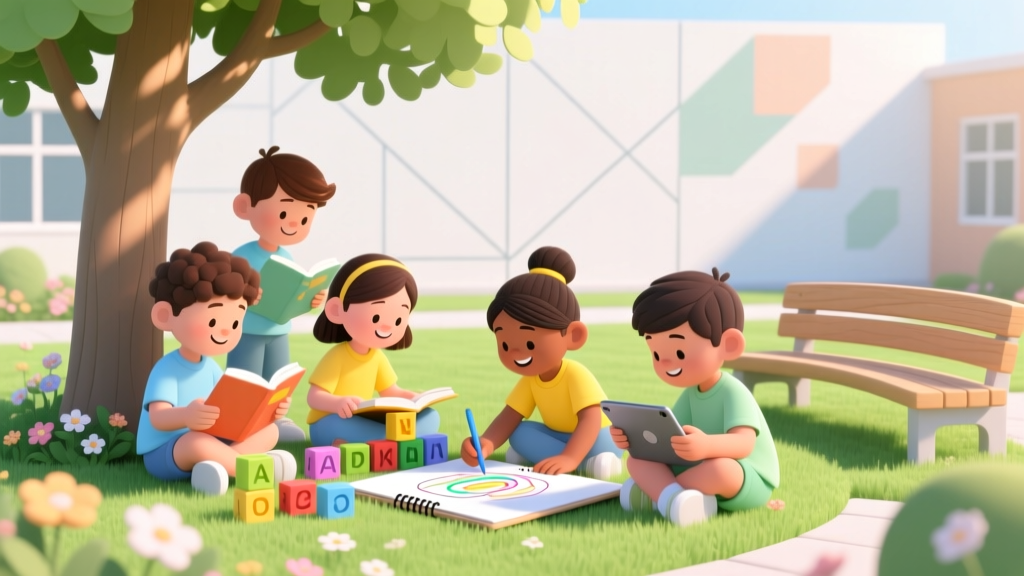
Is My Kid Gifted? Signs, Risks & Expert Advice
Why Asking 'Is My Kid Gifted?' Matters More Than Ever Right Now
If you've ever found yourself quietly wondering is my kid gifted, you're not alone—and you're asking one of the most consequential developmental questions a parent can pose. It’s not about bragging rights or academic pressure; it’s about recognizing when your child’s mind operates differently, processes information at an accelerated pace, or experiences the world with unusual depth—and ensuring their emotional, social, and intellectual needs are met before frustration, isolation, or underachievement take root. In today’s high-stakes educational climate, where differentiation is often scarce and neurodiversity awareness is growing, misreading early signs—or overinterpreting them—can unintentionally harm a child’s confidence, motivation, or sense of belonging.
What ‘Gifted’ Actually Means (Spoiler: It’s Not Just IQ)
Let’s start with clarity: giftedness isn’t a monolith. According to the National Association for Gifted Children (NAGC), gifted individuals demonstrate “outstanding levels of aptitude or competence in one or more domains”—including intellectual, creative, artistic, leadership, or specific academic fields. Crucially, it’s not defined by a single test score or grade point average. Dr. Sally Reis, a leading researcher in gifted education and former president of NAGC, emphasizes that “giftedness is asynchronous: advanced cognitive abilities paired with uneven social-emotional development.” A 6-year-old who reads at a 9th-grade level may still cry when asked to tie their shoes—and that’s not contradictory; it’s expected.
This asynchrony explains why many gifted children go unidentified: they don’t always stand out in classrooms. Some mask their abilities to fit in. Others become disengaged, labeled ‘daydreamers’ or ‘defiant’ when they’re actually bored. And yes—some gifted kids struggle with anxiety, perfectionism, or sensory sensitivities that mimic learning disabilities (a phenomenon known as twice-exceptionality, or 2e). That’s why the American Academy of Pediatrics (AAP) advises pediatricians to screen for both advanced cognition and co-occurring challenges during well-child visits—not as separate concerns, but as interconnected pieces of a child’s developmental profile.
7 Evidence-Based Signs Your Child May Be Gifted (Beyond Just ‘Smart’)
Forget checklists that rely on vague traits like “curious” or “asks good questions.” Real-world indicators emerge consistently across longitudinal studies—including the landmark Johns Hopkins Center for Talented Youth (CTY) cohort tracking over 15,000 children since 1980. Here’s what stands up to scrutiny:
- Early & complex language use: Not just talking early—but using precise vocabulary (“I’m frustrated, not mad”), grasping metaphors by age 4, or constructing sentences with embedded clauses (“The dog that chased the cat ran into the garden”).
- Intense focus paired with selective attention: They’ll spend 90 minutes building a marble run but tune out during circle time—even if they’re physically present. This isn’t defiance; it’s neurological preference for high-stimulus, self-directed tasks.
- Moral reasoning beyond their years: At age 5, questioning fairness in classroom rules; at 7, worrying about global poverty or animal suffering with visceral empathy. Research published in Gifted Child Quarterly links this to heightened emotional intensity—a core trait in giftedness.
- Pattern recognition & abstraction: Spotting numerical sequences in license plates, inventing elaborate fantasy worlds with internal logic, or explaining how gears work after watching a 30-second video—without being taught.
- Memory that feels photographic—then selective: Recalling verbatim a story heard once… but forgetting where they left their backpack. This isn’t inconsistency—it’s a brain prioritizing meaning over rote recall.
- Questioning authority with precision: Not “Why?” repeatedly—but “How do we know that source is credible?” or “What would happen if we changed this one variable in the experiment?”
- Heightened sensitivity to stimuli: Overwhelmed by scratchy clothing tags, loud cafeteria noise, or fluorescent lighting—not as ‘meltdowns,’ but as genuine neurological overload. This aligns with Dabrowski’s Theory of Positive Disintegration, where sensory and emotional overexcitabilities are hallmarks of gifted development.
Important nuance: These signs rarely appear in isolation. The AAP recommends looking for clusters—not single traits—and always contextualizing them within your child’s temperament, culture, language background, and access to enrichment. A bilingual child may speak later in English but code-switch with sophisticated grammar. A child from a low-resource neighborhood may show advanced problem-solving in real-world contexts (e.g., negotiating sibling conflicts, managing household responsibilities) rather than standardized tests.
What NOT to Do (And Why Common Parent Moves Backfire)
When parents suspect giftedness, instinct often drives action—yet some well-intentioned steps cause unintended harm:
- Pushing for formal testing before age 6–7: Most IQ assessments (like the WISC-V or Stanford-Binet) have limited reliability for children under 6. Results can fluctuate dramatically—and labeling too early may lead schools to skip foundational skill-building or discourage growth mindset messaging. As Dr. Deborah Ruf, author of Unauthorized Gifted, warns: “A 4-year-old’s score tells you more about their comfort with testers than their lifelong potential.”
- Withdrawing from peers to pursue advanced academics: Social connection isn’t optional for gifted kids—it’s protective. Studies show gifted children with strong friendships report lower anxiety and higher life satisfaction, even when academically unchallenged. Isolation increases risk for depression and identity confusion.
- Equating giftedness with achievement: A gifted child who hates math may excel in ethical debate or ecological systems thinking. Forcing STEM enrichment on a creatively gifted child undermines intrinsic motivation—the very engine that fuels long-term excellence.
Instead, focus on strength-based scaffolding: observe what captivates your child, then deepen it. If they’re obsessed with ants, don’t just buy an ant farm—visit university entomology labs, read primary research summaries together, or help them design a backyard biodiversity survey. This builds executive function, curiosity, and resilience far more effectively than acceleration alone.
Practical Next Steps: From Observation to Support
You don’t need a diagnosis to nurture potential. Here’s what works—backed by school psychologists, gifted coordinators, and parent surveys from the Davidson Institute’s 2023 Family Needs Assessment:
| Step | Action | Why It Works | Time Commitment |
|---|---|---|---|
| 1. Document patterns | Keep a low-pressure ‘strength journal’ for 2–3 weeks: note moments of deep focus, unexpected insights, emotional reactions, and problem-solving attempts—no interpretations, just observations. | Reduces confirmation bias. Helps distinguish true gifted traits from temporary interests or personality quirks. Used by school psychologists in initial screenings. | 5 mins/day |
| 2. Request a school-based screening | Contact your district’s gifted coordinator (not the teacher) to ask about universal screening tools (e.g., NNAT, CogAT) administered to all students in grades 2–3—not referrals-only models. | Universal screening reduces bias—especially for girls, students of color, and English learners—who are historically underidentified. Required by 22 states per NAGC’s 2022 policy review. | 1 email + follow-up call |
| 3. Prioritize ‘fit’ over ‘fast’ | Seek environments matching your child’s learning style: project-based classrooms, interest-led homeschool co-ops, or summer programs like CTY or Duke TIP—not just grade-skipping. | Acceleration without depth causes burnout. A study in Journal of Educational Psychology found gifted students in enriched, not accelerated, settings showed 3x higher persistence in STEM fields by age 25. | Ongoing, flexible |
| 4. Build emotional literacy | Explicitly name intense feelings (“That sounds overwhelming—let’s name what’s happening in your body”) and co-create calming strategies (e.g., ‘brain breaks,’ sensory tools, journal prompts). | Gifted children’s emotional intensity isn’t pathology—it’s neurology. Teaching regulation skills prevents shutdowns and builds self-advocacy. Recommended by the SENG (Supporting Emotional Needs of the Gifted) organization. | 10 mins/day |
Frequently Asked Questions
Can giftedness be ‘taught’ or developed?
No—giftedness is an innate neurocognitive profile, not a skill set. However, talent development absolutely can be nurtured. Think of it like athletic ability: you can’t teach someone to have fast-twitch muscle fibers, but training, coaching, and opportunity determine whether that potential becomes Olympic-level performance. The same applies to intellectual, creative, or leadership gifts. What can be cultivated are habits of mind—intellectual humility, disciplined curiosity, and resilience through challenge. As Dr. Scott Barry Kaufman, cognitive scientist and author of Ungifted, states: “Potential is distributed equally. Opportunity is not.”
My child scores highly on tests but hates school—what’s going on?
This is extremely common—and often signals a mismatch, not a deficit. Gifted children frequently experience ‘boredom fatigue’: their brains process material so quickly that repetition feels punishing, not reinforcing. A 2021 study in Gifted Education International found 68% of gifted students reported chronic disengagement in standard classrooms, citing ‘redundant instruction’ and ‘lack of choice’ as top stressors. Rather than assuming motivation issues, investigate why school feels irrelevant: Is content too slow? Are assignments procedural rather than conceptual? Is there no avenue for passion projects? Solutions range from subject acceleration (e.g., advanced math while staying with peers for ELA) to curriculum compacting—pre-testing to eliminate mastered material.
Are gifted kids more likely to have ADHD or autism?
They’re more likely to be misdagnosed with them. Because traits overlap—intense focus on interests, sensory sensitivities, social communication differences—many gifted children receive inaccurate labels. This is especially true for twice-exceptional (2e) kids, who have both giftedness and a learning difference or disability. The key is differential diagnosis: a qualified psychologist should assess for both giftedness and neurodevelopmental conditions using tools designed for high-cognition populations (e.g., the WISC-V Integrated, not standard screening checklists). Misdiagnosis delays appropriate support—and can damage a child’s self-concept.
Does giftedness ‘fade’ with age?
No—but its expression evolves. Early signs like precocious language or memory often mature into sophisticated critical thinking, interdisciplinary synthesis, or innovative problem-solving. However, without appropriate challenge and emotional support, gifted adolescents may ‘go underground’: masking abilities to avoid standing out, developing imposter syndrome, or abandoning passions perceived as ‘unrealistic.’ Longitudinal data from the Study of Mathematically Precocious Youth shows sustained achievement correlates less with early IQ and more with access to mentors, autonomy, and meaningful work.
How do I advocate for my child without sounding pushy?
Frame requests around needs, not labels. Instead of “My child is gifted and needs harder work,” try: “She’s consistently completing math assignments in 10 minutes and then disengaging—could we explore compacting her curriculum or adding inquiry-based extensions?” Bring data (your strength journal, past work samples) and collaborate on solutions. Schools respond best to partnership—not demands. The NAGC’s Parent Advocacy Toolkit offers email templates and meeting scripts proven to increase positive outcomes.
Common Myths About Giftedness
Myth #1: “Gifted kids don’t need help—they’ll figure it out.”
Reality: Without targeted support, gifted children are at higher risk for perfectionism, anxiety, underachievement, and social isolation. The U.S. Department of Education identifies gifted students as a protected population under ESSA (Every Student Succeeds Act) precisely because their needs—when unmet—lead to measurable academic and emotional harm.
Myth #2: “Gifted = high-achieving student.”
Reality: Achievement reflects effort, opportunity, and environment. Giftedness reflects neurocognitive wiring. Many gifted kids underachieve due to boredom, undiagnosed learning differences, or lack of challenge. Conversely, high achievers may excel through diligence—not advanced reasoning. As Dr. James Borland, Columbia University professor of education, cautions: “We confuse the map for the territory. Grades measure compliance and mastery of taught material—not potential.”
Related Topics (Internal Link Suggestions)
- Twice-exceptional (2e) children — suggested anchor text: "supporting twice-exceptional kids"
- Gifted education myths debunked — suggested anchor text: "common giftedness myths"
- Emotional intensity in children — suggested anchor text: "helping intense kids thrive"
- Subject acceleration vs. grade skipping — suggested anchor text: "acceleration options for gifted learners"
- Free resources for gifted kids — suggested anchor text: "no-cost enrichment for advanced learners"
Your Next Step Isn’t a Label—It’s a Conversation
Asking is my kid gifted is the beginning of deeper understanding—not the end goal. What matters most isn’t the label, but whether your child feels seen, challenged, and safe to be authentically, complexly themselves. Start small: tonight, ask one open-ended question about something they’re passionate about—not to test knowledge, but to listen deeply. Notice how their eyes light up, how their voice shifts, how their hands move when they explain. That spark? That’s your compass. Then, share your strength journal observations with your pediatrician at the next visit—and ask: “Based on what you’re seeing, what kind of support would best nurture their development right now?” You’ve already done the hardest part: paying attention. Now, trust that curiosity—and act from compassion, not comparison.
More Articles
 How Many Kids Does Baker Mayfield Have? (2026)
 How Many Kids Does John Proctor Have? (2026)
 How Many Kids Do Tyreek Hill Have (2026)
 When Do Kids Stop Peeing the Bed? (2026)
 Foster Youth Homelessness: 5 Strategies That Cut Risk 60%
 Does Kirsten Dunst Have Kids? Her Private Parenting Choices
 Does Putin Have Kids? The Truth Behind His Privacy
 Joe Jonas Kids' Ages (2026) | Real-Time Tracker
 Kids & Change: 7 Research-Backed Resilience Strategies
 Olipop for Kids: Sugar, Prebiotics & Real Effects (2026)