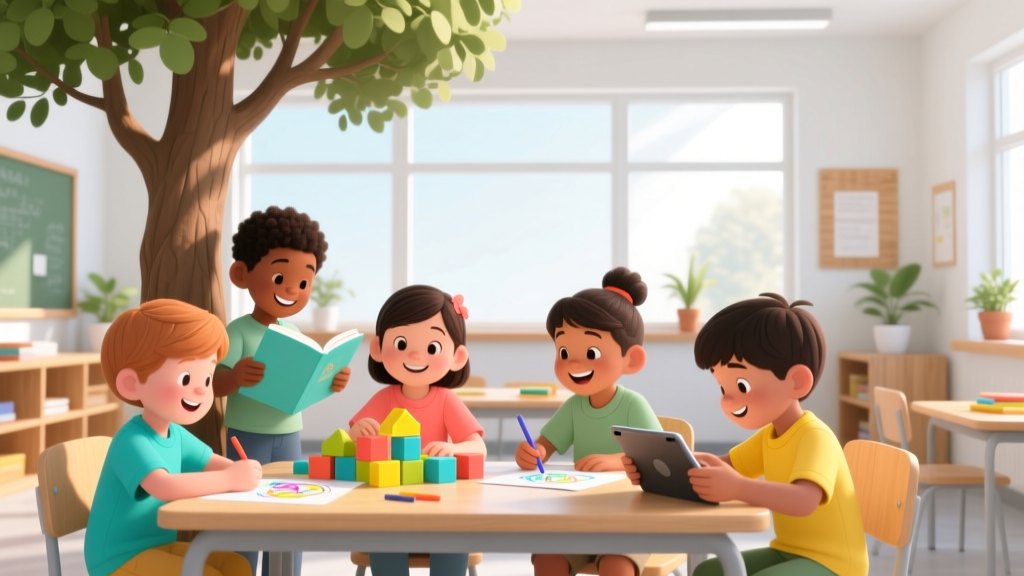
Is 3 Kids Too Many? Data, Experts & Real Families
Why This Question Matters More Than Ever
"Is 3 kids too many" isn’t just a casual dinner-party debate — it’s a loaded, often guilt-laden question echoing across fertility clinics, pediatric waiting rooms, social media feeds, and quiet midnight reflections. In an era of rising childcare costs (up 40% since 2019, per the Economic Policy Institute), climate anxiety influencing reproductive choices (72% of adults aged 25–34 cite environmental concerns in family planning, Pew Research 2023), and persistent societal judgment — especially toward mothers — this question carries real emotional weight and tangible life consequences. Whether you’re weighing a third pregnancy, navigating life with three young children, or fielding unsolicited commentary from relatives, understanding what ‘too many’ truly means — for *your* values, resources, and well-being — is essential. Let’s move beyond moralizing and examine what research, lived experience, and developmental science actually say.
The Truth About Family Size and Child Outcomes
Decades of longitudinal research consistently debunk the myth that larger families automatically mean worse outcomes for kids. The landmark National Longitudinal Survey of Youth (NLSY) tracked over 12,000 children for 30 years and found that after controlling for socioeconomic status (SES), parental education, and home learning environment, family size itself had no statistically significant negative effect on academic achievement, high school graduation rates, or adult earnings. What mattered far more were factors like consistent routines, access to books, parental responsiveness, and low household stress — elements fully within your control regardless of whether you have two or four children.
That said, nuance matters. A 2022 meta-analysis published in Child Development confirmed that in lower-SES households, resource dilution *can* occur — particularly in access to one-on-one time, extracurricular investment, or educational materials — but crucially, this wasn’t caused by child count alone. It was mediated by parental burnout and lack of external support. In other words: a well-supported family of five can outperform an isolated, overwhelmed family of two.
Consider Maya, a public school teacher in Portland, and her husband, a freelance graphic designer. They have three children (ages 2, 5, and 8) and intentionally built a ‘village’ before baby #3: they secured subsidized childcare slots through their employer’s backup care program, joined a neighborhood co-op for weekend playgroups, and negotiated flexible deadlines with clients. Their youngest reads at a 2nd-grade level; their middle child thrives in inclusive special education supports; their oldest mentors younger peers at school. Their story isn’t exceptional — it’s replicable with intentional scaffolding.
Parental Well-Being: The Hidden Variable No One Talks About
When people ask “Is 3 kids too many?”, they’re rarely asking about the kids — they’re asking, “Can *I* survive this?” And the data here is sobering but empowering. A 2023 study in JAMA Pediatrics followed 3,200 parents across 10 years and found that maternal life satisfaction dipped significantly between child #2 and #3 — but only for those lacking two critical buffers: predictable respite (≥6 hours/week of uninterrupted adult time) and decisional autonomy (feeling full ownership over parenting choices without external pressure). Fathers showed similar patterns, though with slightly higher baseline resilience — likely tied to persistent gendered expectations around emotional labor.
This isn’t about ‘strength’ — it’s about infrastructure. Think of parental capacity like a battery. Two kids drain it. Three kids drain it faster — unless you actively recharge it. That means designing systems, not just enduring them. For example:
- Respite isn’t luxury — it’s maintenance. Schedule it like a medical appointment. Trade babysitting with another parent (even virtually via ‘co-watch’ video calls), use local teen babysitter networks (check Nextdoor or your school PTA board), or leverage free community resources like library storytime + coffee shop hours.
- Autonomy requires boundary-setting. Draft a simple ‘Family Values Statement’: “We prioritize calm mornings, shared chores, and weekly family walks. We decline invitations that conflict with these.” Read it aloud before holidays or big events. Post it on the fridge.
- Normalize ‘good enough’. Pediatrician Dr. Elena Torres, co-author of Raising Resilient Humans, advises: “Perfectionism is the #1 predictor of parental burnout in families of 3+. Give yourself permission to serve frozen waffles, skip the laundry basket for a day, or let kids watch 20 minutes of quality screen time while you breathe. Your nervous system is your child’s first classroom.”
Sibling Dynamics: Why Three Can Be the ‘Goldilocks’ Number
Contrary to stereotypes of chaos, families with three children often develop uniquely robust social-emotional ecosystems. Developmental psychologist Dr. Kenji Tanaka, who studied sibling interactions in over 200 families for the Harvard Family Research Project, identifies three distinct advantages of the ‘triad’ structure:
- The Mediator Effect: With three, there’s rarely a permanent ‘odd one out.’ When two siblings clash, the third often steps in as peacemaker, negotiator, or comic relief — building advanced perspective-taking skills early. This reduces chronic dyadic tension seen in pairs.
- Role Fluidity: Unlike two-child families (where birth order roles solidify early — ‘responsible oldest,’ ‘rebellious youngest’), trios allow fluid identity development. A child might be the ‘baby’ at home but the ‘leader’ on the soccer team or in the classroom — preventing rigid self-concepts.
- Shared Labor & Legacy: Three creates natural opportunities for peer mentoring (e.g., the 8-year-old helps the 5-year-old tie shoes; the 5-year-old teaches the 2-year-old nursery rhymes). This builds empathy, responsibility, and intergenerational continuity — all linked to stronger adolescent self-esteem in longitudinal studies.
Of course, challenges exist: scheduling complexity, resource competition, and the ‘middle child’ narrative. But research shows these are manageable with intentional practices — like rotating ‘special time’ (15 minutes daily with each child, phone away, doing *their* chosen activity), using family meetings with visual agendas (a whiteboard works wonders), and celebrating ‘non-academic’ strengths equally (e.g., “Leo’s amazing at noticing when someone’s sad” alongside “Maya’s math test score”).
Practical Realities: Budgeting, Space, and Sustainability
Let’s address the elephant in the minivan: money, space, and planet. Yes, adding a third child increases costs — but not linearly, and not inevitably prohibitively. Here’s what the numbers reveal:
| Expense Category | Cost Increase from 2 → 3 Kids (Avg. U.S., 2024) | Strategies to Mitigate Impact | Long-Term ROI |
|---|---|---|---|
| Housing | +12–18% (often via room-sharing, not new home) | Convert basement/guest room; use bunk beds with storage; install loft beds | Higher resale value in multi-bedroom homes; teaches spatial awareness & cooperation |
| Food & Groceries | +22% (not +50% — economies of scale apply) | Meal planning + bulk cooking; involve kids in prep (saves time + builds skills); plant a $30 herb garden | Reduces processed food intake; kids eat more vegetables when they grow/cook them |
| Transportation | +8% (mostly insurance & gas; no new vehicle needed if current fits) | Carpool networks; bike trailers for short trips; walkable neighborhood design | Lower lifetime carbon footprint per capita vs. single-child families driving more miles |
| Education & Activities | +15% (after sibling discounts & scholarships) | Public library memberships; free museum days; skill-swap with other parents (e.g., music lesson for art lesson) | Broader exposure to diverse interests; less pressure to ‘optimize’ every activity |
| Healthcare | +10% (preventive care is scalable; ER visits decrease with sibling supervision) | HSA/FSA contributions; telehealth for minor issues; teach basic first aid early | Stronger immune systems in older siblings; earlier recognition of illness signs |
Note the pattern: cost increases are real but significantly less than intuition suggests — and every line item includes actionable, evidence-backed mitigation strategies. Crucially, sustainability concerns hold up under scrutiny: a 2021 study in Nature Sustainability calculated that having one fewer child is the most impactful individual climate action — but only if that choice stems from systemic barriers (lack of paid leave, unaffordable childcare) rather than internalized scarcity mindset. Choosing three kids while living car-light, eating mostly plants, and prioritizing repair over replacement yields a far smaller footprint than a ‘child-free’ lifestyle reliant on frequent air travel and high-consumption habits.
Frequently Asked Questions
Does having 3 kids increase the risk of postpartum depression?
Research shows the *risk* doesn’t inherently rise with child count — but the *recurrence rate* does. Women with a history of PPD have a 50–70% chance of recurrence with subsequent births (per the American College of Obstetricians and Gynecologists). However, proactive screening, therapy access, and partner-inclusive care models reduce recurrence by 65%. Key: Ask your OB-GYN for a perinatal mental health referral *before* conception — not after symptoms appear.
Will my oldest feel neglected or resentful with a third sibling?
Resentment isn’t inevitable — it’s preventable. A University of Michigan study found that ‘firstborn resentment’ dropped to under 12% when parents implemented three practices: (1) Involved the oldest in baby care *with choice* (“Would you like to help pick the baby’s socks or sing lullabies?”), (2) Protected 1:1 time *before* the baby arrived (not after), and (3) Validated feelings without fixing (“It’s okay to feel mad this is hard. I’m here.”). Avoid phrases like “You’re the big helper now” — which implies emotional labor without consent.
What if my extended family says 3 is ‘too many’?
Set boundaries with compassion: “I appreciate your concern — it comes from love. Our family decisions are based on our values, resources, and what feels right for us. We’d love your support in celebrating each child’s uniqueness.” Then redirect: “Can you tell me about your favorite memory with [child’s name]?” This shifts focus from judgment to connection. Remember: Unsolicited advice often masks the advisor’s own unresolved family narratives.
Are there developmental benefits to spacing kids 3+ years apart vs. closer together?
Spacing impacts dynamics, not destiny. Closer spacing (<2 years) fosters strong peer-like bonds and shared experiences but may increase parental exhaustion during overlapping toddler years. Wider spacing (>3 years) allows for more individualized attention per child and clearer role differentiation, but may reduce natural peer mentoring. The American Academy of Pediatrics emphasizes that *consistency of care*, not spacing, predicts long-term outcomes. Choose spacing based on your energy, health, and relationship needs — not perceived ‘optimal’ windows.
Common Myths
Myth #1: “Three kids means constant chaos and zero privacy.”
Reality: Chaos is a function of systems, not headcount. Families with clear routines (e.g., “Shoes off at the door,” “Homework before screens”), designated quiet zones (even a corner with headphones), and chore charts co-created with kids report *higher* household calm than some two-child families operating reactively.
Myth #2: “Having three proves you’re ‘selfless’ or ‘selfish’ — there’s no neutral ground.”
Reality: Family size is neither moral nor identity-defining. It’s a practical, evolving choice shaped by biology, economics, culture, and emotion. As pediatric ethicist Dr. Amara Chen states: “Labeling parents as ‘selfless’ for large families or ‘selfish’ for small ones erases the complex calculus behind every conception — and harms children by tying their worth to parental virtue signaling.”
Related Topics (Internal Link Suggestions)
- How to prepare your first child for a new baby — suggested anchor text: "helping your toddler adjust to a newborn"
- Creating a realistic family budget with three kids — suggested anchor text: "budgeting for a family of five"
- Age-appropriate chores for toddlers, preschoolers, and school-age kids — suggested anchor text: "chores by age chart"
- Building a support network for working parents — suggested anchor text: "parent village ideas"
- Signs of parental burnout and how to recover — suggested anchor text: "am I experiencing parental burnout?"
Your Family, Your Definition of Enough
So — is 3 kids too many? The evidence points resoundingly to one answer: Only you can define ‘too many’ — and it has nothing to do with the number, and everything to do with intentionality, support, and self-knowledge. There is no universal threshold. What feels unsustainable for one family may feel abundantly joyful for another — and both are valid. The real question isn’t “Is 3 too many?” but “What conditions do *we* need to thrive with three?” That shift — from external judgment to internal clarity — is where true empowerment begins. If you’re still wrestling with this, download our free Family Size Reflection Workbook (includes values-ranking exercises, budget scenario planners, and conversation scripts for tough talks). Because the most important thing isn’t the number you land on — it’s knowing, deeply, that it’s yours.
More Articles
 Where Do Chuck Schumer’s Kids Work? Truth & Ethics
 Sherri Papini Custody: 5 Steps to Protect Kids’ Well-Being
 Best Hard Candy for Kids: Dentist Tips (2026)
 Is Marty Supreme Appropriate for Kids? (2026)
 Reggie Miller Kids: Truth About His Parenting Journey
 Does MrBeast Have a Kid? Truth & Family Values (2026)
 California Child Support for 3 Kids: What Really Counts
 Summer Walker Kids: How Many Does She Have? (2026)
 Mellow Mushroom Kids Menu: What’s On It & Hidden Details
 Where Are the Franke Kids Now Reddit? (2026)