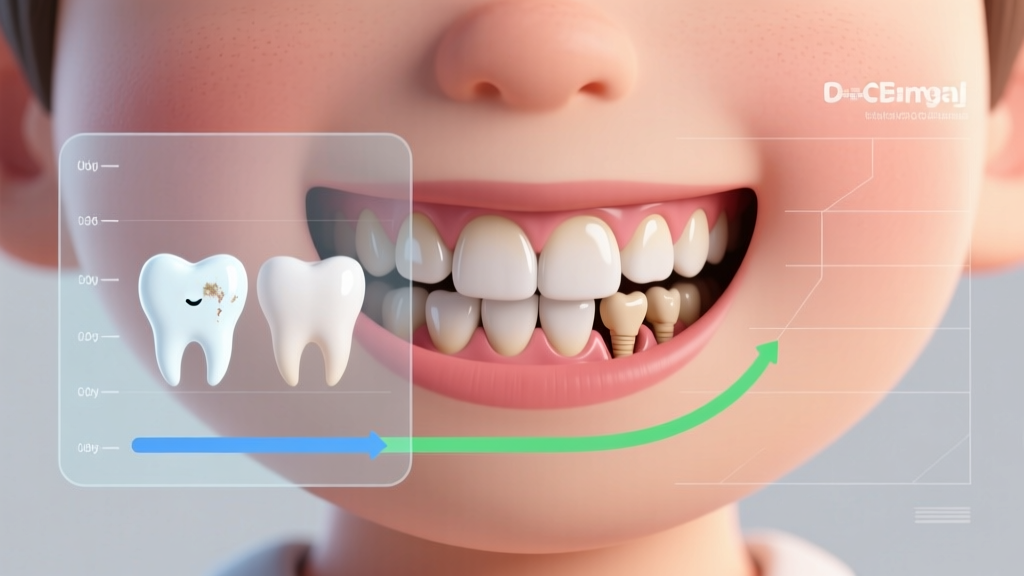
How Many Teeth Do Kids Have? (Pediatric Dentist Guide)
Why This Question Matters More Than You Think
How many teeth do kids have? It’s one of the most frequently searched dental questions by parents — and for good reason. That first tiny white bump on your baby’s gum isn’t just cute; it’s a critical developmental milestone tied to nutrition, speech, jaw alignment, and even future orthodontic outcomes. Yet misinformation abounds: some parents assume 20 baby teeth means ‘done by age 3,’ while others panic when their 18-month-old has only six teeth — despite that being perfectly normal. According to the American Academy of Pediatric Dentistry (AAPD), nearly 40% of children under age 5 experience preventable dental disease, often because caregivers missed early warning signs masked as ‘just baby teeth.’ Understanding not just how many teeth kids have, but when, in what order, and what variations are truly normal empowers you to advocate confidently at checkups, spot real problems early, and avoid unnecessary interventions — or dangerous delays.
The Two-Stage Dental Blueprint: Baby Teeth vs. Permanent Teeth
Children don’t grow ‘more teeth’ in a linear way — they undergo a precise biological sequence involving two distinct sets: primary (deciduous) teeth and permanent (succedaneous) teeth. Each set serves irreplaceable functions — and confusing them leads to serious missteps. Primary teeth aren’t ‘temporary placeholders’; they’re essential for chewing nutrient-dense foods, guiding permanent teeth into proper position, supporting facial bone development, and enabling clear speech articulation. As Dr. Sarah Lin, board-certified pediatric dentist and clinical instructor at UCLA School of Dentistry, explains: ‘Losing a primary molar too early doesn’t just create a gap — it can cause adjacent teeth to drift, narrowing the space for the adult premolar and triggering years of orthodontic complications.’
The primary dentition consists of exactly 20 teeth: 10 in the upper arch and 10 in the lower. These erupt between ~6 months and ~36 months, following a predictable pattern — though timing varies widely. The permanent dentition totals 32 teeth (including wisdom teeth), but children don’t acquire these all at once. Instead, they emerge gradually from age 6 through late adolescence, replacing primary teeth while adding new molars behind them. Crucially, the first permanent molars appear behind the primary teeth — meaning a 6-year-old may have 24+ teeth temporarily (20 baby + 4 permanent molars), creating confusion for parents counting ‘visible’ teeth.
Eruption Timelines: What’s Normal, What’s Not, and When to Call the Dentist
While textbooks cite ‘average’ eruption ages, the AAPD emphasizes a broad, healthy range. For example, the first tooth typically emerges between 4–15 months — but 90% of infants get their first tooth by 12 months. Delay beyond 18 months warrants evaluation, not panic. Similarly, primary teeth usually finish erupting by age 3, but some children complete the set at 28 months; others reach 36 months without concern — unless accompanied by other developmental delays.
Here’s where nuance matters: asymmetry is common (e.g., bottom left incisor appears before bottom right), but bilateral absence (e.g., no upper lateral incisors by age 3) signals possible hypodontia — a genetic condition affecting 1–10% of children. Likewise, natal teeth (present at birth) occur in ~1 in 2,000 births and are usually benign, but require evaluation if loose (choking risk) or associated with syndromes like Ellis-van Creveld.
Permanent teeth follow their own rhythm. The ‘6-year molars’ erupt around age 6–7, often unnoticed since they emerge behind baby teeth. Then comes the ‘mixed dentition phase’ (ages 6–12), where children juggle both sets. By age 13, most have 28 permanent teeth (excluding wisdom teeth). Wisdom teeth — third molars — appear between ages 17–25, but up to 35% of people never develop them, and many require extraction due to impaction or crowding.
When Counting Teeth Becomes a Diagnostic Tool: Red Flags Every Parent Should Know
Counting teeth isn’t just academic — it’s frontline screening. Pediatric dentists use eruption patterns to detect systemic issues. For instance, delayed eruption can correlate with nutritional deficiencies (vitamin D, calcium), endocrine disorders (hypothyroidism), or chronic illness. Conversely, early eruption (before 4 months) may link to hyperthyroidism or certain genetic conditions like congenital syphilis.
More commonly, parents notice anomalies that warrant professional input:
- Supernumerary teeth (extra teeth): Occur in ~1–3% of children, most often near upper incisors. While often asymptomatic, they can block eruption or cause crowding.
- Hypodontia (missing teeth): Most common missing teeth are upper lateral incisors and second premolars. If your child has fewer than 20 primary teeth by age 3 and no history of trauma or extraction, consult a pediatric dentist.
- Enamel defects (white/brown spots, pitting): May indicate prenatal stress, high fever during infancy, or excessive fluoride exposure — not just ‘bad brushing.’
- Crowding or severe rotation before age 7: Suggests potential orthodontic intervention — early assessment (by age 7, per AAPD guidelines) can prevent extractions later.
A real-world case: Maya, a mom in Portland, noticed her son Leo had only 12 teeth at 28 months — but all were present except upper and lower lateral incisors. His pediatrician reassured her, yet his pediatric dentist discovered mild enamel hypoplasia linked to a bout of pneumonia at 8 months. Early fluoride varnish and dietary counseling prevented cavities. ‘I thought I was just counting teeth,’ she shared. ‘Turns out, I was spotting a clue to his immune history.’
Practical Care Strategies Aligned With Dental Development Stages
Knowing how many teeth kids have informs how you care for them. Here’s what evidence-based practice recommends at each stage:
- Pre-eruption (0–6 months): Wipe gums twice daily with a clean, damp cloth. Avoid dipping pacifiers in honey or juice — a major cause of early childhood caries (ECC).
- First tooth to age 3: Use a smear of fluoride toothpaste (size of a grain of rice) twice daily. Supervise brushing — children lack motor control to clean effectively until age 6–7.
- Ages 3–6: Increase fluoride toothpaste to a pea-sized amount. Introduce flossing when teeth touch — often around age 4, but depends on spacing.
- Mixed dentition (6–12): Focus on sealing permanent molars (90% effective at preventing decay, per CDC data). Monitor for orthodontic issues: thumb-sucking beyond age 5 can flare upper front teeth; mouth breathing may narrow dental arches.
Don’t overlook diet: The AAPD stresses that frequency of sugar exposure matters more than total intake. Sipping juice throughout the day bathes teeth in acid — far riskier than eating a cookie at dessert. And yes, breast milk contains lactose — but exclusive breastfeeding under 12 months isn’t cariogenic; it’s the addition of solids, bottles, or snacks that changes risk.
| Age Range | Typical Number of Primary Teeth | Key Eruption Events | Red Flags Requiring Evaluation |
|---|---|---|---|
| 0–4 months | 0 | Gum development; no teeth expected | Teeth present at birth (natal) or within first month (neonatal) — requires dental exam for stability/syndrome screening |
| 4–15 months | 1–8 | Lower central incisors first (avg. 6–10 mo); upper central incisors follow | No teeth by 18 months; >4-month delay beyond sibling’s eruption pattern |
| 12–24 months | 8–16 | Lateral incisors, first molars, canines erupt; ‘terrible twos’ often coincide with canine discomfort | Severe asymmetry (e.g., 8 teeth on left, 0 on right); teeth erupting in abnormal positions (e.g., palate) |
| 24–36 months | 16–20 | Second molars complete primary set; spacing between front teeth is normal and needed for larger permanent teeth | Fewer than 16 teeth by 30 months; persistent gaps >2mm between upper front teeth after age 3 |
| 6–13 years | 20–28+ (mixed) | ‘Shark teeth’ (permanent incisors behind baby teeth) is common; 6-year and 12-year molars erupt distally | Permanent teeth failing to erupt within 6 months of expected window; baby teeth not loosening as permanent teeth emerge |
Frequently Asked Questions
How many teeth do kids have at age 2?
Most 2-year-olds have between 12 and 20 primary teeth — but variation is wide. The average is 16, with lower incisors, upper incisors, first molars, and canines typically present. If your child has 10 teeth at 24 months, that’s still within normal limits (per AAPD clinical guidelines). What matters more than count is symmetry, absence of decay, and functional ability to chew soft solids.
Do all kids get exactly 20 baby teeth?
Virtually all children develop 20 primary teeth — but exceptions exist. Hypodontia (congenitally missing teeth) affects ~2–10% of kids, most often upper lateral incisors or second premolars. Supernumerary (extra) teeth occur in ~1–3%. Both are usually identified via dental X-ray around age 3–4. Importantly: missing primary teeth don’t guarantee missing permanent ones — genetics differ between sets.
What if my child has more than 20 teeth before age 6?
Yes — and it’s completely normal! The first permanent molars erupt behind the primary teeth starting around age 6, so a 5.5-year-old might have 20 primary teeth + 2–4 permanent molars = 22–24 teeth. These ‘extra’ molars are often missed by parents because they’re hidden behind the baby teeth. A dental exam confirms their identity and ensures proper alignment.
Can baby teeth come in out of order?
Absolutely — and it’s more common than textbooks admit. While the typical sequence is lower centrals → upper centrals → laterals → first molars → canines → second molars, deviations occur in ~15% of children. Upper lateral incisors appearing before lower laterals? Normal. Canines before first molars? Also normal. Only concern arises if bilateral teeth are absent beyond expected windows — e.g., no upper laterals by age 3.5 years.
How many teeth do kids lose?
Children lose all 20 primary teeth — but not always one-for-one. Some permanent teeth (like premolars) replace primary molars, while first and second permanent molars erupt without replacing any baby tooth. So while kids lose 20 teeth, they gain 32 permanent ones — meaning 12 ‘new’ teeth emerge without exfoliation. This explains why a 10-year-old might have 24 teeth (20 baby + 4 permanent molars) and then suddenly jump to 28 after losing four front teeth.
Common Myths About Kids’ Teeth
Myth 1: “Baby teeth don’t need fillings — they’ll fall out anyway.”
False — and dangerously misleading. Untreated cavities in primary teeth can infect the developing permanent tooth bud beneath, cause abscesses requiring emergency care, and lead to premature extractions that disrupt speech and nutrition. The AAPD states: ‘Caries in primary teeth is a chronic infectious disease requiring treatment — not watchful waiting.’
Myth 2: “If a baby tooth is knocked out early, the permanent tooth will just come in faster.”
No — early loss often causes adjacent teeth to shift, blocking the permanent tooth’s path. This commonly leads to impaction, cyst formation, or orthodontic intervention. Space maintainers — simple appliances fitted by pediatric dentists — preserve alignment and cost far less than braces later.
Related Topics (Internal Link Suggestions)
- When to take your child to the dentist for the first time — suggested anchor text: "first dental visit age"
- Best fluoride toothpaste for toddlers — suggested anchor text: "fluoride toothpaste for 2 year old"
- Signs of teething vs. illness in babies — suggested anchor text: "teething symptoms checklist"
- How to prevent tooth decay in toddlers — suggested anchor text: "toddler cavity prevention tips"
- Orthodontic evaluation age guidelines — suggested anchor text: "when to see an orthodontist for kids"
Your Next Step Starts With Observation — Not Panic
Now that you understand how many teeth kids have — and why the number shifts dynamically across development — you’re equipped to move from anxiety to informed action. Don’t memorize averages; track your child’s unique pattern. Take monthly photos of their smile, note new teeth, and celebrate milestones without comparing to siblings or social media posts. If you spot asymmetry, discoloration, or prolonged delays, schedule a pediatric dental evaluation — not a general dentist. Why? Pediatric dentists complete 2–3 additional years of residency focused exclusively on child growth, behavior guidance, and early intervention. As Dr. Lin reminds parents: ‘Your child’s teeth aren’t a race. They’re a roadmap — and you hold the first compass.’ So grab that toothbrush, book that first dental visit (by age 1 or within 6 months of first tooth), and trust that knowledge — not perfection — is your greatest parenting tool.
More Articles
 How Old Can A Kid Sit In The Front Seat (2026)
 Rampage Jackson’s Kids: Family Truths & Parenting Insights
 Nick Cannon’s 11 Kids: Mothers, Birth Years & Co-Parenting
 When to Stop Pacifier Use: Pediatrician-Backed Timeline
 Kids Birthday Card Messages: Psychologist-Approved (2026)
 How Many Kids Does Diana Ross Have? (2026)
 First Dental Visit for Kids: When & How to Start (2026)
 What Size Is Women’s 6.5 in Kids? (2026)
 How Many Kids Does Jimmy Cliff Have? (2026)
 Is 100.4°F a Fever in Kids? AAP Guidelines (2026)