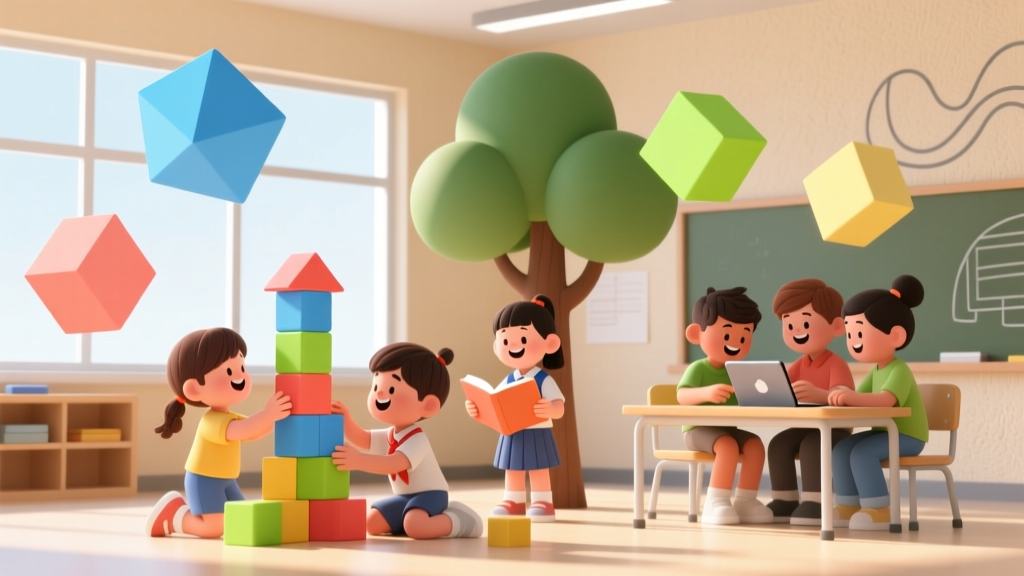
How to Connect With Tweens & Teens Authentically
Why 'How You Do Fellow Kids' Isn’t Just a Meme — It’s a Mirror for Modern Parenting
The phrase how you do fellow kids has long been an internet punchline — a shorthand for awkward, performative attempts by adults to mimic teen language, trends, or values in hopes of gaining credibility. But beneath the satire lies a deeply human, urgent parenting question: how do you authentically connect with your child as they grow into their own identity — especially when their world feels increasingly alien? Whether it’s TikTok lingo, Discord slang, or shifting social norms around identity, privacy, and mental health, parents aren’t failing because they don’t know the latest meme — they’re struggling with something far more foundational: how to stay emotionally present, culturally curious, and relationally grounded without pretending to be someone they’re not. This isn’t about mastering Gen Z vernacular; it’s about cultivating the humility, listening skills, and developmental awareness that let real connection flourish — even when your kid rolls their eyes at your Spotify playlist.
What ‘Fellow Kids’ Really Reveals About Developmental Needs
At its core, the ‘fellow kids’ phenomenon highlights a mismatch between adult intention and adolescent developmental reality. Tweens and teens aren’t rejecting parental involvement — they’re rejecting inauthenticity, condescension, and surveillance disguised as engagement. According to Dr. Lisa Damour, clinical psychologist and author of Untangled, adolescents are biologically wired to test boundaries, seek peer validation, and refine their sense of self — but they still crave secure, non-judgmental adult relationships. When parents over-perform ('slay', 'no cap', 'based') or under-engage (dismissing interests as 'just a phase'), they inadvertently signal that their child’s inner world isn’t worthy of genuine curiosity.
Consider Maya, 14, from Portland, whose dad started using 'rizz' and 'sigma' unironically after watching one YouTube explainer. Within days, Maya stopped sharing her Roblox coding projects — not because she disliked his effort, but because she sensed he wasn’t listening to her; he was auditioning for a role. Contrast that with Javier, 16, whose mom began asking open-ended questions like, 'What makes this trend funny to you?' or 'How do you decide what’s worth your attention online?' — no jargon, just presence. Six months later, Javier initiated conversations about cyberbullying in his group chat and asked for help drafting a respectful boundary-setting message.
This isn’t about linguistic fluency — it’s about relational fluency. The American Academy of Pediatrics (AAP) emphasizes that warm, responsive, and autonomy-supportive parenting — where adults scaffold independence rather than control or mimic — correlates strongly with lower anxiety, higher academic resilience, and stronger identity formation in adolescence.
The 5-Step Framework for Authentic Engagement (No Slang Required)
Forget memorizing acronyms. Real connection flows from consistent, low-stakes practices rooted in developmental science. Here’s how to build it:
- Start with observation, not interpretation. Notice what your child engages with — not to judge or fix, but to understand. Is it the aesthetic? The community? The creative outlet? Keep a simple log for one week: 'What did they spend >10 minutes on today? What emotion came up? What question did I resist asking?'
- Ask permission before diving in. Instead of jumping into commentary ('That song’s so weird'), try: 'I noticed you’ve played this track 12 times — would you be open to telling me why it resonates?' This honors their agency and signals respect for their internal logic.
- Share your own learning process — vulnerably. Say: 'I’m trying to understand how TikTok’s algorithm works — can you walk me through it like I’m 90?' This flips the script: you become the student, they become the expert. It builds mutual respect and models intellectual humility.
- Anchor conversations in shared values, not platforms. Rather than debating whether Fortnite is 'good,' explore: 'What does fairness mean in your squad? How do you handle losing gracefully? What makes a good teammate online?' These questions bridge digital behavior and character development.
- Create low-pressure 'third spaces' for connection. Ride bikes while listening to their playlist. Cook dinner together with their favorite K-pop playlist on. Walk the dog and talk about nothing — then everything. Neuroscience confirms that side-by-side interaction (vs. face-to-face interrogation) reduces adolescent defensiveness and increases openness.
When ‘Trying Too Hard’ Becomes a Safety Issue
Performative engagement isn’t just cringe — it can erode trust in high-stakes moments. A 2023 study published in Journal of Adolescent Health found that teens were 3.2x less likely to disclose mental health struggles to parents who consistently misused or mocked youth language, perceiving it as evidence of dismissiveness. More critically, parents who ‘go undercover’ — creating fake social accounts, using spyware, or impersonating peers — risk violating psychological safety. As Dr. Ken Ginsburg, pediatrician and resilience expert, warns: 'Surveillance without transparency teaches kids to hide — not to make better choices.'
Real-world example: After Liam, 15, discovered his mom had friended his gaming friends under a pseudonym, he deleted all his accounts and withdrew for six weeks. Only after she apologized — naming her fear (not her tactic) and committing to transparent tech agreements — did trust begin rebuilding. Their new family rule? 'No secret accounts. If we want to understand your world, we’ll ask — and listen — openly.'
This aligns with AAP’s 2022 digital media guidance: monitoring should be collaborative, age-appropriate, and focused on coaching, not control. Co-create a family media plan that includes agreed-upon boundaries, shared passwords (for younger teens), and regular 'tech check-ins' — not surprise audits.
Developmental Milestones Meet Digital Literacy: An Age-Appropriate Guide
Authentic connection looks different across ages — and conflating them causes friction. Below is a research-backed roadmap for aligning your approach with your child’s cognitive, emotional, and social development.
| Age Range | Key Developmental Traits | Authentic Engagement Strategy | Red Flag (‘Fellow Kids’ Trap) | Safety & Supervision Level |
|---|---|---|---|---|
| 8–10 years | Concrete thinking; strong need for routine; beginning social comparison; limited impulse control online | Co-play games; narrate your own screen use ('I’m checking weather — why do you think I need this?'); establish clear 'device-free zones' | Using kid slang to seem 'cool' during screen-time negotiations; joking about their 'cringe' interests | High supervision: Shared devices, time limits, pre-approved apps only (COPPA-compliant) |
| 11–13 years | Emerging abstract thought; heightened peer sensitivity; identity experimentation; increased privacy seeking | Ask 'what’s interesting about this platform?' before judging it; review privacy settings together; discuss digital footprint with real examples (e.g., college admissions) | Creating TikTok dances to 'bond'; quoting memes to deflect serious conversations about body image or social pressure | Moderate supervision: Collaborative rules, occasional spot-checks, focus on teaching self-monitoring |
| 14–16 years | Advanced reasoning; moral idealism; testing autonomy; developing long-term goals; vulnerability to social media comparison | Invite them to teach you about algorithms or AI ethics; discuss news stories about digital rights; co-write family tech values (e.g., 'We pause notifications during meals') | Using slang to mask discomfort with topics like sexting or misinformation; pretending to understand complex platforms to avoid admitting ignorance | Low supervision: Focus on accountability, reflection, and consequence-based learning — not surveillance |
| 17–19 years | Near-adult cognition; identity consolidation; future-oriented planning; capacity for mutual mentorship | Treat as emerging peer: Ask for their advice on your own tech use; discuss digital wellness strategies you both can adopt; support their advocacy (e.g., school social media policy) | Insisting on 'staying relevant' by adopting their aesthetics or politics without understanding context; dismissing their emerging worldview as 'phase' | Self-supervision: Parental role shifts to consultant, not controller — with clear boundaries around shared spaces/responsibilities |
Frequently Asked Questions
Can using teen slang ever be helpful — or is it always cringe?
It depends entirely on context and intent. Using a term your child introduced to you — and getting it right — can feel affirming (e.g., 'That’s fire!' after they proudly show you their art project). But deploying slang to 'prove' relevance, especially without understanding nuance or history, often backfires. A 2022 University of Michigan study found that 78% of teens perceived unsolicited adult slang use as 'performative' or 'infantilizing.' The safer path? Let them teach you — and laugh when you get it wrong.
My teen says 'you don’t get it' — how do I respond without shutting down?
Validate first, problem-solve second. Try: 'You’re right — I don’t fully get it yet. Can you help me understand what matters most about this to you?' This disarms defensiveness and centers their experience. Avoid 'I was young once too' — it minimizes their unique context. Instead, name shared feelings: 'I remember feeling that mix of excitement and worry when I first joined a new group — is that part of it?'
Is it okay to follow my teen on social media? If so, how?
Transparency is non-negotiable. Never follow secretly. Instead, propose a trial: 'I’d like to follow your public account to better understand your world — but I won’t comment, share, or react unless you invite me to. Can we revisit this in 3 months?' Respect their 'no' — and explore alternative ways to connect (e.g., sharing articles about digital wellness, discussing news about platform policies). The AAP advises that following should serve mutual understanding, not surveillance.
How do I talk about online risks without sounding alarmist or outdated?
Lead with curiosity, not catastrophe. Replace 'This app is dangerous' with 'I read that this platform’s data policy changed — what do you think about how they use your info?' Use real cases (with names changed) to explore ethics: 'A friend’s daughter had her art reposted without credit — how would you want to be credited if someone shared your work?' This builds critical thinking, not fear.
What if my kid prefers talking to AI chatbots over me?
This is a red flag worth exploring gently — not shaming. Ask: 'What do you like about talking to it?' Common answers include 'It doesn’t judge,' 'It’s always available,' or 'It gives quick answers.' Then reflect: 'How can I be more like that — without losing what only a real person can offer?' Sometimes, it’s about adjusting timing, reducing advice-giving, or simply saying 'I’m here to listen, not fix.'
Debunking Two Common Myths
- Myth #1: 'If I don’t speak their language, I’ll lose influence.' Reality: Influence stems from trust, consistency, and unconditional positive regard — not vocabulary. A longitudinal Harvard Study found parental warmth and responsiveness predicted adolescent decision-making quality more strongly than shared hobbies or platforms.
- Myth #2: 'Teens want parents to be their friends.' Reality: They want trusted adults — not peers. Research from the Search Institute shows teens with at least one 'developmental relationship' (an adult who affirms, challenges, and supports them) are 3x more likely to thrive academically and emotionally. Friendship implies equality; parenting requires wise stewardship.
Related Topics (Internal Link Suggestions)
- Digital Media Plan Template — suggested anchor text: "free printable family media agreement"
- Talking to Teens About Social Media — suggested anchor text: "how to discuss Instagram and TikTok safely"
- Building Teen Resilience — suggested anchor text: "evidence-based strategies for adolescent mental wellness"
- Screen Time Guidelines by Age — suggested anchor text: "AAP-recommended daily screen limits"
- Parent-Teen Communication Workshops — suggested anchor text: "online courses for authentic connection"
Conclusion & Your Next Step
'How you do fellow kids' isn’t a script to memorize — it’s an invitation to show up with humility, curiosity, and unwavering belief in your child’s capacity to grow. Authentic connection isn’t built in viral moments, but in the quiet accumulation of seen, heard, and respected moments: the paused video game to ask about a friend’s tough day; the shared silence while scrolling through art feeds; the apology when you misstep. Your goal isn’t to be fluent in their world — it’s to be a safe harbor within it. So this week, try one small experiment: replace one judgment with one question. Ask 'What’s the story behind this?' instead of 'Why would you watch that?' Track what happens — not just in their response, but in your own sense of calm. Because the most powerful phrase you’ll ever say isn’t 'on fleek' — it’s 'Tell me more.'
More Articles
 Hide Your Kids Hide Your Wife Origin and Safety Tips
 How Many Kids Does Snoop Dog Have (2026)
 Is 3 Kids Too Many? Data, Experts & Real Families
 How to Get Your Child’s Birth Certificate (2026)
 How Old Are Britney Spears’ Kids in 2026?
 Is Gremlins a Kids Movie? (2026) — Expert Guide
 How Much to Save for Kids College: Realistic 2026 Guide
 Social Media for Kids: How, When & Why (2026)
 Baseball Cleats for Football? Safety, Rules & Risks
 Kids’ Abs: Healthy Habits, Not Crunches (2026)