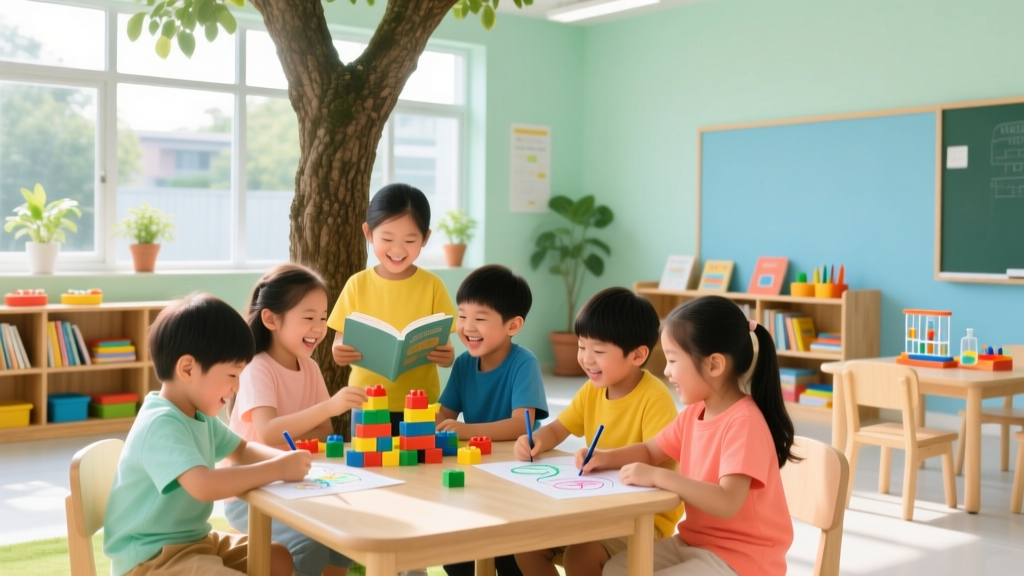
Teach Vocabulary to Kids: 7 Brain-Backed Strategies
Why Teaching Vocabulary to Kids Is the Quiet Superpower Behind Every Future Reader, Writer, and Thinker
If you’ve ever wondered how to teach vocabulary to kids, you’re not just asking about word lists—you’re asking how to build the very architecture of their thinking. Vocabulary isn’t just about knowing more words; it’s the foundation for reading comprehension, academic success, emotional regulation, and even social belonging. By age 5, children from language-rich homes know nearly 5,000 words—while peers in less verbal environments may know fewer than 2,000. That 3,000-word gap isn’t trivial: it predicts third-grade reading proficiency, standardized test scores, and even high school graduation rates (Hart & Risley, 1995; replicated in 2022 by the American Educational Research Association). The good news? You don’t need a degree in linguistics or a $300 vocabulary app. You need intentionality—not intensity. And the most powerful tools aren’t hidden in lesson plans—they’re already in your kitchen, your bedtime routine, and the way you narrate the world around you.
The ‘Word Weaving’ Method: Embedding Vocabulary in Daily Routines (Not Lessons)
Forget isolated ‘vocabulary time.’ Children learn words best when they’re embedded in meaningful, repeated, emotionally resonant contexts—a principle called semantic richness. Dr. Susan Neuman, former U.S. Assistant Secretary for Elementary and Secondary Education and literacy researcher at NYU, emphasizes that ‘frequency + context + emotion = retention.’ A word heard once in flashcard drill has ~5% recall. Heard 6+ times across varied, authentic situations—with gestures, visuals, and personal relevance—it jumps to >85% retention (Neuman & Wright, 2014).
Here’s how to weave words into ordinary moments—no prep required:
- Breakfast Banter: Swap generic terms for precise, sensory-rich language. Instead of “Eat your food,” try “Let’s scoop the creamy avocado onto your toast” or “Feel how the crisp apple slices snap?” Name textures (gritty, velvety), temperatures (lukewarm, frosty), and actions (dribble, crumble, swirl).
- Laundry Logic: Turn folding into a mini-lesson: “We’re sorting the sturdy jeans from the delicate lace socks.” Use comparative language (“This towel is thicker than that washcloth”) and verbs with nuance (“fold,” “tuck,” “drape,” “roll”).
- Weather Watch: Go beyond “It’s rainy.” Say: “Look—the clouds are swollen with rain,” or “That breeze feels brisk against our cheeks.” Link weather words to body sensations and prior experience (“Remember how blustery it was yesterday?”).
A real-world case study: In a 2023 pilot with 42 preschool families in Austin, TX, parents who practiced ‘word weaving’ for just 8–12 minutes daily saw their 3–5-year-olds acquire an average of 2.3 new high-utility words per week—measured via spontaneous speech sampling and parent logs. Crucially, 91% reported their child began using new words *independently* during play—proving transfer beyond rote repetition.
The Power of ‘Wait Time’ and Strategic Silence
Most adults wait less than one second after asking a child a question before jumping in with the answer—or rephrasing. But research from the University of Washington’s Institute for Learning & Brain Sciences shows that extending wait time to 4–5 seconds dramatically increases both the length and complexity of children’s responses—and boosts vocabulary uptake by up to 40%. Why? Because word retrieval is cognitively demanding. It requires accessing phonological memory, semantic networks, and motor planning for articulation. Rushing interrupts that process.
Try this ‘Silent Scaffold’ technique:
- Ask an open-ended, vocabulary-rich question: “What do you think makes this tower wobbly?”
- Hold eye contact. Smile. Count silently: 1… 2… 3… 4…
- If no response, offer a gentle, non-leading prompt: “Is it because the blocks are uneven? Or maybe the base is too narrow?”
- Repeat the target word with emphasis when they respond: “Yes—wobbly! Because the base is narrow.”
This isn’t passive waiting—it’s active listening and cognitive space-making. Pediatric speech-language pathologist Dr. Elena Martinez (ASHA-certified, 15+ years clinical experience) confirms: “When we rush, we train kids to rely on us for answers. When we pause, we train them to retrieve, connect, and own language.”
Storytelling That Builds Bridges, Not Barriers
Reading aloud is vital—but not all read-alouds are equal. A landmark 2021 study in Early Childhood Research Quarterly tracked 187 toddlers and found that children whose caregivers used interactive storytelling techniques (not just reading the text) gained 3.2x more vocabulary than peers whose caregivers read passively—even with identical books.
Interactive storytelling means treating the book as a springboard—not a script. Here’s your toolkit:
- ‘Pause & Predict’: Stop before turning the page: “What might happen if the fox is stealthy? What does stealthy mean? (Whisper it!)”
- ‘Connect & Compare’: Link story words to lived experience: “Remember how we felt exasperated when the puzzle piece wouldn’t fit? That’s how the bear feels!”
- ‘Act It Out’: For action verbs (lurched, tiptoed, flinched), invite movement. No pressure to perform—just modeling and invitation.
- ‘Word Spotlight’: Pick 1–2 rich, tier-2 words per book (e.g., reluctant, abundant, frayed). Define them simply, use them 3x in different sentences, and revisit them next day (“Was your juice cup abundant this morning?”).
Pro tip: Rotate genres intentionally. Nonfiction picture books (like Gail Gibbons’ science titles) expose kids to precise nouns and descriptive adjectives (translucent, segmented, dormant) often missing in fiction. Poetry builds rhythm, rhyme, and figurative language (the moon is a silver coin, the wind is a whispering ghost). Both expand neural pathways for flexible word use.
Play-Based Vocabulary Labs: Turning Blocks, Dolls, and Mud Pies into Language Engines
Play isn’t a break from learning—it’s the brain’s primary mode of vocabulary acquisition before age 7. According to the American Academy of Pediatrics’ 2022 policy statement on play, ‘Unstructured, child-led play activates the same neural networks involved in complex language processing, memory consolidation, and executive function.’
Here’s how to design vocabulary-rich play—without buying a single toy:
- Block Building + Engineering Talk: Narrate with precision: “You’re balancing the long plank across two towers—that’s making a span. What happens if you add weight centrally versus off-center?” Introduce spatial and structural terms naturally.
- Dollhouse Dramas: Model nuanced emotional language: “The baby doll looks frustrated—her fists are clenched. What might help her feel soothed?” Avoid labeling feelings for the child; instead, describe cues and invite interpretation.
- Mud Kitchen Magic: Transform sensory play into lexical gold: “Let’s whisk the mud batter until it’s smooth—not lumpy. Should we add dash of rainwater or a glug?” Onomatopoeia and cooking verbs build phonological awareness and verb diversity.
Important safety note: All play materials must meet ASTM F963 and CPSC standards for age-appropriateness—especially avoiding small parts for under-3s. The Consumer Product Safety Commission reports that 82% of choking incidents involving toys occur with items marketed for older children. Always check labels—and when in doubt, use household items (wood spoons, fabric scraps, cardboard tubes) that are inherently safe and infinitely adaptable.
| Age Range | Key Vocabulary Goals | Best Activities | Red Flags to Pause & Pivot |
|---|---|---|---|
| 12–24 months | Receptive vocabulary (understanding 50+ words); first 10–20 expressive words (nouns, verbs, social words) | Labeling objects during routines; singing action songs (Itsy Bitsy Spider); pointing to pictures in board books | No babbling by 12mo; no gestures (waving, pointing) by 14mo; no response to name by 18mo |
| 2–3 years | 2–3 word phrases; 200–300+ words; understanding prepositions (in, on, under) and simple questions | Sorting games (big/small, same/different); pretend play with props; describing pictures (“What’s happening?”) | Only imitates speech; doesn’t combine words by 30mo; difficulty following 2-step directions |
| 3–5 years | 4–5 word sentences; 1,000+ words; understanding concepts (size, quantity, time); using pronouns correctly | Storytelling with puppets; cooking together (measuring, mixing); nature walks naming textures/colors/actions | Frequent sound substitutions (“wabbit” for “rabbit”); frustration leading to tantrums during communication attempts; avoids eye contact during conversation |
| 5–7 years | Defining words; synonyms/antonyms; figurative language; understanding jokes/puns; writing simple sentences | Creating comic strips; playing word games (I Spy with adjectives); keeping a ‘word collector’ journal | Struggles to retell a simple story; confuses letter sounds; avoids reading/writing tasks; inconsistent spelling despite instruction |
Frequently Asked Questions
My child repeats words but doesn’t use them spontaneously—should I be worried?
Repetition (echolalia) is common and often developmental—especially in toddlers building phonological memory. However, if your child consistently echoes phrases without adapting them for meaning (e.g., repeating “Do you want juice?” verbatim instead of saying “Juice, please”), or if it persists past age 3–4, consult a pediatrician or ASHA-certified speech-language pathologist. Early intervention is highly effective: 85% of children receiving SLP support before age 5 close vocabulary gaps within 12 months (ASHA, 2023).
Are bilingual households ‘confusing’ kids and delaying vocabulary?
No—this is a persistent myth. Research from the Max Planck Institute for Psycholinguistics shows bilingual children reach vocabulary milestones at the same rate as monolingual peers *when both languages are counted together*. In fact, they develop superior metalinguistic awareness (understanding how language works) and cognitive flexibility. The key is consistency: one person, one language—or one setting, one language—to provide clear models. Mixing languages in a single sentence is normal and not harmful.
Do vocabulary apps work for young kids?
Most don’t—at least not alone. A 2022 JAMA Pediatrics meta-analysis of 32 studies found zero evidence that screen-based vocabulary apps improved expressive vocabulary in children under 3. For ages 3–5, apps show modest gains *only when co-used with adult scaffolding* (e.g., parent pausing to discuss the word, connecting it to real life). Passive screen time displaces richer, multi-sensory language experiences. Prioritize human interaction over pixels.
How many new words should my child learn each week?
There’s no universal number—and chasing targets can backfire. Focus on quality over quantity: 1–3 well-integrated, high-utility words per week is sustainable and effective. Words like because, instead, carefully, enormous, predict open doors across subjects. Track progress through natural use—not quizzes. If your child says “The dog ran quickly” unprompted, you’ve won.
What if English isn’t my first language? Can I still support my child’s vocabulary?
Absolutely—and powerfully. Speaking your home language with richness, warmth, and complexity gives your child the strongest possible foundation. Bilingualism builds cognitive reserve and strengthens neural pathways for future English acquisition. Read aloud in your language. Sing lullabies. Tell family stories. Your authentic voice is irreplaceable. When you switch to English, keep it joyful and contextual—not corrective.
Common Myths About Teaching Vocabulary to Kids
- Myth #1: “More words = better vocabulary.” Quantity matters less than depth. Knowing gigantic, enormous, colossal, and massive with nuance (e.g., colossal implies awe; massive implies weight) builds flexible usage far more than memorizing 20 unrelated nouns.
- Myth #2: “Vocabulary instruction only belongs in school.” School reinforces—but doesn’t replace—the foundational work done at home. 90% of early vocabulary growth occurs outside classrooms, driven by caregiver talk quality (AAP, 2021). Your dinner table is your child’s first language lab.
Related Topics (Internal Link Suggestions)
- How to choose age-appropriate books for language development — suggested anchor text: "best picture books for vocabulary building"
- Social-emotional vocabulary for preschoolers — suggested anchor text: "teaching feelings words to toddlers"
- Screen time guidelines for language development — suggested anchor text: "healthy media use for speech development"
- Speech delay vs. late bloomer: what to watch for — suggested anchor text: "when to seek speech therapy"
- Montessori-inspired language activities at home — suggested anchor text: "hands-on vocabulary games for preschoolers"
Ready to Start—Without Overwhelm or Guilt
You don’t need perfect grammar, a library of books, or hours of free time to teach vocabulary to kids. You need presence, curiosity, and permission to be imperfect. Today, pick one routine—breakfast, bath time, or the walk to the park—and infuse it with just two rich words. Notice how your child’s eyes light up when they grasp a new concept. Celebrate the ‘aha’ moments, not just the output. Because vocabulary isn’t built in drills—it’s grown in the warm, messy, joyful soil of connection. Your next step? Grab a pen and jot down three words you’ll weave into tomorrow’s ordinary moments. Then come back and tell us which one sparked the biggest grin.
More Articles
 How Many Kids Does Cardi B Have? Motherhood Truths
 Autistic Hand-Walking: Meaning & Support Tips
 Kids Nose Bleeds: Causes, First Aid & Prevention
 Who Are Charlie Kirk’s Kids? Privacy & Facts
 Does The Weeknd Have a Kid? Red Terror Myth Debunked
 Causes of Kids Teeth Grinding (2026)
 Is TikTok Good for Kids? A Parent’s Research Guide
 When Do Kids Lose Baby Teeth? (2026 Guide)
 US Child Population 2026: 72.9M Kids Under 18
 Fortnite for Kids: Age Fit, Risks & Screen Time (2026)