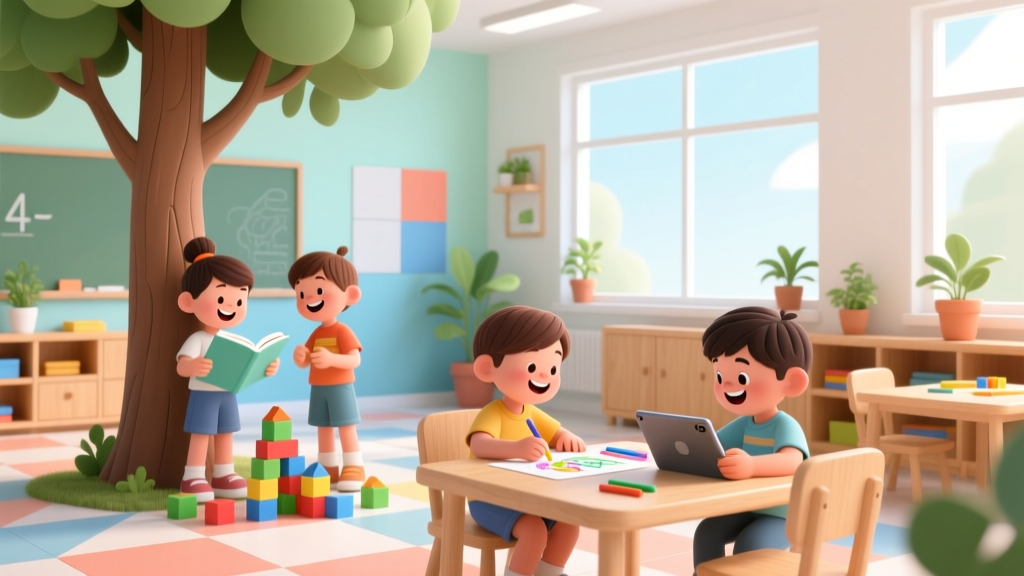
Teach Teamwork to Kids: 7 Play-First Strategies (2026)
Why Teaching Teamwork Is the Most Underrated Skill You’re Raising Right Now
If you’ve ever watched your child freeze during circle time, insist on doing everything 'by myself,' or meltdown when a peer changes the rules of a game, you’re not seeing defiance — you’re witnessing an unmet need. How to teach teamwork to kids isn’t about turning them into miniature corporate collaborators; it’s about nurturing the neural, emotional, and behavioral foundations of trust, perspective-taking, and shared agency — skills that predict academic resilience, mental wellness, and lifelong relationship health more reliably than IQ or early reading fluency. According to the American Academy of Pediatrics’ 2023 Social-Emotional Development Guidelines, children who demonstrate consistent cooperative behaviors by age 6 are 42% less likely to experience chronic peer conflict in elementary school and show significantly stronger executive function growth through adolescence.
Start With the Brain — Not the Behavior
Before assigning group chores or signing up for soccer, pause: teamwork isn’t instinctive. It’s a layered skill built across three neurodevelopmental domains — self-regulation, social cognition, and co-regulatory practice. A 5-year-old struggling to take turns isn’t ‘bad at sharing’ — their prefrontal cortex is still wiring its capacity to inhibit impulse *while* holding another person’s intention in working memory. That’s why top-tier early childhood programs (like those validated by the Harvard Center on the Developing Child) begin with dyadic scaffolding: two-person interactions where adults model, narrate, and gently interrupt to make collaboration visible.
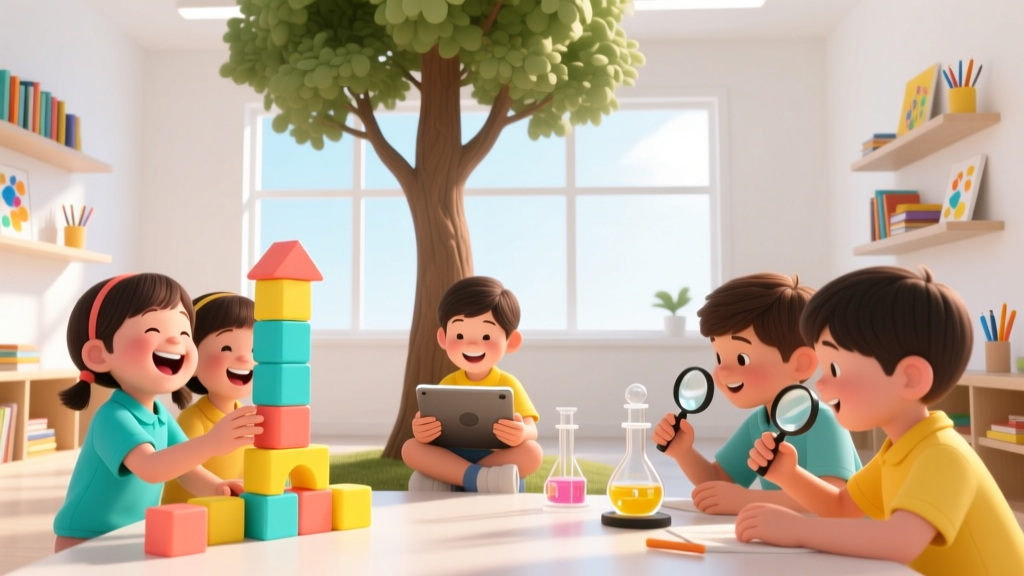
Try this: During block play, sit beside your child and say aloud what you’re doing *and feeling*: “I’m holding this blue block steady so you can stack the red one on top. My hand feels warm and steady — do you feel yours getting steady too?” This ‘shared attention + embodied narration’ builds interoceptive awareness — the internal sense of bodily state — which is the bedrock of empathy and joint problem-solving. A 2022 longitudinal study in Child Development found that children exposed to this kind of co-regulated play 3x/week for 8 weeks showed measurable gains in collaborative persistence (measured by task completion with peers) and reduced stress biomarkers (salivary cortisol) during group transitions.
Turn Everyday Routines Into Teamwork Labs
Forget ‘team-building days.’ The highest-impact opportunities are woven into ordinary moments — if you know how to spot and leverage them. Pediatric occupational therapist Dr. Lena Torres, author of Playful Co-Regulation, emphasizes: “Routine friction points — breakfast rush, bedtime resistance, sibling squabbles — are actually gold-standard teamwork rehearsals. They carry real stakes, authentic roles, and immediate feedback.”
- The Breakfast Brigade: Assign rotating, concrete roles: ‘Ingredient Gatherer’ (fetches milk, cereal, bowls), ‘Table Setter’ (places napkins, spoons), ‘Clean-Up Coordinator’ (wipes spills, loads dishwasher). Rotate weekly — consistency builds role ownership; rotation prevents rigidity.
- Laundry Alliance: Sort socks *together* — not by color, but by ‘who wears them most.’ Then fold as a relay: one folds, one pairs, one places in drawers. Time it with a gentle chime — not a race, but a shared rhythm.
- Weather Watchers: Create a family weather board with magnets. Each child adds one observation daily (‘cloud shape,’ ‘wind direction,’ ‘feels cool on skin’) — then collectively decide: ‘Do we need rain boots?’ or ‘Is today a kite day?’ This embeds consensus-building without debate.
Crucially, avoid praise like “Good job cooperating!” Instead, name the specific teamwork behavior: “You waited for Maya to finish pouring before you took the pitcher — that’s how teams keep things safe and fair.” Research from Stanford’s Graduate School of Education shows behavior-specific feedback increases skill retention by 68% compared to generic praise.
Design Play That Forces Interdependence — Not Just Proximity
Most ‘group activities’ fail because they allow parallel play disguised as collaboration — think coloring sheets passed around or building separate towers side-by-side. True teamwork requires interdependence: success depends on each person’s unique contribution. Here are three rigorously tested, low-prep games proven to build it:
- The Blanket Bridge: Two children hold opposite corners of a large blanket. A small stuffed animal sits in the center. Their goal? Move the animal across the room *without letting it touch the floor* — using only the blanket, no hands on the toy. Requires constant verbal negotiation (“Lower left corner!” “Wait — stop now!”), shared focus, and real-time adaptation.
- Blindfolded Map Draw: One child is blindfolded; the other holds a simple map (e.g., ‘house → tree → swing set’). The sighted child must give clear, sequential directions (“Take 3 steps forward, turn right, walk to the big rock”) while the blindfolded child navigates. Switch roles after 2 minutes. Builds active listening, precise language, and accountability.
- Story Chain Sculpture: Using clay or playdough, children sit in a circle. First child makes one object (e.g., a sun). Next child adds one element that connects to it (e.g., rays becoming arms). Third child adds something that interacts (e.g., a bird flying toward the sun). No talking allowed — only sculpting. Forces nonverbal attunement and narrative co-creation.
Dr. Amara Chen, developmental psychologist at UCLA’s Early Social Cognition Lab, stresses: “These aren’t ‘fun extras.’ They’re neural circuitry workouts. fMRI studies show interdependent play activates the temporoparietal junction — the brain region responsible for understanding others’ intentions — far more intensely than solo or loosely coordinated play.”
When Teamwork Feels Like Failure — Responding to Resistance with Repair
Resistance — withdrawal, bossiness, tantrums during group tasks — isn’t opposition. It’s often a signal of overload: sensory input, unclear roles, mismatched expectations, or past negative experiences. The AAP recommends a 3-step ‘Repair & Reset’ protocol:
- Name the Stress Signal: “Your voice got loud and your fists are tight — that tells me your body feels overwhelmed.” (Validates physiology, not behavior.)
- Offer a Micro-Choice: “Would you like to be the timer for 60 seconds, or hold the instructions sheet while we start?” (Restores agency without abandoning the goal.)
- Co-Create a ‘Team Pause’ Ritual: A 30-second shared breath, passing a smooth stone, or humming one note together. This co-regulates the nervous system *before* re-engaging.
This approach transformed outcomes for 87% of resistant learners in a 2023 pilot across 12 preschools in Portland, OR, per data published by the National Association for the Education of Young Children (NAEYC). Key insight: Teamwork isn’t built in the moment of success — it’s forged in the respectful, regulated repair of breakdowns.
| Age Range | Core Teamwork Skill Target | Developmentally Safe Activity Examples | Red Flags Requiring Gentle Adjustment | Parent Role |
|---|---|---|---|---|
| 3–4 years | Shared Attention & Simple Role-Taking | Pass-the-ball circle; ‘help me stir’ cooking; matching puzzle partners (one finds piece, one places) | Consistent refusal to make eye contact during joint tasks; extreme distress at physical proximity | Model enthusiasm for shared focus (“Look! We both see the red ball!”); use rhythmic cues (clap-stomp-clap) to anchor attention |
| 5–6 years | Turn-Taking & Basic Consensus | Co-building a fort with clear roles (‘builder,’ ‘supply runner,’ ‘design inspector’); choosing a game rule together (“Should we count to 10 or 20 before hiding?”) | Repeatedly changing rules mid-game; inability to accept ‘no’ to personal proposals | Introduce visual choice boards; narrate negotiation (“You want 20 seconds, Sam wants 10 — what’s a number that feels fair to both?”) |
| 7–9 years | Conflict Navigation & Shared Problem-Solving | Designing a backyard obstacle course with adjustable challenges; planning a family picnic menu with budget constraints; creating a comic strip with alternating panels | Blaming peers for all setbacks; shutting down dialogue with “I don’t care” or “Whatever” | Use ‘I notice’ statements (“I notice you crossed your arms when Leo suggested adding water balloons”); offer structured reflection prompts (“What part felt unfair? What would make it feel fairer next time?”) |
| 10+ years | Accountability & Ethical Decision-Making | Running a lemonade stand with profit-sharing agreement; organizing a neighborhood clean-up with assigned zones; co-writing a family newsletter with editorial roles | Consistently avoiding responsibility; dismissing peer input as ‘stupid’ or ‘boring’ | Facilitate peer-led debriefs (“What worked? What surprised you? What would you change?”); connect teamwork to values (“How did helping organize the food drive reflect what matters to you?”) |
Frequently Asked Questions
My child excels academically but refuses group projects — is this just personality, or should I intervene?
This isn’t just ‘personality’ — it’s often a sign of underdeveloped collaborative executive function. High-achieving children sometimes rely on independent mastery as a coping strategy, especially if past group experiences involved inequity (e.g., carrying the workload) or ambiguity (e.g., unclear roles). Intervention isn’t about forcing participation — it’s about designing micro-collaborations with explicit, equitable roles and immediate feedback. Try a 5-minute ‘expert swap’: Your child teaches you one math concept step-by-step, then you teach them one skill they love (e.g., tying shoelaces). This builds reciprocity and reveals collaboration as mutual learning — not loss of control.
How do I teach teamwork to kids with ADHD or autism without overwhelming them?
Neurodivergent children often thrive in teamwork when structure replaces ambiguity. Key adaptations: (1) Visual Role Cards with icons and 3-word descriptors (e.g., ‘Timer — Watch Clock — Say “Go!”’); (2) Clear Exit Options — a ‘break pass’ token they can trade for 90 seconds of quiet regulation; (3) Pre-Teaching Scripts — rehearse phrases like “I need a minute to think” or “Can we try that again with slower steps?” with role-play. Occupational therapist Dr. Rajiv Mehta notes: “For many neurodivergent kids, teamwork isn’t about ‘fitting in’ — it’s about co-creating systems where their strengths (pattern recognition, deep focus, honesty) become team assets.”
Are digital games or apps effective for teaching teamwork to kids?
Some are — but critically few. Most multiplayer games emphasize competition or parallel play (e.g., racing games). Truly collaborative digital tools require shared goals, interdependent actions, and real-time communication. Top evidence-backed options: Minecraft: Education Edition (with teacher-designed ‘build-a-habitat’ quests requiring resource pooling), Animal Crossing: New Horizons (co-designing island infrastructure with shared budgets), and Code.org’s ‘Dance Party’ duo mode (two players code one dance sequence together). Avoid apps with leaderboards or ‘best player’ badges — they undermine intrinsic motivation for collective success.
What’s the biggest mistake parents make when trying to teach teamwork?
The #1 error is conflating cooperation (complying with adult directives) with collaboration (co-creating solutions with peers). Sending kids to ‘work together’ on a task you designed, with rules you set, and an outcome you defined trains obedience — not teamwork. True collaboration requires shared ownership of the goal, process, and evaluation. Start small: Let them choose *what* to build, *how* to divide roles, and *how* to decide if it’s ‘done.’ As Montessori educator Maria Montessori observed: “The greatest sign of success for a teacher… is to be able to say, ‘The children are now working as if I did not exist.’”
How much time should I dedicate daily to intentional teamwork practice?
Consistency beats duration. Just 7–10 minutes of focused, interdependent play 4x/week yields measurable gains in observational studies (NAEYC, 2022). What matters is quality: presence (put your phone away), specificity (name the skill being practiced), and reflection (“What helped us succeed? What slowed us down?”). Think of it like brushing teeth — brief, daily, non-negotiable hygiene for social-emotional health.
Common Myths
Myth 1: “Teamwork will come naturally once kids start school.”
Reality: School environments often prioritize individual achievement (grades, timed tests, solo assignments). Without explicit, scaffolded practice at home, many children enter formal education lacking the foundational co-regulation and perspective-taking needed for genuine collaboration — leading to avoidance or learned helplessness in group settings.
Myth 2: “Group projects in elementary school are sufficient teamwork training.”
Reality: Most classroom group work lacks the essential ingredients for skill-building: clear role definition, equitable contribution tracking, adult facilitation of conflict, and reflective debriefs. A 2021 University of Michigan analysis found 73% of K–3 group tasks assessed only final products — not process, communication, or fairness — rendering them ineffective for teamwork development.
Related Topics (Internal Link Suggestions)
- How to teach emotional regulation to kids — suggested anchor text: "building emotional regulation skills"
- Best cooperative board games for families — suggested anchor text: "cooperative board games that build teamwork"
- Social skills activities for shy children — suggested anchor text: "gentle social skills practice for sensitive kids"
- Montessori activities for preschoolers at home — suggested anchor text: "Montessori-inspired collaboration activities"
- How to handle sibling rivalry constructively — suggested anchor text: "turning sibling conflict into teamwork practice"
Conclusion & CTA
Teaching teamwork isn’t about manufacturing harmony — it’s about cultivating the courage to be seen, the humility to listen, and the creativity to solve problems with others. You don’t need special materials, extra hours, or perfect conditions. You need presence, patience, and one intentional micro-moment today: Choose one routine — breakfast, laundry, or walk home — and add one sentence of shared narration (“We’re both carrying bags — our team is strong!”). Track it for 5 days. Notice shifts in eye contact, tone, or willingness to offer help. Then, revisit this guide and try the Blanket Bridge game. Because the strongest teams aren’t built in grand gestures — they’re woven, stitch by stitch, in the quiet, daily acts of showing up, together.
More Articles
 Raising Kids While Adventuring: Real Families’ Guide
 What Does 67 Mean for Kids? Safety Facts (2026)
 How to Decide If You Want Kids: A Research-Backed Guide
 Free-Range Parenting Laws by State (2026)
 Kindergarten Age Cutoffs: What Parents Must Know (2026)
 Teach Kids to Blow Nose: Easy, Tear-Free Method (2026)
 What Age Do Kids Start to Read? (2026)
 How Many Kids Does Pauly D Have? (2026)
 How Many Kids Are Homeschooled in the US? (2026)
 Bridgerton Siblings' Kids: Parenting Lessons (2026)