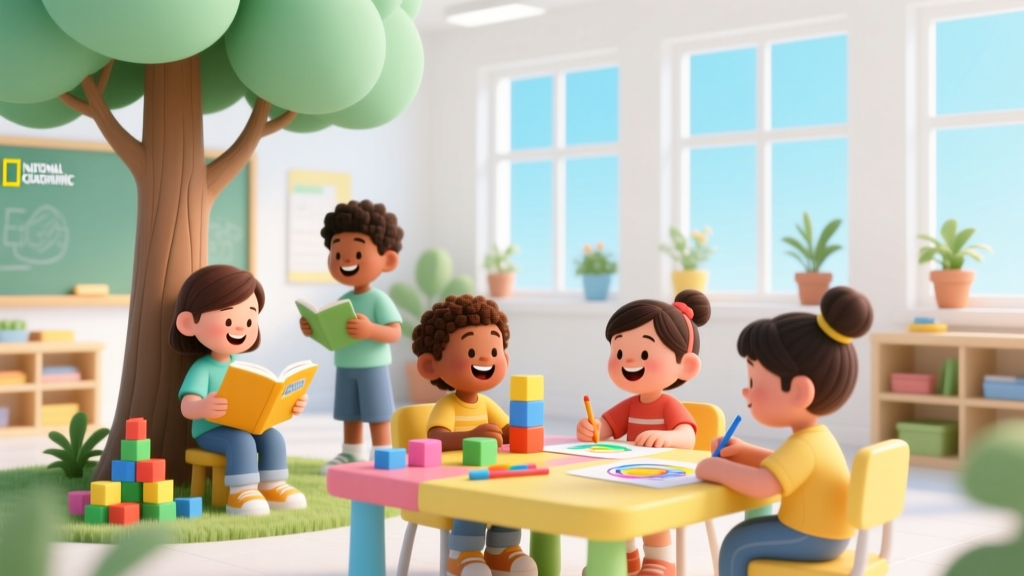
How to Teach Patience to Kids: Brain-Based Strategies
Why Teaching Patience Isn’t About Waiting — It’s About Wiring the Brain
If you’ve ever asked yourself, "How to teach patience to kids" while holding your breath as your 4-year-old screams because their toast was cut into squares instead of triangles—or watched your 7-year-old abandon a puzzle after 90 seconds—you’re not failing. You’re navigating one of the most complex, under-supported skills in early development. Patience isn’t innate; it’s a neurologically demanding executive function skill built slowly across childhood, requiring consistent scaffolding from adults. And yet, most parents receive zero training on how to cultivate it—just vague advice like "be patient with them" or "they’ll grow out of it." The truth? Without intentional, developmentally calibrated support, impatience doesn’t fade—it fossilizes into frustration intolerance, academic avoidance, or emotional reactivity that follows kids into adolescence and beyond.
The Patience Paradox: Why ‘Just Wait’ Backfires (and What Works Instead)
When a child melts down at the checkout line because they can’t have the candy bar *right now*, our instinct is often to say, "You need to be patient." But here’s what neuroscience reveals: that phrase lands like static noise in an underdeveloped prefrontal cortex. According to Dr. Stephanie M. Carlson, co-author of Bilingualism and Executive Function and a leading researcher in executive function development at the University of Minnesota, "Children under age 7 lack the neural architecture to self-regulate delay without external scaffolding. Telling them to ‘be patient’ is like asking someone who’s never held a violin to play a concerto—and then blaming them for the screech."
What works instead is co-regulation followed by micro-practice. Co-regulation means staying calm, naming emotions (“I see you’re feeling really frustrated because you want the toy *now*”), and physically anchoring (a hand on the shoulder, shared breathing). Micro-practice means embedding tiny, winnable delays into daily routines—like waiting 10 seconds before opening a snack wrapper, or taking three deep breaths before choosing a game. These aren’t punishments—they’re neural reps, strengthening the brain’s ‘pause button’ circuitry.
Consider Maya, a mom of twins aged 5. She’d spent months enforcing “quiet time” after school—only to watch both boys escalate into shouting matches within minutes. After working with a pediatric occupational therapist, she shifted to a 3-minute “Patience Practice”: they’d sit together, light a sand timer, and practice noticing sensations (“Can you feel your feet on the floor? Can you hear the clock ticking?”). Within two weeks, they independently requested the timer before transitions. Not because they’d magically matured—but because their brains had begun recognizing the physical cues of rising urgency *before* explosion.
Age-by-Age Patience Scaffolding: What’s Realistic (and What’s Not)
Expecting a 3-year-old to wait 5 minutes is like expecting a toddler to ride a bike without training wheels: biologically premature. Executive function develops in stages, tightly linked to myelination of the prefrontal cortex. Below is a research-backed guide to aligning expectations with neurological readiness—backed by longitudinal data from the National Institute of Child Health and Human Development (NICHD) and the American Academy of Pediatrics (AAP).
| Age Range | Realistic Patience Window | Key Developmental Milestones | Best-Supported Strategies | Risk of Pushing Too Hard |
|---|---|---|---|---|
| 2–3 years | 15–45 seconds | Emerging self-awareness; limited emotion vocabulary; high impulsivity driven by limbic dominance | Visual timers + simple language (“When the sand runs out, we’ll go outside”); distraction *before* meltdown; labeling feelings (“You’re mad! That’s okay.”) | Shame spirals; attachment insecurity; chronic stress response activation |
| 4–5 years | 2–4 minutes | Beginning to use “I” statements; can follow 2-step directions; starts to understand cause-effect | Choice-based delays (“Do you want to count to 20 or sing the ABCs while we wait?”); role-play scenarios (“Let’s pretend we’re astronauts waiting for launch!”); reward charts tied to *effort*, not outcome | Learned helplessness (“I always mess up waiting”); defiance masking anxiety |
| 6–8 years | 5–15 minutes | Improved working memory; understands fairness concepts; can reflect on past emotional experiences | “Pause plans” (e.g., “When I feel like yelling, I’ll squeeze my fist 3 times”); collaborative problem-solving (“What could help us wait better next time?”); linking patience to values (“Waiting shows respect for others’ time”) | Perfectionism; suppression of emotion; somatic symptoms (stomachaches, headaches) |
| 9–12 years | 20+ minutes (with support) | Abstract thinking emerging; developing moral reasoning; increased self-monitoring capacity | Goal-mapping (break big waits into milestones); mindfulness journaling; discussing real-world patience models (scientists, athletes, artists); negotiating wait-time trade-offs | Cynicism about effort; disengagement from long-term goals; covert avoidance |
This table isn’t prescriptive—it’s diagnostic. If your 6-year-old consistently cannot tolerate a 3-minute wait despite consistent scaffolding, it may signal underlying challenges: sensory processing differences, ADHD traits, or anxiety—not laziness or willfulness. As Dr. Russell Barkley, clinical psychologist and ADHD authority, emphasizes: "Impulse control deficits are neurobiological, not behavioral. Punishing them for what their brain literally cannot yet do only deepens shame and erodes motivation."
7 Daily Micro-Practices (Not Lessons) That Build Patience Like Muscle
Forget “patience lessons.” Children don’t learn patience through lectures—they build it through repeated, low-stakes experiences where they *feel* their own capacity expand. Here are seven evidence-based, no-prep practices woven into ordinary moments:
- The “Before/After” Ritual: Before any transition (leaving the park, ending screen time), name what comes next *and* what must happen first. “Before we go home, we’ll pack up toys together. After we pack, we’ll read one story.” This builds predictive security—the brain’s antidote to impatience.
- Delayed Gratification Snack Prep: Let kids help make a simple snack that requires waiting—like mixing pancake batter and letting it rest for 5 minutes, or freezing yogurt pops. Use a visual timer and narrate the process: “Our taste buds are getting ready for something delicious—and waiting makes it even better.”
- Turn-Taking Games With Zero Stakes: Play “Red Light, Green Light” or “Simon Says” *without* winners or losers. Focus entirely on the act of stopping and starting. Celebrate micro-wins: “You held still for 8 seconds—that took serious focus!”
- “Wait-and-Wonder” Walks: On neighborhood walks, pause intentionally at interesting things (a snail, cloud shape, rustling leaves) and ask: “What do you notice? What do you wonder? How long can we watch quietly?” No time pressure—just presence.
- Repair Over Reset: When patience fails (and it will), avoid “Let’s start over.” Instead, repair: “That got loud. My voice got tight too. Let’s breathe together, then try again—with hands on our bellies.” This models accountability and recalibration—not perfection.
- Patience Storytelling: Read books where characters *earn* outcomes through waiting—not magic fixes. Try Waiting Is Not Easy! (Elephant & Piggie) or The Most Magnificent Thing. Pause to ask: “What did she do when she felt frustrated? What helped her keep going?”
- Adult Modeling with Commentary: Narrate your own waits aloud: “I’m waiting for this email to send… and I notice my foot is tapping. So I’m going to take three slow breaths instead.” Kids absorb regulation strategies through observation—not instruction.
Crucially, these aren’t chores to “get through.” They’re relational moments. A 2023 study published in Child Development tracked 127 families over 18 months and found that children whose caregivers used *emotion-anchored language* during delays (“This is hard—I see your fists are tight”) showed 42% greater growth in impulse control than those whose caregivers used time-focused language (“Just wait 2 more minutes”). The difference wasn’t duration—it was connection.
When Patience Challenges Signal Something Deeper
Occasional impatience is universal. Chronic, intense difficulty tolerating delay—especially when paired with aggression, withdrawal, or extreme distress—can indicate needs beyond typical development. Key red flags warranting professional collaboration:
- Consistent physiological escalation: Frequent vomiting, hyperventilation, or loss of bladder/bowel control during waits
- Extreme avoidance: Refusing all activities involving turn-taking, waiting, or delayed rewards—even preferred ones
- Disproportionate reactions: Meltdowns lasting >30 minutes or requiring physical restraint multiple times per week
- Developmental mismatch: A 7-year-old unable to wait 60 seconds without physical aggression, despite consistent, supportive scaffolding for 3+ months
These aren’t discipline issues—they’re communication. As Dr. Mona Delahooke, clinical psychologist and author of Brain-Body Parenting, explains: "When a child’s nervous system perceives waiting as life-threatening, their survival brain takes over. Our job isn’t to ‘fix’ the behavior—it’s to discover what threat the child is trying to escape, and co-create safety so the thinking brain can come back online." Occupational therapists, developmental pediatricians, or child psychologists trained in polyvagal-informed approaches can help decode these signals and co-design regulation pathways.
Frequently Asked Questions
Can screen time actually help teach patience—or does it hurt it?
It depends entirely on *how* screens are used. Passive, autoplay-driven streaming (YouTube Kids, TikTok-style feeds) trains the brain for instant stimulation and rapid attention shifts—undermining patience circuits. But intentional, interactive use *can* support it: co-playing turn-based games like Mario Party, using apps with built-in timers for chores (“When the timer rings, we’ll water the plants”), or watching documentaries about scientists waiting years for discoveries. The AAP recommends co-viewing and discussion: “What did that researcher do when their experiment failed? How did they stay curious?” Screen time doesn’t build patience alone—it either erodes or reinforces neural pathways based on design and adult mediation.
My child is patient with teachers but loses it at home. Is this normal?
Yes—and it’s actually a sign of secure attachment. Children often save their biggest emotional releases for the safest people: you. At school, they’re expending enormous energy suppressing impulses to meet external demands. At home, their nervous system finally relaxes enough to discharge that stored tension. This isn’t manipulation—it’s biology. Prioritize co-regulation over correction: “You worked so hard all day. Your body is telling you it’s safe to let go. Let’s breathe together.”
Does teaching patience mean suppressing emotions?
No—quite the opposite. True patience is emotionally intelligent waiting: feeling frustration, disappointment, or excitement fully—and choosing a response aligned with values. Suppressing emotions teaches children that big feelings are dangerous or unacceptable, which fuels shame and dysregulation. Patience-building validates emotion (“It’s okay to feel mad!”) while guiding action (“And we can choose to stomp our feet *here*, not on Grandma’s vase”). As Dr. Daniel Siegel says: “Name it to tame it”—not “shame it to silence it.”
Are there foods or nutrients that support patience development?
While no single food “gives” patience, stable blood sugar and key nutrients directly support prefrontal cortex function. Research links consistent intake of omega-3s (found in fatty fish, walnuts, flaxseed), magnesium (spinach, pumpkin seeds, avocado), and B vitamins (eggs, legumes, nutritional yeast) with improved attention regulation and reduced emotional reactivity in children. Conversely, high-sugar, highly processed meals correlate with sharper mood swings and shorter frustration tolerance in longitudinal studies. Think of nutrition not as a quick fix—but as foundational soil for neural growth.
What if my own impatience gets in the way?
Your self-awareness is already half the battle. Start small: pick *one* daily trigger (e.g., morning rush) and commit to a 3-second pause before speaking. Place a sticky note on your mirror: “Breathe first.” Track patterns in a notes app: “Felt impatient when ___ happened. My body felt ___. I said ___.” Patterns reveal unmet needs (sleep? autonomy? support?). Joining a parent support group or working with a therapist isn’t failure—it’s modeling the very patience you hope to nurture. As licensed marriage and family therapist Dr. Tina Payne Bryson reminds us: “Children don’t need perfect parents. They need parents who repair, reflect, and grow alongside them.”
Common Myths About Teaching Patience
Myth #1: “Patience is just about waiting quietly.”
Reality: Patience is active regulation—not passive stillness. It involves noticing internal sensations (heat, tightness, racing thoughts), naming emotions, evaluating options, and choosing aligned action. A child humming while waiting for their turn isn’t “not being patient”—they’re using a self-soothing strategy.
Myth #2: “If I give in once, they’ll never learn.”
Reality: Flexibility isn’t weakness—it’s responsive attunement. Sometimes a 3-minute wait truly *is* unbearable due to hunger, fatigue, or sensory overload. Offering a choice (“We can wait 2 minutes, or we can leave now and come back tomorrow”) preserves dignity while honoring limits. Rigid consistency without compassion teaches fear—not patience.
Related Topics (Internal Link Suggestions)
- Helping kids manage big emotions — suggested anchor text: "how to help kids manage big emotions without shame"
- Executive function skills by age — suggested anchor text: "executive function milestones from toddler to tween"
- Positive discipline strategies that work — suggested anchor text: "positive discipline that builds connection, not compliance"
- Sensory-friendly waiting strategies — suggested anchor text: "sensory tools for kids who struggle with waiting"
- Building resilience in children — suggested anchor text: "how to build resilience in kids through everyday moments"
Ready to Grow Patience—Together
Teaching patience isn’t about producing perfectly poised children. It’s about walking beside them as they discover their own capacity to pause, feel, choose, and trust that good things unfold—not instantly, but meaningfully. Every deep breath you take with them, every “I see how hard this is” you offer, every time you name your own wobble and repair it—these are the quiet bricks building their inner architecture of calm. So start small: pick *one* micro-practice from this article and try it this week—not to “fix” your child, but to deepen your shared rhythm. Then, come back and share what you noticed in the comments. Because patience, like all profound human capacities, grows strongest in community.
More Articles
 Messenger Kids Safety: A Parent’s Audit Guide
 Does Pikaboo Have a Kid? The Truth Behind the Rumors
 Kids Listen Without Yelling: 7 Neuroscience Strategies
 How to Make Kids Electric Car Faster Safely (2026)
 Jeff Bezos Kids: Co-Parenting & Raising Grounded Children
 How to Stream PBS Kids (2026) — Free & Safe Guide
 When Do Kids Wear Deodorant? Pediatrician-Backed Guide
 How Many Kids Get Bullied? Stats & Prevention (2026)
 iPhone Screen Time Loopholes Kids Use (2026)
 Kids & Parental Scandal: Psychologist Tips (2026)