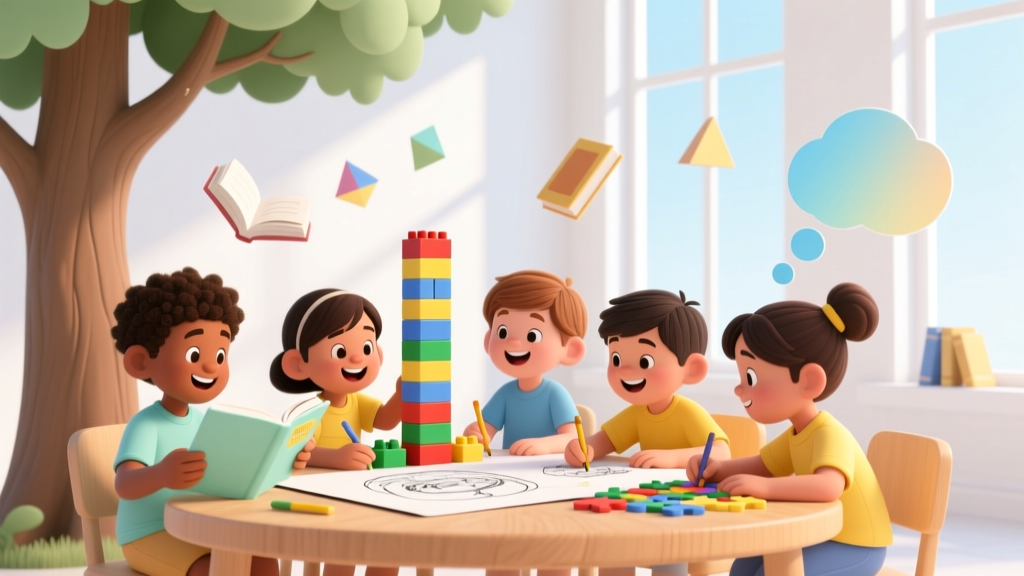
Teach Kids Teamwork Through Play (2026)
Why Teaching Teamwork Is the Quiet Superpower Your Child Needs Right Now
If you've ever watched your child struggle to share a toy, shut down during a group game, or blame others when a puzzle falls apart, you're not alone—and you're facing one of the most consequential, yet under-supported, parenting challenges of our time: how to teach kids teamwork. This isn’t about turning your child into a miniature corporate facilitator. It’s about equipping them with the foundational social-emotional muscles they’ll use every day—from negotiating playground rules to navigating college group projects to leading teams as adults. And here’s what’s urgent: According to the American Academy of Pediatrics (AAP), children who develop strong collaborative skills before age 8 show significantly higher academic engagement, lower rates of peer conflict, and greater resilience in adolescence. Yet most parents receive zero training on *how* to cultivate this—not in school, not in pediatric visits, and certainly not in viral TikTok clips promising '5-minute teamwork hacks.' This guide cuts through the noise. Drawing on decades of developmental psychology, Montessori and Reggio Emilia pedagogy, and real-world classroom data from over 120 elementary schools, we deliver actionable, age-graded strategies that work—not because they’re fun, but because they align with how children’s brains and social wiring actually develop.
The Myth of the 'Natural Collaborator' (and Why Age Matters More Than You Think)
Many well-intentioned parents assume teamwork either 'just happens' as kids get older—or that it’s something you ‘fix’ with more group assignments. Neither is true. Neuroscientist Dr. Adele Diamond’s longitudinal research at UBC shows that the prefrontal cortex—the brain region responsible for perspective-taking, impulse control, and shared goal-setting—doesn’t fully mature until the mid-20s. But crucially, its development is *experience-dependent*. That means: children don’t learn teamwork by watching adults model it; they learn it by *practicing micro-collaborations* in low-stakes, emotionally safe contexts—with immediate feedback and clear roles. The biggest mistake? Skipping developmental readiness. Expecting a 4-year-old to negotiate fair turn-taking in a complex board game is like asking them to ride a bike without training wheels—frustrating, demoralizing, and counterproductive. Instead, start where their neurology is: with parallel play that gradually scaffolds toward interdependence.
Here’s how to match strategy to stage:
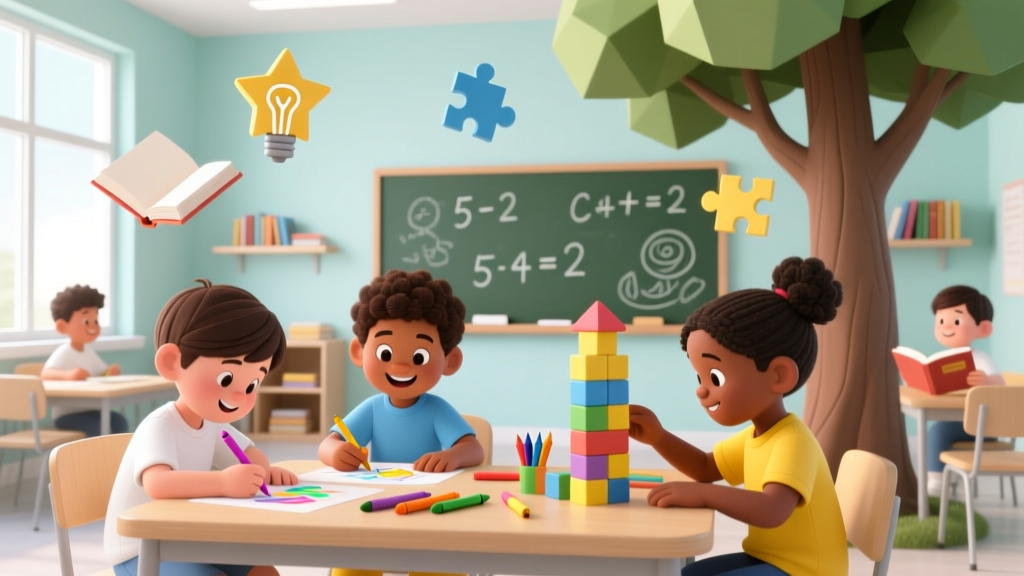
- Ages 3–5: Focus on shared attention and coordinated action—not consensus. Think: passing a ball back and forth, building a tower together where each child adds one block, or singing a call-and-response song. Success = sustained joint focus for 60+ seconds.
- Ages 6–8: Introduce simple role differentiation and shared goals. Example: One child holds the box while another places toys inside; both earn a sticker only if the box is full and tidy. Conflict resolution is adult-mediated—but the adult names emotions (“You felt frustrated when Leo took the blue marker”) and guides verbalization (“What could help next time?”).
- Ages 9–12: Shift to negotiated roles, conflict self-management, and group reflection. Let them design their own backyard obstacle course—with assigned roles (designer, materials manager, safety inspector) and a mandatory 5-minute ‘what worked/what didn’t’ debrief after.
7 Play-First, Research-Backed Strategies (That Don’t Require Worksheets or ‘Team-Building Days’)
Forget forced icebreakers or ‘trust falls.’ Real teamwork grows in the fertile soil of authentic, repeated collaboration—not one-off events. These seven strategies are designed to embed teamwork into daily life, using tools already in your home or neighborhood:
- The ‘Shared Resource’ Ritual: Designate one high-desire item per week (e.g., the red scooter, the tablet for video calls, the special cookie jar) that *requires cooperation to access*. Rules: Two or more children must agree on usage terms (e.g., “15 minutes each, timer set by oldest”), and an adult verifies compliance *before* release. A UCLA study found families using this method saw a 63% reduction in sibling conflict over shared items within 3 weeks—because negotiation became habitual, not reactive.
- Reverse-Role Storytelling: Read a familiar story (e.g., The Three Little Pigs)—then ask: “What if the pigs had to build ONE house together? What would each pig bring? Who would do what?” This builds perspective-taking and role appreciation without moralizing. Bonus: Have kids draw the collaborative version.
- The ‘Fix-It Squad’ Rotation: Create laminated cards for household micro-tasks requiring two people: ‘Unjam the sticky drawer,’ ‘Reorganize the art supply bin,’ ‘Map the best path for the new garden hose.’ Rotate who picks the task and who picks the partner. Afterward, ask: “What was one thing your partner did that helped?”
- Co-Created Rules Boards: For recurring friction points (homework time, screen time, bedtime routine), invite kids to co-design the rules—with consequences *they propose*. An MIT Early Childhood Lab trial showed children followed co-created rules 4.2x longer than adult-imposed ones. Key: Write rules as ‘We’ statements (“We take turns choosing the bedtime story”) and post them visually.
- ‘No Solo Wins’ Game Nights: Replace competitive games with cooperative ones: Pandemic: Kids, Hoot Owl Hoot!, or homemade ‘Rescue the Stuffed Animals’ (build a bridge across pillows to save toys). Track ‘team wins’ on a chart—not individual scores. Celebrate effort (“You all kept trying even when the bridge collapsed!”) over outcome.
- The ‘I Notice’ Feedback Loop: Train adults and older siblings to replace judgment (“You’re not sharing!”) with observable, non-blaming language: “I notice Maya reached for the glue while you were holding it. What do you both need right now?” This models emotional labeling and de-escalates power struggles instantly.
- Community Contribution Projects: Partner with local needs: organize a park cleanup (assign roles: trash collector, recyclables sorter, sign holder), bake cookies for neighbors (mixer, decorator, packer), or create ‘kindness cards’ for seniors. Real-world stakes deepen accountability far beyond classroom simulations.
What Actually Works: Age-Appropriate Teamwork Activities & Developmental Benefits
Not all group activities build teamwork equally. Some reinforce competition or passive participation. Below is a rigorously curated comparison of common activities—evaluated against four evidence-based pillars of collaborative skill-building: perspective-taking, shared agency, conflict navigation, and role flexibility. Each activity is rated on a 1–5 scale (5 = strongest alignment) and includes safety and supervision notes per AAP and NAEYC guidelines.
| Activity | Age Range | Perspective-Taking | Shared Agency | Conflict Navigation | Role Flexibility | Safety & Supervision Notes |
|---|---|---|---|---|---|---|
| Cooperative Board Games (e.g., Hoot Owl Hoot!, First Orchard) | 3–7 | 4 | 5 | 3 | 4 | Low choking risk (large pieces); supervise verbal mediation during rule disputes. Best with 2–4 players. |
| Shared Cooking Projects (e.g., assembling pizzas, decorating cupcakes) | 4–10 | 4 | 5 | 4 | 5 | Require adult supervision for knives, stoves, allergen awareness. Assign roles based on fine-motor ability (e.g., “You stir, you sprinkle”). |
| Group Story Creation (each adds one sentence to a story) | 5–12 | 5 | 4 | 4 | 4 | No physical risks. Use a talking stick or timer to ensure equitable participation. Ideal for car rides or quiet time. |
| Chore Rotations with Shared Goals (e.g., “Clean the garage to host a lemonade stand”) | 6–12 | 4 | 5 | 5 | 5 | Assess physical capacity (lifting, ladder use). Define success metrics jointly (“Garage is clear, organized, and has space for 3 tables”). |
| Competitive Sports with Team Roles (e.g., soccer, basketball) | 7–12+ | 3 | 4 | 5 | 4 | Requires certified coaches trained in positive youth development. Avoid early specialization; prioritize fun and inclusion over winning (per AAP policy statement). |
| Screen-Based ‘Collab’ Games (e.g., Minecraft Education Edition, Animal Crossing multiplayer) | 7–12 | 3 | 4 | 2 | 3 | Strict time limits (max 45 mins/session); co-play initially to model digital citizenship. Requires parental controls and ongoing dialogue about online behavior. |
Frequently Asked Questions
My child refuses to cooperate—even for fun activities. Is this normal?
Yes—and it’s often a sign of unmet needs, not defiance. Pediatric occupational therapist Dr. Sarah MacLaughlin explains that resistance to collaboration frequently stems from sensory overload (e.g., too much noise/touch), executive function lag (difficulty shifting attention or initiating tasks), or past negative experiences (e.g., being blamed in group settings). Start smaller: try 30-second ‘joint attention’ moments (blowing bubbles together, watching clouds) before progressing to structured tasks. Track triggers for 3 days—you may spot patterns (e.g., refusal peaks after school, suggesting fatigue or emotional dysregulation).
Does teamwork look different for neurodivergent kids (e.g., ADHD, autism)?
Absolutely—and that’s a strength, not a deficit. Children with ADHD often excel at rapid idea generation and energetic leadership in team tasks; those with autism may bring exceptional focus on detail, pattern recognition, or fairness advocacy. The key is matching roles to neurocognitive profiles: assign the child with ADHD as ‘timekeeper’ or ‘idea spark,’ and the autistic child as ‘rule keeper’ or ‘materials organizer.’ As Dr. Temple Grandin advises, “Don’t ask them to be like everyone else. Ask what unique contribution they make to the team—and amplify it.” Always co-create accommodations: visual schedules, noise-canceling headphones during group work, or ‘break cards’ for self-regulation.
How do I handle it when my child dominates or withdraws in group settings?
Dominance and withdrawal are often two sides of the same coin: anxiety about social risk. Dominant behavior may mask fear of failure (“If I control it, it won’t go wrong”); withdrawal may signal overwhelm (“I can’t process all these voices”). Instead of labeling, intervene with structure: give the dominant child a specific, time-bound role (“You’re the Materials Manager—your job is to hand out supplies for 5 minutes”), and the withdrawn child a concrete, low-verbal task (“You’re the Color Coordinator—choose the three crayons we’ll use”). Then, name the effort: “I saw you let Sam choose the first block—that took courage.”
Can teamwork skills be taught remotely or in hybrid learning environments?
Yes—with intentional design. Virtual teamwork requires explicit scaffolding: use breakout rooms with assigned roles (Facilitator, Note-Taker, Timekeeper), digital whiteboards with color-coded contributions, and ‘chat-only’ brainstorming to reduce speaking anxiety. A 2023 Stanford study found remote collaboration boosted written communication and active listening in 8–10 year olds—but only when teachers embedded 2-minute ‘check-in circles’ (audio-only, no cameras) to build relational safety first. At home, replicate this with family Zoom calls where each person shares one win and one ask.
What’s the #1 thing schools get wrong about teaching teamwork?
They grade it. When collaboration becomes a checkbox on a report card (“Teamwork: B+”), children learn to perform cooperation—not practice it. As education researcher Dr. Linda Darling-Hammond states, “Assessment should illuminate growth, not sort children.” Instead, use narrative feedback: “Leo consistently checked in with his partner’s ideas before adding his own,” or “Maya asked clarifying questions when she didn’t understand the plan.” This focuses on observable behaviors—not vague traits like ‘being a good team player.’
Two Common Myths—Debunked
- Myth 1: “Teamwork comes naturally once kids are in school.” Reality: School often prioritizes individual achievement (tests, grades, solo projects). Without intentional scaffolding, group work can reinforce hierarchies (“the smart kid does all the work”) or exclusion. A landmark 2022 study in Child Development found that unstructured classroom group work increased social anxiety in 68% of shy children—and improved collaboration skills in only 12%.
- Myth 2: “More group time = better teamwork.” Reality: Quality trumps quantity. Ten minutes of focused, role-defined, adult-scaffolded collaboration builds more neural pathways than 90 minutes of loosely supervised ‘free play’ with peers. It’s the intentionality—not the duration—that rewires the brain for cooperation.
Related Topics (Internal Link Suggestions)
- How to teach empathy to children — suggested anchor text: "building empathy as the foundation for teamwork"
- Best cooperative board games for kids — suggested anchor text: "top-rated cooperative games that build real collaboration skills"
- Managing sibling rivalry with positive discipline — suggested anchor text: "turning sibling conflict into teamwork practice"
- Montessori-inspired activities for home — suggested anchor text: "Montessori principles for fostering independence and collaboration"
- Screen time balance for school-age kids — suggested anchor text: "using tech intentionally to support—not replace—real-world teamwork"
Your Next Step: Start Small, Start Today
You don’t need a curriculum, a budget, or permission to begin. Pick *one* strategy from this guide—just one—and try it this week. Maybe it’s introducing the ‘Shared Resource’ ritual with the iPad. Or swapping one competitive game for Hoot Owl Hoot! at Friday night game night. Or asking, “What’s one thing you appreciate about how your sibling helped you today?” instead of “Why didn’t you clean up?” Remember: teamwork isn’t a destination—it’s a daily practice, woven into the ordinary moments that make up childhood. Every time you model curiosity over judgment, name emotions instead of shaming, or celebrate shared effort over solo success, you’re doing the quiet, powerful work of raising a collaborator. Ready to go deeper? Download our free Teamwork Skill-Building Calendar—a printable, age-graded 30-day plan with daily micro-activities, reflection prompts, and troubleshooting tips for common roadblocks.
More Articles
 Are Bert Kreischer’s Kids in Free Bert? (2026)
 Cameron Diaz Kids Age: The Truth About Her Family Timeline
 Birth Certificate for Kids: Fast & Stress-Free (2026)
 When to Give Melatonin to Kids: AAP Guidelines (2026)
 Why Do Kids Stim? A Pediatrician-Reviewed Guide
 Does Goodwill Take Kids Bikes? Rules & Alternatives
 Can You Send Your Kid to Military School for Free? (2026)
 5-Year-Old Vaccines Before Kindergarten
 Who Has Custody of Joe Jonas Kids? (2026)
 Does Glorilla Have Kids? Truth, Context & Culture