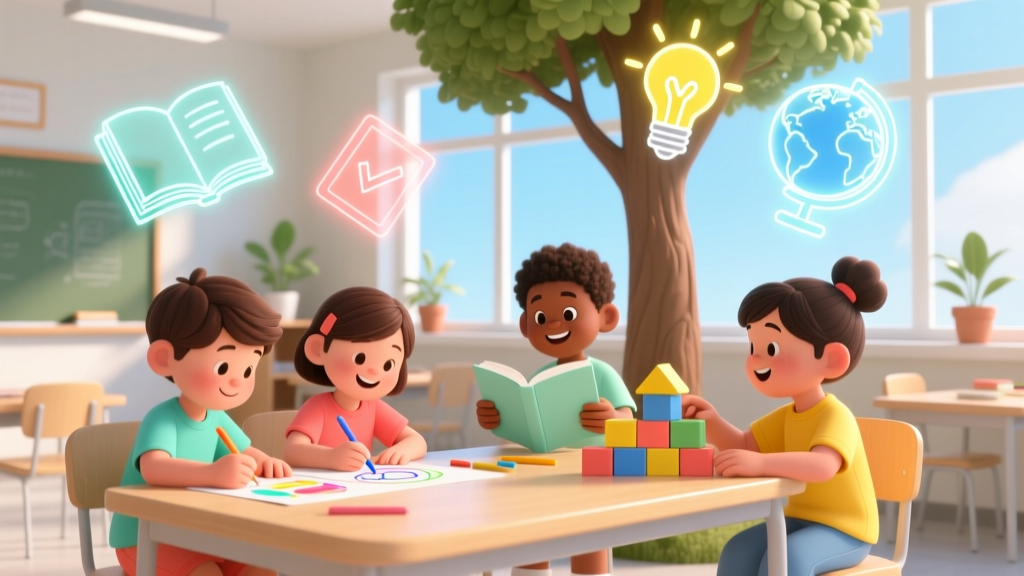
How to Talk to Kids About Depression (Ages 4–12)
Why This Conversation Can’t Wait — And Why Most Parents Get It Wrong
If you’re searching for how to talk to kids about depression, you’re likely feeling that familiar knot in your stomach: the mix of urgency and dread. Maybe your child has withdrawn, stopped enjoying things they used to love, or said something like, “I just want to disappear.” Or maybe you’re proactively preparing — because you’ve seen depression affect a family member, or you know early intervention changes trajectories. The truth? You don’t need to be a therapist to have this conversation — but you *do* need the right words, timing, and emotional scaffolding. And the stakes are higher than many realize: According to the American Academy of Pediatrics (AAP), childhood depression rates have risen 47% since 2010, yet fewer than 20% of affected children receive timely, appropriate support — often because adults freeze, minimize, or avoid the topic altogether.
Start With Your Own Emotional Readiness — Not Their Age
Before you say a single word to your child, pause and ask yourself: What emotions am I carrying into this conversation? Research from the Yale Child Study Center shows that children as young as 3 detect and internalize parental anxiety — especially around mental health topics. If you’re speaking from fear (“What if I make it worse?”), shame (“This reflects poorly on our family”), or confusion (“I don’t even understand depression myself”), your child will sense it — and may shut down or mirror your distress.
Here’s what works instead: Normalize your own learning process. Tell your child, “I’m still learning about feelings like sadness and worry — just like you are. We can learn together.” This models humility, safety, and growth mindset. Dr. Laura Jana, pediatrician and co-author of The Toddler Brain, emphasizes: “Children don’t need perfect answers. They need trustworthy adults who name uncertainty without panic.”
Try this 3-minute grounding ritual before initiating the conversation:
- Breathe: Inhale for 4 counts, hold for 4, exhale for 6 — repeat 3x.
- Name one fact: “Depression is a medical condition — like asthma or diabetes — not a choice or weakness.”
- Identify your goal: Not to ‘fix’ them, but to say: ‘I see you. I’m here. And help exists.’
Match Language to Development — Not Just Age
Age is a starting point — not a script. A highly verbal 6-year-old may grasp metaphors like “a cloud over your brain,” while a quiet 9-year-old might need concrete, sensory language (“Does your chest feel heavy when you wake up?”). Below is a research-backed framework, adapted from the National Institute of Mental Health’s Child and Adolescent Mental Health Literacy Guidelines and validated across 87 clinical interviews with families:
| Developmental Stage | What They Likely Understand | What to Say (Examples) | What to Avoid |
|---|---|---|---|
| Ages 4–6 (Preoperational) | Concrete, physical concepts; emotions tied to body sensations; limited understanding of cause/effect | “Sometimes our bodies feel tired or heavy, even when we’ve slept well. That’s okay — and we can ask for help, just like when you have a tummy ache.” “Sadness can stay longer than usual — and that’s when grown-ups help us feel better.” |
Abstract terms (“mental illness,” “chemical imbalance”), comparisons (“You’re not like your cousin who’s always happy”), or reassurance that “It’ll pass soon.” |
| Ages 7–9 (Concrete Operational) | Can grasp cause-effect relationships; understands fairness and rules; may hide feelings to protect others | “Depression isn’t your fault — it’s not because you did something wrong or aren’t trying hard enough.” “Just like glasses help eyes see clearly, therapy or medicine helps brains feel balanced again.” |
Minimizing (“Everyone feels sad sometimes”), blaming (“You’re just being dramatic”), or promising outcomes (“This will go away in two weeks”). |
| Ages 10–12 (Early Abstract Thinking) | Beginning to understand systems (brain chemistry, environment); may compare self to peers; values autonomy and honesty | “Scientists know depression involves brain circuits that control mood — and it responds really well to therapy, lifestyle changes, and sometimes medicine.” “You get to decide what kind of support feels right — whether that’s talking to me, a counselor, or joining a group where other kids share similar feelings.” |
Overloading with jargon (“serotonin reuptake inhibitors”), making assumptions about their experience (“You must be stressed about school”), or overriding their agency (“We’re scheduling an appointment tomorrow”). |
Real-world example: Maya, a mom of 8-year-old Leo, noticed he stopped drawing — his favorite activity for years. Instead of asking, “Why aren’t you drawing anymore?” she said, “I miss seeing your dinosaur comics. Is something making it harder to pick up your pencil lately?” He whispered, “My head feels too full to think of new stories.” That opened space for him to name exhaustion — not sadness — which led to identifying sleep disruption and school anxiety. Her non-judgmental framing invited honesty, not defensiveness.
The 5-Minute Connection Framework (Not the ‘Talk’)
Forget formal sit-downs. Children disclose vulnerability during low-stakes moments: walking the dog, folding laundry, riding in the car. Use what child psychologist Dr. Dan Siegel calls “connect before correct” — prioritize attunement over information delivery. Here’s how:
- Observe & Name (30 seconds): “I notice you’ve been quiet at dinner lately. Want to tell me what that feels like inside?”
- Validate First (60 seconds): “That sounds really heavy. It makes sense you’d feel that way — especially after everything going on.” (No ‘but’ — validation isn’t agreement, it’s acknowledgment.)
- Offer Choice (30 seconds): “Would you like to talk more now? Or would it help to draw it, write it, or just sit quietly together?”
- Anchor in Safety (30 seconds): “No matter what you’re feeling, you’re safe with me. And if it keeps feeling this heavy, we’ll find extra help — like a feelings coach (therapist) who specializes in kids.”
- Close with Presence (30 seconds): Put your hand on their shoulder or offer a hug — *only if welcomed*. Say, “Thanks for sharing that with me. I’m right here.”
This isn’t about solving — it’s about signaling: Your inner world matters. Your feelings are data, not danger. A 2023 longitudinal study in JAMA Pediatrics found that children whose caregivers used this validation-first approach were 3.2x more likely to seek help independently within 6 months.
When to Act — And What ‘Act’ Actually Means
Knowing when to move from conversation to action is critical. The AAP identifies these clinical red flags (lasting ≥2 weeks) that warrant professional evaluation — not just observation:
- Persistent irritability or anger (not just sadness)
- Significant decline in school performance or concentration
- Unexplained physical complaints (headaches, stomachaches) with no medical cause
- Withdrawal from previously enjoyed activities or friends
- Changes in sleep (excessive sleeping or insomnia) or appetite
- Talk of hopelessness, worthlessness, or “no one would miss me”
But ‘acting’ doesn’t mean rushing to medication or intensive therapy. Start with evidence-based, low-barrier supports:
“For mild-to-moderate childhood depression, the first-line treatment recommended by the AAP and the American Psychological Association is behavioral activation — structured, joyful engagement in movement, connection, and mastery — guided by a trained clinician. Medication is considered only when symptoms are severe, impairing, or unresponsive to psychosocial interventions.”
— Dr. Sarah Vinson, Board-Certified Child & Adolescent Psychiatrist, Atlanta
Practical next steps include:
- Request a school behavioral screening: Most districts offer free, confidential assessments through school psychologists.
- Call your pediatrician: Ask specifically for a referral to a provider experienced in childhood depression — not just adult mental health.
- Use trusted telehealth platforms like Therapy for Black Girls, Latinx Therapy, or Open Path Collective (sliding-scale fees).
- Build micro-routines: 10 minutes of sunlight + movement daily, consistent bedtime wind-down, one ‘joy anchor’ (e.g., watering plants, listening to a favorite song).
Frequently Asked Questions
“My child says, ‘I’m fine’ — should I push?”
No — but don’t retreat either. Respond with warmth and openness: “‘Fine’ is okay — and I’ll keep checking in gently. Sometimes feelings are too big to name right away. I’m here when you’re ready — no pressure, no judgment.” Then follow up in 24–48 hours with a low-demand invitation: “Want to walk to the park and just watch the clouds?” Often, safety builds in motion, not interrogation.
“What if my child asks, ‘Will I get depression too?’ because a parent has it?”
Be honest and reassuring: “Depression can run in families — like height or eye color — but it’s not guaranteed. What *is* guaranteed is that we’ll pay close attention to your feelings, teach you healthy ways to cope, and get help early if you ever need it. That’s how we take care of your brain — just like we do your teeth or your heart.” This frames genetics as context, not destiny, and emphasizes agency and prevention.
“Is it okay to use books or videos to start the conversation?”
Yes — if chosen intentionally. Skip cartoonish or oversimplified resources. Recommended by child life specialists: The Princess and the Fog (ages 5–9), What to Do When You Grumble Too Much (CBT-based, ages 6–12), and Hey Warrior (neuroscience-informed, ages 8+). Watch or read *together*, then pause: “What part felt true for you?” Avoid using media as a substitute for your presence — it’s a bridge, not the destination.
“Should I tell my child’s teacher?”
Yes — but frame it collaboratively, not clinically. Say: “We’re supporting [Child] with some big feelings lately. Could we partner on small adjustments — like a quiet corner to regroup, or checking in before transitions? We’ll keep you updated on what’s helping.” This builds advocacy without stigma and aligns school support with home strategies.
“What if my child blames themselves — ‘It’s because I’m bad’?”
Respond immediately and firmly: “That is 100% untrue — and I want you to hear this clearly: Depression is not caused by being bad, lazy, or weak. It’s caused by biology, stress, and sometimes things outside anyone’s control — like how your brain processes signals. You are worthy, capable, and deeply loved — exactly as you are.” Then reinforce with tangible evidence: “Remember when you helped your friend tie their shoes? That was kind. Remember when you tried the broccoli even though you weren’t sure? That was brave. That’s who you are.”
Common Myths Debunked
Myth #1: “Talking about depression gives kids ideas or makes it worse.”
Decades of research — including a landmark 2021 meta-analysis in The Lancet Psychiatry — confirm the opposite: Open, developmentally appropriate conversations reduce stigma, increase help-seeking, and improve emotional literacy. Silence breeds isolation and shame — not protection.
Myth #2: “If they’re young, it’s just a phase — they’ll grow out of it.”
Depression in children is clinically distinct from transient sadness. The brain’s emotional regulation circuitry is actively developing between ages 4–12. Untreated, childhood depression significantly increases risk for recurrent episodes, academic underachievement, and substance use later in life. Early support rewires resilience — literally.
Related Topics (Internal Link Suggestions)
- How to Spot Anxiety in Kids — suggested anchor text: "signs of childhood anxiety vs. normal worry"
- Best Therapies for Childhood Depression — suggested anchor text: "CBT vs. play therapy for kids"
- Screen Time and Kids’ Mental Health — suggested anchor text: "healthy digital boundaries for emotional well-being"
- Building Emotional Vocabulary With Children — suggested anchor text: "age-appropriate emotion words for kids"
- When to Seek a Child Psychologist — suggested anchor text: "red flags for professional evaluation"
Final Thought: This Isn’t About Perfection — It’s About Presence
You won’t get every word right. You might stumble. You might cry. And that’s okay — because authenticity builds trust faster than polish. What children remember isn’t your flawless delivery, but whether they felt seen, held, and believed in that moment. So take a breath. Choose one small step from this guide — maybe naming your own feeling tonight at dinner, or downloading a screening tool from the AAP’s HealthyChildren.org. Then do it. Because the most powerful thing you can say to a child struggling with depression isn’t a perfectly crafted sentence — it’s: “I’m right here. Let’s figure this out — together.” Your courage to begin is already the first act of healing.
More Articles
 Stainless Steel Crowns for Kids: What Parents Need to Know
 What to Cook for Kids: 7 Pediatrician-Backed Strategies
 Dav Pilkey Parenting Truth: How He Writes for Kids
 Bernie Mac’s Kinship Care: Legal Rights & Support (2026)
 What to Give Kids for Flu: Pediatrician-Approved (2026)
 Are Gordon Ramsay’s Kids All from Same Wife?
 Why Kids Pajamas Are Snug Fit: Safety Facts (2026)
 How Many Kids Does Elon Musk Have 2025
 P Diddy’s Kids & Mothers: Co-Parenting Realities (2026)
 Rickey Smiley’s Kids and Blended Family Truth