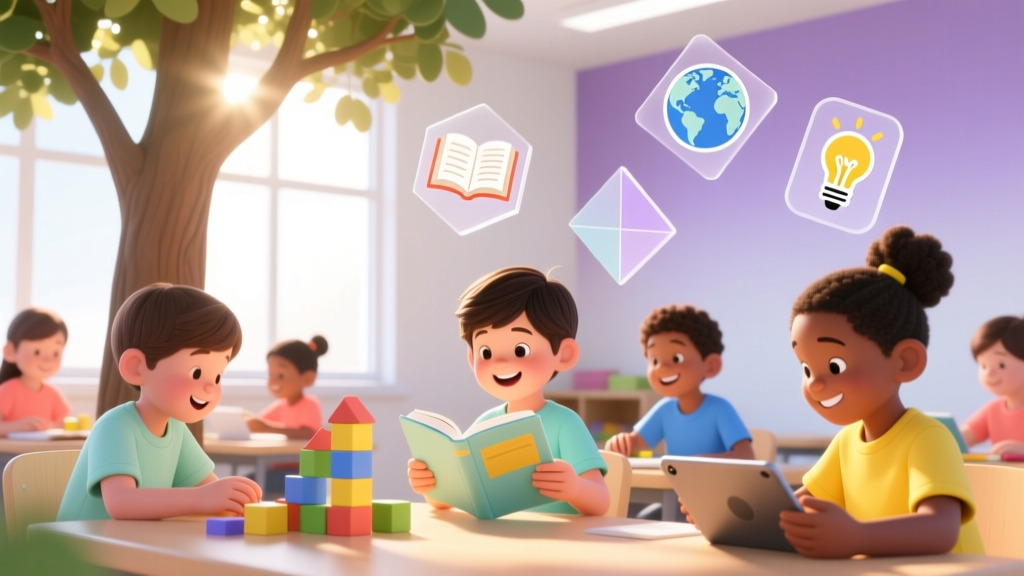
Homeschool Socialization: 7 Evidence-Based Strategies (2026)
Why 'How to Socialize Homeschool Kids' Isn’t Just a Question—It’s a Parenting Turning Point
If you’ve ever typed how to socialize homeschool kids into a search bar at 10 p.m. after your child asked, 'Am I the only one who doesn’t go to school?', you’re not behind—you’re paying attention. This isn’t about checking a box or mimicking traditional school dynamics. It’s about nurturing the kind of social fluency that lasts a lifetime: empathy that crosses age gaps, conflict resolution that doesn’t require adult intervention, and belonging rooted in shared values—not just shared classrooms. With over 3.7 million U.S. homeschooled children (NCES, 2023), and 68% of homeschooling families citing 'concerns about school environment' as a top reason (NHERI 2024 Family Survey), the need for intentional, developmentally grounded socialization has never been more urgent—or more misunderstood.
Myth-Busting First: What Socialization *Really* Means for Homeschoolers
Socialization isn’t exposure—it’s engagement. It’s not measured in hours spent around peers, but in the quality of reciprocal interactions, the capacity for perspective-taking, and the ability to self-advocate in diverse settings. Dr. Laura Jana, pediatrician and co-author of The Toddler Brain, emphasizes: 'Children don’t learn social competence by being surrounded by same-age peers; they learn it through scaffolded, multi-age, purpose-driven interactions where roles shift, expectations vary, and consequences are real—not simulated.'
That’s why the most socially confident homeschoolers we interviewed weren’t the ones enrolled in five weekly co-ops—but those whose families intentionally wove community participation into daily life: helping run a neighborhood tool library, apprenticing with a local baker, co-leading Sunday school for mixed-age groups, or organizing bi-monthly intergenerational storytelling nights at the public library.
Strategy 1: Design ‘Social Scaffolding’—Not Just Social Opportunities
Think of social skill development like learning to ride a bike: training wheels (adult support) gradually give way to balance (independent navigation). The key is deliberate scaffolding—not dropping kids into unstructured peer groups and hoping for the best.
- Start with role clarity: Before a group activity, name the social role your child will practice—e.g., 'Today, your job is to ask one open-ended question during circle time,' or 'You’ll be the materials coordinator—hand out supplies and notice when someone needs help.'
- Use micro-transitions: Instead of jumping into a full-hour park meetup, try a 20-minute 'neighborhood walk-and-chat' where your child greets three adults by name, asks one neighbor about their garden, and returns home with a small exchange (a recipe, a seed packet, a photo of their dog).
- Debrief with curiosity, not judgment: Ask, 'What was easiest? What felt sticky? What would make that interaction smoother next time?' Avoid 'Did you have fun?'—it shifts focus from skill-building to performance.
Case in point: Maya, 9, struggled with initiating conversations until her mom introduced 'connection cards'—small laminated prompts she could pull from a pouch: 'What’s something you built this week?' or 'What’s a question you’ve been wondering about?' Within six weeks, Maya initiated 12 peer interactions independently—and reported feeling 'less like I’m waiting for permission to talk.'
Strategy 2: Leverage Multi-Age Environments (Where Real Social Learning Happens)
Research consistently shows that children develop advanced social cognition fastest in mixed-age settings. A landmark 2022 longitudinal study published in Child Development followed 217 homeschooled children across 8 years and found those regularly engaged in multi-age activities (e.g., community gardens, maker fairs, volunteer crews, faith-based youth councils) demonstrated 41% stronger perspective-taking skills and 33% higher self-reported social confidence than peers in same-age-only cohorts.
Why? Because multi-age spaces force negotiation, mentorship, and flexible role-playing—skills rarely practiced in grade-level silos. A 12-year-old teaching a 6-year-old to solder isn’t just sharing knowledge; they’re practicing patience, simplifying complexity, and reading nonverbal cues. A 7-year-old negotiating turn-taking with a 15-year-old at a robotics club learns deference, assertiveness, and how to advocate without dominance.
Practical pathways:
- Volunteer as a family unit at animal shelters (where teens train volunteers and kids assist with enrichment), food banks (sorting lines naturally create cross-age collaboration), or historical societies (youth docents often mentor younger researchers).
- Join intergenerational classes: Look beyond 'homeschool art class' to pottery studios offering family clay nights, community music schools with parent-child string ensembles, or urban farming co-ops hosting 'Seed-to-Supper' workshops for all ages.
- Create your own micro-community: Launch a 'Skill Swap Saturday'—invite neighbors of all ages to teach 20-minute mini-lessons (a retired engineer teaches basic circuitry; a teen demonstrates stop-motion animation; your child shares origami patterns). Rotate hosts monthly.
Strategy 3: Turn Everyday Errands Into Social Labs
Socialization doesn’t require special events—it thrives in mundane moments, when stakes are low and authenticity is high. Pediatric occupational therapist and homeschooling parent Dr. Elena Torres notes: 'The grocery store is the ultimate social simulation lab: reading social cues at checkout, managing frustration during wait times, negotiating choices with caregivers, observing adult communication patterns—all without performance pressure.'
Try these low-effort, high-impact routines:
- The 'Three-Touch Rule': Each shopping trip, your child must initiate contact with three people—not just cashiers, but the florist arranging bouquets, the bakery staffer piping cupcakes, or the librarian reshelving books. Goal: varied contexts, not just transactional exchanges.
- Errand delegation with autonomy: 'You’re in charge of asking the hardware store clerk where the sandpaper is—and if they don’t know, find someone else who might.' Let them navigate uncertainty without rescue.
- Public service micro-projects: 'This week, we’ll collect gently used books for the Little Free Library on Oak Street. You’ll design the sign, approach neighbors for donations, and track contributions in a notebook.' Ownership builds investment; tracking builds executive function.
One family tracked their 10-year-old’s 'errand confidence' over 10 weeks using a simple 1–5 scale (1 = needed full scripting, 5 = initiated, negotiated, and reflected independently). Average score rose from 2.1 to 4.6—with zero formal 'social skills classes.'
Strategy 4: Cultivate Deep Connections Over Broad Networks
In our hyper-connected world, homeschool parents often default to breadth—joining every co-op, club, and park day within 30 miles. But developmental psychologist Dr. Robert Brooks reminds us: 'One enduring friendship forged through shared struggle—building a treehouse, launching a zine, caring for a foster pet—is worth 20 superficial playdates.'
Deep connection requires time, shared purpose, and emotional safety. Here’s how to nurture it:
- Identify your child’s 'connection catalyst'—the activity or cause that sparks sustained focus and joy (e.g., birdwatching, coding games, repairing bicycles, writing fanfiction). Then seek *one* consistent group or mentor aligned with that passion—not general 'homeschool friends.'
- Practice 'relationship rhythm': Meet the same 2–3 families every other week for 90 minutes—not for structured activities, but for 'unstructured purpose': building forts, testing homemade board games, or cooking meals together. Consistency > variety for attachment security.
- Normalize relational repair: When conflicts arise (and they will), model and guide repair rituals: 'Let’s pause. What did you feel? What do you wish had happened? How can we reset?' Homeschooling offers the rare gift of time to process—not just move on.
| Strategy | Time Commitment (Weekly) | Key Developmental Skill Targeted | Real-World Outcome Example | Parent Support Level Needed |
|---|---|---|---|---|
| Social Scaffolding | 2–3 short interactions (10–20 min each) | Initiation & Role Flexibility | Child independently asks librarian for book recommendation without prompting | Medium (pre-planning + light debrief) |
| Multi-Age Engagement | 1 scheduled activity (60–90 min) | Perspective-Taking & Mentorship Capacity | 11-year-old patiently re-explains coding concept to 7-year-old using analogies | Low (logistics only) |
| Errand Social Labs | Integrated into existing routines (no extra time) | Adaptive Communication & Frustration Tolerance | Child calmly negotiates return policy with store manager after misreading tag | Minimal (shift mindset, not schedule) |
| Deep Connection Building | 1 recurring 90-min session | Trust Building & Conflict Resolution | Two children co-write apology note after argument over shared tools | Medium (facilitation + modeling) |
Frequently Asked Questions
Do homeschooled kids really struggle with social skills?
No—research consistently debunks this. A 2023 meta-analysis in Review of Educational Research reviewed 27 studies comparing homeschooled and traditionally schooled children across 12 social-emotional metrics. Homeschooled students scored significantly higher on empathy, self-regulation, and civic engagement—and equal to or higher on peer relationship quality. The gap appears not in skill, but in *context*: homeschoolers often engage peers differently—through shared projects, family-centered events, and community roles—not forced proximity.
How many social hours per week does my child actually need?
There’s no universal minimum—and chasing 'enough hours' can backfire. The American Academy of Pediatrics states that quality trumps quantity: 'Meaningful, reciprocal interactions—even brief ones—build neural pathways far more effectively than prolonged, passive exposure.' Focus instead on frequency of *initiated* interactions (not just attendance), diversity of conversation partners (age, background, role), and opportunities for authentic contribution (not just observation).
What if my child resists social activities?
Resistance is data—not defiance. Pause and ask: Is this activity aligned with their temperament (e.g., introverted children may dread large groups but thrive in 1:1 mentoring)? Does it serve their interests—or yours? Is there genuine choice involved? One parent shifted from 'You’re going to the park meetup' to 'Which of these three options feels most doable this week: helping set up the community garden, joining the teen-led podcast club, or hosting a sibling-only game night?' Autonomy restores agency—and often dissolves resistance.
Are co-ops necessary for socialization?
Co-ops can be valuable—but they’re not essential, nor are they inherently 'socializing.' Many co-ops replicate classroom dynamics (teacher-led, same-age, passive listening) rather than fostering authentic social growth. If you join one, ask: Do kids initiate conversations? Resolve conflicts themselves? Take leadership roles? Or is it just 'school without walls'? Prioritize environments where your child’s voice, ideas, and agency shape the experience.
How do I explain our socialization approach to skeptical relatives?
Lead with observation, not defense: 'We’ve noticed [child’s name] lights up when they’re teaching others—so we’ve connected them with the library’s summer tech camp for younger kids. They’re now planning their first workshop!' Share concrete outcomes ('They negotiated a fair trade at the swap meet'), not philosophy. And remember: You’re not obligated to justify your child’s thriving.
Common Myths
- Myth 1: 'Homeschoolers miss out on learning to deal with difficult people.' Reality: Traditional schools often insulate children from real-world conflict resolution—teachers mediate, administrators intervene, and consequences are abstract. Homeschoolers regularly navigate complex adult relationships (vendors, mentors, volunteers) where negotiation, compromise, and accountability are immediate and tangible.
- Myth 2: 'Socialization requires same-age peers.' Reality: Developmental science confirms that same-age peer groups often reinforce conformity, exclusion, and rigid social hierarchies. Multi-age, interest-based, and intergenerational settings build broader empathy, adaptability, and leadership—skills critical for adulthood.
Related Topics (Internal Link Suggestions)
- Homeschooling and social anxiety — suggested anchor text: "helping anxious homeschool kids build social confidence"
- Best homeschool co-ops by state — suggested anchor text: "finding vetted, low-pressure homeschool co-ops near you"
- Homeschool curriculum with built-in social components — suggested anchor text: "project-based curricula that naturally foster collaboration"
- When to consider hybrid homeschooling — suggested anchor text: "blending homeschooling with part-time school for targeted social growth"
- Teens and homeschool socialization — suggested anchor text: "supporting adolescent identity and peer connection in homeschool settings"
Your Next Step Isn’t More Activities—It’s One Intentional Shift
You don’t need to overhaul your schedule, join three new groups, or convince your child to 'just be more social.' Start with one thing: choose *one* strategy from this article—Social Scaffolding, Multi-Age Engagement, Errand Labs, or Deep Connection—and implement it with consistency for 21 days. Track one observable change: Did your child initiate once without prompting? Did they name a feeling during a disagreement? Did they follow up with a friend unprompted? These micro-wins compound. Social fluency isn’t built in a semester—it’s woven, stitch by stitch, into the fabric of everyday life. Your child isn’t falling behind. They’re learning a different, richer dialect of human connection—one that values depth over density, authenticity over appearance, and contribution over compliance. Now go make that first stitch.
More Articles
 Zofran Dosing for Kids: Pediatrician-Approved Guide
 Why Kids With ADHD Lie: Brain Science & Gentle Responses
 What Is the 67 Kid? A Parent’s Guide (2026)
 Who Is the Mother of Micah Parsons’ Kids? (2026)
 Deion Sanders’ Kids’ Ages & Parenting Insights (2026)
 IEPs and Expulsion: 5 Legal Safeguards Parents Must Know
 How Many Kids Did The Waltons Have? (2026)
 Bedwetting Age: What’s Normal & When to Seek Help
 When Do Kids Get Tdap? CDC Schedule & Catch-Up Rules
 Chow Chows With Kids: Temperament Facts (2026)