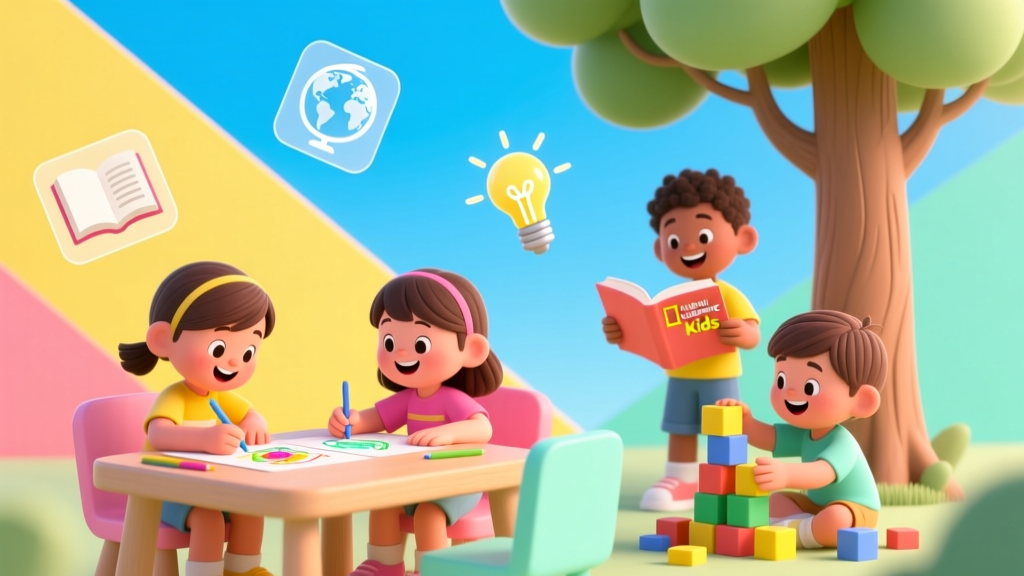
Mentally Strong Kids: 7 Neuroscience-Backed Habits
Why 'Mentally Strong Kids' Isn’t About Stoicism — It’s About Secure Wiring
If you’ve ever searched how to raise mentally strong kids, you’re not chasing perfection — you’re seeking reassurance that your child can weather disappointment, manage big feelings, bounce back from setbacks, and trust their own judgment. Mental strength isn’t inherited grit or innate toughness; it’s a set of learnable, neurobiologically supported skills rooted in secure attachment, cognitive flexibility, and emotional literacy. And right now — amid rising childhood anxiety rates (up 27% since 2016, per CDC data), academic pressure starting as early as kindergarten, and social media’s relentless comparison culture — building this foundation isn’t optional. It’s protective medicine for the developing brain.
1. Reframe Failure as Neuroplasticity in Action — Not a Character Flaw
Most parents instinctively rush to fix, rescue, or minimize failure: “It’s okay! Let me help you tie your shoes,” or “Don’t cry — it’s just a game.” But here’s what developmental neuropsychologist Dr. Lisa Damour explains in her landmark work Under Pressure: Every time a child experiences manageable frustration — and is allowed to sit with it, try again, and eventually succeed — their prefrontal cortex strengthens synaptic connections tied to problem-solving, impulse control, and self-efficacy. The key is manageable. Too much stress floods the amygdala; too little offers no growth stimulus.
Try this instead: When your 6-year-old spills milk, pause before cleaning it up. Kneel to eye level and say, “That was frustrating. What part felt hardest? Would you like to try wiping it up yourself — or do you want me to hold the cloth while you guide my hand?” This scaffolds agency without abdicating support. A 2022 longitudinal study published in Child Development followed 342 children aged 4–10 and found those whose parents consistently used ‘effort-focused’ language (“I saw how hard you tried to balance that tower”) were 2.3x more likely to persist after failure at age 10 than peers whose parents praised only outcomes (“You’re so smart!”).
Real-world example: Maya, a mother of twins in Austin, shifted from saying “Good job!” to “Tell me one thing that was tricky about building that Lego castle.” Within 8 weeks, both children began volunteering solutions before asking for help — like using tape to stabilize a wobbly bridge or sketching a plan before assembling.
2. Teach Emotional Vocabulary — Not Just ‘Calm-Down Strategies’
We teach kids to count to ten or breathe deeply — but rarely *name* what they’re feeling beneath the tantrum. Yet research from the Yale Center for Emotional Intelligence shows children with robust emotional vocabularies (20+ feeling words by age 6) demonstrate 31% higher classroom engagement and 44% fewer aggressive incidents. Why? Because naming an emotion activates the ventrolateral prefrontal cortex — literally dialing down the amygdala’s alarm response.
Build this skill daily:
- Label emotions in real time: “Your fists are clenched and your voice is loud — that sounds like frustration. Want to name it together?”
- Use visual tools: Hang a ‘Feelings Wheel’ (with primary + nuanced emotions like ‘disappointed,’ ‘overwhelmed,’ ‘hopeful’) in their bedroom or kitchen. Rotate weekly ‘Feeling of the Week’ (e.g., ‘flustered’ — “When things happen too fast and you can’t catch up”).
- Model vulnerability: Say aloud your own complex feelings: “I felt embarrassed when I forgot my colleague’s name — but I also felt relieved when she laughed with me.”
Pro tip: Avoid ‘feeling’ words that describe behavior (“You’re being stubborn”) or judgment (“That’s silly”). Stick to internal states: “You seem discouraged,” “I sense you’re feeling left out,” “That looked exhausting.”
3. Practice ‘Controlled Discomfort’ — Not Helicopter Parenting or Neglect
Mental strength grows in the ‘stretch zone’ — between comfort and overwhelm. Yet many well-meaning parents unintentionally hover (solving lunchbox disputes, negotiating with teachers over grades) or withdraw (leaving kids to navigate social exclusion alone). Both extremes impair resilience.
The sweet spot? What Dr. Kenneth Ginsburg, author of Raising Resilient Children, calls ‘supportive scaffolding’: providing just enough structure and empathy to let kids practice autonomy within safe boundaries.
Here’s how it looks across ages:
| Age Range | Controlled Discomfort Opportunity | Parent Role (Scaffolding) | Red Flag: Over- or Under-Support |
|---|---|---|---|
| 3–5 years | Choosing between two snack options — then accepting ‘no’ if they change their mind 30 seconds later | “You picked apple slices. If you decide you want crackers instead, we’ll wait until after lunch.” Calmly hold the boundary without debate. | Offering endless choices → decision fatigue; or overriding choice entirely → erodes agency |
| 6–9 years | Walking to school with a buddy (10-minute route), carrying own backpack, managing lunch money | Role-play ‘what if’ scenarios (“What if you forget your lunch? Who can you ask for help?”), check in once midweek — not daily | Calling the teacher to excuse a forgotten homework → undermines accountability; or refusing all independence → delays executive function development |
| 10–13 years | Managing one extracurricular commitment end-to-end: registration, scheduling, communicating with coaches, handling minor conflicts | Ask open questions: “What’s your plan if practice overlaps with family dinner?” Offer resources (calendar app tutorial) — not solutions | Solving scheduling conflicts for them → stunts planning skills; or refusing all input → leaves them unsupported during complexity spikes |
4. Normalize ‘Repair Work’ — Because Conflict Is Data, Not Danger
Many parents fear conflict with their kids will damage the relationship. But according to Dr. Becky Kennedy, clinical psychologist and founder of Good Inside, “The single strongest predictor of lifelong mental strength isn’t avoiding arguments — it’s experiencing consistent, loving repair after rupture.” When a parent snaps, dismisses a feeling, or breaks a promise — and then names it, takes responsibility, and co-creates amends — they model humility, accountability, and relational safety.
Effective repair isn’t “I’m sorry you felt that way.” It’s:
- Name the rupture: “I raised my voice when you didn’t put your shoes away. That wasn’t okay.”
- Own your role (not theirs): “My tone scared you — that’s on me, not your behavior.”
- Ask for input: “What helps you feel safe again? A hug? Some quiet time? Drawing together?”
- Co-create a tiny fix: “Next time I feel frustrated, I’ll take three breaths before speaking. Can you remind me with our signal?”
A 2023 University of Minnesota study tracking 187 families found children whose parents engaged in authentic repair after conflicts showed significantly higher scores on the Resilience Scale for Children and Adolescents (RSCA) — particularly in ‘trust in self’ and ‘tolerance of negative affect.’
Mini-case study: After yelling during homework, Liam (age 11) shut down for hours. His dad sat beside him silently for 10 minutes, then said, “I owe you an apology. My stress isn’t your job to fix. Want to shoot hoops and talk — or just be quiet together?” Liam chose silence — but 20 minutes later asked, “Can we make popcorn and watch that documentary you promised?” That reconnection wasn’t magic — it was repair made visible.
Frequently Asked Questions
Is mental strength the same as emotional intelligence?
No — though they overlap significantly. Emotional intelligence (EI) focuses on recognizing, understanding, and managing one’s own emotions and those of others. Mental strength builds on EI but adds cognitive stamina (persisting through discomfort), behavioral flexibility (adapting strategies when something fails), and values-driven action (choosing kindness even when angry). Think of EI as the ‘software’ — mental strength is the ‘operating system’ that runs it under pressure.
Won’t letting my child struggle cause anxiety or low self-esteem?
Only if the struggle is chronic, unscaffolded, or shames their effort. Developmental psychologist Erik Erikson identified ‘industry vs. inferiority’ (ages 6–12) as a critical stage where children build competence through trying, failing, adjusting, and succeeding. When adults consistently intervene before children have time to engage their problem-solving muscles, kids internalize “I can’t handle this” — not “I haven’t learned how yet.” Controlled, time-limited discomfort paired with unconditional support builds self-efficacy. Chronic helplessness — not challenge — erodes self-worth.
Do screen time limits impact mental strength?
Yes — but not because screens are inherently toxic. Excessive passive scrolling (especially social media for tweens+) displaces three resilience-building activities: unstructured play (which teaches negotiation and creative problem-solving), face-to-face connection (which wires empathy and reading nonverbal cues), and boredom (which sparks imagination and self-directed activity). The American Academy of Pediatrics recommends co-viewing and collaborative tech use for younger kids, and family media plans that prioritize sleep, physical activity, and in-person interaction — not just screen time minutes.
What if my child has anxiety, ADHD, or learning differences?
Mental strength isn’t ‘one-size-fits-all’ — it’s deeply individualized. For neurodivergent children, mental strength may look like advocating for accommodations, using sensory tools to regulate, or celebrating ‘small win’ consistency over linear progress. Work with therapists, educators, and specialists to identify their unique strengths (e.g., hyperfocus, pattern recognition, creative thinking) and build strategies that honor neurological wiring. As Dr. Ross Greene, creator of the Collaborative & Proactive Solutions model, says: “Kids do well if they can — not if they want to.” Strength grows when expectations match capacity — and capacity expands with targeted support.
Common Myths
Myth 1: “Mentally strong kids don’t get upset.”
Truth: Mental strength requires feeling emotions fully — then choosing how to respond. Suppressing sadness or anger doesn’t build resilience; it stores unprocessed stress in the body and increases long-term anxiety risk. Healthy expression (crying, journaling, movement) is strength in action.
Myth 2: “Praising effort guarantees mental strength.”
Truth: Generic praise (“You tried so hard!”) lacks specificity and can feel hollow. Effective effort feedback names *what* was effortful and *why it mattered*: “You kept checking your math steps even when you were tired — that’s how accuracy gets built.” Without linking effort to strategy and outcome, kids miss the learning loop.
Related Topics (Internal Link Suggestions)
- Building Emotional Regulation Skills in Toddlers — suggested anchor text: "emotional regulation activities for toddlers"
- Positive Discipline Strategies That Actually Work — suggested anchor text: "positive discipline techniques for preschoolers"
- How to Talk to Kids About Anxiety Without Scaring Them — suggested anchor text: "talking to children about anxiety"
- Screen Time Guidelines by Age (AAP-Backed) — suggested anchor text: "healthy screen time for kids"
- Growth Mindset Activities for Elementary Students — suggested anchor text: "growth mindset classroom activities"
Your Next Step Starts With One Micro-Shift
Raising mentally strong kids isn’t about grand gestures or perfect consistency — it’s about hundreds of tiny, intentional moments where you choose connection over correction, curiosity over control, and repair over avoidance. Pick just *one* practice from this article to try this week: maybe pausing before fixing a spill, naming a feeling you notice in your child, or apologizing authentically after a rupture. Track what happens — not just in their behavior, but in your own nervous system. Because mental strength isn’t just for kids. When you model self-awareness, humility, and regulated responses, you’re not just raising resilient children — you’re healing your own relationship with struggle. Ready to go deeper? Download our free Resilience-Building Prompt Cards — 30 age-adapted conversation starters designed by child psychologists to spark courage, curiosity, and calm in everyday moments.
More Articles
 Dachshunds With Kids: What Parents Must Know
 How Long Are Kids Passports Good For? (2026)
 Supporting Children After Parental Death: Expert Guide
 What to Write in Kids Valentines Cards (2026)
 Why Do Little Kids Stare at Me? 7 Science-Backed Reasons
 Speech Milestones: Pediatrician-Approved Guide (0–5 Years)
 Does Chad Michael Murray Have Kids? (2026)
 Travis Scott Kids: Co-Parenting Truths & Fatherhood (2026)
 Where Are the Barney Kids Now? (2026)
 How Many Kids Does Billy Ray Cyrus Have? (2026)