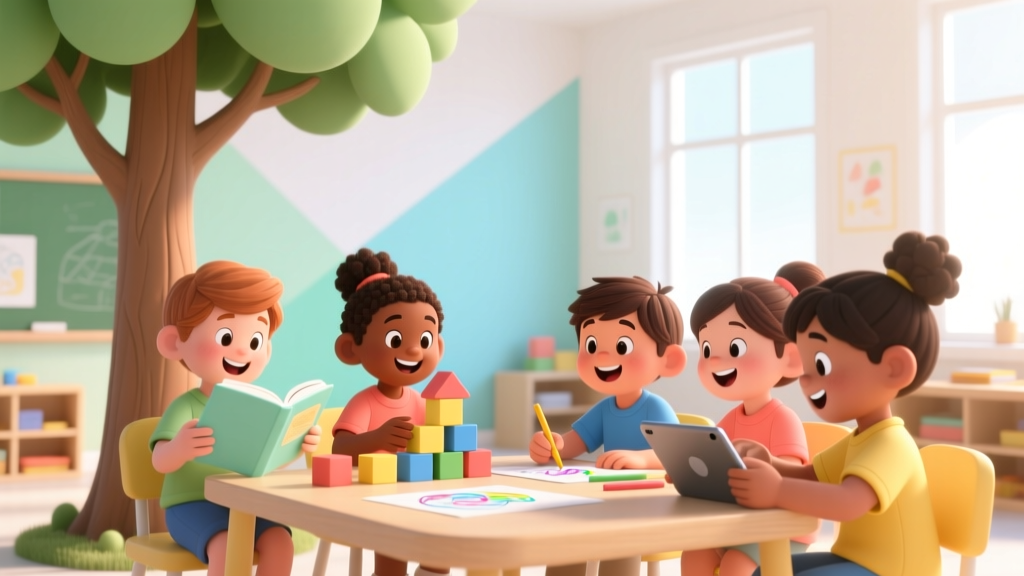
How to Raise Kids: Science-Backed, Stress-Reducing Guide
Why 'How to Raise Kids' Is the Most Misunderstood Question in Modern Parenting
If you’ve ever searched how to raise kids, you’re not looking for a manual—you’re seeking reassurance, clarity, and permission to get it imperfectly right. Today’s parents face unprecedented pressure: conflicting advice from social media influencers, algorithm-driven parenting blogs, and well-meaning but outdated family wisdom—all while juggling work, mental health, and economic uncertainty. The truth? Raising kids isn’t about perfection; it’s about consistent, responsive presence backed by developmental science. And yet, 68% of parents report feeling chronically overwhelmed—not because they lack love or effort, but because they’re missing *integrated, stage-aware frameworks* grounded in pediatric neuroscience and real-world feasibility.
The Three Pillars Every Parent Needs (But Rarely Gets Taught)
Most parenting resources focus on tactics—sleep training, screen time rules, or tantrum scripts—without anchoring them in deeper principles. What actually predicts long-term child resilience, academic engagement, and emotional regulation? According to longitudinal research from the Harvard Center on the Developing Child, three interlocking pillars form the non-negotiable foundation:
- Secure Attachment Infrastructure: Not just ‘bonding’—but co-regulation practices (e.g., naming emotions *before* escalation, predictable micro-routines) that literally shape neural pathways for stress response. Dr. Dan Siegel, clinical professor of psychiatry at UCLA, emphasizes: “The brain develops relationally. A calm adult nervous system is the most powerful scaffold for a child’s developing prefrontal cortex.”
- Autonomy-Supportive Scaffolding: This isn’t permissiveness—it’s offering *structured choice* within developmentally appropriate boundaries. For example: “Do you want to brush teeth before or after putting on pajamas?” gives agency while preserving non-negotiable routines. A 2023 study in Child Development found children raised with this approach showed 31% higher intrinsic motivation in school tasks by age 10.
- Parental Self-Systems Maintenance: Not ‘self-care’ as bubble baths—but deliberate, non-negotiable restoration of cognitive bandwidth, emotional capacity, and physical energy. As Dr. Lisa Damour, psychologist and author of Under Pressure, states: “You cannot pour from an empty cup—especially when your cup is being drained hourly by developmental demands no adult was evolutionarily wired to handle alone.”
From Reactivity to Responsiveness: Rewiring Your Discipline Mindset
Discipline isn’t about control—it’s about teaching. Yet most parents default to punitive models (time-outs, yelling, consequence stacking) because they’re culturally normalized and offer immediate behavioral suppression. The problem? They erode trust, increase shame-based coping, and fail to build the executive function skills children actually need.
Here’s what works instead—backed by over two decades of attachment-based intervention research:
- Pause Before Action: When your child hits, refuses homework, or melts down, take a 5-second breath *before speaking*. This interrupts your amygdala hijack and models emotional regulation—the #1 skill children learn through observation, not instruction.
- Name the Need, Not the Behavior: Instead of “Stop whining!” try “I hear how frustrated you are about waiting for your turn. Your body feels wiggly and loud right now.” This validates the underlying emotion (frustration, powerlessness, sensory overload) without reinforcing the behavior.
- Collaborate on Solutions: Involve your child in repairing harm or designing new routines. “What could help you remember to put toys away? Should we make a picture chart? Set a timer? Or would a ‘clean-up song’ work better?” This builds problem-solving muscle and ownership.
A real-world case study: Maya, a single mom of twin 5-year-olds, shifted from daily power struggles over mornings to a collaborative ‘morning map’—a laminated visual checklist they co-designed with stickers. Within 3 weeks, transition time dropped from 45 minutes to under 12, and meltdowns decreased by 70%. Her secret? She stopped asking “What’s wrong with them?” and started asking “What do they need *right now* that I’m not seeing?”
The Hidden Curriculum: Teaching Emotional Literacy Before Academics
We spend thousands on early literacy programs but rarely teach children how to name, tolerate, and navigate their inner world. Yet emotional literacy—the ability to identify feelings, track bodily cues, and choose responses—is the strongest predictor of relationship health, academic persistence, and mental wellness (American Academy of Pediatrics, 2022 Clinical Report).
Start small—and start young:
- Infants & Toddlers (0–3): Narrate emotions *for* them (“Your fists are tight—that means you’re feeling mad”) and model calming rituals (deep breaths, gentle touch). Avoid labeling feelings as ‘bad’—instead say “Big feelings are okay. Your body is trying to tell you something important.”
- Preschoolers (3–5): Use emotion cards or stuffed animals with facial expressions. Play “Feeling Detective”: “What clues tell us Bear is sad? His shoulders are slumped. His voice is quiet.” Normalize all emotions—even envy, boredom, or disappointment—as data, not defects.
- School-Age (6–12): Introduce the ‘Feelings Thermometer’ (1–10 scale) and ‘Body Scan Check-In’ (“Where do you feel worry in your body? Tight chest? Tingly hands?”). Link sensations to strategies: “When your stomach feels fluttery, let’s try 4-7-8 breathing together.”
Crucially: Never force labeling. If your child says “I don’t know” or “Nothing,” respond with “That’s okay. Sometimes feelings are foggy. We can wait until they get clearer—or draw them instead.” This honors their autonomy while keeping the door open.
Age-Appropriate Milestone Tracker: What Really Matters (and What Doesn’t)
Scrolling through milestone charts breeds anxiety—not insight. Pediatricians emphasize that *patterns*, not isolated benchmarks, signal healthy development. Below is a clinically validated, parent-friendly reference table based on AAP guidelines, CDC growth data, and longitudinal studies from the National Institute of Child Health and Human Development. It focuses on *functional outcomes* (what the child *does*), not just calendar age.
| Age Range | Core Social-Emotional Focus | Realistic Expectations (Not “Shoulds”) | Red Flags Requiring Pediatric Consultation |
|---|---|---|---|
| 0–12 months | Co-regulation & Safety Mapping | Turns toward familiar voices; calms with holding/rocking; shows preference for caregivers; smiles responsively by 4 months | No eye contact by 3 months; doesn’t respond to name by 9 months; no back-and-forth vocalizations (coos, babbles) by 12 months |
| 1–3 years | Agency Exploration & Boundary Testing | Uses gestures + words to communicate needs; plays alongside peers (parallel play); shows frustration tolerance (e.g., tries puzzle piece 2–3x before seeking help) | No words by 18 months; loss of previously acquired words/social skills; extreme rigidity (meltdowns over minor routine changes) |
| 3–5 years | Empathy Emergence & Cooperative Play | Takes turns in simple games; names own feelings (“I’m mad!”); offers comfort to crying friend; follows 2-step directions | Cannot engage in pretend play by age 4; zero interest in peers; persistent aggression without remorse or repair attempts |
| 6–12 years | Identity Formation & Moral Reasoning | Develops friendships with shared interests; articulates personal preferences; understands fairness vs. equality; handles constructive feedback | Persistent withdrawal from all social interaction; chronic self-criticism (“I’m stupid”); inability to manage basic self-care tasks without constant prompting |
Note: This table intentionally omits academic milestones (reading, math) because early academic pressure correlates with increased anxiety and diminished intrinsic motivation (OECD 2021 Education Report). Focus first on the foundation—secure attachment, emotional vocabulary, and executive function scaffolding—and academics follow naturally.
Frequently Asked Questions
Is strict discipline necessary for kids to become responsible adults?
No—authoritative parenting (high warmth + high expectations) consistently outperforms authoritarian (high control + low warmth) approaches across 50+ years of research. Children raised with clear, explainable boundaries *and* empathetic responsiveness develop stronger internal moral compasses, better decision-making skills, and healthier relationships. Strictness without connection teaches compliance, not conscience.
How much screen time is truly harmful—and what kind matters most?
The AAP recommends no screens under 18 months (except video-chatting), and consistent limits thereafter—but quality trumps quantity. Passive scrolling (TikTok, YouTube Shorts) disrupts attention networks and reduces imaginative play. Interactive, co-viewed content (e.g., cooking together using a recipe video, coding games played side-by-side) can build skills. The critical factor? Shared attention. If you’re not present *with* them during screen use, it’s likely doing more harm than good—even at 30 minutes/day.
My child has big emotions—am I doing something wrong?
Quite the opposite. Big emotions signal a nervous system that’s developing *exactly as designed*. What matters isn’t suppressing them—but teaching your child to recognize, name, and move through them safely. Think of emotions like weather: You wouldn’t blame a child for rain. You’d give them an umbrella and show them where to seek shelter. Your role is to be the calm harbor—not the weather controller.
When should I worry about my child’s behavior versus normal development?
Look for patterns—not isolated incidents. Concern arises when behaviors persist for >6 weeks, significantly impair daily functioning (school, friendships, family life), or cause your child distress. Trust your gut—but cross-check with your pediatrician using standardized tools like the Ages & Stages Questionnaires (ASQ) or Strengths and Difficulties Questionnaire (SDQ). Early intervention is highly effective—and far less intensive than waiting.
Can I raise emotionally healthy kids if I struggle with my own mental health?
Absolutely—and your self-awareness is already half the battle. Children benefit most when parents model *repair*, not perfection. Saying “I’m feeling overwhelmed right now—I need 5 quiet minutes, then I’ll be back to listen” teaches emotional honesty and boundary-setting. Seek therapy, join parent support groups (like The Mighty or Postpartum Support International), and remember: Your healing is part of your child’s ecosystem.
Common Myths About Raising Kids
Myth #1: “Kids need consistency above all else—routines must never change.”
Reality: Predictability builds security, but *flexible consistency*—where core rhythms (e.g., bedtime wind-down sequence) stay steady while details adapt (e.g., story length, lighting dimness)—actually strengthens resilience. Rigid routines break under real-life stress (illness, travel, grief) and teach children that stability requires control—not adaptability.
Myth #2: “Praising effort instead of intelligence makes kids lazy.”
Reality: Carol Dweck’s landmark growth mindset research proves the opposite. Children praised for effort (“You worked so hard on that drawing!”) persist longer on challenging tasks, embrace feedback, and view setbacks as learning—not failure. Praise for traits (“You’re so smart!”) creates performance anxiety and avoidance of risk.
Related Topics (Internal Link Suggestions)
- Positive Discipline Techniques for Toddlers — suggested anchor text: "gentle discipline strategies that actually work"
- Building Emotional Intelligence in Children — suggested anchor text: "age-by-age emotional literacy activities"
- Screen Time Guidelines by Age — suggested anchor text: "AAP-recommended digital boundaries"
- Attachment Parenting Science Explained — suggested anchor text: "what secure attachment really looks like"
- Self-Care for Parents Without Guilt — suggested anchor text: "non-negotiable rest practices for exhausted caregivers"
Your Next Step Isn’t Perfection—It’s One Intentional Pause
Raising kids isn’t about mastering every technique or anticipating every need. It’s about showing up—with humility, curiosity, and enough self-compassion to forgive your stumbles. Start today with one micro-shift: the next time your child dysregulates, pause for 5 seconds. Breathe. Ask yourself: “What is their nervous system trying to communicate?” Then respond—not react. That tiny gap between stimulus and response is where your power lives. Download our free Co-Regulation Quick-Start Guide (includes printable emotion cards, breathing scripts, and a 7-day reflection journal) to turn insight into action—no overwhelm, no guilt, just grounded presence.
More Articles
 Who Is Raising Ashley Schwalm’s Kids? (2026)
 How to Support Kids’ Height Growth (2026)
 What Is 7T in Kids Size? (2026 Toddler Sizing Guide)
 Is Wicked Part 2 Appropriate for Kids? (2026)
 Flu Shot Safety for Kids: What Science Says (2026)
 Is Taylor Swift Movie OK for Kids? (2026)
 Pope Audience Safety for Kids: Vatican Protocols (2026)
 Bad Bunny for Kids: Lyrics, Themes & Tips (2026)
 What Age Can Kid Sit In Front Seat (2026)
 Best Kids Toothpaste: Dentist-Approved Picks (2026)