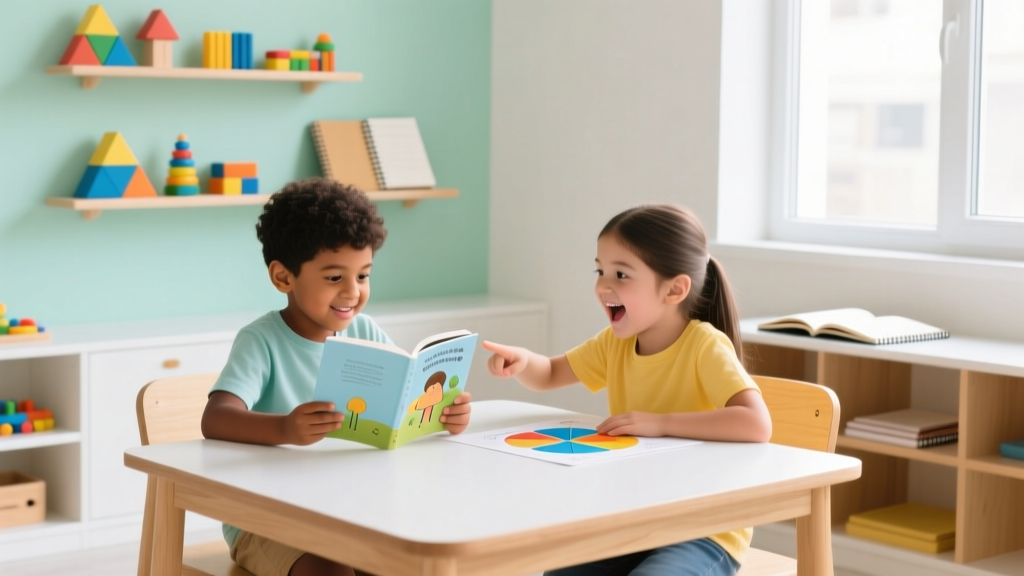
How to Raise Confident Kids: Science-Backed Strategies
Why 'How to Raise Confident Kids' Isn’t About Boosting Ego — It’s About Building Unshakeable Self-Efficacy
If you’ve ever Googled how to raise confident kids, you’ve likely scrolled past dozens of articles promising quick fixes: “just praise more!” or “sign them up for sports!” But here’s what decades of developmental psychology reveal — and what exhausted parents rarely hear: true confidence isn’t loud self-assurance or effortless success. It’s the quiet, steady belief that “I can handle hard things — even when I stumble.” In a world where childhood anxiety rates have surged 27% since 2016 (CDC, 2023) and social media amplifies comparison from age 8, raising kids who trust their own judgment, recover from setbacks, and advocate for themselves isn’t optional — it’s protective. This isn’t about creating ‘winners.’ It’s about cultivating resilience, agency, and emotional literacy — the bedrock of lifelong mental health.
1. Confidence Starts With Autonomy — Not Achievement
Most parents unintentionally erode confidence by over-helping. Think: tying shoes ‘faster,’ finishing sentences for toddlers, or rewriting middle-school essays ‘to make them sound better.’ But research from Stanford’s Project for Education Research That Scales (PERTS) shows that children who regularly experience ‘productive struggle’ — solving problems just beyond their current ability with supportive scaffolding — develop significantly stronger self-efficacy than peers whose tasks are consistently simplified or solved for them. Why? Because confidence isn’t built on outcomes; it’s forged in the neural pathways activated during effortful, self-directed problem-solving.
Try this instead: Use the “Pause-and-Prompt” Method. When your child says, “I can’t do this!” pause for 5 seconds (yes — count silently), then ask one open-ended question: “What’s the first small step you could try?” or “Where did you get stuck last time — and what helped?” This honors their frustration while redirecting focus to agency, not rescue. A 2022 longitudinal study in Child Development followed 342 children ages 4–12 and found those whose parents used prompting (vs. solving) showed 41% higher persistence on novel tasks at age 10 — and reported 33% less fear of failure in academic settings.
Real-world example: Maya, a homeschooling mom of twins (ages 7), shifted from correcting math errors to asking, “Show me where your thinking went — let’s trace it together.” Within 8 weeks, both children began catching their own mistakes mid-problem and confidently explaining their reasoning — not just answers.
2. Praise That Builds Confidence — And the 3 Words That Sabotage It
Here’s the uncomfortable truth: generic praise like “You’re so smart!” or “Great job!” doesn’t build confidence — it often undermines it. Dr. Carol Dweck’s seminal work on growth mindset demonstrates that person-focused praise (“You’re talented!”) teaches kids their worth is tied to innate traits. When they inevitably face difficulty, they interpret struggle as evidence they’re *not* smart/talented — leading to avoidance. Process-focused praise, however, links effort, strategy, and perseverance to outcomes.
The magic formula? Specificity + Effort + Impact. Instead of “Good drawing!”, try: “I noticed you spent 20 minutes blending those colors — the gradient on the sky makes it feel like sunset is really happening.” Notice how it names the action (blending), highlights sustained effort (20 minutes), and connects it to a tangible result (realistic sunset effect). This tells the child: Your choices and work matter — and I see them.
Avoid these 3 confidence-sabotaging phrases — and what to say instead:
- “Don’t cry — it’s not a big deal.” → “That felt really hard. Your feelings make sense. Want to sit with me while it passes?” (Validates emotion = safety to be imperfect)
- “Just try harder!” → “What part feels most confusing? Let’s break it into two tiny pieces.” (Names the barrier + offers collaboration)
- “I’ll do it — it’s faster.” → “You’ve got this. I’ll hold the bag while you zip it.” (Affirms capability + provides minimal, non-intrusive support)
According to Dr. Lisa Damour, clinical psychologist and author of Under Pressure, “Confidence isn’t the absence of doubt — it’s the presence of self-trust. And self-trust grows when children learn their emotions won’t overwhelm them, and their efforts have real weight.”
3. The Courage Curriculum: Normalizing Discomfort (Without Fixing It)
Confident kids aren’t fearless — they’re practiced at feeling fear, uncertainty, or embarrassment and moving forward anyway. Yet many parents rush to soothe, distract, or solve discomfort immediately. While well-intentioned, this deprives children of essential ‘courage rehearsal.’ Think of discomfort like muscle fiber: it must be gently stressed to grow stronger.
Introduce micro-challenges — low-stakes situations that invite mild discomfort but carry zero risk of real harm. Examples:
- Toddler/Preschool: Let them pour their own water (expect spills), order their own ice cream, or choose which shoe to put on first — then wait patiently while they fumble.
- Elementary: Assign a ‘voice task’ like asking a librarian for help finding a book, calling grandparents to share news, or presenting one fact in class.
- Middle/High School: Support them in negotiating a later curfew, emailing a teacher about a grade concern, or initiating a group project role discussion.
Critical nuance: Never force. Offer choice: “Would you like to try ordering lunch today — or would you prefer to practice with me first?” Then, after the attempt, debrief using the 3-Question Reflection:
1. What did you notice in your body before/during? (e.g., “My hands felt sweaty”)
2. What did you do that helped you keep going? (e.g., “I took a breath and looked at my menu”)
3. What’s one thing you’d tell a friend who felt the same way? (This builds self-compassion)
This ritual transforms nervous energy into embodied self-knowledge — the foundation of authentic confidence.
4. Modeling Vulnerability: The Most Powerful Confidence Lesson You’ll Ever Teach
Children don’t learn confidence from lectures. They absorb it through observation — especially how adults navigate uncertainty, error, and imperfection. Yet many parents hide their struggles: apologizing for ‘messy’ homes, avoiding new skills in front of kids, or framing mistakes as failures rather than data.
Try intentional, age-appropriate vulnerability:
- Share your learning process: “I’m trying this new recipe — I burned the garlic last time! This time, I’m setting a timer. Mistakes help me learn.”
- Name your emotions aloud: “I feel frustrated waiting in this long line. I’m going to take three slow breaths — want to breathe with me?”
- Reframe your own setbacks: “My presentation didn’t go as planned. I learned my slides were too text-heavy — next time, I’ll use more images.”
A landmark 2021 study in Developmental Psychology tracked 197 parent-child dyads and found children of parents who modeled adaptive responses to stress (naming emotions, seeking solutions, accepting limits) demonstrated 2.3x higher emotional regulation scores at age 9 — and were significantly more likely to initiate challenging tasks independently.
Remember: You’re not modeling perfection. You’re modeling recovery. That’s the blueprint for confidence.
| Age Group | Confidence-Building Strategy | Key Developmental Benefit | Real-World Implementation Tip | Risk to Avoid |
|---|---|---|---|---|
| 2–5 years | Choice Architecture | Builds early agency & decision-making pathways | Offer only 2–3 realistic options: “Do you want the red cup or blue cup?” NOT “What do you want to drink?” | Overwhelming choice → paralysis or tantrums |
| 6–9 years | “Mistake Journal” Practice | Normalizes error as learning data; reduces shame | Keep a simple notebook: “Today I tried ___ and learned ___.” Celebrate entries weekly — no corrections, just curiosity. | Turning journal into performance metric (grades, comparisons) |
| 10–13 years | Role-Reversal Teaching | Strengthens metacognition & self-concept as capable | Ask them to teach YOU something they know well (a game, TikTok trend, coding trick). Listen intently. Ask genuine questions. | Using it as disguised assessment (“Prove you understand!”) |
| 14–18 years | Values-Based Boundary Practice | Develops moral courage & identity clarity | Discuss real scenarios: “What would you do if friends pressured you to skip class? What value guides that choice?” Focus on reasoning, not right/wrong answers. | Imposing parental values as universal truths |
Frequently Asked Questions
Can too much praise actually damage a child’s confidence?
Yes — but only certain kinds. Research consistently shows that person-focused praise (“You’re so smart!”) backfires because it ties self-worth to fixed traits. When children face challenges, they interpret struggle as proof they’re *not* smart — leading to avoidance. In contrast, process-focused praise (“I saw how you tried three different strategies!”) reinforces that effort and strategy drive success. A 2018 meta-analysis in Psychological Bulletin confirmed that process praise correlates strongly with growth mindset and academic resilience across 12 countries.
My child freezes in new situations — is this shyness or low confidence?
Freezing is often a neurobiological response — not a character flaw. The amygdala (fear center) is highly active in young brains, and novelty triggers its alarm system. True confidence isn’t the absence of freeze — it’s developing the capacity to regulate that response. Observe: Does your child warm up with time and familiarity? Do they express curiosity *after* the initial freeze? If yes, this is likely temperament-driven caution — not deficient confidence. Support it with co-regulation (calm presence, naming feelings) and gradual exposure — never pushing. According to Dr. Lynne Kenney, pediatric psychologist, “Labeling a cautious child ‘shy’ or ‘timid’ can become a self-fulfilling prophecy. Instead, call them ‘thoughtful observers’ or ‘careful learners.’ Language wires the brain.”
Does screen time hurt confidence development?
It depends entirely on how screens are used. Passive scrolling (endless YouTube, social feeds) correlates with lower self-esteem in tweens/teens (JAMA Pediatrics, 2022), likely due to upward social comparison and reduced real-world mastery experiences. However, active, creative, or collaborative screen use — coding, video editing, building Minecraft worlds with friends, or researching a passion project — builds competence and agency. The key is intentionality: co-view, discuss content critically (“What message does this ad send about success?”), and balance with offline skill-building. The American Academy of Pediatrics recommends prioritizing “screen time that sparks curiosity, creation, or connection — not consumption.”
How do I help my confident child stay humble and kind?
Authentic confidence naturally includes empathy — but humility requires explicit cultivation. Two powerful practices: 1) Gratitude rituals — not just “what are you thankful for?” but “who helped make this possible?” (highlighting interdependence), and 2) Service scaffolding — start small: “Let’s bake cookies for the neighbor who’s sick,” then gradually increase responsibility and reflection: “What did you notice about how helping made you feel — and how it impacted them?” As Dr. Michele Borba, educational psychologist, states: “Confidence without compassion is arrogance. Compassion without confidence is passivity. We raise both — side by side.”
Common Myths About Raising Confident Kids
- Myth #1: Confidence comes from constant success. Truth: Children build deepest confidence through navigating manageable failure — not avoiding it. Success without struggle breeds fragility; struggle with support builds resilience.
- Myth #2: Confidence is inherited — you either have it or you don’t. Truth: Confidence is a set of learnable skills (self-regulation, self-advocacy, realistic self-appraisal) shaped powerfully by environment, language, and daily interactions — not DNA.
Related Topics (Internal Link Suggestions)
- How to talk to kids about anxiety — suggested anchor text: "helping anxious children feel safe"
- Positive discipline techniques that build respect — suggested anchor text: "discipline that strengthens connection"
- Screen time guidelines by age — suggested anchor text: "healthy digital habits for kids"
- Growth mindset activities for elementary students — suggested anchor text: "classroom games that teach resilience"
- Signs of low self-esteem in teens — suggested anchor text: "when confidence dips in adolescence"
Your Next Step: Pick One Micro-Shift — Then Notice the Ripple
Raising confident kids isn’t about overhauling your parenting — it’s about making intentional, consistent micro-shifts in how you respond, what you model, and where you place your attention. Today, choose just one strategy from this article: maybe pausing before solving, replacing one generic praise with specific feedback, or sharing one small vulnerability at dinner. Track it for 7 days — not to judge progress, but to observe: What did my child do differently? What did I notice in myself? Confidence isn’t built in grand gestures. It’s woven, thread by thread, in the quiet moments where we choose trust over control, curiosity over correction, and presence over perfection. Ready to begin? Download our free Confidence Builder Toolkit — including printable reflection cards, age-specific scripts, and a 14-day micro-challenge calendar — to turn insight into action.
More Articles
 Candace Parker Kids: How Many Children in 2026?
 How Many Kids Does Tristan Tate Have? (2026)
 Does Lil Uzi Have Kids? Facts, Trends & Parenting Insights
 Big Kids 6 to Women’s Size: Exact Conversion (2026)
 Gifted Kid Burnout: Signs, Causes & Healing Strategies
 DayQuil for Kids: Pediatrician Advice & Safer Alternatives
 Whitney Decker’s Kids: Privacy Truths & Parenting Tips
 Why Kids Say “Six Seven”: Viral Phrase Explained (2026)
 Homeschooling Pay: Tax Credits, Stipends & Income (2026)
 How Many Kids Did Frederick Douglass Have?