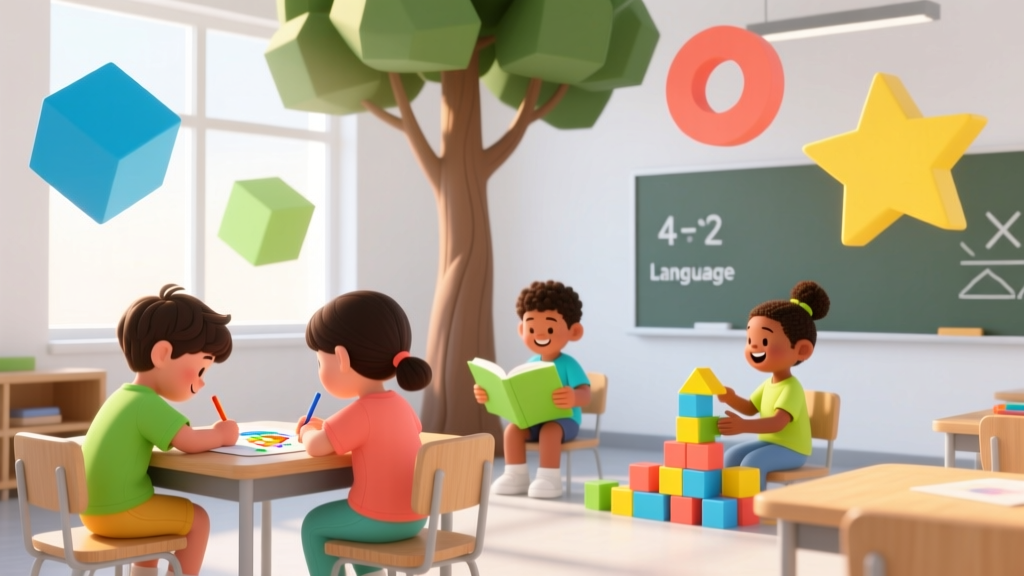
How to Prevent Kids Bullying: 7 Proven Strategies
Why 'Just Ignore It' Isn’t Enough—and Why Prevention Starts Long Before the First Incident
If you’ve ever searched how to prevent kids bullying, you’re not alone—and you’re already ahead of the curve. Because the most effective anti-bullying work doesn’t happen after a child comes home in tears or after a teacher sends an incident report. It happens in the living room during bedtime stories, at the dinner table during casual conversations about feelings, and in the way we model empathy—even when no one’s watching. According to the American Academy of Pediatrics (AAP), up to 30% of U.S. students experience bullying each school year—but research from the Yale Child Study Center shows that schools implementing *proactive, relationship-centered prevention programs* see bullying incidents drop by as much as 50% within one academic year. This isn’t about zero-tolerance policies or punitive discipline alone. It’s about building emotional literacy, strengthening peer connection, and equipping children with internal resources long before conflict arises.
1. Build Emotional Literacy Early—Before Age 6
Bullying rarely erupts from nowhere. It often grows from unmet needs, underdeveloped self-regulation, or misinterpreted social cues. Children who lack vocabulary for their own emotions—or who haven’t practiced naming and managing frustration, envy, or insecurity—are far more likely to act out aggressively or withdraw passively. A landmark 2022 longitudinal study published in Child Development followed 1,247 children from preschool through fifth grade and found that those who received explicit emotion-coaching at home (e.g., labeling feelings, validating experiences, brainstorming calm-down tools) were 42% less likely to engage in relational or physical bullying by age 10.
So what does this look like in practice? It starts with consistency—not perfection. Try these three daily micro-practices:
- Feeling Check-Ins: At breakfast or bedtime, ask, “What’s one feeling word for how your body feels right now?” Offer visual aids (like a ‘feelings wheel’ poster) for nonverbal or pre-readers.
- Empathy Mirroring: When your child expresses anger (“I hate my brother!”), respond with curiosity first: “It sounds like something big happened. Can you tell me what made your heart feel hot?” Then reflect back—not fix, not judge.
- Story-Based Role Play: Use books like Stand in My Shoes (by Bob Sornson) or The Recess Queen (by Alexis O’Neill) to pause and ask: “What do you think Maya felt when she sat alone? What could someone have done differently?”
Dr. Mona Delahooke, clinical psychologist and author of Brain-Body Parenting, emphasizes: “Children don’t need fewer big feelings—they need safer ways to express them. Bullying is often a failed attempt at connection or control. When we teach regulation *before* crisis, we disarm the impulse before it escalates.”
2. Partner With Schools Using the ‘Three-Tiered Prevention Framework’
Most parents assume schools either ‘have a bullying problem’ or they don’t. But leading educators use a public health-inspired approach—called the Three-Tiered Model—that layers universal, targeted, and intensive supports. Knowing how this works empowers you to advocate effectively—not just complain.
Tier 1 (Universal) reaches every student: school-wide social-emotional learning (SEL) curricula, inclusive classroom agreements (“We listen with our eyes and ears”), and consistent adult modeling. Look for evidence-based programs like Second Step or Responsive Classroom—both validated by CASEL (Collaborative for Academic, Social, and Emotional Learning).
Tier 2 (Targeted) supports at-risk groups: small-group coaching for kids struggling with friendship skills, peer mediation training, or lunch bunches for socially isolated students. These are *not* punishment-based; they’re skill-building opportunities.
Tier 3 (Intensive) involves individualized support: behavioral intervention plans (BIPs), trauma-informed counseling, or family collaboration with school psychologists.
When meeting with teachers or administrators, skip vague questions like “Is my child safe?” Instead, ask: “Which Tier 1 SEL program does your school use? How often is it taught? How do you measure its impact?” And if your child has been targeted or accused: “Can we co-create a Tier 2 plan—like weekly check-ins with a trusted adult or peer buddy pairing—before things escalate?”
3. Turn Digital Spaces Into Practice Grounds—Not Danger Zones
Over 90% of bullying among tweens and teens now includes a digital component—yet most ‘cyberbullying prevention’ advice stops at ‘don’t post mean things.’ That’s like teaching fire safety by saying ‘don’t light matches’ without explaining smoke detectors or escape routes. Real prevention means building *digital citizenship muscles*—and it starts in elementary school.
Here’s how to scaffold it developmentally:
- Ages 6–8: Introduce ‘digital kindness’ through analog parallels. “Would you say this comment aloud in the cafeteria? If not, don’t type it—even if it’s ‘just a joke.’” Use screen time together to model pausing before sending: “Let’s read this message out loud first. How might Sam feel reading it?”
- Ages 9–12: Co-create a family media agreement—not a list of bans, but shared values. Example clause: “If I see something upsetting online, I will screenshot it *then close the app*, and bring it to a grown-up within 2 hours—no matter who posted it.” Include consequences tied to behavior, not device access.
- Ages 13+: Shift from monitoring to mentoring. Ask open-ended questions: “What makes a group chat feel safe vs. stressful?” “When have you seen someone get excluded online—and what did you wish you’d said or done?”
Crucially: Avoid surveillance-only tools (like keystroke loggers or hidden tracking apps). Research from the University of New Hampshire’s Crimes Against Children Research Center confirms they erode trust and increase secrecy. Instead, use collaborative tools like Google Family Link or Apple Screen Time *with transparency*: “Let’s review our weekly usage together—and talk about what feels energizing vs. draining.”
4. Equip Bystanders—Because 85% of Bullying Happens With Witnesses
Here’s a hard truth: Most bullying stops within 10 seconds when a peer intervenes—even silently. Yet only 20% of kids report knowing *how* to help safely. We spend endless energy coaching targets (“be confident!”) and disciplining aggressors—but neglect the single largest lever for change: the 3–5 kids watching.
Effective bystander action isn’t about heroics. It’s about low-risk, high-impact micro-actions. The Olweus Bullying Prevention Program identifies four evidence-backed response types:
- Support the Target: “Hey, want to walk with me to class?” or “That wasn’t cool. You okay?”
- Redirect the Aggressor: “Wait—let’s hear what Maya thinks,” or “Our teacher said we use kind words in this group.”
- Get Help Discreetly: Signal a teacher while pretending to tie a shoe; send a quick text to a trusted adult: “Room 204, Liam’s teasing Zoe again.”
- Refuse to Participate: Laughing along, liking a cruel post, or staying silent all signal approval. Simply turning away and walking off is powerful.
Practice matters. Role-play these scripts weekly—even during car rides or cooking together. Bonus: Studies show children who regularly practice bystander skills report higher self-efficacy and lower anxiety, regardless of whether they’ve experienced bullying themselves.
| Strategy | Best Starting Age | Key Adult Action | Expected Impact Timeline | Evidence Source |
|---|---|---|---|---|
| Emotion-Coaching at Home | 3–5 years | Label feelings daily; validate before correcting; co-create calm-down kits (e.g., glitter jar + breathing card) | Reduced aggression observed in 8–12 weeks; sustained effect at 2-year follow-up | Yale Child Study Center, 2022 |
| School-Wide SEL Curriculum | K–12 (school-level implementation) | Ask administrators which CASEL-aligned program is used; attend parent workshops; reinforce concepts at home | 25–50% reduction in reported incidents within 1 school year | CASEL Meta-Analysis, 2023 |
| Digital Citizenship Coaching | 6 years+ | Use real examples (not hypotheticals); co-review screenshots; normalize asking for help | 73% increase in responsible reporting behavior after 6-week home-school module | Common Sense Media & UC Berkeley, 2021 |
| Bystander Skill-Building | 7 years+ | Practice 1 script/week; debrief real moments (e.g., “What did you notice at soccer practice yesterday?”) | 3x increase in peer intervention within 10 weeks; 41% drop in passive witnessing | Olweus Program Evaluation, Norway, 2020 |
Frequently Asked Questions
“My child says ‘it’s not bullying—it’s just joking around.’ Should I intervene?”
Yes—especially if the ‘joking’ is one-sided, repetitive, or causes visible distress (tears, withdrawal, stomachaches). The AAP defines bullying by three criteria: intentional harm, repetition, and a power imbalance—not the aggressor’s intent. What feels like ‘teasing’ to one child may feel like humiliation to another. Gently name the behavior (“I noticed Sam kept calling you ‘clumsy’ while you were tying your shoes”) and ask: “How did that make your body feel? What would help next time?”
“What if my child is the one bullying others?”
This is deeply unsettling—but it’s also a critical opportunity. Bullying behavior is rarely about ‘bad kids’ and almost always signals unmet needs: anxiety, trauma, undiagnosed learning differences, or exposure to aggression at home. Don’t shame—investigate. Request a school social worker evaluation; consult a child psychologist specializing in behavior; and examine family dynamics (e.g., Are harsh punishments modeled? Is emotional expression discouraged?). As Dr. Ross Greene, author of The Explosive Child, states: “Kids do well if they can. If they’re not, we need to ask: what skill is missing?”
“Does zero-tolerance punishment actually reduce bullying?”
No—and it often backfires. A 2023 meta-analysis in Review of Educational Research found schools relying solely on suspension/expulsion saw *increased* rates of retaliation, covert bullying (e.g., exclusion, rumor-spreading), and disengagement among both aggressors and targets. Effective discipline is restorative: it requires accountability *and* skill-building (e.g., “You’ll write an apology *and* co-design a plan with the counselor to practice respectful disagreement”).
“How do I talk to my child about bullying without scaring them?”
Focus on empowerment, not danger. Instead of “Bad kids might pick on you,” try: “Your voice matters. If something feels yucky—even if it’s not ‘big’—your job is to tell a grown-up you trust. Our job is to listen, believe you, and figure it out *together*.” Use age-appropriate language: “Bullying is when someone keeps doing something unkind, even after you ask them to stop.”
“Are anti-bullying assemblies effective?”
Rarely—as standalone events. Research from the University of Illinois shows assemblies *increase awareness* but don’t change behavior unless paired with ongoing classroom lessons, adult modeling, and peer-led initiatives. Think of them as opening credits—not the whole movie.
Common Myths
Myth #1: “Bullying builds resilience.”
False. Chronic victimization correlates strongly with anxiety, depression, academic decline, and even altered brain development (per fMRI studies in Nature Human Behaviour, 2021). Resilience grows from *supportive relationships*, not enduring harm.
Myth #2: “Only ‘mean girls’ or ‘tough guys’ bully.”
Wrong. Bullying crosses all genders, socioeconomic backgrounds, and academic levels. In fact, ‘popular’ students are statistically more likely to engage in relational bullying (exclusion, rumor-spreading) because they wield social influence—and it often goes unreported because peers fear losing status.
Related Topics (Internal Link Suggestions)
- Helping kids manage big emotions — suggested anchor text: "emotion coaching for children"
- Signs your child is being bullied — suggested anchor text: "subtle bullying warning signs"
- Building confidence in shy children — suggested anchor text: "social confidence for quiet kids"
- Screen time rules that actually work — suggested anchor text: "age-appropriate digital boundaries"
- How to talk to teachers about bullying — suggested anchor text: "productive school communication tips"
Your Next Step Starts With One Small Conversation
You don’t need to overhaul your parenting, transform your school, or master every strategy overnight. Prevention begins with presence—and one intentional choice today. Tonight, try this: During dinner or bath time, ask your child, “What’s one thing that made you feel proud of yourself this week?” Then listen—without fixing, praising, or redirecting. That simple act of witnessing builds the very foundation that makes bullying less likely to take root: the unshakable belief, “I matter. My feelings matter. My voice matters.” That belief is the first, strongest, and most enduring form of protection. Ready to go deeper? Download our free Prevention Starter Kit—including printable feelings wheels, sample family media agreement templates, and a 7-day bystander practice calendar.
More Articles
 Kids Crocs 2026: Best Sizes, Prices & Retailers
 Camping with Kids: Pediatrician-Approved Packing List (2026)
 Diane Keaton’s Adoption Story: Truth & Insights (2026)
 School Shooting Deaths: Verified Data & Parent Actions
 How Old Are Lily Allen’s Kids in 2026?
 When Can Kids Eat Gum? Pediatrician-Backed Guide
 BCG Vaccine for Kids: Timing, Safety & Global Decisions
 Florida School Start Dates 2026: County Guide
 Does Muni Long Have Kids? Privacy, Motherhood & Fame
 Robert Redford’s Kids: Parenting Truths & Lessons