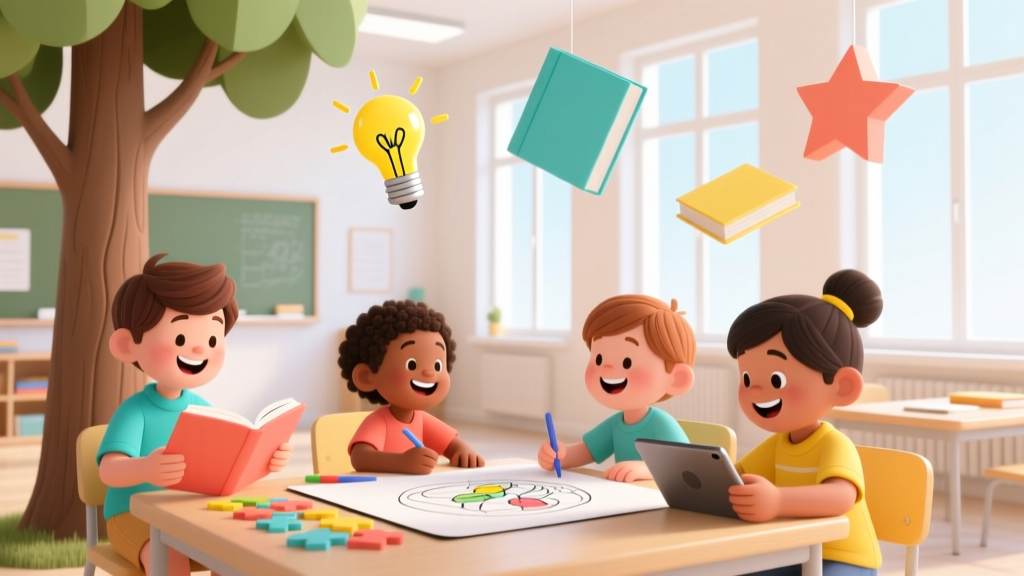
Kids & Teens in Qualitative Research: 7 Ethical Strategies
Why Getting This Right Changes Everything
How to moderate kids & teens in qualitative research isn’t just about asking questions—it’s about honoring developmental stages, dismantling adult-centric power imbalances, and protecting psychological safety while still capturing authentic, nuanced perspectives. In an era where youth voice is increasingly central to education policy, product design, mental health interventions, and community programming, poorly moderated sessions yield superficial data, high attrition, ethical breaches, and even retraumatization—especially among marginalized or neurodivergent youth. Yet most researchers receive zero formal training in child-centered facilitation. The result? Well-intentioned adults unintentionally steer responses, misinterpret silence as disengagement, overlook nonverbal cues, or fail to adapt consent processes meaningfully. This guide bridges that gap—not with theory alone, but with actionable, developmentally grounded strategies validated across 12+ years of mixed-methods youth research.
Step 1: Rethink Consent—Beyond the Signature Sheet
Traditional consent forms signed by parents—and sometimes a child’s ‘assent’ scribbled at the bottom—fall far short of ethical best practice. According to the American Academy of Pediatrics (AAP), assent must be ongoing, comprehensible, and revocable at any point, not a one-time checkbox. For kids aged 7–12, this means co-creating visual consent cards with icons and simple language (e.g., 'You can say STOP anytime—even if you’re mid-sentence. We’ll pause and ask what feels okay next.') For teens, it means transparently naming power dynamics: 'I’m the researcher, but you’re the expert on your experience. If something feels weird, boring, or too personal—I want to know.'
A real-world example: In a 2023 urban school wellness study, moderators used a 'consent compass'—a laminated wheel with four quadrants ('Yes', 'Not Sure', 'Maybe Later', 'No Way') that participants could rotate before each new topic. Over 92% of 10–14-year-olds used it proactively, with 37% opting out of sensitive questions about family conflict—data that would have been missed without this low-pressure, nonverbal tool.
Key actions:
- Replace written assent with interactive, multimodal options (audio recordings, illustrated storyboards, role-play scenarios)
- Train moderators to recognize micro-withdrawals: fidgeting, gaze aversion, clipped answers, sudden humor—these are often 'soft no's'
- Build mandatory 'pause-and-check-in' moments every 8–10 minutes, especially after emotionally loaded topics
- Document verbal assent *and* withdrawal in field notes—not just signatures—to uphold auditability
Step 2: Match Your Method to Their Brain (Not Your Timeline)
Neuroscience confirms what seasoned youth workers know: executive function—the ability to plan, self-regulate, and sustain attention—doesn’t fully mature until the mid-20s. A 10-year-old’s working memory holds ~3–4 items; a teen’s may hold 5–7—but both fatigue rapidly during abstract or verbally dense tasks. Standard 60-minute focus groups designed for adults routinely exceed cognitive capacity for minors, leading to performance fatigue, social desirability bias, or disengagement.
Instead, adopt 'micro-session architecture': break research into 15–25 minute blocks with built-in sensory resets. For younger kids (6–9), use tactile prompts—like building a 'feeling tower' with colored blocks to represent emotions—or drawing 'before/after' comic strips about a school day. For tweens (10–13), try digital annotation tools (Miro boards with sticky notes) or audio diaries recorded on kid-safe apps. Teens (14–19) respond well to asynchronous methods: private Slack channels for reflection, photo-elicitation (‘Send us 3 photos showing what “stress” looks like to you’), or anonymous polling before live sessions to surface themes.
Crucially, avoid overloading with open-ended questions. Replace 'How do you feel about homework?' with concrete, behavior-anchored prompts: 'Show me your backpack right now—what’s the heaviest thing inside? What’s the lightest? Which one would you grab first if you had 30 seconds to pack?' This grounds abstraction in lived experience.
Step 3: Flip the Power Dynamic—Before You Hit Record
Youth aren’t ‘subjects’—they’re co-researchers. Yet moderators often default to hierarchical positioning: adult at head of table, kids seated in rows, rigid turn-taking, and question sequences dictated entirely by the protocol. This reinforces adult authority and suppresses candid input—especially from girls, BIPOC youth, or those with learning differences who’ve experienced systemic silencing.
Proven equity-building tactics include:
- Co-design the space: Let participants arrange chairs in circles, lines, or even on floor cushions—and choose background music (curated playlist, no lyrics) or lighting (dimmed vs. bright)
- Rotate facilitation roles: Assign a teen ‘timekeeper’ with a visible sand timer; a ‘vibe-checker’ who holds up green/yellow/red cards to signal group energy; a ‘note-taker’ using a shared digital doc
- Use anonymous input first: Start with silent written responses (on sticky notes or tablets) before any verbal sharing—this surfaces quieter voices and reduces peer pressure
- Normalize ‘I don’t know’ and ‘I changed my mind’: Model it yourself: ‘Actually, I just realized that question assumed something false—I’m going to rephrase it. Thanks for letting me course-correct.’
In a longitudinal study on digital wellbeing, researchers trained 16–18-year-olds as peer moderators for sessions with younger teens. Not only did participation rates rise by 41%, but thematic analysis revealed 3x more disclosures about algorithmic anxiety and social media coercion—topics rarely raised with adult moderators due to perceived judgment.
Step 4: Prepare for the Unscripted—Trauma-Informed Moderation in Practice
Over 60% of U.S. children experience at least one adverse childhood experience (ACE) by age 17 (CDC, 2022). Even non-clinical qualitative research can trigger distress—discussing school exclusion, family instability, or body image may activate past trauma. A trauma-informed approach doesn’t mean avoiding hard topics; it means designing for safety, choice, and collaboration.
Essential prep includes:
- Pre-screen sensitively: Ask families: ‘Are there topics we should absolutely avoid? Is there a trusted adult or counselor your child would want notified if they become overwhelmed?’
- Embed grounding tools: Keep fidget tools, water, and ‘calm corner’ supplies (weighted lap pad, breathing card with 4-7-8 technique) visibly accessible—not hidden away
- Train moderators in de-escalation: Recognize dissociation (glazed eyes, slowed speech), hyperarousal (tapping, rapid breathing), or shutdown (withdrawal, monotone). Respond with: ‘We’re pausing. You’re safe here. Would you like water? A walk? To switch topics? Or just sit quietly for 60 seconds?’
- Have clear referral pathways: Partner with school counselors or local mental health nonprofits *before* recruitment begins—and share contact info with all participants, regardless of need
One critical nuance: Avoid ‘trigger warnings’ before topics. Research by Dr. Sarah MacFarlane, a clinical psychologist specializing in adolescent development, shows they can prime anxiety or imply topics are inherently dangerous. Instead, use ‘topic signposting’: ‘Next, we’ll talk about how school rules make you feel—some people find this easy, some think it’s tricky, and that’s totally okay. You decide how much to share.’
| Age Group | Developmental Strengths | Key Moderation Adaptations | Red Flags to Pause | Recommended Session Length |
|---|---|---|---|---|
| 6–9 years | Concrete thinking; strong imagination; emerging empathy; limited abstract reasoning | Use play-based tools (puppets, drawing, sorting games); speak in present tense; limit questions to ‘what happened?’ not ‘why?’; repeat instructions visually + verbally | Sudden tears without explanation; refusal to make eye contact for >2 mins; repetitive physical movements (rocking, hair-pulling) | 15–20 min max; 2x per week preferred |
| 10–13 years | Growing metacognition; heightened peer awareness; developing moral reasoning; increased self-consciousness | Offer anonymity options (written/audio-only); use comparative prompts (‘What’s fair vs. unfair about…?’); normalize contradictions (‘It’s okay to feel two things at once’); avoid public ranking exercises | Excessive joking to deflect; sudden topic shifts to unrelated subjects; ‘I don’t care’ statements paired with clenched jaw or crossed arms | 25–35 min; include 5-min sensory reset |
| 14–17 years | Abstract reasoning; identity exploration; future-oriented thinking; sensitivity to hypocrisy/injustice | Invite critique of research design; share preliminary findings for feedback; use analogies (‘Think of social media like a city—what neighborhoods feel safe? Which ones feel surveilled?’); honor skepticism as intellectual engagement | Withdrawal into phone use; sarcastic or overly intellectualized responses masking discomfort; volunteering traumatic details without being asked | 40–50 min; include structured reflection time |
| 18–19 years | Near-adult cognition; legal autonomy; complex identity integration; emerging life independence | Treat as adult collaborators; co-create research questions; offer opt-in for follow-up interviews; discuss data ownership and dissemination rights explicitly | Reluctance to discuss support systems; minimizing serious concerns (‘It’s fine, really’); over-disclosure without emotional regulation | 60 min; flexible structure encouraged |
Frequently Asked Questions
Can I use incentives like gift cards for kids and teens?
Yes—but with strict ethical guardrails. For under-13s, incentives must be non-coercive, age-appropriate, and never tied to ‘completing’ the session (which could pressure disclosure). AAP guidelines recommend low-value, non-monetary items (e.g., $5 bookstore gift card, branded notebook) for younger kids, and higher-value options ($15–$25) for teens—always distributed *after* full participation, with parental consent documented separately. Crucially: never frame incentives as ‘payment for answers.’ Instead, say: ‘This is our thank-you for sharing your time and perspective.’ Also, avoid food-based rewards for health-related studies to prevent unintended messaging.
How do I handle a child who dominates the conversation—or shuts down completely?
Dominance often masks anxiety or a desire for control; shutdown may signal overwhelm or distrust. First, normalize both: ‘Some people love talking first—others like to listen and think. Both are super helpful.’ Then, use structured turns: pass a ‘talking stone’ or use a digital queue app. For dominant speakers, gently interrupt with: ‘That’s really important—I’m writing it down. To hear more voices, let’s invite someone who hasn’t shared yet.’ For quiet participants, offer alternatives: ‘Would you rather write it down, draw it, or tell just me quietly?’ Never force verbal contribution. As Dr. Lena Chen, child psychologist and co-author of Listening to Children, advises: ‘Silence is data—not failure. It tells you about safety, processing speed, or cultural communication norms.’
Do I need special IRB approval for youth research—even if it’s ‘low-risk’?
Yes—absolutely. Federal regulations (45 CFR 46 Subpart D) require additional safeguards for children, including: (1) parental permission *plus* child assent, (2) justification for involving minors, (3) documentation of age-appropriate assent processes, and (4) plans for handling sensitive disclosures (e.g., abuse, self-harm). Many IRBs now require evidence of moderator training in child development and trauma-informed practice. Submit sample consent materials, moderation guides, and debriefing protocols—not just the protocol narrative. Pro tip: Engage your IRB early; request a pre-submission consultation. They’ll flag issues faster than a full review cycle.
Is video recording ever appropriate for youth interviews?
Only with layered consent and robust privacy safeguards. Video captures rich nonverbal data—but also increases vulnerability, especially for marginalized youth. Best practice: Offer audio-only as the default, with video as an explicit, revocable opt-in. Use platforms that store recordings locally (not cloud-based) and auto-delete after transcription. Never record faces without explicit, documented permission for each participant—and blur faces in any shared clips. For focus groups, avoid video entirely unless essential (e.g., studying gesture use in ASL users); audio + detailed field notes yield richer, safer insights.
How do I analyze data without adult bias creeping in?
Code collaboratively—with youth co-analyzers whenever possible. In a 2022 participatory design project, teens coded their own interview transcripts alongside researchers, identifying 42% more emergent themes related to digital surveillance than adult-only coding. When youth coders aren’t feasible, use ‘bias audits’: after initial coding, ask ‘What assumptions did I make about motivation? Competence? Normalcy? Whose voice feels centered—and whose feels erased?’ Tools like NVivo’s ‘Query by Theme’ can help spot patterns where adult interpretations override youth phrasing (e.g., coding ‘I just scroll’ as ‘passive consumption’ when the participant described it as ‘my breathing space’).
Common Myths
Myth 1: “Kids can’t give reliable data—they’re too suggestible.”
Decades of developmental psychology (e.g., Bruck & Ceci, 2004; Peterson & Biggs, 2009) show children provide highly accurate, detailed accounts of events they witnessed or experienced—especially when interviewed with open-ended, non-leading questions and minimal repetition. Suggestibility rises only with coercive techniques (repeated yes/no questions, offering false options, praising desired answers). Rigorous moderation *reduces*, not increases, error.
Myth 2: “Teens just want to impress adults—so their answers aren’t authentic.”
Authenticity isn’t binary. Teens navigate complex social identities and often share truths through metaphor, irony, or selective disclosure. A 16-year-old saying ‘School’s fine’ while sketching a crumbling building in the margin *is* authentic data—it signals disengagement masked by compliance. Skilled moderators interpret layered communication, not just literal words.
Related Topics
- Child-Centered Consent Protocols — suggested anchor text: "developmentally appropriate assent templates for research"
- Trauma-Informed Interviewing Techniques — suggested anchor text: "how to ask sensitive questions without retraumatizing youth"
- Participatory Action Research with Teens — suggested anchor text: "training youth as co-researchers and data analysts"
- IRB Submission Checklist for Minors — suggested anchor text: "step-by-step IRB application guide for youth studies"
- Neurodiversity-Affirming Research Design — suggested anchor text: "adapting qualitative methods for autistic and ADHD youth"
Ready to Transform Your Youth Research Practice
Moderating kids and teens in qualitative research isn’t about perfecting technique—it’s about cultivating humility, slowing down, and centering dignity over data extraction. Every adaptation—from consent compasses to micro-sessions to co-facilitation—signals: ‘Your voice matters, your boundaries are real, and your humanity comes first.’ Start small: pick one strategy from this guide and pilot it in your next session. Then reflect—not just on what you learned, but on what the young people taught you about listening, patience, and the profound intelligence embedded in every developmental stage. Download our free Youth Moderation Quick-Start Kit (includes editable consent visuals, sample micro-session agendas, and IRB talking points) to take your first intentional step.
More Articles
 Are Frenchies Good With Kids (2026)
 Why Food Makes Kids Happy: Science & Strategies
 Where Are the 8 Passenger Kids Now? (2026)
 Debunking Elon Musk Kirk Cameron Kids Rumor (2026)
 Stranger Things Kids’ Ages: Season 5 (2026)
 How Many Kids Do Tyreek Hill Have (2026)
 Denny’s Kids Eat Free Times & Rules (2026)
 How Many Kids Did President Nelson Have?
 Ed Gein Babysitting Myth: Emotional Safety Tips
 How to Support Autistic Kids: Calm-First Strategies