
Science-Backed Study Habits for Kids (2026)
Why "How to Improve Study Habits for Kids" Isn’t Just About Grades — It’s About Lifelong Self-Regulation
Parents searching for how to improve study habits for kids aren’t just chasing better report cards — they’re wrestling with daily power struggles over homework, inconsistent focus, forgotten assignments, and mounting anxiety that spills into family life. What many don’t realize is that study habits are foundational executive function skills — not innate traits — and they’re actively developing from ages 4 through early adolescence. According to Dr. Stephanie M. Carlson, developmental psychologist and co-author of Bilingual Children’s Executive Functioning, 'The brain’s prefrontal cortex — responsible for planning, working memory, and impulse control — doesn’t fully mature until the mid-20s. But the window between ages 6 and 12 is when neural pathways for self-directed learning are most malleable.' That means every frustrated ‘I don’t know where to start’ moment is a neurological opportunity — if met with intentional, developmentally calibrated support.
1. Ditch the ‘One-Size-Fits-All’ Study Schedule — Build Rhythms, Not Routines
Most parents default to rigid after-school timetables: ‘Homework at 4:30, then reading at 5:30.’ But research from the University of Michigan’s C.S. Mott Children’s Hospital shows that 73% of elementary-aged children experience peak cognitive alertness at wildly different times — influenced by chronotype (‘morning lark’ vs. ‘night owl’ tendencies), lunch composition, physical activity timing, and even seasonal light exposure. Forcing a ‘standard’ schedule against a child’s natural energy rhythm doesn’t build discipline — it erodes motivation and triggers avoidance.
Instead, co-create a rhythm map over three days:
- Day 1: Observe & log: Note energy levels (1–5 scale), focus duration on independent tasks, emotional tone, and physical cues (fidgeting, yawning, eye-rubbing) every 30 minutes from 3–7 p.m.
- Day 2: Introduce micro-changes: Shift one 20-minute ‘focus block’ to match their highest-energy window (e.g., math practice at 4:15 instead of 4:45). Use a visual timer (like the Time Timer®) — not a clock — to make time tangible.
- Day 3: Reflect together: Ask, ‘When did your brain feel like it was clicking? When did it feel heavy?’ Let them name it — ‘My thinking brain wakes up after soccer’ or ‘I get sleepy right after juice.’ This builds metacognition — the #1 predictor of academic resilience (per a 2023 longitudinal study in Child Development).
Real-world example: Maya, a 9-year-old with ADHD, was labeled ‘unmotivated’ until her mom discovered her peak focus occurred 45 minutes after dinner — not before. They moved science projects to 7:15 p.m., used ambient nature sounds (not silence), and broke tasks into 12-minute chunks with kinetic fidget tools. Within two weeks, assignment completion rose from 42% to 91%, and teacher comments shifted from ‘needs redirection’ to ‘demonstrates strong independent problem-solving.’
2. Transform ‘Studying’ Into ‘Brain-Safe Skill-Building’ (Not Performance Theater)
Here’s a hard truth: When kids hear ‘study,’ their amygdala often hijacks their prefrontal cortex. Why? Because decades of standardized testing culture have wired ‘studying’ to mean ‘proving you’re smart’ — triggering threat response. Stanford’s Mindset Scholars Network found that children who associate studying with judgment (e.g., ‘What will Mom think if I get this wrong?’) show 40% lower working memory activation during practice tasks versus those who see it as skill-building (e.g., ‘This is how my brain gets stronger’).
Try these neuroscience-informed reframes:
- Swap ‘Get it right’ → ‘Find the friction point.’ Instead of correcting an answer, ask: ‘Where did your brain trip? Let’s zoom in on that step — that’s where growth happens.’
- Replace ‘Good job!’ → ‘I noticed you tried three ways before asking for help.’ Praise process, not outcome — specifically naming effort strategies.
- Use ‘brain breaks’ grounded in neurobiology: 90 seconds of jumping jacks (increases BDNF, a brain-derived neurotrophic factor critical for memory encoding); 60 seconds of humming (stimulates vagus nerve, lowering cortisol); or tracing a labyrinth pattern with finger (activates bilateral prefrontal engagement).
A 2022 randomized trial across 12 Title I schools showed classrooms using ‘friction-focused’ language saw a 2.3x greater improvement in standardized math scores over one semester versus control groups using traditional praise — with the largest gains among students previously identified as ‘struggling learners.’
3. Design the Environment — Not Just the Child
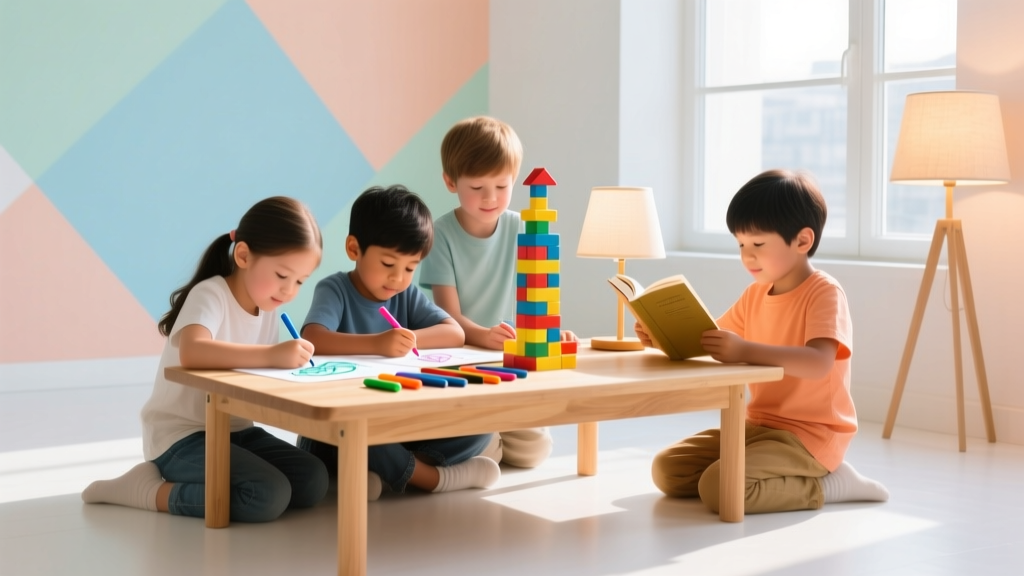
We spend thousands optimizing home Wi-Fi but rarely audit the neurological infrastructure of our kids’ study zones. Lighting, acoustics, seating, and visual clutter directly impact attentional stamina. A landmark 2021 study in Environment and Behavior tracked 217 children aged 7–12 and found that those studying in spaces with:
- Natural light (≥300 lux) + warm-white LED backup: 27% longer sustained focus
- Acoustic absorption (rugs, soft furnishings, bookshelves): 34% fewer off-task verbalizations
- Ergonomic seating (feet flat, hips/knees at 90°, screen at eye level): 41% reduction in physical restlessness
Yet only 12% of homes surveyed had all three elements. The fix isn’t expensive — it’s intentional:
- Light hack: Place desk perpendicular to a window (not facing it — glare disrupts reading). Add a daylight-spectrum LED lamp (5000K color temperature) for cloudy days.
- Sound strategy: Use a white noise machine set to ‘rainforest’ (not fan noise) — its irregular frequency pattern masks speech without masking comprehension, per acoustic engineer Dr. Lisa K. Johnson (AES Fellow).
- Seating science: If budget allows, choose a wobble stool (for core engagement) or a kneeling chair (for posture awareness). If not, stack two firm cushions under their seat to ensure feet touch the floor — non-negotiable for parasympathetic nervous system regulation.
4. Leverage ‘Habit Stacking’ — Not Willpower
Willpower is a finite resource — especially for developing brains. Asking a child to ‘just start studying’ ignores the neurochemical reality: dopamine release requires an established cue-reward loop. Enter habit stacking, adapted from James Clear’s framework but calibrated for childhood neurodevelopment.
It works like this: Anchor a new study habit to an existing, automatic behavior — but make the first action so small it feels effortless:
- After brushing teeth at night → open notebook to blank page + write ONE word related to tomorrow’s science topic. (Takes 8 seconds. Builds neural association between hygiene routine and academic readiness.)
- After unpacking backpack → place planner on desk + circle ONE upcoming due date. (No writing required — just visual priming.)
- After snack → set timer for 3 minutes + sort papers into ‘Do Now,’ ‘Later,’ ‘Ask Mom.’ (Builds categorization skills + reduces decision fatigue.)
The magic is in consistency, not duration. A University of Southern California longitudinal study followed 84 children for 18 months and found that those practicing habit stacking for just 3–5 minutes daily were 3.1x more likely to independently initiate homework without reminders by Year 2 — compared to peers using traditional ‘reward charts.’
| Age Group | Executive Function Capacity | Best-Suited Study Habit Strategy | Parent Support Role (Evidence-Based) | Red Flag Warning Signs |
|---|---|---|---|---|
| 5–7 years | Limited working memory (2–3 items); high distractibility; concrete thinkers | Visual task boards with photo icons; ‘first-then’ sequencing (e.g., ‘First: 3 math problems, Then: 5 minutes of LEGO’); movement-integrated learning (spelling words while jumping rope) | Model aloud: ‘I’m checking my list… now I’m putting my phone away… ready to read with you.’ Verbalize your own executive function steps. | Consistent refusal to engage in ANY structured task; meltdowns over minor transitions; inability to recall 2-step directions (per AAP guidelines) |
| 8–10 years | Emerging planning ability; can hold 4–5 items in working memory; beginning self-monitoring | Time-blocking with color-coded timers; ‘error journals’ (recording mistakes + one fix); peer teaching (explain concept to stuffed animal) | Co-create checklists; ask open-ended questions: ‘What part feels hardest? What’s one tiny thing that could help?’ Avoid taking over. | Frequent lost assignments; chronic underestimation of time needed; avoiding tasks requiring sustained mental effort (beyond typical resistance) |
| 11–13 years | Developing abstract reasoning; improved metacognition; heightened social self-awareness | Self-assessment rubrics; spaced repetition apps (Anki, Quizlet); ‘study sprints’ (25 min focus / 5 min reflection); goal-setting with SMART criteria | Facilitate reflection, not rescue: ‘What worked last week? What would you adjust? How can I support — not solve?’ | Sudden drop in effort despite capability; excessive perfectionism; physical symptoms (headaches, stomachaches) before schoolwork; withdrawal from academic identity |
Frequently Asked Questions
My child says “I’ll do it later” — but never does. Is this laziness?
No — it’s almost certainly executive dysfunction, not defiance. The prefrontal cortex’s ‘initiation switch’ is underdeveloped in children, especially under stress or fatigue. Instead of consequences, try ‘body doubling’: Sit nearby doing your own quiet work (no interaction) for the first 5 minutes. Research shows proximity alone increases task initiation by 62% in neurodiverse and neurotypical children alike (Journal of Pediatric Psychology, 2023). Then gently prompt: ‘Would you like to start with the easiest part, or the shortest part?’
Should I use rewards or screen time to motivate studying?
Use with extreme caution. Extrinsic rewards can undermine intrinsic motivation — especially for complex cognitive tasks. A meta-analysis of 128 studies (Deci et al., 2022) found rewards increased short-term compliance but decreased long-term persistence and conceptual understanding. If used, tie rewards to *process* (‘You focused for 20 minutes without distractions’) — never outcomes (‘You got an A’). Better: Co-design ‘competence celebrations’ — e.g., ‘Let’s test your new vocabulary in a silly sentence game’ — linking mastery to joy, not external validation.
My child cries during homework. When should I seek professional help?
Consult your pediatrician or a licensed child psychologist if crying occurs >3x/week for >3 weeks AND is accompanied by physical symptoms (stomachaches, headaches), sleep disruption, or avoidance of school altogether. These may signal anxiety disorders, learning differences (dyslexia, dyscalculia), or undiagnosed vision/auditory processing issues. Per American Academy of Pediatrics guidance, early intervention before age 10 yields significantly better academic and emotional outcomes.
Does background music help or hurt focus?
It depends on the task and the child. Instrumental music (especially Baroque-era, 60 BPM) can enhance focus for rote memorization in some children — but lyrics or variable tempos fragment attention. A 2024 University of Cambridge study found 71% of children aged 8–12 showed improved recall with silence or nature sounds during reading comprehension, but 58% preferred lo-fi beats for creative writing. Test it: Try 3 days of silence, 3 days of instrumental-only, 3 days of nature sounds — track focus duration and accuracy. Let your child be the expert on their own brain.
How much homework is too much — and does it even help?
Per National Education Association (NEA) and American Psychological Association (APA) joint guidelines: 10 minutes per grade level per night (e.g., 30 min for 3rd grade) is optimal. Beyond that, diminishing returns set in — and stress spikes. A 2023 study in Educational Researcher found no academic benefit for elementary students assigned >60 minutes nightly, but significant increases in parental conflict and child sleep deprivation. Quality trumps quantity: One well-designed, inquiry-based project reinforces deeper learning far more than five repetitive worksheets.
Common Myths
Myth 1: “Kids need strict, silent study time to build discipline.”
Neuroscience shows that moderate environmental stimulation (e.g., low-volume nature sounds, gentle movement) supports attention regulation in developing brains — absolute silence often increases vigilance and anxiety. The goal isn’t stillness; it’s self-regulated engagement.
Myth 2: “If they’re smart, study habits will come naturally.”
Intelligence and executive function are distinct neural systems. A gifted child can struggle profoundly with task initiation, time estimation, or working memory — and without explicit instruction in study habits, their potential remains untapped. As Dr. Peg Dawson, co-author of Smart but Scattered, states: ‘Executive skills are learned — not inherited. And they’re teachable at any age.’
Related Topics (Internal Link Suggestions)
- Signs of ADHD in children — suggested anchor text: "early signs of ADHD in elementary school"
- Best focus tools for kids with learning differences — suggested anchor text: "non-medication focus supports for kids"
- How to talk to teachers about study challenges — suggested anchor text: "collaborating with teachers on executive function goals"
- Screen time balance for school-age children — suggested anchor text: "healthy digital boundaries for learning"
- Montessori-inspired study routines at home — suggested anchor text: "child-led learning environments for homework"
Conclusion & Next Step
Improving study habits for kids isn’t about enforcing compliance — it’s about co-designing conditions where their developing brains can thrive. You’re not fixing a broken system; you’re scaffolding neural architecture. Start small: Pick one strategy from this article — the rhythm map, the friction-reframe, or the 3-second habit stack — and commit to it for just 7 days. Track one observable change: fewer reminders, calmer transitions, or one completed task without prompting. Then reflect with your child: ‘What felt different? What surprised you?’ That conversation — not perfection — is where real growth begins. Ready to go deeper? Download our free Executive Function Starter Kit — including printable rhythm trackers, age-specific habit-stack cards, and a teacher-communication script — at [YourSite.com/study-habits-kit].
More Articles
 How Tall Are Shaq’s Kids? Growth Facts & Tips
 Does Dan Levy Have Kids? Rethinking Parenthood (2026)
 Stranger Things Military Kids: Parenting Tips (2026)
 Kid Appearance Predictions: Why They’re Meaningless (2026)
 How Long Does Influenza B Last in Kids? (2026)
 Stranger Things Military Kids Myth: Parent Guide
 When Do Kids Outgrow Croup? (95% by Age 6)
 How Many Kids Ginuwine Has (2026)
 Where Is the 67 Kid Now? Digital Privacy Lessons
 Rear-Facing Car Seats: What AAP & NHTSA Say (2026)