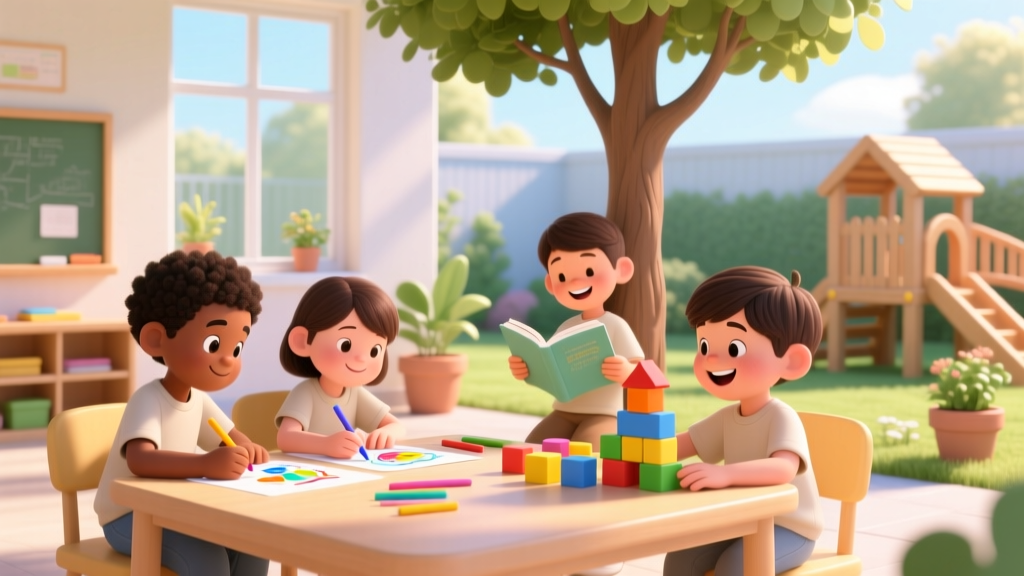
How to Homeschool Kids Without Burning Out (2026)
Why 'How to Homeschool Kids' Is the Most Pressing Parenting Question of Our Time
If you're searching for how to homeschool kids, you're not just looking for lesson plans—you're navigating identity shifts, legal obligations, emotional labor, and deep questions about what education really means for your child. With over 3.7 million U.S. homeschooled children in 2023 (up 64% since 2019, per the National Center for Education Statistics), this isn’t a fringe experiment—it’s a mainstream, high-stakes parenting pathway requiring intentionality, not improvisation. Whether you’re responding to learning differences, safety concerns, religious values, or simply a desire for deeper connection, the first step isn’t picking a math curriculum—it’s grounding yourself in evidence, empathy, and realistic expectations.
Your Legal Foundation: Know the Rules Before You Teach a Single Lesson
Homeschooling isn’t legally uniform—it’s a patchwork quilt of state-specific requirements. In Idaho and Texas, you need no notification or testing; in New York and Pennsylvania, you’ll submit quarterly portfolios and standardized assessments. According to the Home School Legal Defense Association (HSLDA), 38 states require some form of notification—but only 15 mandate standardized testing, and just 7 require certified teacher oversight. Ignoring these rules doesn’t just risk truancy charges; it jeopardizes college admissions, driver’s license applications, and even participation in public school extracurriculars (like sports or band) in states with dual-enrollment policies.
Start here: Visit your state’s Department of Education website—or better yet, join your local homeschool association. In Georgia, for example, families must file a Declaration of Intent within 30 days of starting and keep attendance records, but no curriculum approval is required. Contrast that with Massachusetts, where parents must submit an education plan for review—and face home visits if academic progress is questioned. One mother in Worcester told us her biggest early mistake was assuming ‘no news is good news’—only to receive a formal inquiry letter at month four because her submitted plan lacked measurable objectives. Her fix? She added simple, observable benchmarks (e.g., “Child will independently read aloud 100-word passages with ≤3 errors”) and included dated work samples. Clarity, not perfection, satisfies regulators.
Curriculum Design: Ditch the ‘One-Size-Fits-All’ Myth (and Save $1,200/Year)
Here’s the uncomfortable truth: Most pre-packaged homeschool curricula are built for compliance—not cognition. A 2022 Stanford Learning Lab study found that students using highly structured, linear programs showed 22% lower retention on applied science concepts than peers using project-based, interdisciplinary units—even when both covered identical standards. The solution isn’t less structure—it’s *smarter* structure. Think in terms of ‘learning ecosystems,’ not lesson schedules.
Begin with your child’s neurodevelopmental profile—not grade level. A 9-year-old with ADHD may thrive with hands-on physics experiments (building marble runs to explore gravity and momentum) but stall on textbook-based history. A gifted 7-year-old might devour primary-source documents on the Civil Rights Movement while struggling with rote multiplication tables. Pediatric neuropsychologist Dr. Elena Torres, author of Learning Beyond Labels, advises: “Match the medium to the mind. If your child processes best through movement, teach fractions by baking. If they think visually, map the water cycle using colored yarn and sticky notes on the wall.”
This approach saves money, too. Instead of paying $400–$1,500/year for boxed curricula, build a hybrid model: Use free, high-quality OERs (Open Educational Resources) like Khan Academy (math/science), CK-12 (STEM simulations), and the Library of Congress Primary Source Sets (history). Supplement with low-cost tactile tools—magnetic poetry kits, geoboards, or even LEGO-based coding (via SPIKE Prime)—that reinforce abstract thinking without screen fatigue. One family in rural Oregon cut their annual curriculum spend from $1,840 to $217 by rotating three core resources and adding community-based learning (e.g., interviewing local farmers for ecology units).
Socialization Isn’t Optional—It’s Neurological Infrastructure
The #1 anxiety voiced in every homeschool Facebook group? “Will my child be socially stunted?” Here’s what developmental science says: Socialization isn’t about daily peer exposure—it’s about *diverse, meaningful relational practice*. According to Dr. Roberta Michnick Golinkoff, cognitive scientist and co-author of Becoming Brilliant, “Children develop executive function, empathy, and conflict resolution skills most robustly in mixed-age, goal-oriented settings—not just same-age playgrounds.” Translation: Your child doesn’t need 6 hours of classroom-style interaction—they need real-world collaboration.
That means replacing ‘recess’ with purposeful engagement: Join a co-op robotics team where 10-year-olds mentor 7-year-olds on circuit design; volunteer at a food bank where your 11-year-old manages inventory logs alongside retirees and teens; or start a neighborhood podcast where siblings interview local artisans. A longitudinal study tracking 1,200 homeschooled adolescents (published in Pediatrics, 2021) found those engaged in ≥2 structured, multi-age community activities per week scored 31% higher on measures of perspective-taking and 27% higher on collaborative problem-solving than peers in traditional schools—without any formal ‘social skills curriculum.’
Pro tip: Normalize ‘social scaffolding.’ When your child struggles with a disagreement during a co-op science project, don’t intervene immediately. Instead, ask: “What’s one thing you heard them say that felt important?” Then: “What’s one thing you want them to understand?” This builds metacognition—the bedrock of mature social intelligence.
The Burnout Breakthrough: Why Your Well-Being Is Curriculum
You cannot pour from an empty cup—especially when that cup is expected to hold lesson plans, grading, emotional regulation, and lunch prep. A 2023 Homeschool Compass survey revealed 68% of parents reported moderate-to-severe emotional exhaustion within their first year, with mothers bearing 82% of instructional labor. But burnout isn’t inevitable—it’s a signal that your systems aren’t aligned with human biology.
Neuroscience confirms: The brain’s prefrontal cortex—the seat of planning and self-control—fatigues rapidly under sustained multitasking. That’s why trying to ‘do it all’ (teach algebra, mediate sibling fights, answer emails, cook dinner) triggers cortisol spikes that impair memory formation—for you AND your child. The antidote? Rhythmic role rotation and protected restoration time.
Try this: Block two non-negotiable 45-minute ‘reset windows’ each day—one mid-morning, one late afternoon—where you step away from all teaching roles. Use it for breathwork (try box breathing: 4 sec inhale, 4 sec hold, 4 sec exhale, 4 sec hold), a walk without headphones, or journaling three sentences about something you’re proud of—not productive, but *human*. Meanwhile, rotate ‘lead learner’ duties weekly: Dad handles science experiments Mondays/Wednesdays/Fridays; Mom leads literature circles Tuesdays/Thursdays; teens facilitate Friday ‘Genius Hour’ projects. This isn’t delegation—it’s distributed cognitive load, proven to increase retention and reduce decision fatigue.
| Approach | Time Commitment (Avg. Daily) | Key Strengths | Best For | Common Pitfall to Avoid |
|---|---|---|---|---|
| Classical Education (Trivium: Grammar, Logic, Rhetoric) | 4–6 hours | Builds critical analysis, language mastery, and historical context; strong for verbal learners | Families valuing Socratic dialogue, literature-rich environments, and long-term intellectual formation | Overloading younger kids with dense texts before concrete reasoning develops (per Piaget’s stages) |
| Charlotte Mason (Living Books, Nature Study, Narration) | 3–4 hours | Nurtures observation, curiosity, and moral imagination; low-prep, high-engagement | Parents seeking gentle, relationship-centered learning; children who resist worksheets | Misinterpreting ‘short lessons’ as fragmented learning—Mason emphasized deep focus on one idea, not skimming many |
| Unschooling (Interest-Led, Child-Directed) | Highly variable (2–8 hrs) | Fosters intrinsic motivation, entrepreneurship, and self-advocacy; excellent for neurodivergent learners | Families prioritizing autonomy, flexible timelines, and real-world skill integration | Lack of documentation leading to administrative friction during college applications or state reviews |
| Eclectic Hybrid (Mix of structured + project-based) | 3.5–5 hours | Adaptable, responsive, balances accountability with creativity; highest reported parent satisfaction (Homeschool Research Institute, 2022) | Most families—especially those with multiple children of different ages or learning profiles | ‘Curriculum hopping’—constantly switching resources due to impatience, rather than giving methods time to take root |
Frequently Asked Questions
Do I need a teaching degree to homeschool my kids?
No—48 states do not require parents to hold teaching credentials. What matters more is your capacity for observation, resourcefulness, and responsiveness. As Dr. Laura Jana, pediatrician and co-author of The Toddler Brain, explains: “Children learn most powerfully from adults who notice their cues, adjust pacing, and follow their sparks—not from those with the most certifications.” That said, many states (e.g., New York, Rhode Island) require a high school diploma or GED. Always verify your state’s baseline requirements first.
How do homeschooled kids get into college?
Very successfully—often more so than peers. Over 90% of colleges (including Harvard, MIT, and UCLA) have official homeschool admissions pathways. They look for transcripts with course descriptions, GPA calculations, standardized test scores (SAT/ACT—though increasingly test-optional), and rich portfolios (research papers, art exhibits, coding projects, business ventures). The key is documentation: Keep detailed records of coursework, reading lists, projects, and community involvement. Dual enrollment at community colleges (starting as early as 10th grade) provides official transcripts and rigor that admissions officers recognize instantly.
What about kids with IEPs or learning disabilities?
You retain full rights to your child’s educational plan—even outside public school. Many families use their IEP as a blueprint, then adapt accommodations privately: audiobooks for dyslexia (via Learning Ally), speech-to-text software (Dragon NaturallySpeaking), or occupational therapy-informed motor breaks. Under IDEA, you can request an Independent Educational Evaluation (IEE) at district expense if you disagree with public school assessments—and use those findings to guide your homeschool strategy. Organizations like the Council of Parents Attorneys and Advocates (COPAA) offer free webinars on leveraging IEP data in home settings.
Can I work full-time and still homeschool?
Yes—but it requires redefining ‘homeschooling.’ Think ‘learning architect,’ not ‘full-time instructor.’ Leverage asynchronous tools (Khan Academy, Time4Learning), hire subject-specific tutors for 1–2 hours/week (many retired teachers offer virtual sessions for $35–$65/hour), and design ‘anchor routines’—like morning independent reading, afternoon nature journaling, and evening family discussion—that require minimal direct supervision. A 2022 study in Education Policy Analysis Archives found families using this ‘modular model’ reported equal academic outcomes and 40% higher parental well-being scores than full-time teaching households.
Is homeschooling legal internationally?
Legality varies drastically: It’s fully legal and regulated in Canada, Australia, and New Zealand; restricted but possible with government approval in Germany and Sweden; and outright banned in Spain, Brazil, and Greece. In countries like South Korea and Japan, homeschooling exists in gray zones—often tolerated if children maintain public school enrollment while attending private academies (hagwons). Always consult the U.S. State Department’s Country Reports on Human Rights Practices and connect with expat homeschool networks (e.g., Homeschooling Abroad Facebook Group) before relocating.
Debunking Common Myths
Myth #1: Homeschooling isolates children from diversity. Reality: Public schools often reflect socioeconomic and racial segregation far more than intentional homeschool communities. Families actively seek out multicultural co-ops, language exchanges, refugee mentorship programs, and global pen-pal initiatives—creating richer, more intentional exposure than passive classroom demographics.
Myth #2: Homeschooling means sacrificing career goals. Reality: A growing cohort of ‘micro-school’ founders, curriculum designers, and educational consultants began as homeschooling parents. Your deep understanding of pedagogy, child development, and systems design is a marketable superpower—not a detour.
Related Topics (Internal Link Suggestions)
- Homeschooling High School — suggested anchor text: "how to homeschool high school students"
- Homeschool Curriculum Reviews — suggested anchor text: "best homeschool curriculum for [grade/learning style]"
- Homeschool Legal Requirements by State — suggested anchor text: "homeschool laws in [state name]"
- Homeschooling a Child with ADHD — suggested anchor text: "ADHD homeschooling strategies that work"
- Homeschool Co-ops Near Me — suggested anchor text: "find a homeschool co-op in your area"
Ready to Begin—Without Overwhelm
How to homeschool kids isn’t about replicating school at home—it’s about designing an education that honors your child’s humanity, your family’s values, and the irreplaceable gift of time. You don’t need perfection. You need presence, preparation, and permission to iterate. Start small: This week, choose one subject your child loves—and explore it through a field trip, interview, or creative project instead of a worksheet. Document what you notice. Then, next week, add one 15-minute ‘reset window’ for yourself. Progress compounds quietly. And remember: Every expert homeschooler was once exactly where you are now—reading this sentence, heart pounding, wondering if they’re enough. You are. Now go take your first intentional step—not toward flawless execution, but toward faithful, joyful stewardship of your child’s unfolding mind.
More Articles
 How Many Baby Teeth Do You Lose As A Kid (2026)
 How Many Kids Does Ochocinco Have? (2026)
 How Long Does the Flu Last in Kids? (2026)
 Aphmau for Kids? Pediatric Media Experts Weigh In
 How to Books for Kids: Build Confidence & Skills
 Is Sheriff Labrador Bad for Kids? The Truth
 Is RED ONE Appropriate for Kids? Safety Facts
 Can Kids Soak in Epsom Salt? Pediatrician-Reviewed Safety
 Do Crocs Run Big for Kids? Sizing Truths (2026)
 When Should Kids Start Losing Teeth (2026)