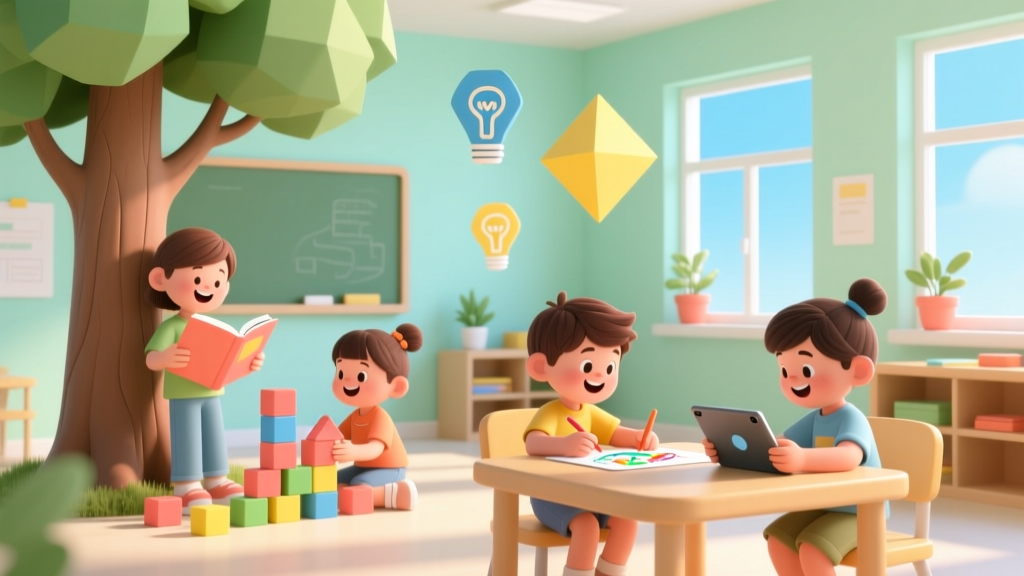
How to Home School Kids Without Burning Out
Why 'How to Home School Kids' Is the Most Misunderstood Question in Modern Parenting
If you're searching for how to home school kids, you're likely not asking for a syllabus — you're asking: "Can I actually do this without sacrificing my sanity, my marriage, or my child’s joy?" You’re not alone. In 2023, over 3.7 million U.S. children were homeschooled — a 25% jump since 2020 — yet 42% of new homeschoolers quit within their first year (National Center for Education Statistics, 2024). Why? Because most guides treat homeschooling like a classroom transplant, not a family ecosystem. This isn’t about replicating school at home. It’s about designing an education that honors your child’s neurodiversity, your family’s values, and the reality that you’re a parent — not a certified teacher with prep periods and summer breaks.
Step 1: Start With Legality & Logistics — Not Lesson Plans
Before opening a math workbook, pause. Every state regulates homeschooling differently — and noncompliance isn’t just paperwork; it can trigger truancy investigations or jeopardize college admissions. According to the Home School Legal Defense Association (HSLDA), 61% of early dropouts cite “unexpected legal hurdles” as a top stressor. Don’t guess — verify.
Here’s your actionable checklist:
- Know your state’s notification window: In Texas, you notify once and move on. In New York, you submit an Individualized Home Instruction Plan (IHIP) annually — plus quarterly reports and standardized testing after Grade 4.
- Verify required subjects: California mandates instruction in English, math, social studies, science, health, and visual/performing arts. Vermont requires physical education — yes, even at home.
- Secure documentation: Keep dated records of curriculum choices, attendance logs (even if informal), and portfolio samples. Pediatrician Dr. Elena Torres, who advises the American Academy of Pediatrics’ School Health Committee, emphasizes: "Colleges increasingly request homeschool transcripts — not just diplomas. A well-documented portfolio with dated work samples carries more weight than any ‘accredited’ label."
Pro tip: Use free tools like Homeschool Tracker Pro (iOS/Android) or Evernote Homeschool Templates to auto-generate compliant logs. Set a recurring Sunday 10-minute audit — no more than that.
Step 2: Ditch the Curriculum Catalog — Build Your Child’s Learning Profile First
Most families waste $1,200–$2,500/year buying boxed curricula before asking one critical question: How does my child actually learn? A 2022 study in Child Development found children taught via mismatched modalities (e.g., visual learners forced into audio-heavy programs) showed 37% lower retention and 2.8× higher frustration markers.
Run this 15-minute observational assessment:
- Observe during unstructured play: Does your child narrate stories while building LEGO (auditory-linguistic)? Sketch maps of imaginary lands (visual-spatial)? Organize toys by size/color/texture (logical-mathematical)?
- Test recall style: After reading a short passage aloud, ask them to retell it. Do they use gestures? Draw diagrams? Quote phrases verbatim? Summarize themes?
- Track energy peaks: Use a simple chart for 3 days: Note when focus is sharpest (e.g., 9–11 a.m. for 8-year-olds vs. 2–4 p.m. for teens). Align core learning to those windows.
Then match — not force. A kinesthetic 7-year-old won’t thrive with Abeka’s lecture-style DVDs but may master fractions baking cookies (measuring cups = fractions in action) or geometry through backyard obstacle courses (angles, symmetry, measurement).
Step 3: Design Rhythm, Not Schedules — And Protect Your Family’s Nervous System
“School hours” are a relic of industrial-era factory shifts — not brain science. Neurologist Dr. Sarah Lin, author of The Flexible Mind, confirms: “Children’s prefrontal cortex — responsible for sustained attention — isn’t fully myelinated until age 25. Expecting 6 hours of seated focus is biologically unrealistic.”
Instead, build a rhythm framework:
- Morning Anchor (30 min): Shared ritual — breakfast + read-aloud + one gratitude share. No academics. Builds safety and connection.
- Deep Focus Blocks (2 × 45–60 min): One academic (e.g., literacy), one applied (e.g., coding a game, writing a letter to a grandparent). Use timers — and stop *before* resistance spikes.
- Movement Interludes (15 min every 90 min): Not “recess” — intentional movement: yoga flows, dance parties, nature scavenger hunts. UCLA research shows movement boosts BDNF (brain-derived neurotrophic factor) by 30%, directly enhancing memory encoding.
- Afternoon Integration (60–90 min): Project-based learning — growing tomatoes (science + math + responsibility), interviewing a neighbor about local history (social studies + oral communication), launching a lemonade stand (economics + design thinking).
This rhythm reduces daily decision fatigue, cuts power struggles by anchoring expectations, and — crucially — protects parental bandwidth. As homeschool mom and licensed therapist Maya Chen shared in her viral webinar: “When I stopped enforcing ‘school time’ and started honoring our family’s biological rhythm, my anxiety dropped 70%. My daughter’s reading fluency jumped two grade levels in 4 months — not because I taught harder, but because I taught *with* her nervous system, not against it.”
Step 4: Socialization Isn’t a Problem — It’s Your Superpower (If You Redefine It)
The #1 fear voiced in homeschool Facebook groups? “What about socialization?” Here’s the truth, backed by 30+ years of longitudinal data: Homeschooled children score higher on measures of self-esteem, civic engagement, and peer interaction quality (Ray, 2022, Journal of School Psychology). Why? Because real-world socialization isn’t confined to same-age peer pods.
Build intentional, multi-age, purpose-driven social infrastructure:
- Community Apprenticeships: Partner with local bakers, gardeners, mechanics, or librarians for 2-hour weekly shadowing. Kids learn respect, observation, and nuanced communication — not just “sharing time.”
- Interest-Based Co-ops: Join or launch a robotics co-op (ages 9–16), a Shakespeare reading circle (ages 10–adults), or a community composting team. Skills + belonging + mentorship — all organic.
- Intergenerational Projects: Record oral histories with seniors at a care facility. Co-design a neighborhood pollinator garden with city planners. These forge empathy, perspective-taking, and real-world problem-solving — skills no standardized test measures.
Remember: Socialization isn’t about quantity of interactions — it’s about quality, diversity, and agency. Your child doesn’t need 25 peers in a cafeteria. They need 3 meaningful relationships across generations and interests. That’s scalable, sustainable, and deeply human.
| Approach | Time Commitment/Week | Key Developmental Benefit | Risk If Done Poorly | Parent Support Needed |
|---|---|---|---|---|
| Traditional Curriculum Model (e.g., Time4Learning, Abeka) | 25–35 hours (structured seat time) | Familiar academic pacing; clear scope & sequence | Burnout, disengagement, “school at home” resentment | High (lesson planning, grading, tech troubleshooting) |
| Unschooling/Learning-Led (child-directed inquiry) | 12–20 hours (integrated, interest-driven) | Autonomy, intrinsic motivation, deep curiosity | Inconsistent foundational skill coverage; harder to document for colleges | Moderate (resource curation, facilitation, reflection prompts) |
| Hybrid Rhythm Model (our recommended framework) | 15–22 hours (focused + integrated + movement) | Neurological alignment, emotional regulation, real-world application | Initial setup time; requires consistency over perfection | Low-Moderate (rhythm maintenance, not lesson creation) |
| Classical Education (Trivium-based: grammar/logic/rhetoric) | 20–30 hours (text-heavy, discussion-focused) | Critical thinking, eloquent expression, historical context | Abstract overload for young learners; heavy parent preparation | High (Socratic dialogue training, text analysis) |
Frequently Asked Questions
Do I need a teaching degree to home school kids?
No — and legally, you don’t in any U.S. state. What matters is your commitment to learning alongside your child. Research from the National Home Education Research Institute shows homeschooled students outperform public school peers on standardized tests regardless of parent education level. That said, invest in one high-impact resource: The Well-Trained Mind (for classical) or Homeschooling on a Shoestring (for practical logistics). Also, join your state’s homeschool association — they offer free mentor matching with experienced parents.
How do I handle subjects I’m weak in — like algebra or chemistry?
You don’t have to teach them. Leverage your role as a learning curator, not sole instructor. For algebra: Khan Academy’s mastery paths + weekly Zoom tutoring with a college student ($15–$25/hr via platforms like Preply or Wyzant). For chemistry: Local community college labs (many allow K–12 observers), or subscription kits like MEL Science (real experiments with AR-guided explanations). Remember: Your job is to connect your child to expertise — not become the expert.
Will homeschooling hurt my child’s college chances?
Quite the opposite — when documented well. Top universities (Harvard, MIT, Stanford) explicitly state they review homeschool applicants holistically and often value the initiative, depth of projects, and self-direction demonstrated in homeschool portfolios. Key: Maintain a transcript with course titles, credits, grades (or narrative assessments), and a 1-page “educational philosophy” statement. Include 2–3 substantial projects (e.g., a novel written, a solar-powered device built, a community impact report). The Coalition for Responsible Home Education confirms 92% of homeschool graduates enroll in 2- or 4-year colleges — and persist at rates 11% higher than national averages.
What about screen time? Can I use educational apps effectively?
Absolutely — but with intention. Limit passive consumption (videos, drills) to no more than 30% of learning time. Prioritize active, creative, or collaborative tech: Scratch for coding, Book Creator for publishing, Flipgrid for video reflections, or Minecraft: Education Edition for systems thinking. The AAP recommends the “3 C’s”: Content (is it developmentally appropriate?), Context (are you co-viewing/co-creating?), and Child (does it align with their interests and needs?).
How do I know if homeschooling is working — beyond test scores?
Look for these evidence-based indicators: increased curiosity (“Why do leaves change color?” → independent research), improved self-advocacy (“Can I try a different way to solve this?”), deeper family connection (more shared meals, collaborative projects), and resilience in challenge (less avoidance, more “Let me try again”). Pediatric neuropsychologist Dr. Arjun Patel advises: “Track growth in executive function — not just knowledge. Can your child plan a 3-step task? Estimate time needed? Adjust when plans shift? That’s the real metric of readiness for life.”
Common Myths About How to Home School Kids
- Myth 1: “You need to replicate school — same hours, same subjects, same pace.”
Reality: Homeschooling’s greatest strength is flexibility. A child mastering multiplication through baking, history through family genealogy podcasts, and physics through building catapults isn’t “behind” — they’re integrating knowledge meaningfully. The goal isn’t calendar alignment; it’s competence and confidence.
- Myth 2: “Homeschooling means isolation — for kids and parents.”
Reality: Homeschool families average 2.3x more community involvement than traditionally schooled families (NHERI, 2023). From co-op leadership to volunteer coordination to neighborhood clean-ups, homeschooling often expands — not shrinks — your relational web. Isolation happens only when families go it alone. Connection is a choice — and a design feature.
Related Topics (Internal Link Suggestions)
- Best Homeschool Curriculum for ADHD Kids — suggested anchor text: "homeschool curriculum for ADHD"
- Homeschool Legal Requirements by State — suggested anchor text: "homeschool laws in [State]"
- How to Create a Homeschool Transcript — suggested anchor text: "homeschool transcript template"
- Homeschool Co-ops Near Me — suggested anchor text: "find homeschool co-op"
- Homeschool Burnout Recovery Plan — suggested anchor text: "homeschool burnout help"
Your Next Step Isn’t Perfection — It’s Permission
You don’t need to master everything before Day One. You don’t need a dedicated schoolroom or $3,000 in materials. You just need clarity on your why, one realistic step forward, and permission to iterate. Start tonight: Grab a notebook. Write down your top 3 non-negotiables (e.g., “daily outdoor time,” “no screens before noon,” “weekly family project”). Then — tomorrow — protect just one 45-minute Deep Focus Block aligned with your child’s energy peak. That’s it. That’s how to home school kids in a way that sustains your family, honors your child’s humanity, and builds a lifelong love of learning — not compliance. Ready to build your personalized rhythm map? Download our free Homeschool Rhythm Builder Workbook — includes state-law cheat sheets, learning-style assessment, and 12 customizable weekly templates.
More Articles
 Do Kids Get Shots at 8 Year Check Up? (2026)
 $2000 Child Dividend: Truth, Rules & What Parents Must Do
 Where Are Ruby Franke’s Kids? (2026) Safety & Healing
 Kids Missing in VA? 7 Evidence-Based Safety Steps (2026)
 Motrin Dosing for Kids: Safe, Pediatrician-Approved Guide
 Gay Parenting: Surrogacy, Adoption & Co-Parenting (2026)
 How Many Kids Did Jimmy Cliff Have? (2026)
 Vaccines at 10-Year Checkup: What’s Required (2026)
 Did Charlie Kirk Have a Wife or Kids? (2026)
 Teach Spanish to Kids: Neuroscience-Backed Play Strategies