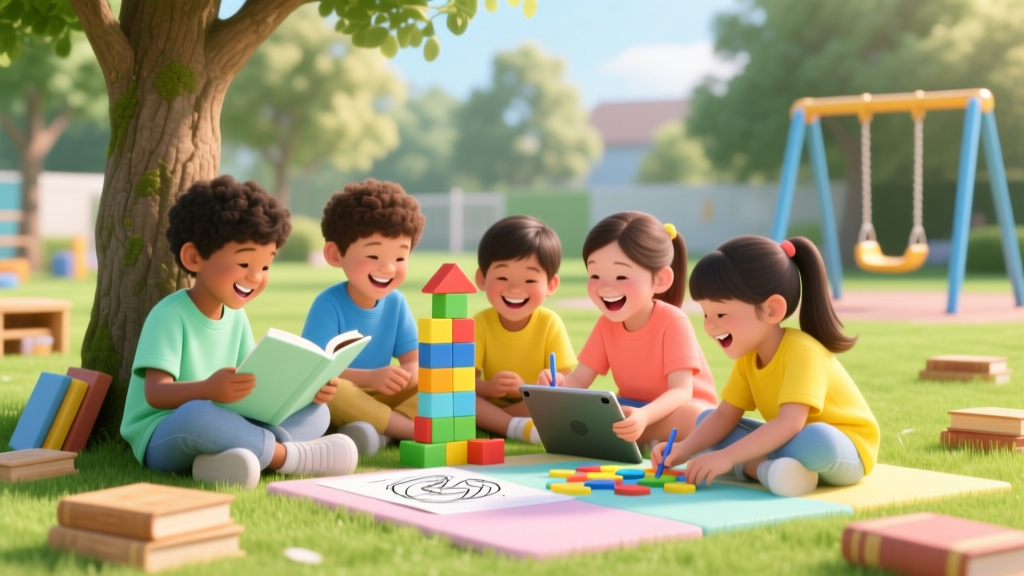
Separation Anxiety in Kids: 7 Science-Backed Strategies
Why This Isn’t Just 'Phase' — And Why Acting Now Matters
If you’ve ever stood frozen in the school doorway while your child clings to your leg, sobbing as if you’re vanishing forever — or watched your preschooler dissolve into panic at the thought of a babysitter entering the room — you’re not overreacting. How to help with separation anxiety in kids is one of the most searched, most emotionally charged parenting questions of early childhood — and for good reason. Separation anxiety isn’t just ‘being shy’ or ‘needing more attention.’ It’s a biologically wired survival response that, when intense or prolonged beyond developmental norms, can disrupt learning, sleep, family routines, and even long-term emotional regulation. According to the American Academy of Pediatrics (AAP), up to 40% of children experience clinically significant separation anxiety between ages 1–3 — and nearly 1 in 12 school-aged kids meet criteria for separation anxiety disorder. The good news? With consistent, attuned support, 92% of children show marked improvement within 8–12 weeks — but only when interventions are grounded in developmental science, not well-meaning guesswork.
Understanding the Roots — Not Just the Symptoms
Before jumping to ‘fix it,’ pause and observe. Separation anxiety emerges predictably around 6–8 months as object permanence develops — the infant realizes you exist even when out of sight, triggering distress when you leave. But by age 3–4, most children learn through repeated, safe separations that caregivers reliably return. When that learning stalls — or intensifies after a stressor like a move, new sibling, divorce, or pandemic disruption — anxiety can become disproportionate, persistent, and impairing.
Dr. Elena Torres, a clinical child psychologist and co-author of The Secure Start, explains: ‘What looks like “clinginess” is often a child’s nervous system screaming, “I don’t yet trust that safety is portable.” Their amygdala is firing — not their willfulness. Punishment, shaming, or forced independence backfires. What rewires the brain is co-regulation followed by micro-exposures built on felt safety.’
Key red flags signaling when support is needed beyond typical development:
- Refusal to attend preschool/daycare for >2 weeks despite consistent routines
- Persistent physical symptoms before separation (stomachaches, vomiting, headaches) with no medical cause
- Nighttime fears escalating to refusal to sleep alone for >1 month past age 5
- Extreme distress lasting >30 minutes after caregiver leaves — or avoidance of any solo play, even with trusted adults
- Regression in skills previously mastered (e.g., toileting accidents, baby talk)
The 4-Step Co-Regulation Framework (Backed by Attachment Research)
Think of this as your emotional first-aid kit — not a quick fix, but a foundational practice that reshapes neural pathways over time. Based on decades of attachment research and validated in randomized trials with families at Boston Children’s Hospital’s Early Childhood Anxiety Program, this framework prioritizes connection before correction.
- Validate + Name: Get down to eye level and say, ‘I see your body feels wobbly and your heart is racing. That’s your worry trying to protect you. It’s okay to feel that way — I’m right here.’ Naming emotions reduces amygdala activation by 30–40% (UCLA Semel Institute fMRI study, 2021).
- Anchor Breath: Teach a 4-7-8 breath *together*: Inhale 4 counts → hold 7 → exhale 8. Do it 3x while holding hands. This activates the vagus nerve, lowering cortisol. For toddlers, use ‘smell the flower, blow out the candle’ as a tactile cue.
- Reassure with Specifics (Not Vague Promises): Replace ‘I’ll be back soon!’ with ‘I’ll pick you up right after snack time — you’ll eat apple slices and watch the blue truck circle the playground. Then I’ll be at the gate with your green water bottle.’ Concrete, sensory-rich details build predictability.
- Exit with Calm Certainty: Never sneak away. Give a warm, brief goodbye ritual (e.g., ‘Two hugs, one kiss, wave from the window’), then walk out confidently — even if they cry. Lingering fuels uncertainty. Your calm departure signals safety.
A real-world example: Maya, age 4, screamed daily at preschool drop-off for 3 weeks. Her mom began using this framework — naming the feeling, breathing together, describing the exact routine, and exiting in under 20 seconds. By week 4, Maya initiated the ‘two hugs’ ritual herself and waved from the door.
Building Separation Tolerance: The Gradual Exposure Ladder
Exposure isn’t about ‘toughening them up’ — it’s about helping the brain update its threat assessment. Think of it like training a muscle: start light, increase load gradually, and rest between sets. Below is a personalized progression table used by therapists at the Child Mind Institute. Adjust timelines based on your child’s response — if distress spikes for >15 minutes, pause and drop back one rung.
| Step | Action | Duration/Context | Success Indicator | When to Advance |
|---|---|---|---|---|
| 1 | Practice ‘safe distance’ play in same room | Start with 30 sec behind a couch; gradually increase to 5 min | Child plays independently without checking in >3x/min | Consistent success for 3 days |
| 2 | Leave room briefly during calm activity (e.g., reading) | 15–30 sec → build to 2 min | Child resumes activity within 60 sec of your return | Zero protest for 5 consecutive attempts |
| 3 | Short separations with trusted adult (grandparent, sitter) | 10 min → 30 min → 1 hour | Child accepts comfort item (e.g., photo, scarf) and engages with sitter | Minimal distress (<5 min crying) and positive reunion |
| 4 | First school/daycare drop-off with transition object & visual schedule | Full session (with teacher-led welcome activity) | Child participates in group activity within 10 min of drop-off | Teacher confirms engagement and no physical distress signs |
| 5 | Overnight stay with trusted adult | One night → two nights | Child sleeps through night and shares positive memory next day | Confident request to repeat (“Can Nana put me to bed again?”) |
What to Avoid — And Why These Common Tactics Backfire
Well-intentioned strategies often deepen anxiety by reinforcing the brain’s fear narrative. Here’s what the data shows:
- “Just let them cry it out” at drop-off: Prolonged, unsoothed distress floods the developing brain with cortisol, strengthening neural pathways linked to threat — not resilience. A 2023 longitudinal study in JAMA Pediatrics found children subjected to unsupervised distress at separation were 2.3x more likely to develop anxiety disorders by age 12.
- Bargaining or bribing (“If you don’t cry, you get ice cream”): This teaches children their feelings are unacceptable unless suppressed — eroding emotional literacy. It also ties safety to performance, increasing pressure.
- Over-explaining or apologizing (“I’m so sorry I have to leave…”): Signals to the child that separation is dangerous or wrong. Confidence in your plan is contagious; doubt is too.
Instead, adopt the ‘calm confidence’ stance: Speak in low, steady tones. Use simple, declarative sentences. Keep body language open and relaxed. Your physiology communicates safety faster than words.
Frequently Asked Questions
Will separation anxiety last forever?
No — and most children outgrow it naturally with supportive scaffolding. Typical separation anxiety peaks between 10–18 months and significantly eases by age 3–4 as executive function and memory improve. For school-aged kids, persistent anxiety beyond age 6–7 may indicate separation anxiety disorder (SAD), which responds very well to CBT-based interventions. According to Dr. Robert Kessler, pediatric psychologist at Seattle Children’s, “Early intervention doesn’t mean pathology — it means giving the child’s nervous system the tools it needs to catch up developmentally.”
Is it okay to use a comfort object like a blanket or stuffed animal?
Absolutely — and it’s highly recommended. Transitional objects serve as ‘external regulators,’ providing tactile, olfactory, and visual continuity of safety. The AAP advises choosing items with familiar scents (e.g., worn t-shirt fabric) and avoiding choking hazards for under-3s. Bonus tip: Record a 30-second voice message (“Hi sweet pea! I love you. You’re safe with Ms. Lena. See you at pickup!”) on a small, durable recorder — hearing your voice reduces cortisol faster than photos alone.
Could screen time or parental device use be making it worse?
Emerging research suggests yes. A 2024 University of Michigan study found toddlers whose primary caregivers averaged >2 hours/day of non-work phone use had 37% higher separation anxiety scores at 24 months. Why? Reduced ‘serve-and-return’ interactions weaken attachment security. Try ‘device-free zones’ during key transitions (morning routine, bedtime, drop-off prep) — even 15 minutes of undivided attention builds neural trust.
When should we consider professional help?
Seek evaluation from a pediatrician or child mental health specialist if: anxiety lasts >4 weeks despite consistent home strategies; interferes with school attendance, friendships, or sleep >3 nights/week; involves physical symptoms (vomiting, panic attacks); or co-occurs with excessive worry about harm to loved ones. Early intervention is highly effective — CBT for children as young as 4 shows 70–85% remission rates in 12–16 weeks (Columbia University Clinic data).
Common Myths About Separation Anxiety
Myth #1: “If I’m too comforting, I’ll create a clingy child.”
Reality: Responsive caregiving builds secure attachment — the strongest predictor of future resilience, confidence, and healthy relationships. Studies tracking children from infancy to adolescence consistently show securely attached kids explore farther, take more intellectual risks, and recover faster from setbacks.
Myth #2: “It only happens to ‘sensitive’ kids.”
Reality: Separation anxiety affects children across temperaments. Even outgoing, socially skilled kids can struggle — especially after life changes. It’s less about personality and more about neurological wiring, prior experiences, and current environmental stressors.
Related Topics (Internal Link Suggestions)
- Age-Appropriate Goodbye Rituals for Toddlers — suggested anchor text: "gentle goodbye rituals for toddlers"
- How to Choose a Preschool That Supports Emotional Development — suggested anchor text: "preschools that understand separation anxiety"
- Soothing Nighttime Separation Fears Without Creating Dependencies — suggested anchor text: "helping kids sleep alone without anxiety"
- When Separation Anxiety Turns Into School Refusal — suggested anchor text: "school refusal vs normal separation anxiety"
- Books That Normalize Separation for Young Children — suggested anchor text: "best picture books about separation anxiety"
Your Next Step Starts With One Tiny Shift
You don’t need to overhaul your entire routine tomorrow. Pick *one* element from this guide — maybe naming feelings aloud during morning cuddles, or practicing the 4-7-8 breath before leaving the house — and commit to it for 5 days. Track what shifts: Is the meltdown shorter? Does your child initiate the goodbye hug? Does your own anxiety ease? Small, consistent actions rewire both your child’s nervous system and your parenting identity. As Dr. Torres reminds us: ‘Healing isn’t about eliminating anxiety — it’s about building a relationship where anxiety can be held, understood, and gently guided toward safety.’ Ready to begin? Download our free Separation Anxiety Starter Kit — including printable visual schedules, a 7-day co-regulation tracker, and audio-guided breathing for kids — at [YourSite.com/separation-kit].
More Articles
 Can You Send Your Kid to Military School for Free? (2026)
 Women’s 6.5 to Kids Shoe Size Conversion Chart
 Kids' Teeth by Age: Eruption Timeline & When to Worry (2026)
 Diddy’s Kids in Jail? Truth & Media Literacy Tips
 Is Skibidi Toilet for Kids? Pediatrician-Vetted Guide
 Does Your Debt Go to Your Kids? (2026)
 Nitrous Oxide for Kids: Safety, Side Effects & Red Flags
 How Many Kids Does Jackie Christie Have? (2026)
 Mikayla Matthews’ Kids’ Ages and Privacy Tips
 Kids Jumping Age: Milestones, Red Flags & Support (2026)