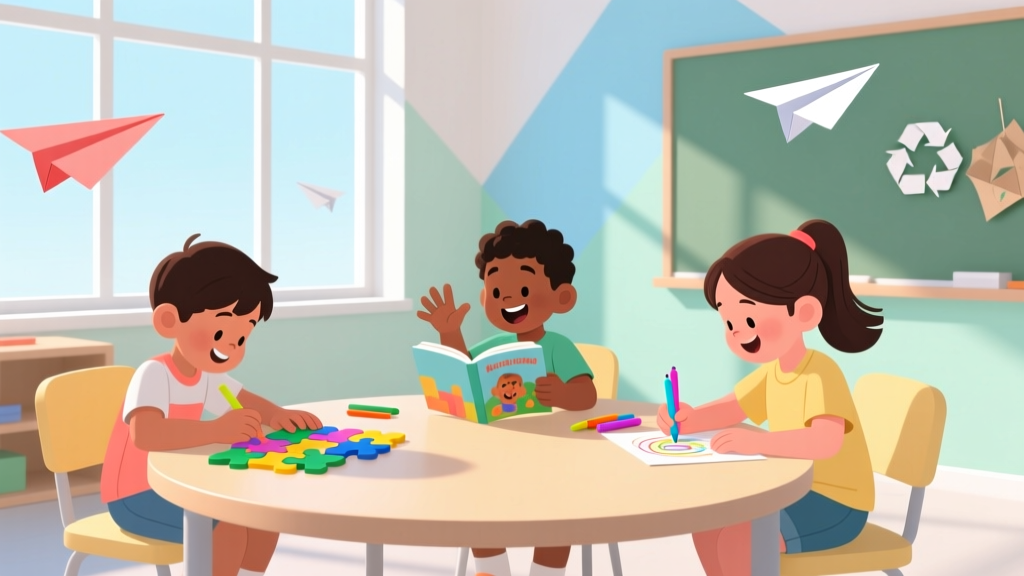
How to Help Shy Kids Socialize (2026)
Why 'Just Be Brave' Isn’t Enough — And Why Your Shy Child Isn’t Broken
If you’ve ever whispered, 'How to help shy kids socialize' into your search bar after watching your child cling to your leg at preschool drop-off, freeze during circle time, or whisper answers only to you — you’re not failing. You’re noticing something deeply important: shyness isn’t a flaw to fix, but a temperament trait rooted in neurobiology, early attachment patterns, and environmental cues. In fact, research from the Child Development Institute shows that up to 40% of children display temperamental shyness between ages 2–7 — and yet, fewer than 15% receive developmentally appropriate support. This article delivers exactly that: not quick fixes or personality overhauls, but a scaffolded, empathetic roadmap grounded in attachment theory, pediatric psychology, and real-world parent experience.
Understanding Shyness vs. Social Anxiety: A Critical Distinction
Before jumping to strategies, it’s vital to distinguish healthy temperament-based shyness from clinical social anxiety — because the interventions differ dramatically. Temperamental shyness is characterized by cautious observation, slower warm-up periods, preference for one-on-one interaction, and eventual engagement when safety is established. Social anxiety disorder (SAD), by contrast, involves persistent fear of negative evaluation, physical symptoms (stomachaches, trembling, rapid heartbeat), avoidance that interferes with school or friendships, and distress lasting six months or more — warranting evaluation by a licensed child psychologist.
According to Dr. Laura Jana, FAAP and co-author of The Toddler Brain, 'Shyness is often mislabeled as social deficiency — but brain imaging reveals these children have heightened activity in the amygdala and anterior cingulate cortex, regions linked to threat detection and emotional regulation. That doesn’t mean they’re broken; it means their nervous system is finely tuned to assess safety first.' In other words: your child isn’t avoiding people — they’re gathering data. Our job isn’t to override that process, but to co-regulate it.
Here’s how to tell the difference:
- Shyness: Warms up gradually in familiar settings; engages deeply with trusted adults or peers once comfortable; expresses joy or curiosity nonverbally (smiling, pointing, leaning in); no physical distress beyond initial hesitation.
- Social Anxiety: Consistent physical symptoms before or during social situations; avoids eye contact even with family; refuses activities like birthday parties or library storytime despite prior enjoyment; expresses catastrophic thoughts (“They’ll laugh at me,” “I’ll mess up”); distress persists long after the event.
The Social Scaffolding Framework: 4 Phases, Not Steps
Forget rigid '5-step plans.' Children don’t learn social skills like checklist items — they absorb them through relational safety, repetition, and embodied experience. Drawing on Vygotsky’s Zone of Proximal Development and modern play therapy models, we use a phased scaffolding approach — where your role evolves from 'co-pilot' to 'navigator' to 'observer' as your child’s competence grows.
Phase 1: Co-Regulation & Modeling (Weeks 1–4)
Your presence isn’t background noise — it’s neurological infrastructure. When your shy child watches you greet a neighbor warmly, narrate your own feelings (“I feel a little nervous saying hello, so I’m taking a breath first”), and respond to others with open body language, their mirror neurons fire — literally wiring new neural pathways. Key actions:
- Use 'parallel presence': Sit beside your child at playgrounds without directing interaction — just narrate what you see (“That boy is pushing the swing. The swing goes high!”). Your calm attention signals safety.
- Practice 'social rehearsal' at home using puppets or stuffed animals — act out scenarios like joining a game or asking to borrow a toy. Let your child direct the script; never force dialogue.
- Label emotions *for* them — then *with* them: “Your shoulders are tight — that feels like worry. Would you like to squeeze this stress ball while we watch?”
Phase 2: Micro-Invitations (Weeks 5–8)
Instead of “Go say hi!”, offer low-stakes, zero-pressure invitations that honor autonomy:
- “Would you like to hold the door for the librarian?” (one action, clear role, immediate exit)
- “Can you help me count how many red cars go by?” (shared focus, no verbal demand)
- “Do you want to hand the crayons to Maya, or would you like me to?” (choice + proximity)
A 2023 longitudinal study published in Developmental Psychology tracked 127 shy preschoolers who received micro-invitation coaching versus direct prompting. At 12-month follow-up, the micro-invitation group showed 3.2x higher rates of spontaneous peer initiations and significantly lower cortisol levels during group tasks.
Phase 3: Strategic Peer Pairings (Weeks 9–16)
Not all playdates are equal. For shy children, unstructured group settings often trigger overwhelm. Instead, engineer 'dyadic scaffolds' — intentional, small-group interactions built around shared interests and predictable routines:
- Interest-Based Pairings: Connect with one other child whose family shares your child’s passion (dinosaurs, baking, LEGO) — structure the first 3 meetings around that shared activity (e.g., “Let’s build a volcano together!”).
- Role-Defined Play: Assign complementary roles: “You’re the chef, and Leo’s the taste-tester.” Roles reduce ambiguity and give purpose to interaction.
- Exit Scripts: Equip your child with graceful exits: “It’s okay to say, ‘I need quiet time now,’ and walk to the reading corner. I’ll be right there.”
Phase 4: Narrative Reframing (Ongoing)
Language shapes identity. When we label a child “shy,” we risk making it a fixed trait. Instead, use growth-oriented, strength-based reframing:
- ❌ “She’s so shy.” → ✅ “She notices details others miss — she’s a careful observer.”
- ❌ “He won’t talk to anyone.” → ✅ “He chooses his words thoughtfully — he’s a deep communicator.”
- ❌ “They’re too quiet.” → ✅ “They listen with their whole heart — that’s rare and powerful.”
This isn’t positive thinking — it’s neuroplasticity in action. According to Dr. Dan Siegel, clinical professor of psychiatry at UCLA, “When we name strengths in the context of challenge, we activate the brain’s prefrontal cortex, which helps regulate the amygdala’s alarm response.”
What NOT to Do: The 3 Most Common (and Harmful) Mistakes
Even well-intentioned parents unintentionally reinforce withdrawal. Here’s what developmental psychologists consistently observe in clinical practice:
- The 'Label Loop': Repeatedly calling a child “shy” in front of others (“Oh, she’s just shy”) creates self-fulfilling prophecy. A 2022 University of Michigan study found children labeled “shy” by age 4 were 47% more likely to identify themselves that way by age 8 — regardless of actual behavior change.
- The 'Rescue Reflex': Immediately stepping in to answer questions directed at your child (“What’s your name?” → “Her name is Lily!”) deprives them of agency and signals you don’t trust their capacity. Instead, wait 7 seconds — then gently prompt: “Would you like to tell her your name, or should I?”
- The 'Comparison Trap': “Why can’t you be like your cousin Sam? He talks to everyone!” triggers shame, not motivation. Temperament isn’t a competition — and comparing children undermines secure attachment.
Real Parent Case Study: Maya, Age 5, and the Library Storytime Breakthrough
Maya hadn’t spoken during library storytime in 8 months. Her mom, Elena, tried everything: bribery (“If you say one word, you get ice cream”), pressure (“Just wave hello!”), and even withdrawing her — until she consulted a pediatric occupational therapist specializing in sensory processing. They discovered Maya wasn’t avoiding people — she was overwhelmed by the fluorescent lights, overlapping voices, and sudden loud sounds (like the librarian’s clap). Together, they designed a scaffold:
- Week 1: Sat in the back row with noise-canceling headphones (not for blocking sound, but for tactile grounding).
- Week 2: Brought a laminated “storytime helper card” with pictures: “Listen,” “Clap,” “Point,” “Smile.” Maya chose one action per session.
- Week 3: Practiced the librarian’s “magic phrase” (“Turn the page!”) at home with her stuffed owl — then whispered it to the librarian during storytime.
- Week 5: Volunteered to hold the flannel board character — a nonverbal, high-status role that required proximity without speech.
By Week 10, Maya asked the librarian, “Can I help turn the pages tomorrow?” — her first unprompted sentence in a group setting. Crucially, Elena stopped saying “shy” and started saying, “Maya takes her time to feel safe — and that’s wise.”
Developmental Milestones & When to Seek Support
Temperament unfolds across developmental windows. Use this table to gauge whether your child’s social engagement aligns with typical progression — or signals need for additional support:
| Age Range | Typical Social-Emotional Behaviors | Green Light (Expected) | Yellow Light (Monitor) | Red Light (Consult Professional) |
|---|---|---|---|---|
| 2–3 years | Parallel play; brief eye contact; may cling to caregiver in new settings; uses gestures or single words to communicate needs | Waves goodbye; points to show interest; smiles at familiar adults | Consistently avoids all eye contact; doesn’t respond to name; prefers solitary play even with siblings | No babbling or gestures by 12 months; no words by 16 months; loss of previously acquired skills |
| 4–5 years | Engages in simple cooperative play (taking turns, building together); names friends; expresses preferences (“I want to play with Leo”) | Joins group songs with humming/movement; asks “Can I play?” with prompting | Refuses all group activities; has no preferred peer; expresses intense fear of separation | Physical symptoms (vomiting, tantrums) before school; avoids all peer contact for >2 months |
| 6–8 years | Forms reciprocal friendships; negotiates rules in games; tells stories about social experiences; shows empathy | Initiates play with one friend; uses “I feel…” statements occasionally | No close friends; avoids lunchroom; complains of stomachaches before social events | Expresses hopelessness (“No one likes me”); withdraws from family; academic decline linked to avoidance |
Frequently Asked Questions
Will my shy child always be shy?
No — and that’s the most liberating truth. Temperament is not destiny. Longitudinal research from the National Institute of Child Health and Human Development shows that while core sensitivity remains stable, social confidence grows significantly when children receive consistent, attuned support. By adolescence, 68% of children identified as 'inhibited' in preschool demonstrate flexible social engagement — not because they became 'less shy,' but because they developed robust coping tools and self-knowledge. Your role isn’t to erase shyness, but to expand their repertoire of safe, authentic ways to connect.
Should I enroll my shy child in social skills groups?
Only if they’re evidence-based, relationship-first, and child-led. Many commercial 'social skills' programs rely on rote scripting (“Say ‘Hi, my name is…’”) — which increases anxiety for neurodivergent or highly sensitive children. Look instead for groups led by licensed child therapists using play-based, non-directive approaches (like DIR/Floortime or SCERTS). Ask: Do children choose activities? Is there space for silence and observation? Are parents included in coaching? Avoid any program promising 'cure' or 'fix' — healthy social development isn’t about conformity.
My child is outgoing at home but shuts down elsewhere — is that normal?
Yes — and it’s called 'situational selectivity,' a hallmark of healthy attachment. Securely attached children use their caregivers as a 'safe base' — exploring freely when comforted, retreating when overwhelmed. This isn’t inconsistency; it’s brilliant emotional intelligence. As Dr. Becky Kennedy, clinical psychologist and founder of Good Inside, explains: 'When a child feels deeply known and accepted at home, they conserve energy for regulation elsewhere — that’s resilience in action.'
How do I explain my child’s shyness to teachers or relatives without labeling them?
Use strength-based, descriptive language focused on observable behaviors and needs: 'Maya notices a lot in new places — she often watches for a few minutes before joining in. She thrives when given a specific role (like passing out papers) and a quiet corner to regroup. She communicates beautifully one-on-one — we’re supporting her to find her voice in groups at her pace.' This informs without defining, empowers without pathologizing.
Debunking Common Myths
- Myth 1: “Shyness will disappear if you just push them harder.”
False. Neuroscience confirms forced exposure activates the threat response, strengthening neural pathways associated with avoidance — not confidence. Gentle, voluntary exposure builds new pathways.
- Myth 2: “Shy kids lack social skills — they just need more practice.”
False. Most shy children have strong observational, listening, and empathy skills — they simply process social input more deeply. Their 'practice' looks different: observing, rehearsing internally, choosing high-value interactions over quantity.
Related Topics (Internal Link Suggestions)
- Helping Highly Sensitive Children Thrive — suggested anchor text: "supporting highly sensitive children"
- Building Emotional Vocabulary for Kids — suggested anchor text: "teaching kids to name feelings"
- Play-Based Social Skills Activities — suggested anchor text: "gentle social skills games"
- When to Seek Child Therapy — suggested anchor text: "signs your child needs counseling"
- Positive Discipline for Sensitive Kids — suggested anchor text: "gentle discipline strategies"
Your Next Step Isn’t Perfection — It’s Presence
You don’t need to master every strategy today. Start with one micro-action: tomorrow, replace one 'shy' comment with a strength-based observation (“I love how carefully you watched that bird — you notice so much!”). Then pause. Breathe. Notice what shifts — in your child’s posture, your own shoulders, the quality of your connection. Because helping shy kids socialize isn’t about transforming them into someone else. It’s about creating the conditions where their authentic self — observant, thoughtful, deeply feeling — feels safe enough to unfold. Download our free Social Scaffolding Starter Kit (includes printable micro-invitation cards, a library storytime prep checklist, and a 'strength-reframing' journal prompt) — and remember: the quietest voices often carry the deepest wisdom. Your patience isn’t passive — it’s the most powerful catalyst of all.
More Articles
 Steve Irwin Death: How to Talk to Kids About Loss
 Homeschool Sports: 4 Legal Ways to Play in 2026
 Ryan Reynolds Kids: Privacy, Parenting & Expert Insights
 Why Are Kids Disrespectful? 7 Science-Backed Reasons
 Liam Conejo Ramos Super Bowl Halftime Truth (2026)
 Al Roker’s Kids: Blended Family Truths & Parenting Lessons
 Are Silicone Plates Safe for Kids? (2026)
 Jalen Hurts Kids: Family Privacy & Parenting Truths (2026)
 PBS Kids on Spectrum: Channel Number & Fix Guide (2026)
 Kids' Sealant Safety: What Toxicologists & CPSC Say (2026)