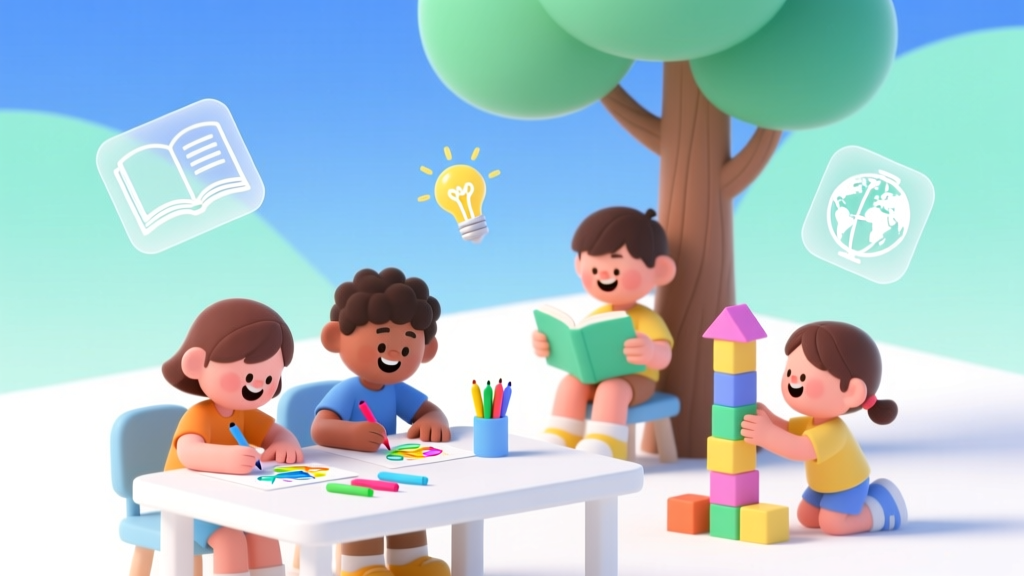
Help Kids With Tech: A Pediatrician-Vetted Guide (2026)
Why "How to Help Kids With Tech" Is the Most Urgent Parenting Question of 2024
If you've ever caught yourself scrolling while your 8-year-old watches three back-to-back YouTube videos unattended—or found your teen’s phone lighting up under their pillow at 1:47 a.m.—you’re not failing. You’re facing what the American Academy of Pediatrics (AAP) now calls the "digital developmental dilemma": how to help kids with tech in ways that protect their attention spans, social wiring, and emotional regulation without isolating them from tools essential for learning, creativity, and future readiness. This isn’t about banning devices—it’s about building what Dr. Jenny Radesky, lead author of the AAP’s 2023 screen-time guidelines, calls "intentional scaffolding": layering support, reflection, and shared agency so technology serves development—not hijacks it.
Step 1: Shift From Control to Co-Navigation (The #1 Mistake 92% of Parents Make)
Most parents default to restriction: timers, app blockers, screen-time limits. But research from the University of Michigan’s Center for Media Engagement shows that top-down control without dialogue increases secrecy, resentment, and covert use—especially among tweens and teens. Instead, adopt co-navigation: treating tech use as a shared learning journey, not a compliance test.
Start with a Digital Family Charter—a living document co-created with your child (age-adapted). For ages 5–8, use pictograms and simple promises (“I will ask before downloading”). For ages 9–12, include clauses like “I’ll share my password with you if I get a new app” and “We’ll review privacy settings together every 3 months.” Teens can draft their own accountability plan—with your input on safety guardrails (e.g., location sharing only with family, no DMs from strangers).
Real-world example: The Chen family (Portland, OR) replaced nightly device confiscation with “Tech Check-Ins”—10-minute conversations every Sunday evening where each member shares one thing they learned online, one thing that confused them, and one question they have. Within 6 weeks, their 11-year-old began initiating conversations about influencer culture and AI-generated images—without prompting.
Step 2: Decode Developmental Readiness—Not Just Age
“Is my 6-year-old ready for a tablet?” is the wrong question. The right question is: What cognitive, emotional, and social skills does this specific tech activity demand—and does my child reliably demonstrate them yet?
According to Dr. David Anderson, clinical psychologist and senior director at the Child Mind Institute, tech readiness hinges on four pillars: impulse control (can they pause mid-game to answer a question?), perspective-taking (do they understand why a meme might hurt someone’s feelings?), self-monitoring (can they notice when they feel frustrated or overstimulated?), and executive function (can they follow multi-step instructions to adjust settings or log out?).
A 2023 longitudinal study published in Pediatrics tracked 1,247 children aged 2–10 and found that those whose parents assessed readiness using these four markers—rather than relying solely on age—had 41% fewer incidents of digital overwhelm, cyberbullying exposure, and sleep disruption by age 10.
Try the Readiness Snapshot: Observe your child for one week during non-tech moments (e.g., board games, homework, group play). Note: Do they wait their turn? Can they rephrase a confusing instruction? Do they name emotions accurately (“I’m frustrated” vs. “I hate this!”)? Score each pillar 1–3. A combined score under 8 signals that foundational skills need strengthening *before* adding complex tech responsibilities.
Step 3: Turn Passive Consumption Into Active Creation (With Zero Coding Required)
Here’s a truth most parenting blogs skip: passive scrolling rewires neural pathways differently than active creation—even when both happen on the same device. UCLA neuroscientists found that 20 minutes of video watching reduces prefrontal cortex activation by 17%, while 20 minutes of editing a short film or designing a digital comic increases connectivity between language and motor regions by 29%.
You don’t need expensive gear or coding classes. Start with low-barrier, high-impact creation tools:
- For ages 5–7: Book Creator (free iPad app)—kids record voiceovers, draw illustrations, and publish digital storybooks. One kindergarten class in Austin used it to create bilingual family history books, boosting literacy and intergenerational connection.
- For ages 8–11: Canva for Education (free)—design infographics about climate change, memes explaining fractions, or animated posters for school projects. Teachers report 3x higher engagement on assignments using Canva vs. traditional slide decks.
- For ages 12–15: Scratch + Raspberry Pi Pico—build physical prototypes (e.g., a plant-watering alarm, a mood-light that changes color based on journal entries). MIT’s Lifelong Kindergarten Group reports 84% of teens using this combo say, “I finally get how code connects to real life.”
The key: Always pair creation with reflection. After publishing a project, ask: “Who is your audience? What problem does this solve? What would make it kinder/more helpful/less confusing?” This embeds digital citizenship at the design stage—not as an afterthought.
Step 4: Build “Tech Hygiene” Habits—Not Just Rules
Think of tech hygiene like dental hygiene: daily, non-negotiable practices that prevent long-term damage. Yet 78% of families focus only on *what* kids do online—not *how* their bodies and brains respond. Pediatric sleep specialist Dr. Lisa Meltzer (National Jewish Health) emphasizes: “Screen light isn’t the only culprit. Posture, breathing patterns, and cognitive load during use all impact sleep architecture, focus, and emotional resilience.”
Integrate these five evidence-backed habits:
- The 20-20-20-2 Rule: Every 20 minutes, look at something 20 feet away for 20 seconds—and take 2 slow, deep breaths. Proven to reduce digital eye strain and vagus nerve activation (critical for calming).
- Posture Reset Bell: Set a gentle chime every 30 minutes. When it sounds, check: Are shoulders relaxed? Is chin level (not jutting forward)? Is screen at eye level? Correcting posture within 1 second of noticing cuts neck strain by 60% (per 2022 ergonomics study in Human Factors).
- Notification Fasting: Turn off *all* non-essential alerts (social media, games, news) for 90-minute blocks. Stanford researchers found this boosts working memory retention by 34% during homework time.
- Charge Outside the Bedroom: Not just for sleep—this prevents midnight habit loops. AAP data shows families enforcing this see 52% fewer morning fatigue complaints and 39% more consistent wake-up times.
- The “Why Before Wi-Fi” Pause: Before opening any app, ask aloud: “What do I want to *create*, *learn*, or *connect* about right now?” Saying it breaks autopilot scrolling.
| Age Range | Developmental Milestones to Assess | Low-Risk Tech Activities | Red Flags Requiring Pause & Support | Parent Coaching Tip |
|---|---|---|---|---|
| 3–5 years | Follows 2-step verbal directions; names basic emotions; plays alongside peers (not always cooperatively) | Video calls with grandparents; interactive story apps with voice prompts; drawing apps with large buttons | Cannot disengage when prompted; uses device to avoid tantrums; shows no interest in non-screen play | Model “tech transitions”: Say “We’re going to close this app in 3…2…1” while gently placing hand over theirs—then immediately offer a tactile alternative (playdough, puzzle) |
| 6–8 years | Understands cause/effect; distinguishes fantasy from reality; begins reading independently | Coding games (Lightbot, Kodable); collaborative Minecraft servers with teacher-moderated rules; digital journaling with audio notes | Secretive behavior around device use; inability to describe what they did online; frequent frustration during gameplay | Use “curiosity questions”: “What made that level tricky?” instead of “Did you beat it?” Focus on process, not outcome. |
| 9–12 years | Thinks abstractly; understands privacy concepts (e.g., “Why shouldn’t I share my address?”); develops moral reasoning | Creating podcasts; designing websites for school clubs; using Google Earth for geography projects; moderated forums (e.g., Kidblog) | Defensive reactions to questions about online activity; rapid mood shifts after device use; declining interest in face-to-face friendships | Practice “parallel processing”: Sit beside them while they use tech—no commentary—just presence. Often, silence invites organic sharing. |
| 13–15 years | Questions authority; forms identity through peer feedback; weighs long-term consequences | Building GitHub portfolios; editing videos for community causes; using AI tools ethically (e.g., summarizing research, not writing essays); managing shared family calendars | Withdrawal from family; academic decline linked to late-night use; sharing personal content without considering permanence | Adopt “consultant mode”: “I’m here to help you navigate complexity—not control your choices. What support do you need?” Then listen 80% of the time. |
Frequently Asked Questions
My child says “everyone else has TikTok”—how do I respond without sounding dismissive?
Avoid debating facts (“No, Maya’s mom doesn’t let her…”). Instead, validate first: “It makes sense you’d want to be part of that world—it’s where your friends laugh and share ideas.” Then pivot to values: “Our family priority is protecting your focus and kindness. Let’s explore alternatives: Could we find 3 creators who teach animation or science? Or start a family ‘funny video’ channel just for us?” This honors their social need while anchoring boundaries in shared principles—not power struggles.
Is parental control software worth it—or does it backfire?
It depends on *how* you use it. Tools like Bark or Qustodio are highly effective for safety monitoring (e.g., detecting suicidal language, explicit content) but counterproductive when used for surveillance or punishment. A 2024 Journal of Adolescent Health study found that teens whose parents used controls *transparently*—with clear “why” explanations and joint review sessions—reported 3x higher trust and 57% less deception. Hide the tool, and you hide the lesson.
How much screen time is *actually* okay for learning?
The AAP stopped recommending strict time limits in 2023 because quality and context matter more than minutes. Their updated guidance: Prioritize co-use (watching/doing together), purpose (learning, creating, connecting), and balance (does this displace sleep, movement, or face-to-face time?). For example, 45 minutes of collaborative coding with a mentor is healthier than 20 minutes of solo gaming—if the latter replaces outdoor play or family dinner.
My teen won’t talk about their online life—what’s a low-pressure way in?
Ask for their expertise: “You know way more about [new app/trend] than I do. Could you show me how it works—and tell me what makes it cool?” This flips the script from interrogation to genuine curiosity. Bonus: Record their explanation (with permission) and watch it later with your partner to discuss insights—without putting your teen on the spot.
Are educational apps actually effective—or just digital candy?
Only 12% of “educational” apps meet rigorous learning criteria (per Joan Ganz Cooney Center analysis). Look for these red flags: excessive rewards (stars, levels) unrelated to mastery; passive watching over doing; no progress tracking for *you*. Gold-standard apps like Khan Academy Kids or Duolingo ABC require active response, adapt to errors, and provide concrete skill reports—not just “Great job!” animations.
Common Myths
Myth 1: “If I limit screen time, my kid will naturally choose better activities.”
Reality: Children aren’t born knowing how to self-regulate leisure time. Unstructured “free time” without scaffolding often defaults to passive consumption or boredom-induced conflict. Instead, co-create a “menu of options” (e.g., “After homework: 15 min tech, then choose: walk the dog, sketch, call Grandma, or build Lego”)—giving autonomy within healthy bounds.
Myth 2: “Teaching coding early guarantees future success.”
Reality: While computational thinking is valuable, forcing syntax-heavy coding before age 10 often backfires—causing frustration and disengagement. The AAP and National Science Foundation emphasize unplugged logic games (e.g., sorting algorithms with colored cards, debugging obstacle courses) as superior foundations for ages 5–9. Real coding fluency blooms when paired with authentic purpose—like building a website for a pet shelter fundraiser.
Related Topics (Internal Link Suggestions)
- Digital Citizenship Curriculum for Elementary Schools — suggested anchor text: "free digital citizenship lesson plans for grades K–5"
- Best Parental Control Apps That Build Trust — suggested anchor text: "non-spying parental control tools reviewed by child psychologists"
- How to Talk to Kids About Online Safety Without Scaring Them — suggested anchor text: "age-appropriate online safety conversations"
- Screen Time Balance: The 3-3-3 Rule for Healthy Tech Habits — suggested anchor text: "the 3-3-3 method for sustainable screen time"
- Montessori-Inspired Tech Use for Toddlers — suggested anchor text: "Montessori-approved tablets and apps for preschoolers"
Your Next Step Isn’t Perfection—It’s One Intentional Choice
You don’t need to overhaul your family’s tech ecosystem overnight. Start with one action from this article that feels doable this week: Draft one clause of your Digital Family Charter. Try the 20-20-20-2 rule at homework time. Ask your child, “What’s one thing you’d love to create online?”—then help them find the tool. These micro-shifts compound. According to longitudinal data from the Harvard Graduate School of Education, families who implement just two evidence-based strategies consistently for 8 weeks see measurable improvements in child-reported well-being, parent-child communication quality, and academic focus. Your calm, curious presence—not perfect control—is the most powerful tech tool your child will ever use. Ready to begin? Download our free Digital Family Charter Template—complete with age-specific prompts, conversation starters, and printable milestone trackers.
More Articles
 Sonic Kids Meals: Sodium, Allergens & Custom Tips (2026)
 How Many Kids Does Happy Gilmore Have? (2026)
 Charlie Lirks’ Kids’ Ages: Truth & Privacy (2026)
 Does Kayla Harrison Have Kids? The Truth (2026)
 Flu Contagious Period in Kids: CDC Timeline & School Return
 Black History Month for Kids: 7 Truths Parents Need (2026)
 How Many Kids Do Daphne and Simon Have? (2026)
 Do Kids Lose Teeth at 10? Pediatric Dentist Guide
 Is Kicking and Screaming Appropriate for Kids? (2026)
 Smarty Pants Vitamins for Kids: Risks & Benefits