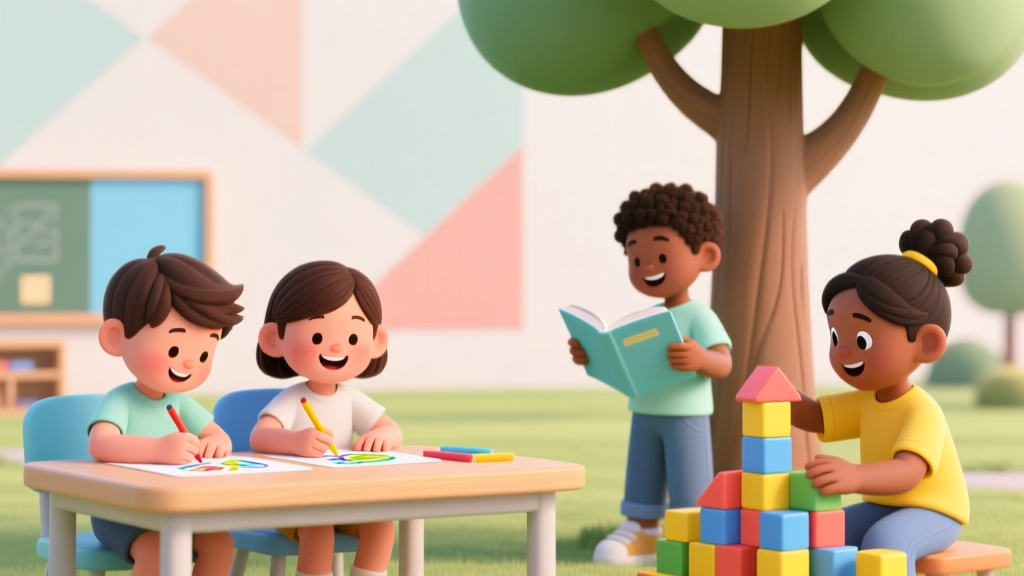
How to Help Kids Read: Science-Backed Strategies
Why 'How to Help Kids Read' Is the Most Urgent Question Parents Aren’t Asking Aloud
If you’ve ever sat beside your child wondering how to help kids read — not just drill sight words, but spark genuine curiosity, confidence, and comprehension — you’re not behind. You’re human. Literacy isn’t built in a single school year; it’s woven over thousands of small moments: pointing to street signs, singing nursery rhymes backward, tracing letters in shaving cream, or rereading the same dog-eared page until the words feel like home. Yet today, 37% of U.S. fourth graders score below basic reading proficiency (NAEP, 2022), and pediatricians report rising parental anxiety about early reading delays — often misinterpreted as learning deficits when they’re actually signals of mismatched pacing, unmet sensory needs, or under-supported oral language foundations. This isn’t about fixing your child. It’s about rethinking how we grow readers — slowly, joyfully, and in alignment with brain science.
Start With Oral Language — Not ABCs
Before a child decodes their first word, their brain has already processed over 4.5 million spoken words (Hart & Risley, 1995). Yet many well-intentioned parents rush to flashcards while overlooking the critical pre-literacy bedrock: rich, responsive oral language. Think of phonemic awareness — hearing and manipulating sounds — as the operating system; phonics is just one app. When children can clap syllables in their name, spot rhyming pairs in silly songs ('cat/hat/bat'), or delete the /b/ from 'bat' to say 'at', they’re building neural pathways that make decoding effortless later.
Try this: For one week, replace ‘What letter is this?’ with ‘What sound does this word start with?’ Then stretch it: ‘Say “snake” slowly… sss-sss-nnn-aaa-kkk-eee.’ Record yourself doing it — you’ll hear how much more musical and embodied this feels than static letter naming. A 2023 longitudinal study in Reading Research Quarterly found children who engaged in daily sound-play activities (e.g., ‘I Spy’ with beginning sounds, tongue twisters, voice-mimicking animal noises) showed 2.3× faster growth in phonemic segmentation by age 5 than peers using only letter-tracing worksheets.
Real-world case: Maya, age 4, refused all books and cried at the sight of alphabet charts. Her preschool teacher suggested swapping flashcards for ‘Sound Scavenger Hunts’: ‘Find something that starts with /m/… now something that ends with /t/.’ Within 10 days, Maya was leading the hunt — and voluntarily pointing to the ‘M’ on her milk carton. No worksheets. No pressure. Just listening, moving, and connecting sound to meaning.
Read Aloud Like You’re Telling a Secret — Not Teaching a Lesson
Reading aloud isn’t passive entertainment — it’s the single strongest predictor of later reading success (National Institute for Literacy, 2020). But how you read matters more than how often. The magic happens in the ‘interactive read-aloud’: pausing to wonder (“What do you think will happen when she opens that door?”), linking text to lived experience (“Remember when we saw rainbows after the storm? That’s exactly what’s happening here!”), and modeling expressive, rhythmic speech — even for babies.
Here’s what most parents miss: You don’t need to ask questions to ‘check understanding.’ Instead, narrate your own thinking: “Hmm… this character looks worried. I’m noticing her eyebrows are scrunched together — that’s how my face feels when I’m nervous.” This ‘think-aloud’ technique builds inferencing skills without interrogation. And yes — it works for toddlers. Try it with board books: “Oh! The duck is splashing! Splash-splash-splash… that’s a fun /s/ sound!”
Dr. Susan B. Neuman, former U.S. Assistant Secretary for Elementary and Secondary Education and literacy researcher, emphasizes: ‘Children learn vocabulary not from definitions, but from repeated, meaningful exposure in emotionally safe contexts. A warm lap, a funny voice, and a pause for laughter — that’s where words stick.’
Create a ‘Literacy Ecosystem’ — Not a Reading Corner
Forget designated ‘reading time.’ Literacy blooms in ecosystems — interconnected, low-stakes, multi-sensory spaces where print is useful, playful, and everywhere. A child who writes grocery lists with you, reads recipe steps while stirring batter, decodes game instructions, or texts emojis to Grandma is practicing authentic reading far more than during forced 10-minute drills.
Build yours with these three non-negotiables:
- Print-Rich Environment: Label drawers (“socks,” “spoons”), rotate magnetic poetry sets on the fridge, hang illustrated family photo captions (“Grandpa’s garden — tomatoes, basil, and ladybugs!”).
- Choice Architecture: Keep 5–7 high-interest, low-text books at eye level (not just leveled readers). Include comics, cookbooks, joke books, and nonfiction with vivid photos — research shows kids who read *anything* for pleasure outperform peers on standardized tests, regardless of genre (Scholastic Kids & Family Reading Report, 2023).
- Adult Modeling: Let them see you read — not just news on your phone, but physical books, recipes, maps, or repair manuals. Say it aloud: “I need to read these instructions carefully so I don’t break the shelf.”
When 6-year-old Leo struggled with blending C-V-C words, his mom stopped ‘practicing reading’ and started ‘reading life.’ She involved him in planning weekend hikes using trail maps, comparing bus schedules, and writing thank-you notes with stickers. Within 8 weeks, Leo independently sounded out ‘SCHEDULE’ — not because he’d memorized phonics rules, but because he’d seen, used, and needed that word.
Decode the Real Roadblocks — Not Just ‘Laziness’
When a child avoids reading, it’s rarely defiance — it’s distress. Common hidden barriers include:
- Visual stress: Up to 12% of children experience visual discomfort (blurring, movement, glare) with standard black-on-white text — often misdiagnosed as ‘inattention.’ A simple colored overlay (e.g., blue or peach acetate) can dramatically improve tracking (American Optometric Association).
- Oral motor challenges: Difficulty coordinating tongue/jaw movements affects phoneme production — which directly impacts phonics instruction. Speech-language pathologists note that kids with low oral-motor tone often benefit from chewing crunchy snacks before reading tasks or using straws for thick smoothies to strengthen articulators.
- Executive function load: Holding sounds in working memory while blending requires cognitive stamina. Break it down: use hand motions (tap each sound on fingers), write letters in sand, or build words with LEGO bricks — multisensory input reduces mental load.
The American Academy of Pediatrics (AAP) advises: ‘If your child consistently avoids reading, squints or rubs eyes, complains of headaches, or seems exhausted after short reading attempts, consult a developmental optometrist and pediatric SLP *before* doubling down on phonics apps.’
Age-Appropriate Literacy Support: What to Do, When, and Why
This table synthesizes evidence-based recommendations from the National Center on Improving Literacy, AAP, and decades of classroom research — aligned to developmental readiness, not arbitrary grade levels. Use it as a flexible guide, not a rigid checklist.
| Age Range | Key Developmental Focus | Top 3 Actionable Strategies | Red Flags Requiring Professional Input |
|---|---|---|---|
| 0–2 years | Sound awareness, joint attention, vocabulary explosion | 1. Narrate daily routines using rich vocabulary (“We’re pouring the cool, clear water into the blue cup.”) 2. Sing repetitive songs with gestures (‘Itsy Bitsy Spider,’ ‘Wheels on the Bus’) 3. Offer board books with textures, flaps, and real-life photos — no pressure to ‘read’ |
No babbling by 12 months; no response to name by 18 months; no first words by 24 months |
| 3–4 years | Rhyme recognition, syllable clapping, letter-name knowledge, narrative sequencing | 1. Play ‘Rhyme Detective’: “Which two words go together? ball, cat, fall?” 2. Create story stones (paint objects on rocks) and sequence them into tales 3. Trace letters in kinetic sand while saying their sounds — not names |
Cannot rhyme by age 4; cannot identify beginning sounds in familiar words (e.g., “What sound does ‘dog’ start with?”); extreme frustration with book handling |
| 5–6 years | Phoneme blending/separating, CVC word decoding, concept of word, emergent writing | 1. Use Elkonin boxes: draw 3 boxes, push a token for each sound in ‘map’ (/m/ /a/ /p/) 2. Write stories together — you scribe, they illustrate and ‘read’ back using pictures + memory 3. Read environmental print first: cereal boxes, road signs, video game menus |
Consistently guesses whole words instead of sounding out; reverses letters beyond occasional b/d confusion; avoids all print interaction despite strong oral language |
| 7+ years | Fluency, comprehension monitoring, inference, genre awareness | 1. Use ‘fix-up strategies’ posters: “I reread,” “I pictured it,” “I asked a question” 2. Compare two versions of the same story (book vs. movie) — what’s different? Why? 3. Keep a ‘Wonder Journal’: jot down questions sparked by reading (e.g., “How do bees make honey?”) and research answers together |
Frequent skipping of lines or words; inability to summarize main ideas; avoidance paired with physical symptoms (stomachaches, tantrums) |
Frequently Asked Questions
My child knows all their letters and sounds but still can’t blend words — what’s wrong?
This is incredibly common — and usually not a sign of dyslexia. Blending requires holding multiple sounds in working memory while coordinating speech output. Try ‘sound chaining’: Start with a known word like ‘cat,’ then change one sound at a time: cat → bat → bad → pad → pat. Use visual aids (colored blocks for each sound) and keep sessions under 3 minutes. Research shows most children master blending within 4–6 weeks of daily, playful practice — not drill. If no progress after 8 weeks, consult a certified reading specialist.
Should I correct every mistake when my child reads aloud?
No — constant correction kills fluency and confidence. The ‘3-Second Rule’ is gold: if your child hesitates for 3+ seconds on a word, gently supply it. Then reread the sentence together smoothly. Save teaching moments for after reading: “That tricky word was ‘through’ — let’s look at the ‘ough’ pattern together tomorrow.” Fluency builds through repeated, successful experiences — not perfection.
Is screen time killing my child’s reading ability?
Not inherently — but *how* screens are used matters profoundly. Passive scrolling or autoplay videos displace language-rich interactions. However, interactive e-books with embedded dictionaries, read-aloud narration, and open-ended prompts (“What would you do next?”) can support comprehension. The key metric: Does screen time involve conversation, prediction, and connection? If yes, it’s literacy-adjacent. If it’s silent, solitary, and algorithm-driven, limit it — especially before age 5. AAP recommends co-viewing and discussing content, not substituting for human interaction.
My child loves being read to but refuses to read themselves — is that normal?
Yes — and it’s often a sign of healthy development. Listening comprehension typically outpaces reading comprehension until around age 10. Your child may simply need more time to bridge the gap between hearing fluent language and producing it independently. Honor their love of stories by continuing read-alouds (even chapter books!), while offering low-stakes reading opportunities: comic strips, lyrics to favorite songs, or choosing dinner options from a menu. Pressure shrinks willingness; autonomy grows it.
When should I worry about dyslexia?
Dyslexia is a neurobiological difference in how the brain processes written language — not laziness or low intelligence. Early signs (by age 5–6) include persistent letter reversals *beyond* typical development (e.g., confusing b/d/p/q regularly), difficulty remembering letter names/sounds, trouble clapping syllables, and extreme fatigue during reading tasks. The International Dyslexia Association stresses: ‘Early identification is powerful — but formal diagnosis isn’t required to begin evidence-based intervention.’ If concerns persist, request a free evaluation through your public school (IDEA law) or consult a psychologist specializing in learning differences. Remember: Many brilliant minds — including Steven Spielberg and Whoopi Goldberg — are dyslexic. Strength lies in how they think, not how they decode.
Common Myths About Helping Kids Read
Myth #1: “More worksheets = better readers.”
Decades of research confirm that isolated skill drills without meaningful context weaken motivation and fail to transfer to real reading. Children learn best when skills are embedded in authentic, joyful tasks — like writing a birthday card or following a Lego manual.
Myth #2: “If they’re not reading by first grade, they’ll fall behind forever.”
Neuroplasticity remains high through adolescence. Many late bloomers — especially those with strong oral language, curiosity, and executive function — catch up significantly by third or fourth grade. What truly predicts long-term success is sustained engagement with stories, not early decoding speed.
Related Topics (Internal Link Suggestions)
- Best Books for Reluctant Readers — suggested anchor text: "engaging books for kids who hate reading"
- Sensory-Friendly Reading Activities — suggested anchor text: "tactile reading games for dyslexic learners"
- Screen Time Guidelines for Early Literacy — suggested anchor text: "how to use tablets to support reading"
- When to Seek a Reading Evaluation — suggested anchor text: "signs your child needs literacy support"
- Phonics vs. Whole Language Debate — suggested anchor text: "what the research really says about reading instruction"
Your Next Step Isn’t Perfection — It’s Presence
There is no ‘right’ way to help kids read — only responsive, attuned, and consistent ways. You don’t need expensive programs, perfect pronunciation, or hours of daily practice. You need to notice what sparks their curiosity, honor their pace, and protect the joy of stories above all else. Tonight, try one tiny thing: read a favorite book with exaggerated voices, pause to predict what’s next, and let them turn the pages — even if it’s upside down. That moment of shared attention, laughter, and anticipation? That’s where literacy begins. Not on a worksheet. In your voice. In their eyes. In the quiet space between the words — where meaning lives.
More Articles
 Is BitLife Appropriate for Kids? Expert Guidance
 Hiya Vitamins for Kids: 2026 Review & Red Flag
 How Many Kids Did Bob Dylan Have? (2026)
 Bedtime Routine Chart for Toddlers (2026)
 Matt Mathews’ Kids & Digital Parenting Choices
 Why Don’t I Like Kids? Science-Backed Reasons
 How Do Kids Get Croup? Causes, Risks & Prevention
 Who Has the Most Kids in the NFL? (2026)
 Do Nonverbal Kids Babble? 7 Therapist Tips
 How Many Kids Did Vecna Take in Stranger Things S5?