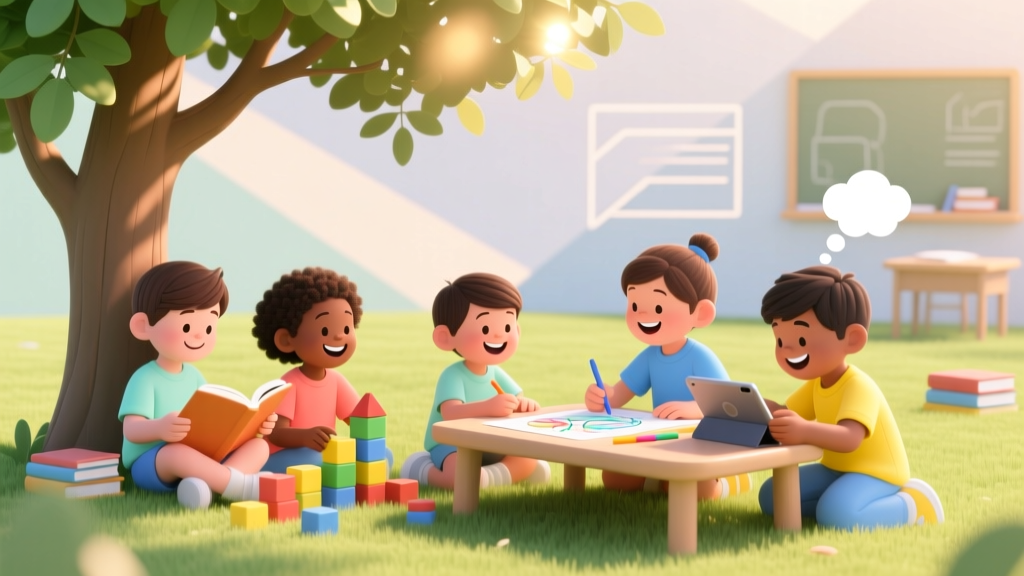
How to Foster Kids: A Trauma-Informed Guide
Why Learning How to Foster Kids Is the Most Important Skill You’ll Ever Master
If you’re searching for how to foster kids, you’re not just looking for tips—you’re seeking a deeper, more intentional way to show up for the children in your life. Whether you’re a biological parent, adoptive caregiver, kinship guardian, or foster parent, the word 'foster' here isn’t about legal status—it’s about the active, daily practice of cultivating safety, curiosity, and connection. In a world where childhood anxiety has risen 27% since 2016 (CDC, 2023) and 1 in 3 U.S. children experiences at least one adverse childhood experience (ACE), knowing how to foster kids isn’t optional parenting—it’s protective, preventive, and profoundly powerful.
1. Build Secure Attachment Through ‘Serve and Return’—Not Just Time
Many assume that simply spending hours with a child automatically builds strong bonds. But research from Harvard’s Center on the Developing Child shows it’s not quantity—it’s quality interaction that wires the brain for trust and self-regulation. The neuroscience-backed 'serve and return' model describes how responsive back-and-forth exchanges (a baby’s coo → your smile + vocal reply → their giggle → your gentle touch) literally strengthen neural pathways in the prefrontal cortex and limbic system.
Here’s what this looks like in practice:
- Pause before reacting: When your toddler melts down over mismatched socks, take a breath—not to suppress your emotion, but to create space for attunement. Ask yourself: What is their nervous system trying to communicate?
- Label feelings early and often: “You’re feeling frustrated because the tower fell.” Naming emotions reduces amygdala activation by up to 50%, per UCLA fMRI studies.
- Repair, don’t perfect: If you yell and then say, “I got loud, and that scared you—I’m sorry. Let’s hug and try again,” you’re modeling accountability and reinforcing safety. According to Dr. Dan Siegel, clinical professor of psychiatry at UCLA, relational repair is more predictive of long-term resilience than flawless parenting.
A real-world example: In a 2022 pilot program with 120 families in Milwaukee, caregivers trained in serve-and-return techniques saw a 38% reduction in child-reported anxiety symptoms after just 8 weeks—and parental stress scores dropped by 42%. Not because they did more—but because they responded differently.
2. Foster Executive Function With Everyday Routines—Not Just Apps or Worksheets
Executive function—the mental skillset behind planning, focus, self-control, and flexibility—isn’t built through flashcards or screen time. It’s forged in the mundane: packing lunches, setting timers, negotiating bedtime transitions. Yet 68% of parents report feeling ill-equipped to support these skills (Zero to Three Parent Survey, 2023).
Try these low-effort, high-impact routines:
- The ‘First-Then’ Visual Board: Use simple icons (e.g., toothbrush + book) instead of verbal directives. Children aged 2–7 process visual cues 3x faster than spoken language (Journal of Child Psychology & Psychiatry, 2021).
- ‘Wait Time’ Practice: After asking a question (“What color is the apple?”), wait 5 full seconds before rephrasing or answering. This builds working memory and response inhibition—two core EF components.
- Choice Architecture: Instead of “Clean up!” offer two options: “Do you want to put the blocks in the red bin or the blue bin?” This activates decision-making circuits without triggering power struggles.
Importantly, executive function develops unevenly. A 5-year-old may tie shoes but forget to flush—or follow multi-step directions at school but meltdown over spilled milk at home. That’s normal. As Dr. Stephanie M. Carlson, co-author of Bilingual Children’s Executive Function Development, explains: “EF isn’t a trait you ‘have’—it’s a set of skills you exercise. Every time a child waits for their turn, checks their own work, or adjusts a plan mid-game, they’re lifting a mental weight.”
3. Cultivate Emotional Literacy—Starting With Your Own
You can’t teach what you haven’t embodied. Yet most parenting resources skip the hardest part: helping adults name, tolerate, and regulate their own emotions so they don’t unconsciously project them onto kids. A landmark 2023 study in Developmental Psychology found that parents who practiced daily emotion-check-ins (e.g., “Right now, I feel __ because __”) had children with 2.3x higher emotional vocabulary scores by age 6.
Here’s how to begin—without adding another ‘to-do’:
- The ‘Emotion Weather Report’: At dinner or bedtime, share your inner climate: “Today my weather was partly cloudy with a chance of impatience—especially when the printer jammed.” Invite kids to do the same. No fixing. No judgment. Just witnessing.
- Normalize physiological responses: Say, “When I get mad, my ears get hot and my voice gets loud—that’s my body trying to protect me. What happens in your body when you feel big feelings?” This teaches interoception—the foundation of self-awareness.
- Create a ‘Calm Corner’—for everyone: Not just for kids. Include items like a weighted lap pad, lavender-scented roller, or a notepad labeled ‘What I Need Right Now.’ Model using it when overwhelmed.
This isn’t self-indulgence—it’s stewardship. As pediatrician Dr. Ari Brown, co-author of Smart Parenting for Smart Kids, states: “Children don’t learn emotional regulation by watching perfect adults. They learn it by watching imperfect adults recover—with kindness.”
4. Foster Belonging Through Micro-Inclusions—Not Just Big Celebrations
Belonging isn’t created at birthday parties or holiday gatherings. It’s woven into micro-moments: using a child’s preferred pronouns before they ask, displaying family photos that reflect their full identity, letting them choose the ‘family meeting’ snack, or asking, “What’s one thing only you notice about this park?”
For neurodivergent, adopted, foster, or culturally marginalized children, these micro-inclusions are lifelines. Consider Maya, a 9-year-old transracial adoptee in Portland. Her caregiver began replacing generic praise (“Good job!”) with identity-affirming specificity: “I love how you used your Korean words to tell Grandma about your drawing—that showed such pride in your roots.” Within 3 months, Maya initiated conversations about her birth culture unprompted—a shift therapists attributed to consistent, low-stakes belonging cues.
Three evidence-based micro-practices:
- Name strengths rooted in identity: “You’re such a thoughtful listener—that’s part of what makes you a great big sister.” Avoid vague labels (“You’re smart”) that imply fixed traits.
- Invite co-creation: Let kids help design routines—even small ones. “What should our ‘after-school reset’ look like? Should we have quiet time, music, or a walk?” Autonomy builds intrinsic motivation and agency.
- Correct misrepresentations gently but firmly: If a relative says, “She’s so lucky to be with you,” respond with warmth and clarity: “We’re lucky to be a family together. Adoption isn’t about luck—it’s about love, commitment, and justice.”
| Age Range | Key Developmental Needs | How to Foster Kids (Practical Actions) | Safety & Supervision Notes |
|---|---|---|---|
| 0–2 years | Secure attachment; sensory integration; co-regulation | Consistent response to cries; skin-to-skin contact; rhythmic rocking/singing; narrating daily actions (“Now I’m washing your toes”) | Constant supervision; no small objects; crib free of pillows/blankets; use rear-facing car seat until age 2+ (AAP) |
| 3–5 years | Autonomy; emotional vocabulary; imaginative play; impulse control | Offer limited choices (“Red cup or blue cup?”); use emotion cards during play; co-create simple rules (“We keep hands to ourselves at circle time”) | Supervise play closely; avoid choking hazards (items <1.25” diameter); verify toys meet ASTM F963 standards |
| 6–9 years | Peer relationships; academic confidence; moral reasoning; self-advocacy | Role-play ‘what if’ social scenarios; praise effort over outcome (“You studied hard for that test”); involve in family decisions (meal planning, weekend plans) | Monitor screen time (max 1 hr/day recreational, per AAP); discuss online safety; ensure bike helmet use; supervise swimming |
| 10–13 years | Identity exploration; critical thinking; boundary negotiation; future orientation | Ask open-ended questions (“What matters most to you about fairness?”); support passion projects; co-draft phone/device agreements; normalize discomfort as growth | Discuss consent & body autonomy; review cyberbullying response plan; verify social media platforms’ age requirements (most require 13+); prioritize sleep hygiene (8–10 hrs) |
Frequently Asked Questions
Is fostering kids the same as being a foster parent?
No—this is a common point of confusion. Legally, 'foster parent' refers to licensed caregivers providing temporary, state-supervised care for children removed from unsafe homes. But how to foster kids (as searched by millions monthly) reflects the broader, universal verb meaning: to nurture, encourage, and support growth. Whether you're raising your biological child, mentoring a neighbor’s teen, or caring for a grandchild, you’re fostering. The strategies in this guide apply across all caregiving roles—and are endorsed by the American Academy of Pediatrics as foundational to healthy development.
Can I foster kids’ emotional health even if I struggle with my own mental health?
Absolutely—and compassionately. You don’t need to be ‘healed’ to foster healing in others. What matters most is consistency, honesty, and repair. Research shows that children benefit most when caregivers practice ‘good enough’ responsiveness—not perfection. If you’re in therapy, taking medication, or using grounding techniques, name it simply: “Sometimes my brain feels noisy, so I’m using my breathing tool. That helps me stay with you.” This models self-awareness and reduces shame—for both of you. As clinical psychologist Dr. Becky Kennedy reminds us: “Connection is the antidote to distress—even when the connector is distressed.”
How early should I start fostering social-emotional skills?
From day one. Newborns are wired for connection: they recognize their caregiver’s voice in utero, track faces within hours of birth, and release oxytocin during eye contact. Early fostering isn’t about teaching—it’s about attuning. A 2022 longitudinal study published in Pediatrics followed 1,200 infants and found that babies whose caregivers consistently mirrored facial expressions and vocal tones before 6 months showed significantly stronger empathy and cooperation skills at age 5. So yes—start now. And yes—it counts.
What if my child resists my efforts to foster their growth?
Resistance is data—not defiance. When a child pushes away co-regulation attempts, withdraws from learning opportunities, or rejects emotional coaching, it often signals unmet needs: fatigue, hunger, sensory overload, past trauma, or fear of failure. Pause and ask: What is this behavior protecting them from? Try lowering demands (“Let’s sit quietly together—no talking needed”) before increasing expectations. As trauma specialist Dr. Bruce Perry advises: “Before you can foster growth, you must first foster safety. Safety isn’t absence of threat—it’s presence of predictability, choice, and connection.”
Do screens hinder my ability to foster kids’ development?
It depends entirely on how and with whom screens are used. Passive scrolling or solo viewing displaces serve-and-return interactions—critical for language and social development. But co-viewing educational content (e.g., watching a nature documentary *together*, pausing to ask questions) can deepen curiosity and vocabulary. The AAP recommends avoiding screens for children under 18 months (except video-chatting), limiting to 1 hour/day of high-quality programming for ages 2–5, and prioritizing shared engagement over solo use at all ages. The key metric isn’t screen time—it’s relational time.
Common Myths About How to Foster Kids
- Myth #1: “Fostering kids means fixing their weaknesses.” Truth: Fostering is about identifying and amplifying innate strengths—not correcting deficits. Neuroscience confirms that growth occurs fastest when children operate from competence, not correction. A child who loves building forts isn’t ‘just playing’—they’re developing spatial reasoning, systems thinking, and executive function.
- Myth #2: “You need special training or degrees to foster kids well.” Truth: While formal education helps, the most powerful fostering tools are accessible to all: presence, patience, curiosity, and humility. As Montessori educator Angeline Lillard writes in Montessori: The Science Behind the Genius, “The adult’s role is not to instruct, but to prepare the environment—and then get out of the way.”
Related Topics (Internal Link Suggestions)
- Positive Discipline Techniques for Toddlers — suggested anchor text: "gentle discipline strategies that build trust"
- How to Talk to Kids About Race and Identity — suggested anchor text: "age-appropriate conversations about diversity and belonging"
- Screen Time Guidelines by Age (AAP-Approved) — suggested anchor text: "evidence-based digital wellness for families"
- Building Resilience in Children After Adversity — suggested anchor text: "trauma-informed ways to nurture strength"
- Executive Function Activities for School-Age Kids — suggested anchor text: "play-based games that boost focus and planning"
Your Next Step Starts With One Intentional Moment
Learning how to foster kids isn’t about mastering a checklist—it’s about returning, again and again, to presence. It’s choosing curiosity over correction, connection over control, and compassion over comparison. You don’t need to overhaul your routine. Start with one micro-shift this week: pause for three extra seconds before responding to your child’s next request. Breathe. Notice your own body. Then meet them—not from habit, but from heart. That’s where fostering begins. And that’s where transformation takes root. Ready to go deeper? Download our free 7-Day Fostering Foundations Challenge—complete with daily audio reflections, printable emotion cards, and expert-vetted conversation prompts.
More Articles
 How Many Kids Did Lisa Marie Presley Have? (2026)
 What Size Is 110 in Kids Clothes? (2026 Guide)
 Why Should Kids Not Have Homework (2026)
 Annie Guthrie Kids? Truth Behind Her Quiet Parenthood
 Is Lilo & Stitch Appropriate for Kids? (2026)
 Band-Aid on Kids’ Belly Button: 7 Reasons & When to Skip
 James Van Der Beek Kids’ Schools (2026)
 Why Do Kids Bruise Easily? Pediatrician-Reviewed Guide
 How Old Do Kids Lose Teeth? Pediatric Dentist Guide
 Ondansetron for Kids: Age, Dose & FDA Warnings (2026)