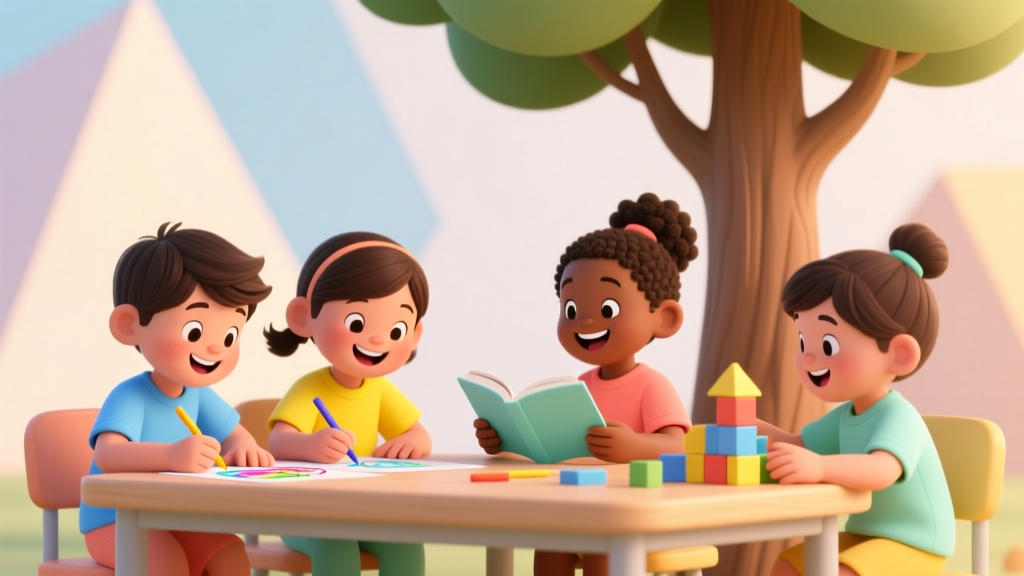
How to Explain Transgender to Kids (2026)
Why This Conversation Matters More Than Ever — And Why It Doesn’t Have to Be Scary
If you’ve ever searched how to explain transgender to kids, you’re not alone — and you’re already doing something vital. In a world where 1 in 50 U.S. adolescents identifies as transgender or gender diverse (The Trevor Project, 2023), children are encountering gender diversity earlier than ever — through classmates, media, books, or even their own emerging self-awareness. Yet most parents report feeling unprepared: 68% say they lack confidence discussing gender identity with children under 10 (GLSEN & UCLA Williams Institute, 2022). The good news? You don’t need perfect answers — just presence, curiosity, and developmentally grounded language. This guide distills insights from pediatric psychologists, LGBTQ+ inclusive educators, and decades of child development research into actionable, compassionate steps — no jargon, no dogma, just clarity rooted in love and science.
Start With What Kids Already Understand: Bodies, Feelings, and Identity
Children as young as 2–3 begin noticing differences in appearance, names, and pronouns — and by age 4–5, many grasp that people can feel different inside than how they look outside. That’s your natural entry point. Instead of launching into abstract definitions, anchor the conversation in concepts they already navigate daily: feelings, choices, and what makes someone who they are. For example: “Some people feel like their body doesn’t match who they know themselves to be inside — just like how you might feel frustrated when your favorite shirt doesn’t fit right, but it’s much deeper and more important.”
Dr. Diane Ehrensaft, clinical psychologist and founding member of the UCSF Gender Affirmative Model, emphasizes that children understand authenticity long before terminology: “When we ask kids, ‘What makes you *you*?’ they’ll name things like ‘I love dinosaurs,’ ‘I hug my dog,’ or ‘I wear sparkly socks.’ That’s identity — concrete, felt, and personal. Gender is part of that tapestry, not separate from it.”
Avoid framing gender as a ‘choice’ or ‘phase’ — both undermine validity and increase anxiety. Instead, use metaphors grounded in experience: “Just like how some people are left-handed and some are right-handed — it’s not something they picked, but it’s real and okay.” Or: “Think of your favorite storybook character — sometimes the person in the story feels like a princess, or a knight, or something else entirely. What matters is how they feel inside, and how we treat them with kindness.”
Age-Appropriate Language: What to Say (and Skip) at Every Stage
There’s no universal ‘right age’ to start — but there *is* a right *way*, calibrated to cognitive and emotional development. Below is a breakdown backed by AAP guidelines and early childhood education frameworks (NAEYC, 2021):
| Age Range | Developmental Capacity | What to Say (Simple Script) | What to Avoid | Key Resource Tip |
|---|---|---|---|---|
| 3–5 years | Concrete thinkers; understand feelings, fairness, and basic categories (boy/girl, big/small). Limited grasp of permanence or social systems. | “Some kids feel like a boy, some feel like a girl, and some feel like both or neither — and that’s okay. What matters is treating everyone kindly and using the name and pronouns they like.” | Complex terms (‘transgender,’ ‘biological sex,’ ‘transition’); moral judgments (“good/bad,” “normal/abnormal”); over-explaining anatomy. | Books: It Feels Good to Be Yourself (Theresa Thorn) — uses affirming, illustrated vignettes without labels. |
| 6–9 years | Developing theory of mind; understand perspective-taking, fairness, and simple cause-effect. May ask ‘why’ repeatedly. | “Gender is about who someone knows themselves to be inside — not just what’s on their birth certificate or what clothes they wear. Some people’s gender matches what doctors guessed at birth; others’ doesn’t — and both are completely real.” | Medical details (hormones, surgery); comparisons to animals or objects (“like a caterpillar becoming a butterfly” — risks implying gender change is temporary or metaphorical); linking gender to sexuality. | Use a ‘Feelings & Facts’ chart: Draw two columns — one for emotions (“safe,” “respected,” “seen”) and one for facts (“Names matter,” “Pronouns show care,” “Everyone deserves privacy”). |
| 10–13 years | Abstract thinking emerging; heightened social awareness; beginning to question norms. May express skepticism or absorb misinformation. | “Transgender people have existed across cultures and centuries — from Two-Spirit Indigenous traditions to Hijra communities in South Asia. Being trans isn’t new or ‘trendy’ — it’s part of human diversity, like eye color or handedness. What’s new is that more people feel safe sharing their truth.” | Defensiveness (“I’m not political!”); minimizing (“It’s just semantics”); debating validity (“But science says…” without citing credible sources). | Invite co-research: Watch short clips from GLSEN’s ‘Respect My Name’ series or explore the Smithsonian’s ‘Gender: Identity, Expression, and Perception’ online exhibit together. |
Turning Awkward Moments Into Teaching Opportunities
Most conversations don’t happen at the kitchen table — they erupt mid-sentence: “Why does Maya wear boy clothes?” “Is Mr. Lopez a man or a woman?” “My friend says he’s a girl now — but he has short hair!” These aren’t interruptions — they’re golden openings. Here’s how to respond in real time:
- Pause and validate first: “That’s a thoughtful question — thank you for asking.” (This signals safety and models curiosity over judgment.)
- Clarify gently: “Names and pronouns are about respect — like how you’d want someone to call you by your real name, not a nickname you dislike.”
- Bridge to values: “What matters most is whether someone is kind, funny, or good at soccer — not whether they match what we expect.”
- Admit uncertainty (authentically): “I’m still learning too — let’s find out together.” Then follow up with trusted resources (see FAQ section).
Real-world case study: When 7-year-old Leo asked his mom why his classmate Sam used ‘they/them’ pronouns, she didn’t lecture — she pulled out three colored pencils and said, “Imagine your favorite color is blue. If I kept calling it ‘red’ every day, even though you told me it’s blue — how would that feel?” Leo paused, then whispered, “Like I wasn’t being heard.” That single analogy shifted his understanding more than any definition could.
Crucially: Correct misgendering *without shame*. If your child says, “She’s playing soccer,” about a peer who uses ‘he/him,’ respond calmly: “I think Sam uses ‘he’ — let’s try that next time. It’s like practicing a new word until it feels right.” Research shows correction delivered with warmth — not punishment — builds neural pathways for empathy (Harvard Center on the Developing Child, 2020).
What to Do When You Get It Wrong (And You Will)
Even well-intentioned adults misgender, stumble over terms, or default to outdated language. What matters isn’t perfection — it’s repair. Pediatrician Dr. Nadine Burke Harris, former U.S. Surgeon General nominee, notes: “Children learn resilience not from never failing, but from witnessing adults model humility, accountability, and course-correction.”
Here’s your 3-step recovery script:
- Pause and acknowledge: “I just realized I used the wrong name/pronoun — thank you for helping me get it right.”
- Correct simply: “Sam uses ‘he/him’ — so I’ll say, ‘He kicked the ball!’” (No over-apologizing — keeps focus on the person, not your guilt.)
- Reinforce the value: “Getting names and pronouns right is how we show people: ‘You matter. Your identity is real.’”
This approach teaches children that mistakes are part of learning — and that care is shown through action, not just intent. Bonus: It models emotional regulation for your child’s own future stumbles (with friends, teachers, or siblings).
Also critical: Audit your environment. Are books, toys, and media in your home diverse in gender expression? Does your school’s curriculum include LGBTQ+ figures beyond Pride Month? According to the National Education Association, classrooms with consistent, integrated representation see 32% higher rates of peer empathy and 41% lower incidence of gender-based teasing — proving that normalization isn’t political; it’s protective.
Frequently Asked Questions
“Isn’t it too early to talk about this with young kids?”
No — and waiting can unintentionally signal that gender is taboo or shameful. Children notice differences (hair length, voice pitch, clothing styles) long before adults name them. What’s ‘too early’ is overwhelming them with adult concepts (medical transition, politics, controversy). Age-appropriate framing — focusing on respect, feelings, and fairness — meets kids where they are. As Dr. Laura Kastner, adolescent development expert, states: “Silence doesn’t protect children — it leaves them to fill gaps with fear, stereotypes, or misinformation.”
“How do I respond if my child says they think they’re transgender?”
First: Breathe. Second: Listen — without fixing, correcting, or rushing to conclusions. Say: “Thank you for trusting me with that. Can you tell me more about what that feels like?” Third: Connect with affirming professionals. The American Academy of Pediatrics recommends seeking providers trained in gender-affirming pediatric care — not conversion or ‘exploratory’ therapy, which is harmful and banned in 24 U.S. states. Resources: The Human Rights Campaign’s Supporting and Caring for Transgender Children guide and local chapters of PFLAG.
“What if my family or community has religious objections?”
This is deeply complex — and requires honoring both faith and dignity. Many faith traditions emphasize compassion, justice, and protecting the vulnerable. Interfaith groups like Faith in America and Keshet offer theology-aligned resources showing how affirming transgender people aligns with core values like ‘love thy neighbor’ or ‘do justice.’ Key step: Separate doctrine from dogma — ask spiritual leaders, “How do we live out mercy when a child is hurting?” rather than “Is this sin?” The goal isn’t theological debate — it’s ensuring your child feels loved *first*.
“Are picture books about transgender people appropriate for preschoolers?”
Yes — when selected intentionally. Look for books where transgender characters exist within everyday contexts (playing, family dinners, school) — not as ‘the transgender kid’ defined solely by identity. Top-recommended titles: Who Are You?: The Kid’s Guide to Gender Identity (Brooke Pessin-Whedbee), Julian Is a Mermaid (Jessica Love), and They, She, He Easy as ABC (Maya Gonzalez). Avoid books that frame transition as magical, medicalized, or exceptional — those reinforce otherness. Instead, seek stories where joy, curiosity, and belonging are central.
Common Myths — Debunked with Evidence
- Myth #1: “Explaining transgender to kids will confuse them or make them ‘question their gender.’”
Research consistently shows the opposite: Age-appropriate, affirming conversations reduce anxiety and increase self-acceptance — for all kids. A 2022 longitudinal study in Pediatrics found children in schools with inclusive curricula were 2.3x more likely to report high self-worth and 47% less likely to express gender-related distress — regardless of their own identity.
- Myth #2: “Kids are too young to understand gender — it’s an adult concept.”
Neuroscience reveals gender cognition begins developing in infancy. By age 2, children categorize people by gender; by age 3, they express strong preferences aligned with gendered expectations. What’s ‘adult’ is the politicization — not the concept. As Dr. Kristina Olson, Yale’s Gender Development Lab director, affirms: “Children don’t need us to simplify gender — they need us to honor its complexity with honesty and care.”
Related Topics (Internal Link Suggestions)
- How to Choose Inclusive Children’s Books — suggested anchor text: "best gender-inclusive picture books for preschoolers"
- Talking to Kids About Pronouns — suggested anchor text: "how to teach pronouns to elementary students"
- Supporting a Gender-Expansive Child at School — suggested anchor text: "working with teachers on gender-inclusive classroom practices"
- What to Say When Kids Ask About Sexuality — suggested anchor text: "age-appropriate answers to questions about being gay or bisexual"
- Building Empathy Through Storytelling — suggested anchor text: "using read-alouds to nurture compassion in early childhood"
Your Next Step Starts With One Small Sentence
You don’t need to master every term or anticipate every question. You just need to begin — with kindness, humility, and the quiet certainty that every child deserves to grow up knowing: Your feelings are real. Your questions are welcome. And you are loved — exactly as you are. So tonight, try one thing: Notice one moment where your child expresses identity — through clothing, art, play, or words — and reflect it back with warmth: “I love how you chose that color. It really suits you.” That’s where inclusion begins. Not in grand declarations — but in daily, deliberate acts of seeing.
More Articles
 Charlie Kirk’s Family: Shielding Kids from Politics (2026)
 MeatCanyon’s Kid? Privacy, Ethics & Parenting (2026)
 Navage for Kids: Pediatric ENT Advice & Safety Rules
 Kids Shoe Sizes Decoded: Printable Templates & Tracker
 When to Tell Kids About Santa: A Developmental Guide
 Do Kids Get Teeth at 2? Pediatric Dentist Answers
 How Many Kids Do the Reiners Have? (2026)
 Travis Barker’s Kids: Blended Family & Co-Parenting (2026)
 PBS Kids Shutting Down in 2026? No — Here’s the Truth
 How to Help Kids Ear Ache Safely (2026)