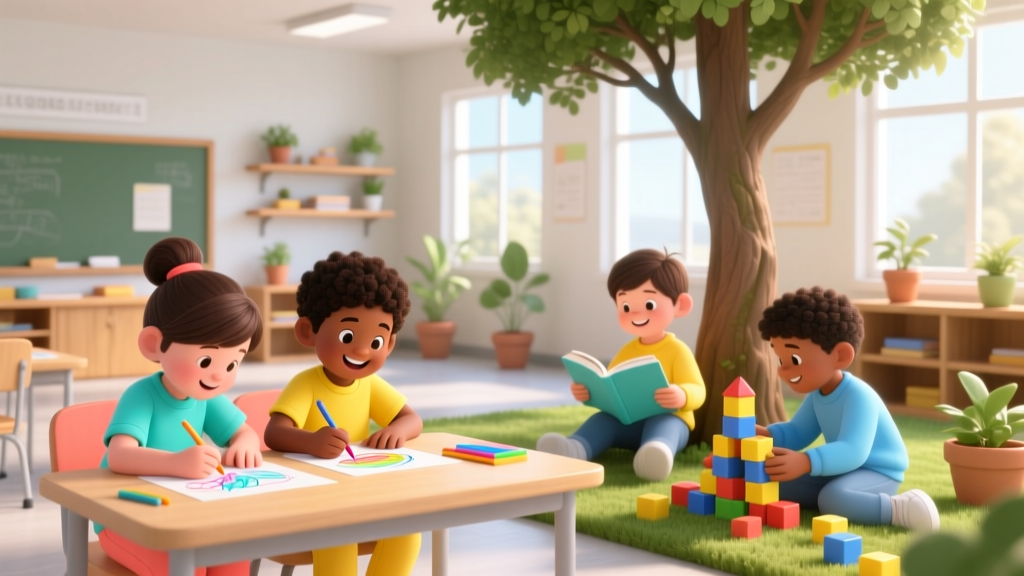
Explain Racism to Kids: 5-Step Framework (2026)
Why 'How to Explain Racism to Kids' Is One of the Most Urgent Parenting Questions of Our Time
If you’ve ever searched how to explain racism to kids, you’re not alone — and you’re already doing something profoundly important. In a world where children notice skin color by age 3, form implicit biases by age 5, and absorb societal messages about race before they can read, silence isn’t neutral. It’s an unspoken lesson. According to the American Academy of Pediatrics (AAP), delaying conversations about race until children are ‘old enough’ actually reinforces bias — because kids fill information gaps with stereotypes, media narratives, or peer assumptions. This isn’t about politics or guilt; it’s about developmental readiness, emotional safety, and justice literacy. And the good news? Research from the Emory University Center for Children and Families shows that when caregivers initiate honest, age-aligned discussions early and consistently, children demonstrate stronger cross-racial friendships, greater empathy, and increased willingness to challenge unfairness — even as young as 6 years old.
Start Where Your Child Is — Not Where You Wish They Were
There’s no universal ‘right age’ to begin — but there is a right developmental moment. Renowned child psychologist Dr. Beverly Daniel Tatum reminds us: “Children don’t learn prejudice in a vacuum — they learn it from what they see, hear, and experience.” That means your child may have already noticed differences — or witnessed exclusion — long before you initiated the conversation. The key is meeting them with curiosity, not correction.
Here’s how to assess readiness:
- Preschoolers (3–5): Focus on fairness, feelings, and visible differences (e.g., “People have different skin colors, just like flowers have different petals — and all are beautiful”). Use concrete examples (“It’s not fair if only some kids get to swing”) to anchor abstract ideas.
- Early elementary (6–8): Introduce simple definitions (“Racism is when someone is treated unfairly because of their race”) and historical context at a digestible level (“A long time ago, laws said Black people couldn’t go to the same schools — and brave people fought to change that”).
- Upper elementary & preteens (9–12): Discuss systemic patterns (“Some neighborhoods have fewer parks or older schools — and that’s often connected to past and present racism”), introduce allyship (“What can you do if you hear a racist joke?”), and explore media literacy (“Who gets to tell stories about different cultures — and whose voices are missing?”).
A powerful starting point? Ask open-ended questions first: “What do you notice about people’s skin, hair, or names?” or “Have you ever seen someone treated differently because of how they look?” Listen more than you speak — and validate their observations without judgment. As Dr. Ibram X. Kendi writes in Antiracist Baby, “You cannot be anti-racist without being pro-child — because children are truth-tellers who haven’t yet learned to hide their discomfort with injustice.”
The 5-Step Framework: From Awkward Silence to Confident Clarity
Based on frameworks used by the National Museum of African American History and Culture’s Being Antiracist initiative and adapted by school counselors across 27 U.S. states, this sequence helps caregivers move beyond one-off talks into sustained, values-driven dialogue:
- Name it clearly: Use plain language — not euphemisms like “bad people” or “some folks.” Say “racism,” define it simply (“treating people unfairly because of their race”), and name emotions (“That might feel confusing or sad — and that’s okay.”)
- Connect to their world: Anchor in lived experience: “Remember when Maya wasn’t invited to Sam’s birthday? That felt unfair — and racism is like that, but bigger and built into rules and habits.”
- Center humanity, not harm: Balance honesty with hope. For every example of injustice, name resistance: “When Rosa Parks refused to give up her seat, she helped change laws — and kids today write letters to leaders, start kindness clubs, and speak up.”
- Invite action, not just awareness: Co-create small, meaningful steps: drawing inclusive playground signs, researching a Black inventor for a school project, or choosing books with diverse protagonists.
- Commit to continuity: Schedule recurring ‘race check-ins’ (e.g., “Every Sunday over breakfast, let’s talk about something fair or unfair we saw this week”). Consistency builds fluency — and signals that this topic matters.
What to Say (and What to Skip) at Every Age
Language matters deeply — especially when children are literal thinkers. Below is a research-backed, clinician-vetted comparison of phrasing that fosters understanding versus unintentionally reinforcing stereotypes or anxiety:
| Age Group | Effective Language (With Rationale) | Language to Avoid (And Why) |
|---|---|---|
| 3–5 years | “Skin comes in many beautiful shades — like cinnamon, cocoa, peach, and honey. All skin is amazing.” (Validates difference + affirms value) | “We don’t see color.” (Erases identity; contradicts what children observe daily) |
| 6–8 years | “Racism is unfair treatment based on race — like when someone gets scolded more at school just because of their name or hair.” (Links concept to tangible experience) | “Some people are mean because they’re ignorant.” (Labels others as ‘mean,’ invites moral judgment over systemic analysis) |
| 9–12 years | “Laws and policies — like redlining or school funding formulas — still affect people’s lives today, even if they weren’t written yesterday.” (Introduces systems without oversimplifying) | “America is racist.” (Overgeneralizes; shuts down critical thinking about complexity and agency) |
Tools That Turn Talk Into Transformation
Words alone rarely stick — especially with younger children. Pair verbal explanations with tactile, visual, and relational tools grounded in developmental science:
- Picture books with layered storytelling: Try The Day You Begin (Jacqueline Woodson) for empathy-building, or Something Happened in Our Town (National Child Traumatic Stress Network) for processing real-world events. AAP recommends reading aloud together — then pausing to ask, “What did the character feel? What would you have done?”
- “Fairness vs. Equal” activity: Give three children different-sized cups and one pitcher of water. Pour equal amounts — then ask, “Is this fair?” When they say no, adjust: pour more into smaller cups so each has full capacity. This mirrors equity vs. equality — a foundational concept for understanding systemic solutions.
- Family “Bias Detective” journal: Keep a shared notebook. When someone says, “She’s loud — she must be angry,” or “He’s good at math because he’s Asian,” record it. Later, discuss: “What story does that tell? What other truths could be true?”
- Community connection: Attend cultural festivals, support Black- or Indigenous-owned businesses, volunteer with multiracial organizations. As Dr. Monique W. Morris, author of Pushout, emphasizes: “Children learn belonging not from lectures — but from witnessing their caregivers invest time, money, and respect in diverse communities.”
Crucially: Model humility. If your child asks, “Why don’t we have friends who look different from us?” — pause. Don’t deflect. Say, “That’s a really important question. Let’s think about how we can widen our circle — maybe by joining a new library program or inviting a classmate to our next park day.” Your willingness to grow alongside them is the most powerful lesson of all.
Frequently Asked Questions
“My child asked, ‘Why is that person’s skin black?’ — what do I say?”
Respond with warmth and simplicity: “Their skin has more melanin — a special part of our body that protects us from the sun, like nature’s sunscreen. Just like how some apples are red and some are green, skin comes in many shades — and all of them are perfect.” Then pivot to celebration: “Want to draw a family portrait with everyone’s real skin tones?” Avoid shushing or saying “Don’t stare” — that teaches shame, not respect.
“I’m white — am I qualified to teach my kids about racism?”
Yes — and your role is vital. According to Dr. Robin DiAngelo, author of White Fragility, “White parents who avoid race conversations out of fear of getting it wrong often end up teaching their children that race is shameful or dangerous to discuss.” Your qualification isn’t perfection — it’s accountability, curiosity, and commitment to learning alongside your child. Start with resources like Raising White Kids (Jennifer Harvey) or the Learning for Justice Let’s Talk! guide. Your humility becomes their model.
“What if my child says something racially insensitive?”
Stay calm. Pause. Then connect before correcting: “I love how honestly you share your thoughts — thank you.” Next, gently unpack: “When you said X, I wonder if you meant Y? Let’s talk about why that phrase might hurt someone’s feelings.” Never shame — but never skip the repair. Co-create an apology or amends (e.g., drawing a card, practicing kind words). Research shows children internalize lessons best when accountability is paired with relational repair — not punishment.
“Should I wait until my child brings it up?”
No. Waiting assumes children will recognize racism as a topic worth naming — but studies show most kids (especially white children) remain silent unless adults initiate. A landmark 2022 study in Child Development found that 78% of children aged 4–7 had witnessed or experienced racial bias — yet only 12% had discussed it with a caregiver. Proactive, age-appropriate framing prevents confusion, reduces anxiety, and builds lifelong racial literacy.
Debunking Two Common Myths
- Myth #1: “Talking about race makes kids racist.”
False. Decades of research — including work by Dr. Andrew Ryder and the Harvard Implicit Association Test team — confirm the opposite: children who grow up in families that openly discuss race show lower implicit bias and higher cross-racial empathy. Silence doesn’t prevent bias — it outsources racial learning to TV, peers, or algorithms.
- Myth #2: “Kids are too young to understand systemic issues.”
Also false. Developmental psychologists at the University of Washington have demonstrated that by age 6, children grasp concepts like rules, fairness, power, and consequences — the very building blocks of systemic thinking. What they need isn’t simplification — it’s scaffolding. Saying “Some neighborhoods have less money for schools” is developmentally appropriate; explaining *why* (historical disinvestment, policy decisions) can follow with age.
Related Topics (Internal Link Suggestions)
- Books to Teach Empathy to Children — suggested anchor text: "best picture books for empathy and inclusion"
- How to Talk to Kids About Police Violence — suggested anchor text: "age-appropriate conversations about safety and justice"
- Building an Anti-Racist Home Library — suggested anchor text: "diverse children's books by age and theme"
- Teaching Kindness Without Colorblindness — suggested anchor text: "how to celebrate difference while rejecting stereotypes"
- Helping Kids Process News Events — suggested anchor text: "guidance for discussing current events with children"
Next Steps: Your First Action Starts Today
You don’t need to master every concept before beginning. You just need to choose one small, authentic step — and take it within the next 48 hours. Maybe it’s reading one page of Antiracist Baby aloud tonight. Maybe it’s asking your 7-year-old, “What’s one thing that felt fair or unfair at school this week?” Maybe it’s ordering two new books with protagonists of different races and placing them on your child’s shelf — with no lecture attached, just quiet presence. As educator and activist Bettina Love writes: “Justice isn’t a destination — it’s a daily practice, practiced in the mundane moments of parenting.” Your consistency, courage, and compassion are the curriculum. So breathe. Begin. And trust that every honest, loving word you speak plants a seed — not just in your child’s mind, but in the world they’ll help shape.
More Articles
 6 7 Kid Hoax: What Parents Need to Know (2026)
 Does Albuterol Make Kids Hyper? What Parents Need to Know
 How Many Kids Does Billy Ray Cyrus Have? (2026)
 Cheap vs Premium Kids Kits: What Matters Most
 What Is a Women’s 7 in Kids? Sizing Guide (2026)
 Everybody Loves Raymond Kids: Real Sibling Bonds (2026)
 How Many Kids Does CJ So Cool Have? (2026)
 Is CapCut Safe for Kids? A Parent’s Safety Audit
 Why Did Cooper Turn Into a Kid in 'The Beauty'?
 Make-A-Wish Eligibility: What Parents Really Need to Know