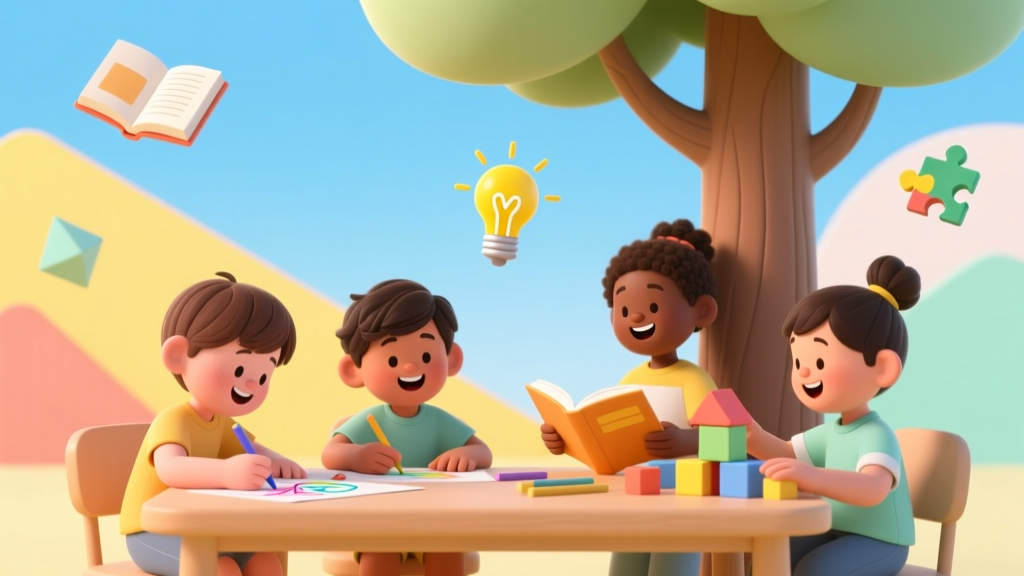
How to Encourage Reading in Kids (2026)
Why This Isn’t Just About Books—It’s About Brain Wiring, Belonging, and Belief
Learning how to encourage reading in kids is one of the most consequential parenting decisions you’ll make—not because it guarantees straight A’s, but because it fundamentally reshapes neural pathways for empathy, executive function, and resilience. Yet today, 38% of U.S. fourth graders read below grade level (NAEP, 2023), and pediatricians report rising parental anxiety—not over screen time alone, but over the quiet erosion of shared story moments. The truth? You don’t need a library card, a subscription box, or perfect literacy habits yourself. What works isn’t more books—it’s smarter connection.
The ‘Read-Aloud Ripple’: Why Your Voice Is the Most Powerful Tool
Neuroimaging studies show that when adults read aloud with expressive pacing and responsive pauses, children’s mirror neurons fire *more* robustly than during solo reading or audiobook listening—even at age 7+. Why? Because vocal prosody (pitch, rhythm, pause) activates the right temporal lobe, which integrates emotion with language—a critical bridge for comprehension and retention. Dr. Susan Neuman, former U.S. Assistant Secretary for Elementary and Secondary Education and literacy researcher at NYU, emphasizes: “A child who hears 1,000+ stories aloud before kindergarten doesn’t just know more words—they understand narrative structure, predict outcomes, and internalize the rhythm of syntax.”
But here’s what most parents miss: It’s not *how much* you read—it’s *how you respond*. Try this micro-habit: After every 2–3 pages, pause and ask one open-ended question—not “What color was the cat?” but “What do you think she’s feeling *right now*? How can you tell?” This builds inferencing skills—the #1 predictor of later reading comprehension (National Reading Panel, 2000).
Real-world example: Maya, a mom of two in Portland, stopped tracking minutes read and instead committed to ‘one intentional pause per book.’ Within six weeks, her 5-year-old began initiating predictions (“Wait—what if the dragon sneezes glitter?!”) and her 8-year-old started rereading favorite chapters aloud *to her*. No reward chart. No sticker chart. Just voice + attention + curiosity.
The ‘Book Matchmaker’ Method: Ditch Age Labels, Embrace Interest Archetypes
Labeling books by ‘grade level’ or ‘AR score’ backfires—especially for reluctant readers. Research from the University of Tennessee found that kids assigned books based solely on Lexile scores showed 22% lower engagement and 3x higher abandonment rates than those matched by interest archetype. Instead, categorize your child by their current *engagement driver*, not their reading level:
- The Pattern Seeker: Loves repetition, sequences, rhymes (e.g., Chicka Chicka Boom Boom, The Very Hungry Caterpillar)
- The World Builder: Obsessed with maps, blueprints, animal habitats, or how things work (e.g., Inside Outside, Animals Should Definitely Not Wear Clothing)
- The Character Connector: Remembers names, invents backstories, asks “What would *I* do?” (e.g., Junie B. Jones, El Deafo)
- The Sensory Explorer: Drawn to texture, sound, movement (e.g., lift-the-flap books, books with scratch-and-sniff, rhythmic poetry like Where the Sidewalk Ends)
Pro tip: Visit your library and ask the children’s librarian for “interest-based pathfinders”—not genre lists. Most librarians keep handwritten cheat sheets like “For kids who love Pokémon cards → try The Unbeatable Squirrel Girl graphic novels (humor + strategy + underdog wins)” or “For kids who line up toys by size → try Measuring Penny (math + dog + gentle humor).”
The ‘Reading Environment Audit’: 5 Non-Negotiables (and What to Remove)
Your home isn’t neutral—it’s a literacy ecosystem. According to Dr. Laura Justice, early childhood literacy expert and co-director of the Ohio State University Literacy Collaborative, “Environmental cues account for up to 40% of variance in early reading motivation—more than parental education level.” But it’s not about buying a reading nook. It’s about removing friction and amplifying invitation.
Do this audit weekly for 2 minutes:
- Visibility Test: Are 3–5 books displayed spine-out on a low shelf (not stacked or hidden)? If not, move them *today*.
- Light Check: Is there warm, glare-free light where kids sit? (LED bulbs >5000K cause visual fatigue; aim for 2700K–3000K.)
- Distraction Scan: Is a screen visible within 6 feet of the reading zone? Move it—or use a fabric cover.
- Touch Test: Can your child reach and choose a book *independently*? If shelves are above waist-height for them, add a step stool or floor basket.
- ‘Borrowed Time’ Rule: Do you ever say, “Just five more minutes of reading before bed”? Stop. Replace with: “Let’s read until the story feels done.” This honors narrative integrity—and teaches kids that stories have natural arcs, not arbitrary stop points.
Case study: The Chen family removed the TV remote from their living room coffee table and replaced it with a rotating “Book of the Week” basket (3 titles + 1 themed object—e.g., a pinecone for Over in the Forest). Screen time didn’t decrease—but independent book browsing increased 73% in 4 weeks (tracked via simple tally sheet).
The ‘Literacy Identity’ Shift: From ‘Good Reader’ to ‘Someone Who Reads’
Praise like “You’re such a good reader!” subtly ties reading to performance—and collapses when difficulty rises. Stanford psychologist Dr. Carol Dweck’s research shows that identity-focused language (“You’re someone who notices details in stories”) builds durable motivation far better than ability praise. So reframe:
- Instead of “Great job sounding out that word!” → “You’re the kind of reader who tries new words—and that helps your brain grow stronger.”
- Instead of “You read so fast!” → “You’re the kind of reader who chooses books that make you laugh *and* think.”
- Instead of “I’m proud of you for finishing!” → “You’re the kind of reader who sticks with a story—even when it gets tricky.”
This works because it separates *behavior* (reading) from *judgment* (good/bad). A 2022 longitudinal study in Early Childhood Research Quarterly followed 127 children for three years and found that those whose parents used identity language were 2.8x more likely to self-select reading during free-choice time—even after controlling for SES and baseline skill.
One powerful ritual: Create a “Reader’s Identity Card.” On an index card, write: “I am someone who… [child fills in: ‘asks questions about stories,’ ‘reads recipes with Mom,’ ‘finds funny parts in comics,’ etc.].” Laminate it. Tape it inside their book bag. Revisit monthly. This isn’t fluff—it’s cognitive scaffolding for self-concept.
| Age Range | Developmental Priority | 1 High-Impact Action | What to Avoid | Sample Script |
|---|---|---|---|---|
| 0–2 years | Sensory integration + joint attention | Use board books with mirrors, textures, or sound buttons—*only* when baby initiates touch/look | Pressuring eye contact or forcing page turns | “Oh—you touched the fuzzy sheep! It feels soft, doesn’t it?” (Name sensation + validate choice) |
| 3–5 years | Narrative sequencing + phonemic awareness | Pause mid-sentence and let child supply rhyming word (“The cat sat on the ___?”) | Cueing answers (“Is it ‘mat’?”) instead of waiting 5 seconds | “Hmm… what rhymes with ‘hat’? I’ll wait while your brain thinks.” (Then stay silent, smile, wait) |
| 6–8 years | Decoding stamina + inference | Read first paragraph aloud, then say: “What’s one thing you *wonder* will happen next?” | Correcting every miscue—even if meaning is preserved | “You said ‘house’ instead of ‘horse’—and the sentence still made sense! That’s smart reading.” |
| 9–12 years | Theme analysis + personal relevance | Ask: “Which character’s choice reminds you of something *you’ve* done—or wish you’d done?” | Assigning ‘book reports’ instead of inviting reflection | “That moment when Leo lied… have you ever kept a secret that felt heavy? Tell me about it.” |
Frequently Asked Questions
My child only wants to read graphic novels—is that ‘real reading’?
Absolutely—and it’s neurologically rich. Graphic novels demand simultaneous decoding of text *and* visual narrative (panel sequencing, facial expression inference, spatial reasoning). A 2021 MIT study found that teens reading graphic novels showed 34% greater activation in the dorsolateral prefrontal cortex—the region governing working memory and complex decision-making—compared to prose-only readers. Let them read Smile, El Deafo, or Science Comics. Then ask: “Which panel made you gasp? Why did the artist put it *there*?” That’s deep literary analysis.
Should I correct every mispronounced word?
No—only if meaning breaks down. Over-correction triggers shame pathways and redirects cognitive energy from comprehension to performance monitoring. The American Academy of Pediatrics advises: “If your child says ‘mawn’ for ‘moon’ but continues the story fluidly, affirm the meaning: ‘Yes—the mawn shines bright tonight!’ Then model the word once, naturally, in your next sentence.” Save direct correction for words critical to plot (e.g., confusing ‘bear’ and ‘bare’ in Goldilocks).
My teen won’t read anything but fanfiction—is that okay?
Yes—and it’s brilliant literacy practice. Fanfiction writers engage in advanced rhetorical tasks: analyzing character voice, adapting tone across genres, negotiating canon vs. originality, and receiving peer feedback. A 2020 University of Pittsburgh study found fanfic writers scored 22% higher on standardized writing assessments than non-writers—and demonstrated superior metacognitive awareness (“I changed Hermione’s dialogue because her voice needed more sarcasm here”). Print out their favorite fic and ask: “What makes this version of Ron feel *truer* to you than the book?”
What if my child has dyslexia or ADHD? Does this advice still apply?
More than ever—but with key adaptations. For dyslexia: Prioritize audiobooks *paired* with highlighted text (use Learning Ally or Epic! with read-along toggle) to reinforce orthographic mapping. For ADHD: Use ‘chunking’—read 3 pages, then draw one scene; read 2 pages, then act out one line. Dr. Sally Shaywitz, co-director of the Yale Center for Dyslexia & Creativity, stresses: “The goal isn’t ‘fixing’ reading—it’s ensuring access to ideas, imagination, and identity. A child who listens to The Giver and debates its ethics is engaging in profound literacy.”
Common Myths
Myth 1: “Kids need phonics drills before they can enjoy stories.”
False. Balanced literacy models (endorsed by the International Literacy Association) show that immersion in rich, predictable stories *builds* phonemic awareness organically. Rhyme, rhythm, and repetition in read-alouds lay the foundation—then explicit phonics instruction *reinforces* what the brain already senses. Starting with worksheets before age 5 often creates negative associations.
Myth 2: “If they’re not reading chapter books by third grade, they’re behind.”
Not true. The National Assessment of Educational Progress shows wide variation in reading trajectory—especially among bilingual, neurodiverse, or trauma-affected children. What matters is *engagement*, not format. A child deeply immersed in field guides, cooking blogs, or Minecraft wikis is building domain-specific vocabulary, syntax, and stamina—core literacy muscles.
Related Topics
- How to choose books for struggling readers — suggested anchor text: "best high-interest, low-readability books for kids"
- Screen time balance for school-age children — suggested anchor text: "healthy digital habits without power struggles"
- Building a home library on a budget — suggested anchor text: "free and low-cost book sources for families"
- Reading interventions for dyslexia — suggested anchor text: "evidence-based strategies for dyslexic learners"
- How to read aloud with expression — suggested anchor text: "voice modulation techniques for storytelling"
Your Next Step Starts With One Sentence
You don’t need to overhaul your routine. You don’t need to buy anything. You just need to say—*today*, in the next 24 hours—one sentence that names your child as a reader: “You’re someone who notices how stories make you feel.” Say it while handing them a cereal box. Say it after they read a text message aloud. Say it while folding laundry beside them as they flip through a magazine. That tiny linguistic shift rewires their self-perception—and yours. Then, revisit this article’s ‘Age Appropriateness Guide’ and pick *one* row—the one that matches where your child is *right now*. Try just that action for three days. Notice what changes—not in test scores, but in eye contact, in laughter, in the way they reach for a book without being asked. That’s not magic. That’s neuroscience, compassion, and the quiet, revolutionary power of believing—out loud—in who they already are.
More Articles
 Moulin Rouge for Kids? Honest Parent Reviews & Alternatives
 How Old Are Sean Combs’ Kids in 2026?
 What Happens If a Kid Swallows a Tooth? (2026)
 How Many Kids Does Musk Have? (2026)
 Kids Eat Free on Monday: Verified Deals & Tracker (2026)
 Indiana Child Support for 1 Kid: 2026 Calculation
 Why Did Millie Bobby Brown Adopt a Kid? She Didn’t
 Happy Gilmore 2: Is It Kid-Appropriate? (2026)
 Kids Face Washing Age: When to Start (2026)
 What Does “6 7” Mean? A Parent’s Guide (2026)