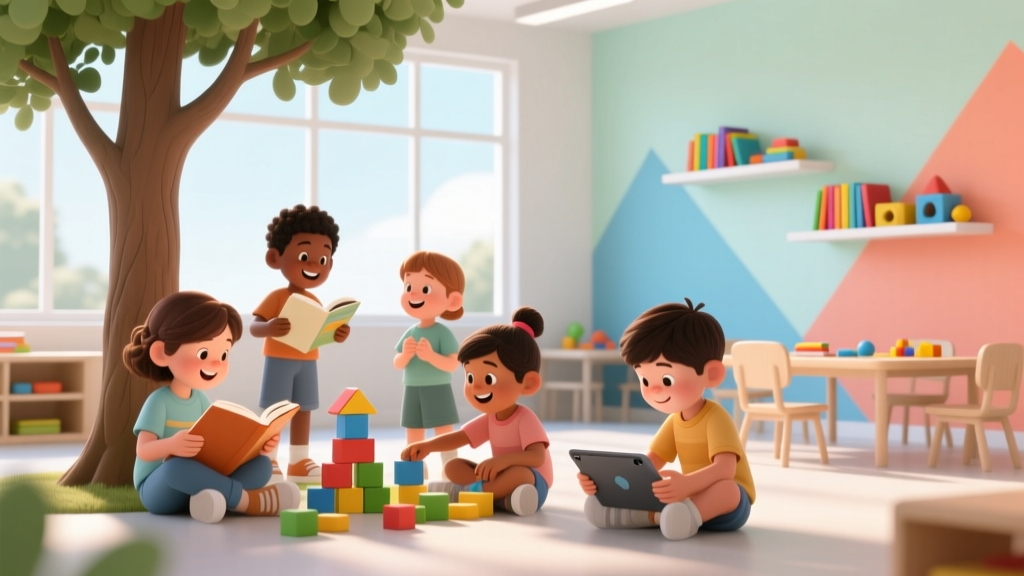
How to Empower Your Kids: 7 Research-Backed Shifts
Why Empowering Your Kids Isn’t Just ‘Letting Go’ — It’s Building Their Inner Compass
If you’ve ever asked yourself, how to empower my kids, you’re not searching for a quick fix — you’re seeking a deeper, more intentional way to raise humans who trust themselves, speak up when something feels wrong, and bounce back from setbacks without needing your constant rescue. In today’s world of curated social feeds, academic pressure, and rising childhood anxiety (affecting 1 in 5 U.S. children, per CDC 2023 data), empowerment isn’t a luxury — it’s protective infrastructure. Empowerment isn’t about handing over control; it’s about scaffolding competence so your child internalizes the belief: ‘I can figure this out — with support, yes, but also with my own voice, judgment, and courage.’
The ‘Agency Gap’: What Happens When We Skip Empowerment
Dr. Lisa Damour, clinical psychologist and author of The Emotional Lives of Teenagers, observes that many well-intentioned parents unintentionally widen what she calls the ‘agency gap’ — the growing disconnect between a child’s chronological age and their lived experience making consequential choices. When we consistently override a 6-year-old’s choice of lunchbox, solve a 9-year-old’s playground conflict before they’ve had time to try, or rewrite a 13-year-old’s essay ‘to make it better,’ we send a quiet, repeated message: ‘Your judgment isn’t reliable yet. I’ll decide what’s safe, right, or good enough.’ Over time, this erodes executive function development — the very brain systems responsible for planning, self-regulation, and weighing consequences.
Consider Maya, a mother of two in Portland: She noticed her 10-year-old daughter froze during a school science fair presentation — not because she didn’t know the material, but because she’d never practiced speaking without Maya editing her slides or rehearsing lines. After shifting to a ‘consultant, not director’ role — asking questions like ‘What part feels hardest?’ and ‘What would help you feel ready?’ instead of rewriting scripts — her daughter delivered her next presentation with steady eye contact and genuine pride. That shift wasn’t magic. It was deliberate empowerment.
Empowerment Is Developmental — Not Age-Neutral
True empowerment is calibrated to your child’s neurodevelopmental stage. The American Academy of Pediatrics (AAP) emphasizes that agency grows in layers: sensory-motor exploration (ages 0–2), autonomous choice-making (ages 3–6), collaborative problem-solving (ages 7–12), and identity-driven decision-making (ages 13+). A one-size-fits-all ‘just let them choose!’ approach ignores critical safety and cognitive boundaries — especially for young children whose prefrontal cortex is still maturing.
Here’s how to match empowerment to development:
- Ages 2–4: Offer two safe, limited choices (‘Do you want the red cup or the blue cup?’), narrate their actions (‘You poured the water all by yourself!’), and tolerate messes as learning laboratories — not failures.
- Ages 5–8: Introduce ‘micro-responsibilities’ with clear cause-effect (e.g., ‘If you forget your lunchbox, you’ll eat the school-provided option — and we’ll talk about how to remember tomorrow’). Let natural consequences teach, not shame.
- Ages 9–12: Co-create family agreements (e.g., screen-time contracts drafted together), invite input on household decisions (‘Should we plant tomatoes or peppers this summer?’), and practice ‘pre-mortems’ before big events (‘What could go wrong? How would you handle it?’).
- Ages 13–18: Shift from ‘approval’ to ‘advisory’. Ask: ‘What do you need from me right now — a sounding board, a reality check, or just silence while you think?’ Then honor their answer.
The 4 Non-Negotiable Pillars of Everyday Empowerment
Empowerment isn’t built in grand gestures — it’s woven into daily micro-interactions. Based on 12 years of clinical work with families and research from the Harvard Center on the Developing Child, these four pillars form the foundation:
- Emotional Literacy First: Children can’t advocate for themselves if they can’t name what they feel. Label emotions accurately (‘That sounds frustrating — your tower fell after 10 minutes of work’), avoid minimizing (‘Don’t cry, it’s just a toy’), and model healthy regulation (‘I’m feeling overwhelmed — I’m going to take three breaths before I respond’).
- Competence Before Control: Let them struggle productively. A 2022 University of Michigan study found children who regularly engaged in ‘effortful tasks’ (tying shoes, packing lunches, troubleshooting a bike chain) showed 37% higher persistence on novel challenges than peers shielded from frustration. Resist the urge to ‘fix it fast’ — ask, ‘What’s the first step you’d try?’
- Ownership of Outcomes: Separate outcomes from worth. Instead of ‘Great job getting an A!’, try ‘You studied for 30 minutes every night — that consistency paid off.’ This links effort to result, not innate talent to praise — building growth mindset (per Dr. Carol Dweck’s seminal research).
- Amplified Voice, Not Just Permission: Create consistent spaces where their opinion carries weight — e.g., rotating ‘Family Menu Planner’ duty, voting on weekend activities, or hosting a monthly ‘Feedback Circle’ where everyone shares one thing they appreciated and one thing they’d like to change.
What Empowerment *Really* Looks Like: A Real-World Comparison Table
| Scenario | Traditional Parenting Response | Empowerment-Focused Response | Developmental Benefit |
|---|---|---|---|
| Your 7-year-old spills milk at breakfast | ‘It’s okay — I’ll clean it. Just sit there.’ | ‘Spills happen! Grab the sponge and towel — I’ll show you the best way to wipe it up so it doesn’t stick.’ | Builds self-efficacy + fine motor coordination + understanding of cause/effect |
| Your 11-year-old argues about homework timing | ‘You’ll do it now — no negotiation. I set the rules.’ | ‘What time do you think works best for focus? Let’s test it for 3 days and check in — what signs will tell us if it’s working?’ | Develops metacognition + collaborative problem-solving + accountability |
| Your 14-year-old wants to attend a concert with friends | ‘No — it’s too late, too far, and I don’t know those kids.’ | ‘What’s your plan for transportation, check-in times, and handling unexpected situations? Let’s map risks and solutions together.’ | Strengthens risk assessment + executive function + trust-building |
| Your 16-year-old gets rejected from a college program | ‘Don’t worry — I’ll call the admissions office and see what went wrong.’ | ‘That hurts. Want to talk about it? When you’re ready, would you like help drafting an email asking for feedback — or would you prefer space first?’ | Fosters emotional resilience + self-advocacy + autonomy in distress |
Frequently Asked Questions
Does empowering my kids mean giving them total freedom?
No — empowerment is guided autonomy. Think of it like training wheels: they provide stability while the rider learns balance and steering. You set compassionate boundaries (‘We don’t hit when angry, but we *can* stomp outside or squeeze a stress ball’) and co-create rules rooted in shared values (safety, respect, fairness). Freedom without scaffolding leads to anxiety; structure without voice breeds resentment. The sweet spot is ‘freedom within frames.’
My child resists taking responsibility — they say ‘You do it!’ What do I do?
This is often a sign of learned helplessness — not defiance. Start smaller than you think. If they refuse to pack their backpack, try: ‘I’ll hold the zipper while you slide the books in,’ then next day, ‘You hold the zipper — I’ll hand you each book.’ Celebrate effort, not perfection. As Dr. Ross Greene (author of The Explosive Child) advises: ‘Kids do well if they can.’ Resistance usually signals lagging skills — not unwillingness.
Won’t empowering my kids make them less respectful or obedient?
Research shows the opposite. A landmark 2021 longitudinal study in Child Development followed 1,200 families for 8 years and found children raised with high warmth + high autonomy support were more likely to internalize moral reasoning, show empathy, and comply with requests — not because they feared punishment, but because they understood the ‘why’ and felt respected as emerging individuals. Obedience rooted in fear fades; cooperation rooted in mutual respect endures.
How do I empower kids when I’m exhausted, overwhelmed, or dealing with my own anxiety?
You can’t pour from an empty cup — and empowerment starts with your self-awareness. Notice your triggers: Does your child’s hesitation spike your urgency? Does their big emotion mirror one you suppress? Pause and name it: ‘I’m feeling rushed right now — I need 60 seconds to breathe before we decide.’ Model the regulation you hope to teach. Also, empower *yourself*: negotiate one non-negotiable boundary (e.g., ‘I need 20 minutes of quiet after work before helping with homework’) — because empowered parents raise empowered kids.
Is empowerment different for neurodivergent kids?
Yes — and it’s even more vital. For children with ADHD, autism, or anxiety, empowerment means honoring neurocognitive differences while expanding capacity. Example: A child with executive function challenges may need visual schedules *and* co-created ‘choice boards’ (‘Which 2 of these 4 math problems feel doable today?’). According to Dr. Mona Delahooke, clinical psychologist and author of Brain-Body Parenting, ‘Empowerment for neurodivergent kids isn’t about fitting in — it’s about building on strengths while adapting environments to reduce overwhelm.’
Common Myths About Empowering Kids
- Myth #1: “Empowerment means stepping back and letting kids figure everything out alone.”
Reality: Empowerment is active, not passive. It requires your presence — observing, questioning, reflecting, and sometimes physically demonstrating — while consciously transferring ownership of the process. You’re the coach on the sideline, not the player on the field.
- Myth #2: “Young kids are too little to be empowered — they just need direction.”
Reality: Agency begins at birth. Even infants exercise choice through gaze aversion, sucking patterns, and sleep cues. Ignoring these early signals teaches helplessness. Empowerment at age 2 looks like choosing socks; at age 5, it’s negotiating chore swaps; at age 12, it’s budgeting allowance. It scales — it doesn’t wait.
Related Topics (Internal Link Suggestions)
- Age-Appropriate Chores for Kids — suggested anchor text: "chores that build responsibility by age"
- How to Teach Emotional Regulation — suggested anchor text: "emotional regulation skills for children"
- Growth Mindset Activities for Families — suggested anchor text: "growth mindset games and conversations"
- Screen Time Boundaries That Stick — suggested anchor text: "collaborative screen time agreements"
- Talking to Kids About Consent and Body Autonomy — suggested anchor text: "consent conversations for preschoolers and tweens"
Ready to Begin — One Small Step at a Time
Empowering your kids isn’t about overhauling your parenting overnight. It’s about noticing one recurring moment this week where you default to doing *for* instead of supporting *with*. Maybe it’s letting your 8-year-old order their own food at a restaurant — even if they stumble over the words. Or asking your 12-year-old to draft the grocery list for dinner — then using it, even if they forget the milk. These micro-shifts rewire neural pathways for both of you. Start with one interaction, reflect on what happened (not just the outcome, but the feeling in your body and theirs), and adjust. You’re not raising perfect children — you’re nurturing capable, compassionate, courageous humans. And that begins the moment you choose to believe — out loud, consistently — ‘I trust you to learn this.’
More Articles
 Mike Vrabel Parenting Strategies for Busy Professionals
 Why Do People Kidnap Kids? Real Reasons & Prevention
 Missing Kids in Virginia: Verify Hoaxes in 90 Seconds
 Kid’s Breath Stinks After Brushing: 7 Hidden Causes
 How to Talk to Kids About Nonbinary Identity
 When Should Kids Get Eye Exams? AAP Timeline & Red Flags
 Youth Violence Prevention: Red Flags & Digital Risks (2026)
 How Many Cherry Pits Are Toxic to Kids? (2026)
 Flintstone Vitamins for Kids: Pediatrician-Reviewed Facts
 Measles Deaths in Children: 2026 Facts & Protection