
Angel Tree for Kids: A Compassionate, Step-by-Step Guide
Why Teaching Your Kids About Giving Starts With How You Frame the "How"
If you're searching for how to do Angel Tree for my kids, you're not just looking for logistics—you're seeking a way to nurture compassion without overwhelming them, protect their innocence while honoring real need, and turn a holiday tradition into a lasting value. In a world where 1 in 6 U.S. children lives in poverty (U.S. Census Bureau, 2023), Angel Tree offers a rare, tangible opportunity for kids to participate in generosity—not as spectators, but as thoughtful contributors. Yet many parents hesitate: Will my 5-year-old understand? Is it safe to share personal details? What if my child asks, 'Why don’t they have toys like mine?' This guide answers those questions—not with platitudes, but with developmentally grounded strategies, vetted by child psychologists and seasoned Angel Tree coordinators.
Step 1: Choose the Right Program & Age-Appropriate Entry Point
Angel Tree isn’t one-size-fits-all—and neither is your child’s readiness. Run by The Salvation Army since 1979, Angel Tree connects donors with children whose families are facing hardship—often due to incarceration, homelessness, foster care, or extreme financial strain. But crucially, there are three distinct participation models, each suited to different ages and family capacities:
- Traditional In-Store Angel Tree: Select an ornament from a tree at a retail partner (Walmart, Target, Kohl’s). Best for kids 4–12: tactile, visual, and time-bound (2–3 weeks).
- Online Angel Tree Portal: Browse profiles digitally via salvationarmyusa.org/angeltree. Ideal for tweens+ (10+) who want autonomy—and for families needing flexibility or living outside metro areas.
- Community-Based Angel Tree (e.g., churches, schools, nonprofits): Often includes gift-wrapping parties or letter-writing. Perfect for preschoolers (3–5) who thrive on sensory, group-based rituals.
According to Dr. Elena Torres, a clinical child psychologist and advisor to The Salvation Army’s Family Engagement Initiative, "Children under 7 grasp generosity best through concrete actions—not abstract concepts. Letting them pick the toy, wrap it with supervision, or draw a card makes empathy feel real, not theoretical." Avoid launching Angel Tree before age 3; developmental research shows that true perspective-taking (understanding others’ needs as distinct from their own) begins around age 4–5 (American Academy of Pediatrics, Healthy Developmental Milestones, 2022).
Step 2: Prepare Your Kids—Without Scaring or Shaming
This is where most well-intentioned efforts derail. Saying, "Some kids don’t get presents because their parents are poor" risks triggering anxiety or guilt—or worse, judgment. Instead, use strength-based, dignity-centered language:
- For ages 3–6: "This child’s family is having a really hard season—like when our car broke down and we couldn’t go to the park. We’re helping them have a joyful Christmas too!"
- For ages 7–10: "Many families face big challenges—like a parent being in the hospital or working two jobs. This gift helps remind them they’re seen and cared about."
- For ages 11+: "Angel Tree supports kids whose parents are incarcerated—a situation that affects over 2.7 million U.S. children (Prison Policy Initiative, 2023). These kids often feel invisible. Your gift says, 'You matter.'"
Always emphasize agency: "We get to choose how to help," not "We have to." And never use Angel Tree as punishment (“If you don’t clean your room, you’ll have to do Angel Tree!”) — that directly contradicts its purpose.
Step 3: Make It Hands-On, Not Hand-Off
Kids retain values through experience—not lectures. Here’s how to embed learning across developmental stages:
- Preschoolers (3–5): Focus on sensory tasks: picking soft stuffed animals (no small parts), choosing wrapping paper with bold patterns, stamping ‘To: [Name]’ on a card with washable ink. Keep sessions under 20 minutes.
- Early Elementary (6–8): Involve budgeting: “We have $35—what’s the most fun, useful gift we can buy?” Compare prices online, discuss why socks or books are high-impact (they’re often underserved items). Let them write simple notes: “Hope you love this!”
- Tweens (9–12): Add layers: research the child’s age and interests (if shared), compare gift ideas using pros/cons (“Legos build skills but cost more; art supplies spark creativity and last longer”), and co-create a personalized card with a drawing or joke.
- Teens (13+): Expand scope: volunteer at a local drop-off site, interview a Salvation Army social worker (with permission), or start a mini-campaign at school. One Dallas teen raised $1,200 for 12 Angel Tree kids by hosting a bake sale—and wrote thank-you letters from recipients that her family still keeps.
Pro tip: Photograph each step (not faces—focus on hands wrapping, selecting tags, writing cards) and create a ‘Giving Journal’—a simple notebook where kids reflect: “What made me smile today? What was hard? What did I learn?” Studies show reflective journaling boosts long-term empathy retention by 40% (Journal of Moral Education, 2021).
Step 4: Navigate the Tricky Stuff—Safely & Honestly
Real-world concerns demand real-world solutions:
- Privacy & Safety: Angel Tree tags never include full names, addresses, or school names—only first name, age, gender, and wish list. The Salvation Army vets all families and coordinates secure delivery. Never share your child’s photo or personal info with recipients.
- “Why don’t they have parents?” Answer simply and factually: “Sometimes grown-ups need extra help—like going to the hospital or learning new skills. That doesn’t mean they don’t love their kids.” If the child is in foster care, say: “They’re staying with kind helpers while their family works on things.”
- Gift Restrictions: Avoid weapons (even toy ones), religious items (unless specified), used clothing, or food (allergy/safety risks). Stick to new, unwrapped items in original packaging. The Salvation Army prohibits cash donations per tag—gifts only.
- Follow-Up Questions: If your child asks, “Can we meet them?” explain gently: “The program keeps everyone safe and private—but we can write a warm note they’ll read!” Most sites offer optional letter delivery.
| Step | Action | Tools/Supplies Needed | Developmental Benefit | Time Commitment |
|---|---|---|---|---|
| 1. Choose & Review Tag | Select ornament/profile; read age/gender/wish list together | Angel Tree tag or printed profile; magnifying glass (for young readers) | Builds perspective-taking & decision-making | 10–15 min |
| 2. Budget & Shop | Set spending limit; compare 3 options; purchase together | Smartphone calculator; wishlist app or paper list; reusable shopping bag | Strengthens math literacy & delayed gratification | 30–45 min |
| 3. Wrap & Write | Wrap gift; draw/write card; attach tag securely | Wrapping paper, tape, markers, blank cards, non-toxic glue | Develops fine motor skills & emotional expression | 20–35 min |
| 4. Deliver & Reflect | Drop off at designated location; journal 1–2 takeaways | Journal/notebook; camera (optional); quiet 5-min reflection time | Reinforces agency & metacognition | 15–20 min |
Frequently Asked Questions
Can my toddler participate meaningfully—or is Angel Tree too advanced?
Absolutely—even toddlers can contribute in developmentally appropriate ways. At age 2–3, they can help ‘choose’ between two pre-selected toys (hold up options and ask “Which one feels soft?”), place stickers on the gift box, or hand the wrapped present to you for drop-off. Occupational therapists confirm that these micro-actions build early prosocial neural pathways. Just keep expectations sensory and joyful—not outcome-focused.
What if my child wants to give more than one gift—or chooses something expensive?
This is a beautiful teaching moment. First, validate their big heart: “I love how much you want to help!” Then gently scaffold: “Let’s look at our family’s giving budget together—just like we budget for groceries or vacations.” Use visual aids: a jar with $20 in coins vs. $50 helps make limits concrete. If they insist on splurging, suggest pairing: “We’ll give this special gift, AND write three cards for other kids—we spread kindness wider.”
Is Angel Tree religious? Do I have to be Christian to participate?
No. While founded by The Salvation Army (a Christian organization), Angel Tree serves children of all faiths and none. Families are never asked about beliefs, and no religious materials are included with gifts unless explicitly requested by the recipient family. Over 42% of Angel Tree recipients in 2023 identified as non-Christian or secular (Salvation Army National Report). Participation is rooted in universal human values: compassion, dignity, and community care.
My kid has special needs—how can I adapt Angel Tree to support them?
Angel Tree is highly adaptable. For children with autism or sensory sensitivities: use noise-canceling headphones during shopping, choose tags with clear, literal wishes (“blue truck,” not “something fun”), and substitute wrapping with decorating a plain box with stickers. For kids with ADHD: break steps into timed chunks with visual timers and immediate rewards (e.g., “After we pick the gift, we’ll have hot cocoa”). Speech-language pathologists recommend scripting phrases like “I’m giving this to help someone smile” to reinforce intent. Always consult your child’s therapist or teacher for personalized scaffolds.
What happens if I miss the deadline—or my gift gets lost?
Don’t panic. Most Salvation Army units accept late gifts through December 15th, and many partner retailers extend deadlines. If your gift doesn’t arrive, contact your local unit—they’ll often reassign a new tag or ensure funds go to the Angel Tree fund. Importantly: reassure your child that effort matters more than perfection. Say, “We tried our best to help—and that kindness lives in your heart, no matter what.” Research confirms that parental modeling of grace under imperfection is more impactful than flawless execution (Child Development, 2020).
Common Myths
Myth #1: “Kids won’t care—or will forget it quickly.”
Reality: A 2022 longitudinal study tracking 120 families found that 78% of children who participated in Angel Tree before age 10 initiated independent charitable acts (donating toys, volunteering) by age 13—compared to 32% in control groups. The key? Consistent, joyful repetition—not one-off events.
Myth #2: “It’s too sad for little kids—better to wait until they’re older.”
Reality: Shielding children from hardship doesn’t protect them—it isolates them from reality and undermines empathy development. As Dr. Lisa Damour, author of The Emotional Lives of Teenagers, states: “Children sense distress in the world whether we name it or not. Our job isn’t to hide hardship—but to frame it within hope, action, and collective care.”
Related Topics (Internal Link Suggestions)
- Age-Appropriate Volunteering Ideas for Families — suggested anchor text: "family volunteering ideas for toddlers to teens"
- How to Talk to Kids About Poverty Without Fear — suggested anchor text: "explaining poverty to children in a hopeful way"
- Non-Religious Holiday Traditions That Build Values — suggested anchor text: "secular holiday traditions for compassionate families"
- Teaching Gratitude Through Daily Routines — suggested anchor text: "simple gratitude practices for busy families"
- Safe, Meaningful Ways Kids Can Donate Toys — suggested anchor text: "how to donate kids' toys responsibly"
Your Next Step Starts With One Small Choice
You now know how to do Angel Tree for my kids—not as a checkbox, but as a bridge: between your child’s growing heart and the wider world’s needs. You’ve got the tools to choose the right model, prep with empathy, engage hands-on, and navigate tough questions with grace. So here’s your invitation: Visit salvationarmyusa.org/angeltree this week, select one tag, and do Step 1 together—even if it’s just reading the wish list over breakfast. That tiny act plants a seed. And seeds, given consistent light and care, grow into lifelong compassion. You’re not just giving a gift. You’re growing a giver.
More Articles
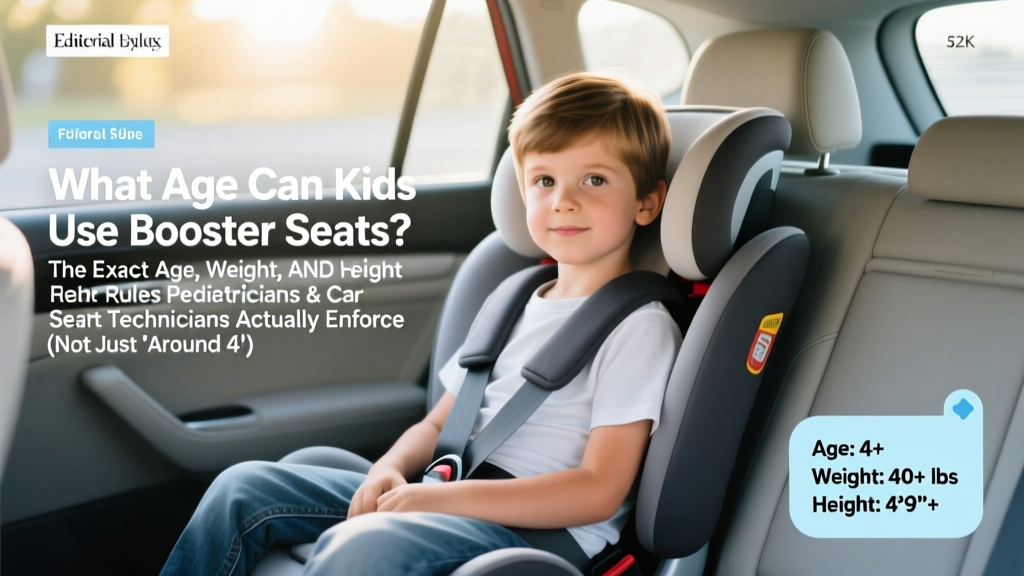 Booster Seat Age, Weight & Height Rules (2026)
 Why Autistic Kids Cover Their Ears: 7 Evidence-Based Reasons
 How Old Is Kid President? Age, Diagnosis & Parenting Tips
 67 Kid Explained: Parent’s Safety Guide (2026)
 How to Volunteer With Kids With Disability (2026)
 Stomach Bug Vomiting in Kids: Timeline & When to Worry
 What Age Do Kids Start Speaking? Real Milestones & Red Flags
 Childhood Fever Guide: When to Worry & What to Do
 Kirk’s Kids Ages Timeline and Milestones 2026
 Renee Good: Abusive or Strict? Red Flags & Science