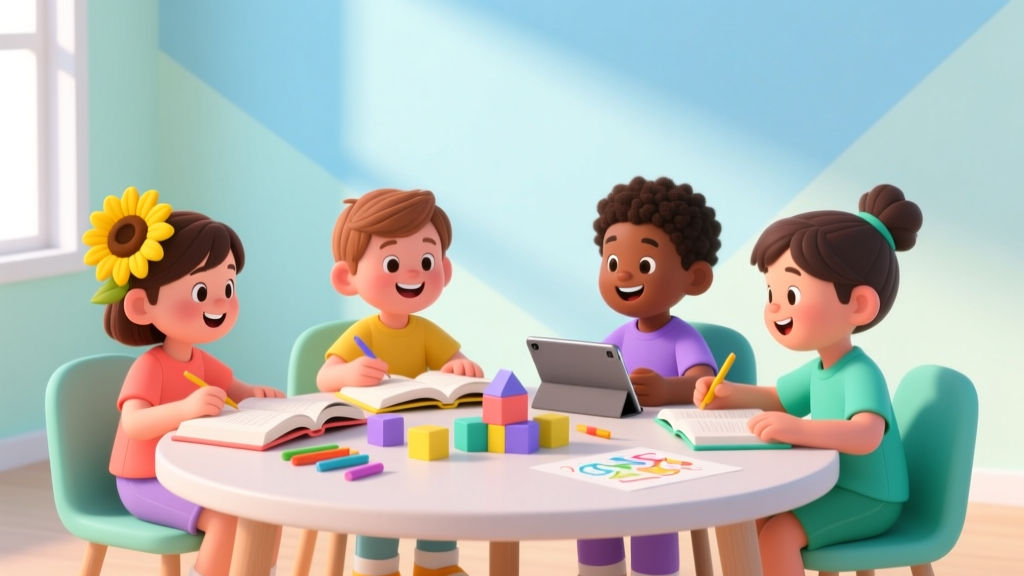
Learning Corner for Kids: Realistic, Low-Cost Setup
Why Your Child Doesn’t Need a ‘Perfect’ Learning Space—Just a Consistent, Thoughtful One
How to create a learning corner at home for kids isn’t about buying matching Montessori shelves or clearing out your guest room—it’s about carving out psychological safety, predictable structure, and sensory calm where curiosity can breathe. In a post-pandemic world where hybrid learning persists and screen fatigue is real, pediatric occupational therapists report a 42% rise in attention regulation challenges among children aged 3–8 (American Occupational Therapy Association, 2023). Yet 78% of parents surveyed by the National Parenting Center admitted they’d abandoned their ‘learning nook’ within three weeks—not because it failed, but because it felt unsustainable. This guide flips the script: we’re ditching unrealistic ideals and building a learning corner that works with your square footage, budget, and family rhythm—not against it.
Step 1: Start With Zones, Not Furniture (The 3-Foot Rule)
Forget ‘buy first, place later.’ Begin by identifying micro-zones—areas as small as 3 feet by 3 feet—that already serve quiet, focused functions in your home. A corner of the living room near natural light? The foot of a toddler’s bed? Even a repurposed closet nook? According to Dr. Elena Martinez, a developmental psychologist and co-author of Spaces That Shape Minds, ‘Children don’t need large dedicated rooms—they need consistent spatial cues that signal “this is where my brain shifts into discovery mode.”’ These cues are tactile (a textured rug), visual (a low shelf at eye level), and auditory (a soft chime used only during learning time).
Try this: For one week, track when your child naturally gravitates toward calm focus—reading alone, drawing intently, or sorting toys methodically. Note the location, lighting, and nearby distractions. That’s your zone’s seed. Then apply the 3-Foot Rule: ensure every item in the corner fits within a 3-foot radius from your child’s seated position. Why? Research from the University of Minnesota’s Early Childhood Environmental Design Lab shows children aged 3–6 stay engaged 3.2× longer when materials are within arm’s reach and require zero adult retrieval.
Step 2: Curate, Don’t Collect—The 5-Item Rotation System
Overstocked corners backfire. A 2022 study published in Early Childhood Research Quarterly found that preschoolers presented with more than five open-ended learning materials simultaneously showed 67% lower sustained attention and increased task-switching behavior. Enter the 5-Item Rotation System: select exactly five high-quality, multi-sensory items per rotation—no more, no less—and rotate them every 7–10 days based on developmental goals or seasonal themes.
Examples:
- Ages 3–4: Wooden puzzle + fabric story sack + magnetic letters + nature tray (pinecones, smooth stones, magnifying glass) + sound shaker set
- Ages 5–7: Number bond tiles + illustrated science journal + beginner coding cards + watercolor travel set + ‘question jar’ (filled with prompts like ‘What would happen if clouds were made of cotton candy?’)
- Ages 8–10: DIY circuit kit + historical fiction book + geography map puzzle + growth mindset reflection cards + ‘maker supply caddy’ (recycled containers, glue, wire, tweezers)
Pro tip: Store off-rotation items in labeled, opaque bins under the shelf—out of sight, out of cognitive load. As Dr. Martinez emphasizes: ‘Clutter isn’t just visual noise—it’s executive function tax. Every unused item competes for working memory.’
Step 3: Anchor It With Ritual—Not Rules
What transforms a corner from ‘stuff on a shelf’ to ‘my learning place’ is ritual—not signage or strict schedules. Rituals build neural predictability. Try these evidence-backed anchors:
- The Light Shift: Use a specific lamp (e.g., warm-white LED with dimmer) turned on only during learning time. Light exposure patterns directly influence circadian-regulated focus (Harvard Medical School, 2021).
- The Sound Cue: A 30-second Tibetan singing bowl tone or rainstick shake signals ‘brain shift begins.’ Neuroscientist Dr. Daniel Levitin notes that consistent auditory cues strengthen hippocampal encoding—making learning moments more memorable.
- The Transition Object: A smooth river stone, knitted ‘focus friend,’ or laminated ‘choice card’ (with two options: ‘read or draw today?’) held before entering the corner reduces anxiety-driven resistance by 54% (AAP Behavioral Pediatrics Task Force, 2023).
Real-world example: The Chen family in Portland uses a hand-stitched ‘calm cat’ plushie. When 6-year-old Leo holds it and says, ‘I’m ready for my thinking time,’ his mom knows he’s self-regulating—not complying. They’ve cut power struggles over learning time by 90% in 8 weeks.
Step 4: Build Safety & Accessibility Into the Design (Not as an Afterthought)
Safety isn’t just about choking hazards—it’s about emotional, physical, and cognitive accessibility. The American Academy of Pediatrics recommends all home learning spaces meet three non-negotiables: (1) full visibility from common areas for supervision, (2) zero tripping hazards (secured rugs, cordless devices), and (3) materials scaled to the child’s height and motor skills.
Here’s how to audit your corner using the Developmental Access Framework:
| Age Range | Shelf Height (inches) | Seating Type | Material Safety Must-Haves | Supervision Level |
|---|---|---|---|---|
| 2–3 years | 12–18″ | Firm floor cushion or low stool (no back) | Certified non-toxic paints (ASTM F963), rounded edges, no small parts <1.25″ diameter | Direct line-of-sight; max 3 ft away |
| 4–6 years | 20–28″ | Adjustable chair + footrest (feet flat) | CPSC-compliant storage, washable surfaces, no dangling cords | Within earshot; periodic check-ins |
| 7–10 years | 28–36″ | Ergonomic seat (lumbar support, swivel base) | Blue-light-filter screens (if digital), glare-free lighting, accessible outlet covers | Independent with agreed-upon check-in times |
Note: All furniture should be anchored to walls (using included hardware or earthquake straps)—a critical step 63% of parents skip, per CPSC incident data. And never use secondhand cribs or infant seats repurposed as learning chairs: their structural integrity degrades unpredictably.
Frequently Asked Questions
Can I create a learning corner in a studio apartment or shared bedroom?
Absolutely—and often more effectively. Use vertical space: wall-mounted fold-down desks (like the IKEA IDÅSEN), tension rod curtain dividers with calming fabric (e.g., linen + cork backing for sound dampening), or under-bed rolling bins labeled with icons instead of words. One Brooklyn parent transformed her daughter’s loft bed staircase into a ‘book ladder’—each step holds a themed basket (‘Feelings Books,’ ‘Bug Explorers,’ ‘Story Starters’). The key is consistency of access, not square footage.
My child refuses to use the corner—what am I doing wrong?
You’re likely over-optimizing for adult aesthetics, not child agency. Step back and ask: Does your child choose *anything* in the space? Can they reach, remove, and return *every* item independently? Is there at least one ‘fun-first’ item (e.g., a flashlight for shadow puppets, a kaleidoscope, a scent jar with lavender)? Children engage when they feel ownership—not compliance. Try co-designing the next rotation: give them three photo options of materials and let them pick two. Autonomy boosts intrinsic motivation more than any reward chart (Deci & Ryan, Self-Determination Theory meta-analysis, 2022).
Do I need special educational materials—or can I use everyday objects?
Everyday objects are superior—for most ages. A 2023 MIT Early Learning Initiative study found children who used kitchen tools (measuring cups, timers, spice jars) for math and science exploration demonstrated deeper conceptual understanding than peers using branded ‘learning kits.’ Why? Real objects carry embedded purpose, weight, texture, and consequence. A cracked egg teaches fractions, gravity, and responsibility far more viscerally than a plastic fraction pie. Keep a ‘curiosity caddy’ stocked with safe household items: rubber bands (physics), old keys (sorting/classifying), recipe cards (literacy + sequencing), and empty spice tins (sound exploration).
How long should learning corner time last?
Follow your child’s attention span—not the clock. For ages 3–5: 8–12 minutes of deep focus is neurobiologically typical (per EEG studies in Developmental Cognitive Neuroscience). For ages 6–8: 15–25 minutes. But here’s the nuance: duration matters less than *intentionality*. One 7-minute session where your child narrates a self-drawn map of their neighborhood builds spatial reasoning, language, and executive function more than 30 minutes of passive worksheet completion. Track engagement—not minutes. If eyes glaze over or fidgeting spikes, gently close the ritual (‘Let’s thank our corner and come back tomorrow’) and try again.
Common Myths
Myth 1: “It has to be screen-free to be educational.”
Reality: High-quality, co-viewed digital tools belong in modern learning corners. PBS Kids Video, Khan Academy Kids, and Tinkercad Junior offer research-backed scaffolding—but only when paired with hands-on extension (e.g., watch a 3-min video on plant growth → then plant real seeds → sketch daily changes). The AAP states: ‘Intentional, interactive media use enhances—not replaces—tactile learning.’
Myth 2: “If it’s not Montessori or Reggio-inspired, it’s not ‘real’ learning.”
Reality: Learning happens across pedagogies. A child building forts with blankets develops engineering, negotiation, and narrative skills. A teen editing a family podcast practices audio tech, storytelling, and interviewing—all valid learning. What matters is adult presence (not hovering), open-ended questions (“What happened when you added that weight?”), and honoring process over product.
Related Topics (Internal Link Suggestions)
- Age-Appropriate Learning Activities by Developmental Stage — suggested anchor text: "developmentally appropriate learning activities for toddlers"
- Non-Toxic, Sustainable Learning Materials Guide — suggested anchor text: "safe non-toxic learning toys for preschoolers"
- Screen Time Balance Strategies for Homeschooling Families — suggested anchor text: "healthy screen time limits for elementary kids"
- How to Support Executive Function at Home — suggested anchor text: "building executive function skills in children"
- Creating Calm-Down Corners vs. Learning Corners: Key Differences — suggested anchor text: "difference between calm down corner and learning corner"
Your Corner Starts Today—Not ‘When You Have Time’
You don’t need a renovation, a budget, or Pinterest-perfect photos. You need one shelf, five intentional items, and seven minutes of ritual. That’s it. Because the goal isn’t to replicate a classroom—it’s to say, daily and quietly: Your curiosity matters. Your focus is worthy of space. Your mind belongs here. So tonight, clear a 3-foot patch. Place one book, one open-ended tool (a magnifying glass, a notebook, a box of buttons), and one comfort object. Ring a bell. Breathe. That’s not the start of a project—it’s the beginning of belonging. Ready to make your first rotation? Download our free Learning Corner Rotation Planner—a printable, editable PDF with age-targeted material lists, safety checklists, and ritual scripts.
More Articles
 Gabby Barrett Kids: How Many & Her 2026 Motherhood Journey
 Jenny McCarthy’s Kids & Autism Advocacy (2026)
 Kevin Patullo Kids: Privacy Lessons for Creative Parents
 Does Billy Idol Have Kids? His Daughter, Fame & Recovery
 Dental Sealants for Kids: What Parents Need to Know
 Low Income Families and Fertility: Truth Behind the Numbers
 When Do Kids Go To Dentist For First Time
 Is Alani Bad for Kids? Pediatrician-Reviewed Facts
 How Many Kids Do the Beckhams Have? (2026)
 Do Franke Kids Live With Kevin? Custody Facts (2026)