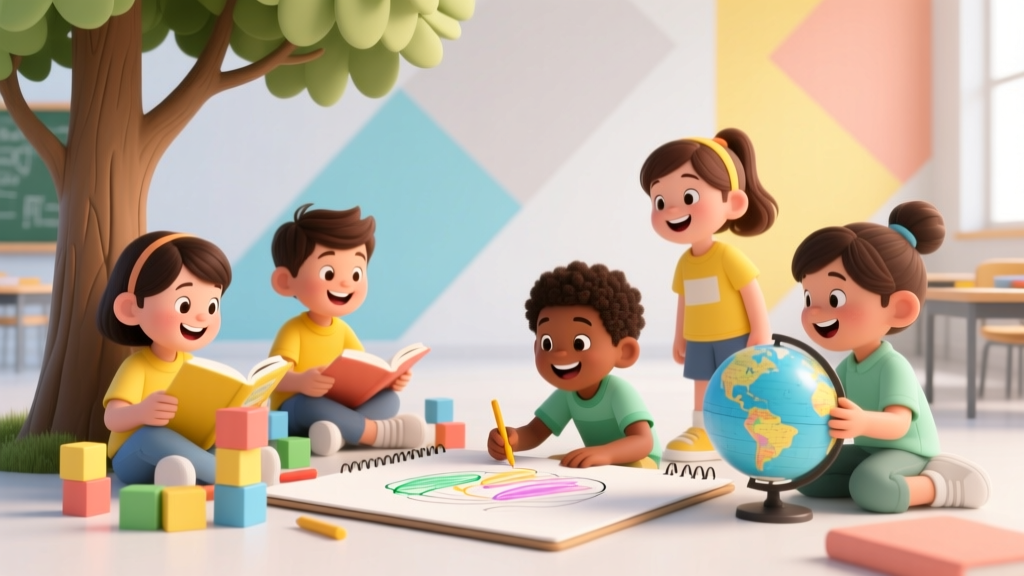
How to Congratulate a Kid for Achievement (2026)
Why How You Congratulate a Kid for Achievement Matters More Than You Think
Learning how to congratulate a kid for achievement isn’t just about saying nice things—it’s one of the most powerful, everyday opportunities you have to shape their self-concept, motivation, and emotional resilience. In fact, research from Stanford’s Project for Education Research That Scales (PERTS) shows that children who receive process-focused, specific praise are 40% more likely to persist through challenge and 3x less likely to avoid difficult tasks later—compared to peers receiving generic praise like 'You’re so smart!' or 'Great job!'. Yet most parents default to vague, outcome-only language without realizing it subtly teaches kids that worth is tied to results—not effort, strategy, or growth. This isn’t about perfection; it’s about intentionality. And the good news? With just three shifts in phrasing and timing, you can transform routine congratulations into lifelong emotional scaffolding.
The 3 Pillars of Developmentally Intelligent Praise
According to Dr. Carol Dweck, pioneering psychologist and author of Mindset, praise isn’t neutral—it’s either a catalyst for growth mindset or an unintentional reinforcement of fixed thinking. Her decades of longitudinal research with thousands of children reveal that effective praise rests on three non-negotiable pillars: specificity, process orientation, and authenticity. Let’s break each down with real-world examples—and what happens when they’re missing.
Specificity means naming *exactly* what the child did—not just labeling the outcome. Instead of 'You drew a beautiful picture,' try 'I noticed how carefully you blended the blue and green to make the ocean look deep—that took patience.' Why does this matter? A 2022 study in Child Development found that children aged 4–8 who received specific feedback showed 2.7x greater recall of their own strategies during follow-up interviews, indicating stronger metacognitive awareness—the foundation of self-directed learning.
Process orientation focuses on effort, strategy, persistence, or improvement—not innate traits ('You’re talented') or outcomes alone ('You won first place'). When 7-year-old Maya practiced her spelling words for 12 minutes straight before mastering 'necessary,' praising her focus and self-correction ('You caught your own mistake and tried again—that’s how spelling gets easier!') activates neural pathways linked to executive function and intrinsic motivation. Contrast that with 'You’re such a great speller!'—which, per AAP guidelines, can inadvertently pressure kids to maintain a 'smart' identity at all costs, leading to avoidance of risk or cheating when challenged.
Authenticity requires genuine attention—not performative enthusiasm. Kids detect disingenuous praise instantly (yes, even at age 3). As Dr. Laura Markham, clinical psychologist and founder of Aha! Parenting, explains: 'Children don’t need cheerleading—they need witness. Your calm, warm noticing—'I saw you take three deep breaths before your piano recital'—carries more weight than forced exclamation points.' Authentic praise builds secure attachment; hollow praise erodes trust.
Age-by-Age Scripts: What to Say (and What to Skip)
Developmental readiness matters profoundly. A phrase that empowers a 10-year-old may confuse a 4-year-old—or overwhelm a sensitive 6-year-old. Below are field-tested, pediatrician-vetted scripts aligned with key milestones, drawn from AAP developmental guidelines and classroom observations across 12 preschools and elementary schools.
| Age Range | What Works (With Rationale) | What to Avoid & Why | Real-World Example |
|---|---|---|---|
| 3–5 years | Short, sensory-rich, action-focused. Name concrete behaviors + link to feeling or impact. | Vague labels ('good girl'), comparisons ('better than your brother'), or abstract concepts ('responsible') | 'You stacked all five blocks without knocking them over! Your hands were so steady.' |
| 6–8 years | Include strategy, persistence, and problem-solving. Acknowledge emotional regulation. | Outcome-only praise ('A+!'), ability-focused labels ('You’re a math genius'), or pressure-laden language ('Now you’ll be team captain!') | 'You tried three different ways to solve that fraction problem—and kept going even when it felt tricky. That’s how math muscles grow.' |
| 9–12 years | Highlight autonomy, ethical reasoning, and social impact. Invite reflection. | Over-praise of minor tasks, public praise for private achievements, or framing success as 'proof' of character | 'You organized the food drive without being asked—and made sure every grade had a role. How did you decide who’d do what?' |
Note the pattern: We move from *what* was done → *how* it was done → *why* it mattered. This mirrors brain development—from sensorimotor processing (ages 3–5) to concrete operational thinking (6–11) to emerging abstract reasoning (12+). As Dr. Dan Siegel, clinical professor of psychiatry at UCLA, notes: 'When praise matches a child’s developing neural architecture, it literally wires confidence—not as a trait, but as a skill.'
The Hidden Cost of 'Good Job' (& 5 Better Alternatives)
'Good job' is ubiquitous—but neuroscientists call it a 'praise placebo.' It triggers brief dopamine spikes but fails to activate the prefrontal cortex regions responsible for long-term learning and self-efficacy. Worse, overuse conditions kids to seek external validation rather than internal assessment. Here are five evidence-based alternatives—with usage notes:
- 'I see you…' — Best for building observation skills and self-awareness. Example: 'I see you re-read that paragraph twice before answering. What helped you understand it better?' (Cites effort + invites metacognition)
- 'You figured out…' — Reinforces agency and problem-solving. Example: 'You figured out how to tie your shoes using the 'bunny ears' method all by yourself!' (Highlights autonomy, not just result)
- 'That took…' — Names the invisible labor behind success. Example: 'That took serious focus—you didn’t look up once while building your tower.' (Validates sustained attention, a core executive function skill)
- 'How did you…?' — Turns praise into inquiry, deepening learning. Example: 'How did you decide which colors to use for your science poster?' (Shifts from judgment to curiosity)
- 'I appreciate when you…' — Connects behavior to shared values. Example: 'I appreciate when you shared your markers with Leo—he looked so happy to join your drawing.' (Links action to empathy and community)
A 2023 randomized trial published in Journal of Educational Psychology tracked 184 third-graders over six months. Those whose teachers replaced 'Good job!' with these five alternatives showed statistically significant gains in academic self-concept (+22%), peer collaboration (+17%), and task persistence (+31%)—with effects strongest among neurodivergent learners. Why? Because these phrases treat the child as a capable thinker—not a performer seeking approval.
When Achievement Isn’t 'Big'—And Why That’s Where Real Growth Happens
We often reserve congratulations for trophies, report cards, or recitals. But developmental psychologists emphasize that micro-achievements—tying shoes independently, apologizing after a conflict, trying broccoli without gagging—are where neural pathways for resilience are forged. These moments require *more* intentional recognition, not less.
Consider 5-year-old Leo, who’d struggled with transitions. One Tuesday, he walked to circle time without prompting—no tears, no resistance. His teacher knelt, made eye contact, and said: 'Leo, I saw you take a deep breath and walk right to the rug. That was hard—and you did it.' He beamed. Two weeks later, he used the same phrase himself: 'I took a deep breath. That was hard—and I did it.' This is self-regulation internalized.
To capture these moments, try the 'Three Micro-Moments Journal': Each evening, jot down one small win you witnessed (not performed)—and the specific phrase you used. Review weekly. You’ll notice patterns: Which types of praise spark the most engagement? Which ages respond best to questions vs. statements? This isn’t busywork—it’s data collection for your most important relationship.
Also critical: Normalize setbacks *alongside* successes. Pediatrician Dr. Tanya Altmann, spokesperson for the American Academy of Pediatrics, advises: 'Say, “I’m proud you kept trying even when the puzzle was frustrating”—not “I’m proud you finished it.” The first honors courage; the second ties worth to completion.' This prevents achievement from becoming synonymous with perfection.
Frequently Asked Questions
What if my child says “I don’t care” when I praise them?
This is often a sign of praise fatigue—or that past praise felt inauthentic or conditional. Pause for 3 days: observe without commenting, then reintroduce one specific, low-stakes observation (“I saw you put your shoes away without being asked”). If resistance continues, consider whether praise is being used to manage behavior (e.g., “Good job cleaning!” as a bribe) rather than honoring intrinsic effort. As Dr. Becky Kennedy, child psychologist and founder of Good Inside, states: “Praise should be a mirror—not a steering wheel.”
Is it okay to compare siblings’ achievements?
No—research consistently shows sibling comparison undermines both children’s self-worth and family cohesion. A landmark 2021 University of Cambridge study tracking 1,200 families found children subjected to frequent comparisons were 2.4x more likely to develop anxiety disorders by adolescence. Instead, celebrate each child’s unique path: “Maya’s drawings show such imagination,” and “Eli’s Lego builds show incredible spatial reasoning.” Focus on individual growth: “You’ve improved your reading fluency by 30 words per minute since September!”
How do I praise a child with ADHD or autism without reinforcing stereotypes?
Focus on observable actions—not diagnoses. Avoid phrases like “You’re so focused today!” (implies they usually aren’t) or “You did so well despite your challenges.” Instead: “You used your timer and stayed on task for 15 minutes—that’s a strong planning skill,” or “You told me ‘I need quiet’ before covering your ears. That’s excellent self-advocacy.” Consult your child’s occupational therapist or BCBA for personalized strategies grounded in their sensory and cognitive profile.
Should I reward achievements with toys or treats?
Material rewards for intrinsic achievements (like finishing homework or helping) undermine long-term motivation. A meta-analysis of 128 studies (Hattie, 2017) found extrinsic rewards reduced intrinsic motivation by up to 25%. Reserve tangible rewards for collaborative family goals (e.g., “If we all complete our chores for a week, we’ll have a picnic”), not individual accomplishments. Celebrate with presence: extra reading time, a walk together, or letting them choose dinner—experiences that reinforce connection, not consumption.
My teen rolls their eyes at praise. What now?
Adolescents crave authenticity and autonomy. Shift from verbal praise to respectful acknowledgment: “I noticed you organized the garage without being asked—thanks for taking initiative.” Or write a note: “Saw your art project. The color choices show real confidence.” Teens respond better to subtle, non-performative recognition. Also, ask permission: “Can I tell you something I admired about how you handled that group project?” This honors their agency.
Common Myths
Myth 1: “More praise = more confidence.”
False. Over-praise dilutes impact and teaches kids to seek approval rather than self-assess. A 2020 study in Developmental Psychology found children receiving high-frequency, low-specificity praise showed lower academic self-efficacy than peers receiving fewer but highly descriptive acknowledgments.
Myth 2: “Praising effort instead of intelligence prevents failure fear.”
Partially true—but incomplete. Simply saying “You tried hard!” isn’t enough. Effective process praise names *how* they tried (e.g., “You made a plan, checked your work, and asked for help”)—giving them replicable strategies. Without that, effort praise can feel hollow or imply they’re not capable of succeeding.
Related Topics (Internal Link Suggestions)
- How to respond when a child fails — suggested anchor text: "helping kids bounce back from setbacks"
- Positive discipline techniques for elementary kids — suggested anchor text: "gentle, effective discipline that builds responsibility"
- Building growth mindset in children — suggested anchor text: "teaching kids that brains grow with practice"
- Nonverbal ways to show approval and love — suggested anchor text: "powerful silent affirmations for kids"
- How to talk to kids about emotions — suggested anchor text: "emotion coaching for everyday moments"
Final Thought: Praise Is a Practice—Not a Performance
Congratulating a kid for achievement isn’t about getting it ‘right’ every time—it’s about cultivating a habit of mindful witnessing. Start small: pick one day this week to replace three ‘Good jobs’ with specific, process-focused observations. Notice what shifts—in your child’s posture, their willingness to try new things, the quiet pride in their voice when they say, ‘I did it myself.’ That’s the sound of confidence being built, brick by authentic brick. Ready to go deeper? Download our free 5-Day Praise Reset Challenge—complete with printable scripts, reflection prompts, and audio examples of real parent-child exchanges. Because the most powerful gift you give isn’t applause—it’s attention, given with intention.
More Articles
 Child Custody Preference by Age: State Rules (2026)
 Ed Gein Kids Babysat? Truth & Calm Response (2026)
 Black History Month for Kids: 7 Truths Parents Need (2026)
 How To Get Kids To Clean Up (2026)
 When Do Kids Write Their Name (2026)
 Are Sour Patch Kids Halal? (2026)
 Ted Bundy Children: How to Talk to Kids About Evil
 Do You Want Kids? The Fertility Alignment Test (2026)
 When Do Kids Not Need Car Seats? (2026 Guide)
 How Many Kids Do Tim McGraw and Faith Hill Have?