
How to Build Confidence in Kids (2026)
Why Building Confidence in Kids Is the Most Underrated Skill You’ll Ever Teach
If you’ve ever watched your child freeze before raising their hand — even when they know the answer — or heard them whisper, “I can’t do it” before trying something new, you’re not alone. How to build confidence in kids isn’t about boosting ego or handing out participation trophies. It’s about cultivating what psychologists call ‘self-efficacy’: the quiet, resilient belief that ‘I can learn, I can try, and I can handle what comes next.’ In today’s world — where childhood anxiety rates have surged 27% since 2016 (CDC, 2023) and screen-based comparison starts as early as age 5 — this skill isn’t just helpful. It’s protective. And the good news? Confidence isn’t inherited. It’s built — daily, deliberately, and often invisibly — in the small moments between ‘You’ve got this’ and ‘Let’s figure it out together.’
The Autonomy Loop: Let Them Do It (Even If It Takes Longer)
Confidence doesn’t bloom under supervision — it sprouts in the fertile soil of *managed independence*. Think of it as the ‘Autonomy Loop’: a feedback cycle where a child initiates an action, experiences natural consequences (not punishment), reflects with guidance, and tries again with refined strategy. A 2022 longitudinal study published in Child Development tracked 412 children aged 4–10 and found those whose parents used ‘scaffolding autonomy’ — offering choice within boundaries, naming effort over outcome, and resisting the urge to intervene prematurely — demonstrated 3.2x higher persistence on novel tasks at age 9 compared to peers raised with high-control or permissive styles.
Try this: Instead of saying, “Let me tie your shoes,” ask, “Which part feels tricky today — the bunny ears or the loop?” Then sit beside them silently for 90 seconds. If they stall, offer one concrete cue: “What if you hold the lace like a drumstick?” No fixing. No rushing. Just presence + precision. Dr. Laura Jana, pediatrician and co-author of The Toddler Brain, calls this ‘the 90-second wait rule’ — enough time for neural pathways to fire, fail, and rewire.
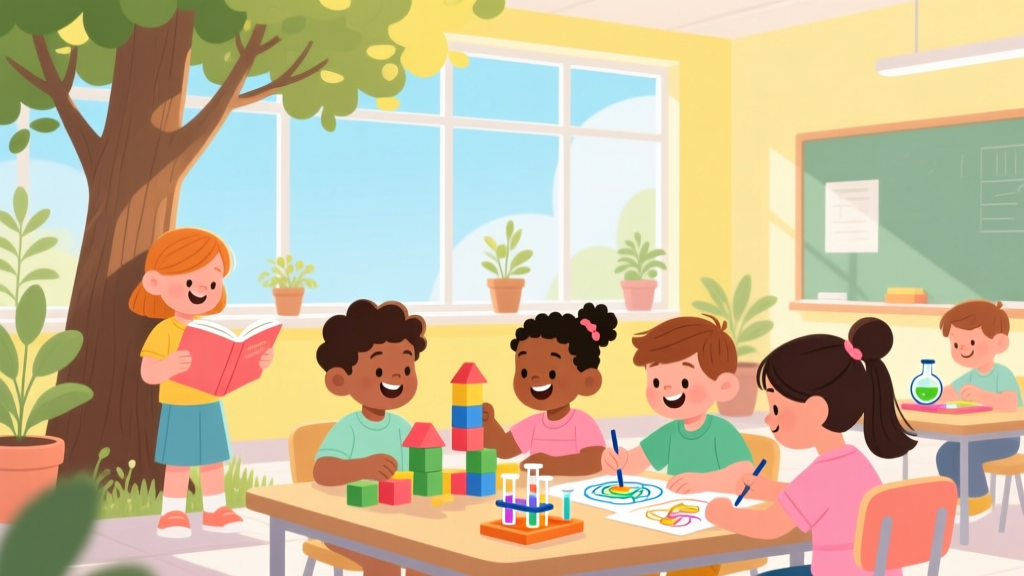
Real-world example: Maya, a first-grade teacher in Portland, introduced ‘Choice Charts’ in her classroom. Each morning, students select *one* responsibility: watering plants, organizing math manipulatives, or leading the line. Not all roles are equal in perceived prestige — but every child rotates weekly, and reflection happens aloud: “What helped you succeed today? What would make it easier tomorrow?” Within 8 weeks, off-task behavior dropped 44%, and peer nominations for ‘most helpful friend’ rose across all personality types — including shy and neurodivergent students.
Growth Mindset Language: Rewiring the ‘I Can’t’ Script
Every time a child says “I can’t,” their brain isn’t declaring permanent incapacity — it’s signaling a temporary cognitive bottleneck. The phrase is rarely literal; it’s a distress signal meaning “This feels too big, too fast, or too unfamiliar.” Stanford psychologist Dr. Carol Dweck’s decades of research confirm: children who hear process-focused language (“You worked so hard on that puzzle”) instead of person-focused praise (“You’re so smart!”) develop deeper resilience, seek more challenges, and recover faster from setbacks.
But here’s what most parenting blogs miss: It’s not just *what* you say — it’s *how you model it*. Children absorb mindset cues nonverbally: your sigh when a recipe fails, your muttered “Ugh, I’m terrible at tech” while struggling with Zoom, your avoidance of tasks labeled ‘hard.’ A landmark 2021 University of Michigan study observed parent-child dyads during collaborative building tasks and found kids mirrored parental self-talk patterns with 89% accuracy — even when parents consciously used growth language *to the child* but not *about themselves.*
Actionable shift: Replace ‘can’t’ with ‘not yet — and here’s what we’ll try.’ Example: Child: “I can’t ride without training wheels.” Parent: “You’re right — your balance muscles aren’t *quite* ready *yet*. Let’s try three things this week: 1) Scooting with feet on flat ground for 2 minutes daily, 2) Watching a slow-motion video of how balance shifts, and 3) Celebrating each time you lift both feet — even for half a second.” Name the micro-skill. Track the micro-win. Normalize the ‘not yet’ pause.
Emotional Literacy: The Confidence Compass
Confidence isn’t the absence of fear — it’s the ability to recognize, name, and move *with* uncomfortable emotions. Yet fewer than 12% of U.S. elementary schools teach explicit emotional vocabulary beyond ‘happy,’ ‘sad,’ and ‘angry’ (CASEL, 2023). Without words for ‘frustrated,’ ‘overwhelmed,’ ‘nervous,’ or ‘disappointed,’ children default to shutdown, tantrums, or people-pleasing — all confidence eroders.
Build their emotional lexicon with the ‘Feeling Flashlight’ technique: When your child reacts strongly, pause and gently illuminate *what might be underneath*. Not “What’s wrong?” (which invites defensiveness) but “I see your shoulders are tight and your voice got loud — is this feeling more like frustration, embarrassment, or worry?” Offer 2–3 precise options. Then validate: “It makes total sense to feel [named emotion] when [situation]. I’d feel that way too.” Validation isn’t agreement — it’s neurological grounding. According to Dr. Dan Siegel, clinical professor of psychiatry at UCLA, naming an emotion literally calms the amygdala, reducing fight-or-flight activation by up to 50%.
Try the ‘Emotion Weather Report’ at dinner: Each person shares their inner weather — “Today my weather was partly cloudy with sprinkles of excitement and a gust of impatience during homework.” No judgment. No solutions. Just witnessing. Over time, kids stop fearing big feelings — and start trusting their capacity to navigate them.
The Power of Purposeful Contribution
Confidence flourishes when children experience themselves as *needed*, not just loved. Contribution builds competence *and* connection — two pillars of secure self-worth. But ‘chores’ often backfire when framed as obligation (“Clean your room or no screen time”). Purposeful contribution, however, answers the unspoken question every child asks: ‘Do I matter here?’
Research from the Harvard Graduate School of Education’s Making Caring Common project shows kids who regularly contribute to family or community well-being — especially tasks requiring reliability and impact — report significantly higher self-esteem and lower depression symptoms by adolescence. Key: Contribution must be *authentic*, *age-appropriate*, and *visible*. Not ‘helping’ — *mattering*.
Examples that work:
- Ages 3–5: “You’re our Official Snack Checker — you decide which apple slices go in the lunchbox. Your eye for crispness keeps us energized!”
- Ages 6–8: “You design the weekend breakfast menu. We’ll shop for your top 3 ingredients — and you guide the cooking steps.”
- Ages 9–12: “You’re our Family Tech Tutor. Next month, you’ll teach Grandma how to use FaceTime — and choose the best spot in her living room for lighting.”
Notice the language: titles (“Official Snack Checker”), specificity (“crispness”), and clear impact (“keeps us energized”). This transforms routine tasks into identity-building rituals.
| Strategy | Core Mechanism | Developmental Benefit | When to Start | Red Flag to Watch For |
|---|---|---|---|---|
| Scaffolded Autonomy | Gradual release of responsibility with embedded support | Strengthens executive function, decision-making, and tolerance for uncertainty | Age 2+ (e.g., choosing between two snacks) | Child consistently avoids trying new tasks *even with support* — may signal sensory processing or anxiety needs |
| Growth Mindset Reframing | Shifting focus from fixed traits to effort, strategy, and learning | Increases academic persistence, reduces perfectionism, improves peer collaboration | Age 4+ (language comprehension threshold) | Child says “I’m stupid” or “I’ll never get it” — signals need for therapeutic support |
| Emotional Literacy Practice | Labeling, validating, and normalizing internal states | Improves self-regulation, empathy, and conflict resolution skills | Age 2+ (start with facial expression matching) | Frequent physical outbursts without verbal labeling — consider occupational therapy evaluation |
| Purposeful Contribution | Assigning meaningful roles with visible impact | Builds identity, belonging, and intrinsic motivation | Age 3+ (simple, concrete responsibilities) | Child refuses *all* contributions or seeks excessive external validation — may indicate low self-worth or attachment concerns |
Frequently Asked Questions
At what age does confidence actually begin to form?
Confidence foundations start in infancy — not as bravado, but as secure attachment. When caregivers consistently respond to cries, mirror expressions, and respect emerging preferences (e.g., “You turned away — you’re done with tummy time”), babies build the primal certainty: ‘My actions matter. My needs are met.’ By age 2–3, this evolves into ‘I can do things’ (autonomy) and ‘People like me’ (belonging) — the twin roots of lifelong confidence. The American Academy of Pediatrics emphasizes that responsive caregiving in the first 3 years is the strongest predictor of later self-efficacy, even more than IQ or socioeconomic status.
My child is confident at home but shuts down at school — what’s happening?
This is incredibly common and usually points to context-dependent regulation, not low confidence. School environments demand rapid transitions, group conformity, and performance under observation — all taxing on developing executive function and social cognition. Neurodivergent children (especially those with ADHD, autism, or selective mutism) often experience this acutely. Instead of pushing ‘more confidence,’ try ‘confidence bridges’: co-create a ‘safe signal’ with their teacher (e.g., a colored card they can place on their desk when overwhelmed), practice ‘micro-braveries’ (raising hand once per day), and debrief *after* school using curiosity, not interrogation (“What felt easiest today? What felt like wading through honey?”). Occupational therapist and author Angela Hanscom notes that 80% of school-related shutdowns correlate with unmet sensory or movement needs — not lack of ability.
Does praising effort really work — or is it just empty encouragement?
It works — but only when it’s specific, authentic, and tied to observable behavior. Generic praise (“Good job!”) activates the brain’s reward center briefly but teaches little. Specific process praise (“You kept trying different keys until the lock clicked — that’s how engineers solve problems!”) builds neural pathways for strategy and perseverance. A 2020 meta-analysis in Psychological Science confirmed that specific effort praise increased task persistence by 31% versus generic praise — but *only* when paired with genuine interest in the child’s process (“How did you decide which key to try first?”). Empty encouragement without attention to the ‘how’ can actually undermine motivation.
My teenager seems chronically insecure — is it too late to help?
It’s never too late. Adolescence is actually a powerful window for confidence rebuilding because the prefrontal cortex is still remodeling — making teens uniquely receptive to new self-concepts. Key leverage points: 1) Shift from ‘fixing’ to ‘co-investigating’ (“What makes that situation feel shaky for you?”), 2) Highlight evidence of past resilience (“Remember when you mastered algebra after failing the first test? What helped then?”), and 3) Support identity exploration *outside* academic/social metrics (e.g., volunteering, creative projects, mentoring younger kids). Clinical psychologist Dr. Lisa Damour, author of The Emotional Lives of Teenagers, stresses that teen insecurity often masks fear of authenticity — not incompetence. Confidence at this stage grows through being seen *as they are*, not as they’re expected to be.
Are confidence-building activities different for neurodivergent kids?
Yes — and the differences are profound. Neurodivergent children (ADHD, autism, dyslexia, etc.) often develop confidence through *strength-based scaffolding*, not normative benchmarks. For example, a child with ADHD may build confidence via movement-integrated learning (building models while explaining concepts) or time-bound ‘focus sprints.’ An autistic child may thrive with visual scripts for social scenarios or predictable contribution roles (e.g., “You’re our Library Shelving Specialist — your pattern recognition keeps books perfectly organized”). The National Autism Association recommends avoiding comparisons to neurotypical peers and instead asking: “What does success *look like for this child’s nervous system and strengths*?” Confidence here is rooted in self-knowledge, not conformity.
Common Myths About Building Confidence in Kids
Myth #1: Confidence comes from constant success. Reality: Overprotecting kids from failure creates ‘fragile confidence’ — easily shattered by the first real challenge. Developmental psychologist Dr. Michael Ungar’s research across 15 countries shows children with the highest resilience had experienced *moderate, supported adversity* — not sheltered perfection. Confidence grows in the stretch zone, not the comfort zone.
Myth #2: Confidence means being outgoing or fearless. Reality: True confidence is internal — it’s the quiet assurance to speak up *or* listen deeply, to try *or* decline, to lead *or* follow — all with self-respect. Introverted, sensitive, or cautious children can possess deep, unshakeable confidence. As Dr. Elaine Aron, researcher on high sensitivity, explains: “Their courage isn’t measured in volume or speed — it’s in the depth of their noticing, the integrity of their boundaries, and the consistency of their values.”
Related Topics (Internal Link Suggestions)
- How to handle perfectionism in children — suggested anchor text: "helping your child overcome perfectionism"
- Signs of low self-esteem in kids — suggested anchor text: "early signs of low self-worth in children"
- Building resilience in elementary-age kids — suggested anchor text: "resilience-building activities for ages 6–10"
- Positive discipline strategies that build confidence — suggested anchor text: "discipline methods that foster self-trust"
- Supporting confident play for shy toddlers — suggested anchor text: "gentle confidence-building for reserved toddlers"
Your Next Step: Pick One Micro-Shift This Week
You don’t need to overhaul your parenting overnight. Confidence grows in increments — and so does your impact. This week, choose *just one* of the four core strategies we explored: scaffold autonomy, reframe language, name emotions, or assign purposeful contribution. Do it with full attention — no multitasking, no ‘fixing,’ just presence and precision. Notice what shifts — in your child’s posture, their willingness to try, the tone in their voice. Then, reflect: What did *you* learn about their inner world? Because the deepest confidence you’ll ever build isn’t just theirs — it’s yours, too: the quiet, unshakable belief that you’re already doing enough, exactly as you are. Ready to begin? Grab your phone, open your notes app, and write down *one* sentence you’ll replace this week — e.g., ‘You’re so smart!’ becomes ‘I love how you kept testing ideas until you found what worked.’ That’s where real change begins.
More Articles
 Bojangles Kids Meals: Nutrition, Allergens & Hacks
 Are Havanese Good With Kids? Truth & Tips (2026)
 Florida School End Dates 2024–2025 by District
 Do Kids Have School on Good Friday? (2026 Guide)
 Was The Kid In The Bad Bunny Halftime Show (2026)
 Does iDubbz Have a Kid? Creator Privacy Explained
 Does Jack Dutton Have Kids? Truth & Modern Fatherhood
 Does My Kid Need Speech Therapy? 7 Early Red Flags
 Amber Heard’s Kids’ Father: Co-Parenting Truths (2026)
 Tylenol and Motrin for Kids: Pediatrician Tips (2026)