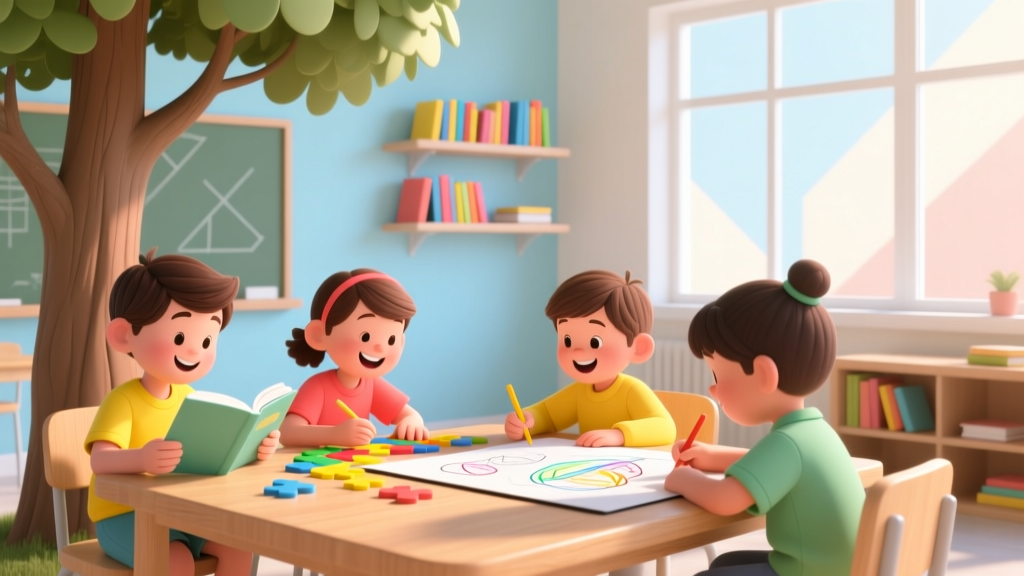
How Old Do Kids Start Reading
Why 'How Old Do Kids Start Reading' Is the Wrong Question—And What to Ask Instead
If you’ve ever scrolled through parenting forums wondering how old do kids start reading, you’re not alone—and you’re probably feeling some mix of curiosity, comparison anxiety, or quiet worry. But here’s the truth no one tells you upfront: reading isn’t a single ‘on/off’ switch that flips at a magic birthday. It’s a layered, neurologically rich process that unfolds across years—and varies widely even among typically developing children. According to the American Academy of Pediatrics (AAP), only about 17% of kindergarteners read fluently by age 5, while over half are still in the emergent stage—recognizing letters, ‘reading’ pictures, or reciting memorized books. So if your 4-year-old can’t sound out ‘cat’ yet, they’re not behind—they’re right on track. This article cuts through the noise with science-backed timelines, actionable support strategies, and the one predictor that matters far more than age: oral language richness.
The 4-Stage Reading Development Journey (Not a Race)
Reading doesn’t appear overnight—it builds across four interlocking stages, each rooted in brain development and environmental input. These stages aren’t rigid age boxes; they’re overlapping, scaffolded progressions. Dr. Hollis Scarborough, a leading literacy researcher, visualizes this as the ‘Reading Rope’: two intertwined strands—language comprehension and word recognition—that must strengthen together for fluent reading to emerge.
Stage 1: Emergent Literacy (Ages 0–4)
Before formal instruction, children absorb the ‘music’ of language. They point to pictures, pretend-read familiar books, scribble purposefully, and recognize logos (‘McDonald’s’, ‘Stop’). This stage is fueled by daily read-alouds, rhyming games, and conversation—not flashcards or worksheets. A landmark study in Developmental Psychology found toddlers who heard >20,000 words per day from caregivers at age 2 had significantly stronger phonological awareness by age 4—a key predictor of later decoding success.
Stage 2: Early Decoding (Ages 4–6)
Children begin matching letters to sounds (phonics), blending C-V-C words (‘cat’, ‘dog’), and using picture cues + first/last letters to guess unfamiliar words. They may read slowly, self-correct often, and rely heavily on memorized sight words. This is where many parents panic—but it’s entirely normal. As Dr. Linnea Ehri, cognitive psychologist and reading expert, explains: “Decoding is like learning to drive stick shift—it feels clunky at first, then becomes automatic with practice.”
Stage 3: Transitional Fluency (Ages 6–8)
Now readers decode faster, use context and syntax to confirm meaning, and begin reading silently with expression. They tackle chapter books with controlled vocabulary (e.g., Henry and Mudge, Cam Jansen) and write simple sentences with invented spelling that shows phonetic logic (‘frend’ for ‘friend’). This stage thrives on volume—research from the University of Tennessee shows kids who read ≥20 minutes daily outside school gain 2.3x more vocabulary than peers reading <5 minutes.
Stage 4: Fluent & Strategic (Age 8+)
Reading becomes effortless and automatic, freeing cognitive resources for inference, analysis, and critical thinking. Children choose texts aligned with interests, monitor their own comprehension (“Wait—did that make sense?”), and adjust reading speed for purpose (skimming vs. close reading). Importantly, fluency doesn’t mean perfection—it means flexibility and engagement.
What Actually Predicts Reading Success (Hint: It’s Not Alphabet Flashcards)
Forget isolated letter drills. The strongest early predictor of reading achievement isn’t knowing ABCs by age 3—it’s oral language proficiency: vocabulary depth, sentence complexity, narrative skills, and phonological awareness (hearing and manipulating sounds in words). A 2022 longitudinal study tracking 1,200 children found that oral language skills at age 3 predicted 48% of reading comprehension variance at age 10—far more than letter-naming ability (12%).
Here’s how to nurture it authentically:
- Swap ‘What’s this?’ for ‘Tell me about…’ When reading The Very Hungry Caterpillar, ask: “What do you think the caterpillar will eat next—and why?” instead of naming fruits. This builds inferencing and vocabulary in context.
- Embrace ‘rich talk’: Replace “That’s a dog” with “Look—the fluffy golden retriever is trotting past the mailbox, tail wagging!” Research shows children exposed to descriptive, varied language develop larger vocabularies and stronger syntactic processing.
- Play with sound—not just letters: Sing nursery rhymes (“Hickory Dickory Dock”), stretch words (“ssssssun”), or play ‘I Spy’ with beginning sounds (“I spy something that starts with /b/”). These build phonemic awareness—the bedrock of decoding—without worksheets.
- Let them tell stories: Record your child narrating a made-up tale or retelling a favorite book. Transcribe it and read it back. This reinforces narrative structure, sequencing, and print-to-speech connection.
Crucially, screen time doesn’t replace this. A 2023 AAP policy statement warns that passive video exposure (even ‘educational’ shows) does not build oral language like live, responsive interaction does. The ‘video deficit effect’ means toddlers learn far less from screens than face-to-face exchanges.
When to Pause & Pivot: Red Flags vs. Normal Variation
Every child develops at their own pace—but certain patterns warrant gentle professional insight. The key is distinguishing typical variation from signs of potential dyslexia or language-based learning differences. According to the International Dyslexia Association, red flags before age 6 include:
- Consistently reversing letters after age 7 (reversals under 6 are common);
- Inability to rhyme or segment words into syllables (e.g., can’t clap ‘butterfly’ into two parts) by age 4;
- Struggling to recall names of common objects or colors despite repeated exposure;
- Avoiding books altogether—even when read aloud—and showing no interest in environmental print (signs, labels, menus).
Note: Difficulty with handwriting, slow speech, or mixing up similar-sounding words (pen for pen) isn’t inherently alarming—it’s part of normal development. What matters is persistence and impact. If a 5-year-old still can’t identify rhyming words and avoids all literacy play, consult a speech-language pathologist or pediatrician—not to ‘fix’ them, but to understand their learning profile.
Real-world example: Maya, age 5, knew all her letters and could spell her name—but couldn’t blend ‘c-a-t’. Her preschool teacher noticed she’d skip rhyming games and often substituted words in songs (“Twinkle, twinkle, little starfish”). A speech evaluation revealed subtle phonological processing delays. With targeted, playful intervention (sound-matching games, rhythmic clapping), Maya began blending sounds by age 6 and read her first chapter book at 7. Her timeline wasn’t ‘late’—it was hers.
The Age Appropriateness Guide: What to Expect (and What to Skip)
While individual variation is vast, research-based norms help set realistic expectations. Below is an Age Appropriateness Guide grounded in longitudinal studies (National Institute of Child Health and Human Development), AAP guidelines, and classroom observation data. It focuses on what’s developmentally appropriate, not what’s ‘supposed’ to happen.
| Age Range | Typical Literacy Behaviors | Supportive Activities (No Pressure) | What to Avoid |
|---|---|---|---|
| 0–2 years | Attends to books, points to pictures, babbles along with rhythms, recognizes familiar faces/objects in photos | Shared reading with animated voices; singing lullabies; labeling objects during diaper changes (“Here’s your nose! Your soft, round nose!”) | Expecting attention for >3 minutes; correcting babbling; using tablets for ‘learning’ |
| 2–3 years | Turns pages independently (sometimes multiple at once), ‘reads’ by describing pictures, repeats refrains (“…and they all fall down!”), names some letters (often those in their name) | Playing with magnetic letters during snack time; drawing ‘stories’ with crayons; acting out stories with stuffed animals | Drilling letter sounds; requiring silent listening; comparing to siblings or peers |
| 4–5 years | Recognizes own name in print; matches upper/lowercase letters; identifies beginning sounds; ‘writes’ using scribbles or letter-like forms; enjoys predictable books (e.g., Goodnight Moon) | Creating a ‘word wall’ with family names; playing ‘sound scavenger hunt’ (find something that starts with /m/); writing grocery lists together (child draws items, you add words) | Pushing formal phonics instruction; testing letter knowledge; using workbooks before age 5 |
| 6–7 years | Blends CVC words; reads simple decodable texts (e.g., Fox in Socks); uses context + phonics to decode new words; writes sentences with inventive spelling | Keeping a ‘wonder journal’ (child dictates questions about nature/weather, you write them down); choosing library books by topic, not level; reading recipes together while baking | Comparing reading levels across classrooms; insisting on ‘grade-level’ books only; discouraging picture books |
| 8+ years | Reads fluently across genres; infers character motives; summarizes plots; reads silently for sustained periods; chooses books based on interest, not just ease | Starting a family book club (even if adults read aloud); visiting author talks; creating fan art or alternate endings | Limiting reading to assigned texts; dismissing graphic novels or nonfiction as ‘not real reading’; monitoring every page count |
Frequently Asked Questions
My child is 5 and still doesn’t know all their letters—is that a problem?
No—this is completely typical. By age 5, most children recognize 10–15 uppercase letters (often those in their name), but full alphabet mastery usually emerges between ages 5–6. What matters more is whether they’re engaging with print: pointing to words, noticing signs, or asking “What does that say?” Focus on joyful exposure—not rote memorization. As literacy specialist Dr. Susan Neuman notes, “Alphabet knowledge is a tool, not a destination. The goal is understanding that print carries meaning.”
Should I teach my preschooler to read early to give them an advantage?
Research consistently shows no academic advantage to early formal reading instruction—and potential downsides. A 2015 study in Educational Researcher followed children taught to read at age 4 vs. age 6. By grade 4, both groups performed identically on standardized tests—but the early-instruction group showed higher rates of test anxiety and lower intrinsic motivation. The brain’s neural pathways for reading mature around age 5–6; pushing before readiness can create frustration, not fluency.
My child reads well but hates it—what should I do?
This is incredibly common and signals a mismatch between expectation and experience. Many ‘reluctant readers’ associate reading with pressure, correction, or boredom—not joy. Try shifting focus: swap leveled readers for high-interest nonfiction (dinosaurs, space, cooking), let them listen to audiobooks while following along, or read comics/graphic novels together. As educator Donalyn Miller emphasizes, “We don’t raise readers by assigning books—we raise them by sharing stories, honoring choice, and protecting time for pleasure.”
Is bilingualism delaying my child’s reading?
Quite the opposite. Bilingual children often develop stronger metalinguistic awareness—the ability to think about language itself—which aids phonics and decoding. While they may mix languages or have smaller vocabularies in each language initially, their total conceptual vocabulary is typically equivalent or larger. The AAP confirms bilingualism poses no risk for reading delays and may enhance executive function. Support both languages equally—reading in the home language builds foundational literacy skills that transfer.
What’s the biggest mistake parents make when supporting early reading?
Correcting every error. When a child says “horse” for “house,” jumping in with “No—it’s house!” interrupts their meaning-making process and signals that accuracy trumps understanding. Instead, model the correct word naturally: “Yes—the house has a red door! What color is the horse?” This preserves confidence while gently reinforcing language. As early childhood expert Dr. Kathy Hirsh-Pasek says, “Children learn language through thousands of tiny, joyful interactions—not corrections.”
Common Myths
Myth 1: “If they’re not reading by first grade, they’ll fall behind forever.”
False. Longitudinal data from the National Center for Education Statistics shows that children who begin reading at age 7 (the upper end of typical development) catch up to peers by grade 3 in comprehension and outperform them in critical thinking by middle school. Reading fluency is not fixed—it’s malleable with appropriate support.
Myth 2: “Phonics-only instruction is the fastest path to reading.”
Overly narrow. The Science of Reading confirms effective instruction requires both explicit phonics and rich language experiences. A 2022 meta-analysis in Review of Educational Research found balanced approaches (phonics + vocabulary + comprehension strategy instruction) produced 2.1x greater gains than phonics-only methods. Phonics without meaning is like learning musical notes without hearing the song.
Related Topics (Internal Link Suggestions)
- Phonological Awareness Activities for Toddlers — suggested anchor text: "playful phonological awareness games"
- Best Picture Books for Language Development — suggested anchor text: "vocabulary-building picture books"
- Signs of Dyslexia in Preschoolers — suggested anchor text: "early dyslexia indicators"
- How to Choose Decodable Books — suggested anchor text: "science-backed decodable readers"
- Screen Time Guidelines for Early Literacy — suggested anchor text: "healthy media habits for toddlers"
Conclusion & CTA
So—how old do kids start reading? The answer isn’t a number. It’s a spectrum: from scribbling at 2 to savoring poetry at 12. What truly matters isn’t the calendar—it’s the quality of language-rich moments you share, the patience you extend, and the joy you protect. Your child isn’t falling behind; they’re building a unique, resilient literacy foundation. Your next step? Tonight, pick one book you loved as a child—and read it aloud, slowly, with zero agenda. Notice what your child points to, asks about, or imagines beyond the page. That’s where real reading begins. Then, download our free Literacy Moment Tracker (a printable guide with 30 low-pressure, research-backed interactions)—because the best reading instruction happens in the spaces between the words.
More Articles
 When Can Kids Drink Coffee? Pediatrician Advice (2026)
 Why Do Kids Say 67? The Real Meaning Behind the Trend
 Is Marty Supreme OK for Kids? Pediatrician Safety Guide
 What Age Can Kids Stay Home Alone? (2026 Guide)
 Visine for Kids: What Pediatric Ophthalmologists Say (2026)
 How Kids Can Make Money: 12 Safe, Skill-Building Ways
 How to Tell Your Kids About Santa (2026)
 Elizabeth Smart Pregnancy Myth: Facts & Healing (2026)
 How Many Kids Does Anne Burrell Have? (2026)
 Hank Green’s Parenting: Screen Time, Education & Balance